Museum Fundraising Success

“To everything there is a season and a time to every purpose under the heavens.”  
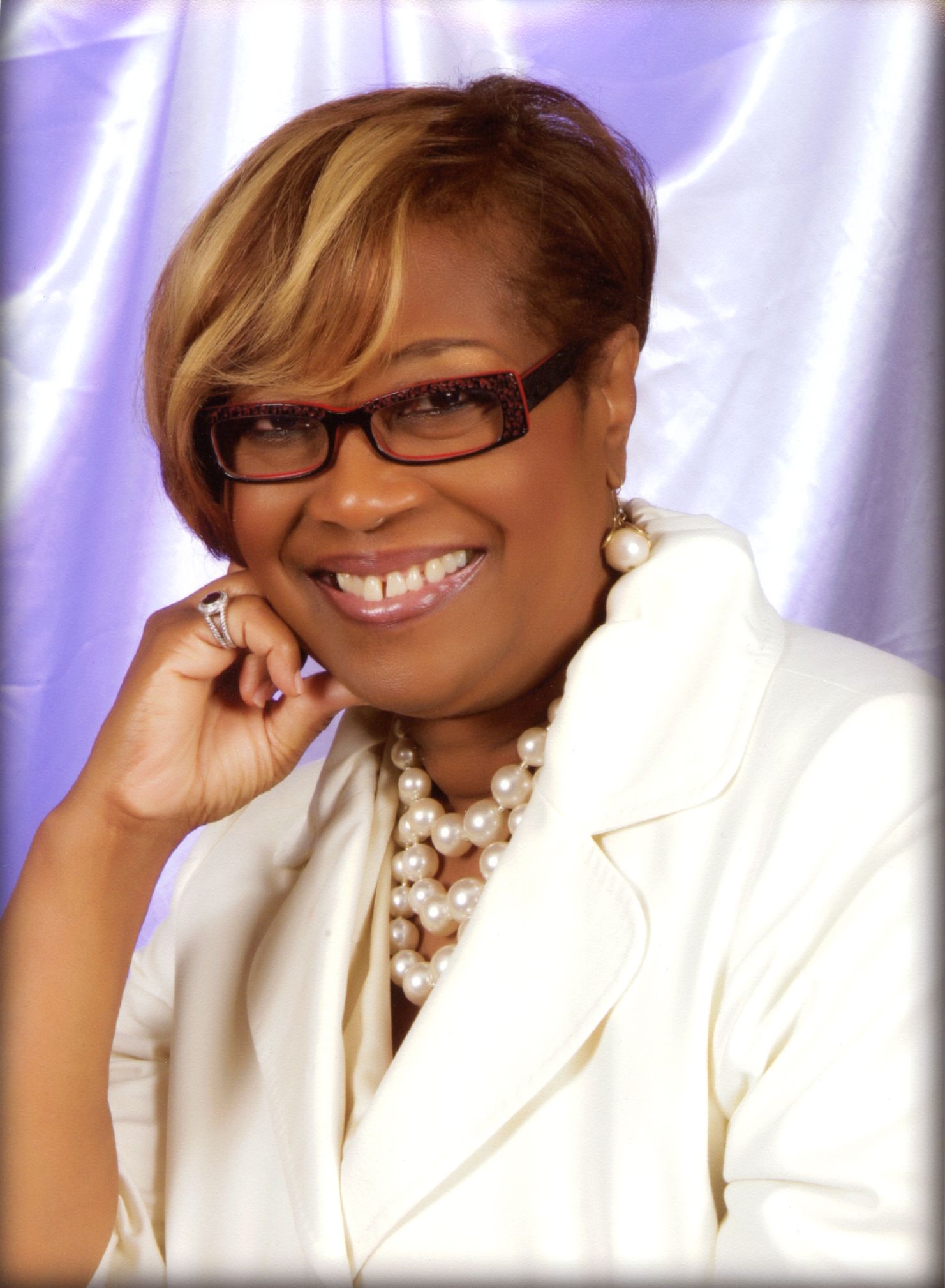
 Beverly  Robertson, National Civil Rights Museum, Saad and ShawThis is the biblical quote Beverly Robertson, president of the National Civil Rights Museum used to begin our conversation.

She quickly followed with its special relevance to her at this point in time. “I recently announced my retirement from the museum because I believe it is time. On March 1, 2014, the National Civil Rights Museum will re-open the historic Lorraine Motel after an 18 month, $28 million renovation. An additional $12 million is being raised to support the first ever major endowment for the museum to secure the life of the institution. This tremendously challenging accomplishment along with so many other successes and challenges over the past 16 years have led me to realize that I have had my season. It has been an honor to work at this sacred place, but even the best of leaders must know when it is time to go. People who lead understand that they have a season. They also understand that exits are better done when individuals are at the pinnacle of their success.”

The National Civil Rights Museum showcases the history of the African American struggle for civil rights within the context of a global struggle for human rights. It holds a vision for us of a world dedicated to creating opportunity for the disenfranchised.

Located in Memphis, Tennessee at the former Lorraine Hotel – the site of the assassination of Dr. Martin Luther King Jr, – the National Civil Rights Museum has steadily expanded and updated exhibits and curriculum.  Over 3.5 million people have visited since its opening in 1991 – an annual average of 200,000 visitors. It is an educational and cultural site of conscience for visitors from around the world.

Under Robertson’s leadership the museum has stayed focused on fundraising. To date, $25.2 million has been raised for renovations, and $2.2 million for endowment. Robertson has also grown the museum’s annual fundraising which includes direct mail, personal solicitations, and The Freedom Awards, their annual gala. The Freedom Awards, honor individuals who have made significant contributions in civil rights and have laid the foundation for present and future leaders in the battle for human rights. This year awards were presented to Mary Robinson, first female president of Ireland and human rights champion; Geoffrey Canada, CEO and president of Harlem Children’s Zone and a leading advocate for education reform and equality; and Earl Graves, founder and publisher of Black Enterprise Magazine, activist for black consumer and black business power. The event raised over $490,000 and was one of their most successful.

“I have always wanted to leave people and organizations for whom I have worked much better than I found them,” Robertson said. “I can only hope and pray that this is part of the legacy I leave when I depart the National Civil Rights Museum on July 1, 2014.” Beverly Robertson – we salute your leadership.

Learn more about the National Civil Rights Museum at www.civilrightsmuseum.org.

Mel and Pearl Shaw are the authors of “Prerequisites for Fundraising Success” and “The Fundraiser’s Guide to Soliciting Gifts.” They provide fundraising counsel to nonprofits. Visit them at www.saadandshaw.com. Follow them on Twitter: @saadshaw.

Make Every Tuesday Giving Tuesday

http://community.givingtuesday.org/NewsGiving Tuesday is here! There is still time left in the day to give to the nonprofits you believe in. Friday was Black Friday for shopping at the mall and big boxes, Saturday was Small Business Saturday to promote shopping at locally owned small businesses, and Monday was Cyber Monday for internet shopping. Today it is Giving Tuesday and we – collectively – can get our give on! You can give by cell phone or through the ever accessible “donate now” button. You can give the “old fashioned” way by writing a check. Most importantly it’s time to give AND you can make very Tuesday a giving Tuesday. Here are three tips!

  1. Set up your checking account to automatically transfer funds to your favorite charity every Tuesday. Or every first Tuesday of the month. You pick! Giving small amounts frequently – and AUTOMATICALLY – makes it easier to give. You make the decision once and technology keeps you committed.
  2. Write a check to one of your favorite nonprofits when you write your monthly bills. You can pick the same one each month, or pick a different one each month.
  3. Join or create a giving circle – you and your friends can get together once a month, pool your money and choose where to give it. You can be as simple or as complex as you want to be. You can get ideas by visiting www.givingcircles.org.

Enjoy giving. Enjoy fundraising. Keep the FUN in FUNdraising.

Mel and Pearl Shaw www.saadandshaw.com

Image courtesy of http://community.givingtuesday.org/News


How do you count your money?

MoneyA cornerstone of successful nonprofit fundraising is trust. While there are many reasons to give, there are also reasons why people, foundations and corporations do not give. One reason is a lack of trust: donors and funders don’t trust the nonprofit to use the funds for the stated purpose. Here are some suggestions to help ensure your institution or organization retains a high level of trust from current and prospective donors.

Whether you are raising funds for an annual campaign or for a capital, endowment or other campaign the process of building trust begins with how you define what you are raising money for. Gain consensus amongst leadership (board and executive) regarding how much money you seek to raise and how the funds will be used. Be specific. Measure your progress against the agreed upon goal.

Work with the development committee of the board to develop gift acceptance policies. These can help avoid future confusion. For example, how long are your pledge periods, and when do you write off uncollected pledges? How do you account for gifts of real estate?

Be specific when talking about fundraising progress. A donor may have given a verbal commitment for a large gift, but you can’t include it in your fundraising total until it has been received or until you have a signed pledge agreement in place. The gift may not materialize.

Develop standardized fundraising reports that clearly communicate how much has been raised and for what purposes. Differentiate between pledges and actual funds received. When in the midst of a major fundraising campaign you are sure to receive multi-year pledges. These are vital, but they are also typically difficult to spend until the funds are received. Develop reports that show when pledge payments are expected to be received. These should match the terms of each pledge agreement.

When conducting a comprehensive campaign, list your fundraising priorities, and how much has been raised towards each. You may be able to reach or exceed your overall fundraising goal but may not have the funds you need to implement all stated priorities. This can occur when donors are inspired by a campaign and choose to make a restricted gift to a non-campaign priority. You should celebrate such gifts – but be careful how you include them in campaign accounting.

Remember – different people have different foci when it comes to counting money. Bring in the CFO, the CEO and your fundraising team and agree on how you will record and report on your fundraising. Be sure to reconcile fundraising reports with those produced by the finance office. Do this on a monthly basis.

If it sounds like we are focusing on small details, you are right. Don’t claim a fundraising success you cannot substantiate – it can come back to haunt you.

Picture credit: 401(K)2012 via Flickr

Mel and Pearl Shaw are the authors of “Prerequisites for Fundraising Success” and “The Fundraiser’s Guide to Soliciting Gifts.” They provide fundraising counsel to nonprofits. Visit them at www.saadandshaw.com. Follow them on Twitter: @saadshaw.

Gifts that keep on giving

Holiday giving,  holiday gifts, nonprofit, gift givingLet the holiday season begin! Thanksgiving ushers in six weeks of busyness as we reunite with family and friends for dinners, parties, and holidays such as Hanukkah, Christmas and New Year’s Eve. This is a time of gift giving. In addition to daily business and family activities our minds find time to weigh questions such as “What would my children enjoy?” and “When should I order the turkey?” and, of course, “How can I give to all the people I love without going broke?”In the midst of all this holiday activity comes the busy season for nonprofit fundraising. Some organizations and institutions encourage us to give before the year-end to take advantage of tax benefits, while others offer opportunities to remember those who are less fortunate. Still others invite us to imagine new expressions and manifestations of the arts, leadership, education, and science.

If you can take a moment to escape the hustle and bustle of the season you may find a way to combine celebrations, gift giving and support for nonprofits that are important to you and your family. You can put the busyness of the season in perspective by spending the afternoon with your children volunteering at a local hospital, food bank, senior center, or veterans home. When considering what to give, consider underwriting a child’s pre-K education by giving to a program that had their funds cut this year. You’ll be giving a gift that will make an impact for a lifetime. You can make that gift in honor of a family member. Other ideas include purchasing gloves or socks in bulk to give to people who are homeless in your community. Spend an afternoon making tasty sandwiches and share them with people who are hungry.

Talk with your faith leader, college representative or another trusted person “in-the-know” to find out which out-of-state (or out-of-country!) college students need a home for the holidays and open your home and heart. If your neighbor is in need, consider purchasing a gift card she can use at a local grocery store. This is an ideal time for a gift to the food bank.

Gifts to scholarship funds are easily made on-line and are more important than ever as so many students are losing access to Parents PLUS loans. Give to help those half-way around the world by supporting victims of the typhoon in the Philippines. If you are thinking of purchasing a pet for your child, consider adopting one from your local nonprofit animal rescue or ASPCA. Many nonprofits publish beautiful calendars – consider giving one as a gift. Purchase your Christmas tree from a nonprofit and holiday cards from UNICEF.

Most importantly, sit down as a family and share the gratitude you experience. Then find a way to give in ways that speak to your hearts.

Photo Credit: Nonprofit Hub

Mel and Pearl Shaw are the authors of “Prerequisites for Fundraising Success” and “The Fundraiser’s Guide to Soliciting Gifts.” They provide fundraising counsel to nonprofits. Visit them at www.saadandshaw.com. Follow them on Twitter: @saadshaw.

Choices and Will

Facing History, fundraising, Facing History, Shelby County Schools,We recently had the opportunity to attend a benefit dinner for Facing History and Ourselves as the guests of two long term supporters. We had a great time. The event was much larger than we had anticipated and we found ourselves in a beautiful room surrounded by people committed to ensuring that students have the opportunity to learn from history and develop the ability to make ethical choices. As they share on their website, “through a rigorous investigation of the events that led to the Holocaust, as well as other recent examples of genocide and mass violence, students in a Facing History class learn to combat prejudice with compassion, indifference with participation, and myth and misinformation with knowledge.” The theme of the benefit dinner was “People make choices. Choices make history.”

The evening was an example of a well orchestrated fundraising event. First, as the name makes clear, it was a benefit dinner. We learned that funds raised from the dinner will represent 25% of the annual budget for the Memphis office of this international organization. The event also provided supporters with the opportunity to introduce friends and colleagues to Facing History. The event was choreographed so the reception, dinner, and desserts were in different rooms allowing people multiple opportunities to mingle, socialize and make new friends. Finally the official program and remarks were well-scripted, short, and powerful. Enough time was left for the call to action: everyone was asked to make a gift and gift cards and envelopes were provided at each table.

One of the people speaking at the event was Shelby County Schools Superintendent Dorsey E. Hopson, II. He pledged his support to ensuring students have access to the Facing History and Ourselves curriculum and thanked the organization for its support of local students and our community. During his remarks he thanked the organization for having “the will and the skill.”

We left the event with two short phrases to contemplate: “People make choices. Choices make history.” And, “the will and the skill.” As human beings, and as fundraisers, we find these phrases to be powerful mantras. Each of us can make a difference. We make that difference through how we respond, the actions we take. In our experience, it is “the will” that precedes action. “Will” is that internal process and power that combines thought, heart, spirit, intuition and facts. When it is ignited it manifests in our choices. In the world of fundraising a lot of emphasis is put on fundraising skill. Yes, there are definitely skills associated with fundraising, but they are most effective when combined with “will.” We have witnessed people making choices that make history. Their conscience motivates them to action and they then combine their “will” with “skill” and change individual and collective experience.

Learn more about Facing History and Ourselves at www.facinghistory.org

Photo credit: Facing Our  History

Mel and Pearl Shaw are the authors of “Prerequisites for Fundraising Success” and “The Fundraiser’s Guide to Soliciting Gifts.” They provide fundraising counsel to nonprofits. Visit them at www.saadandshaw.com. Follow them on Twitter: @saadshaw.

Are You Ready to Retire?

Retirement, plan for retirement, nonprofit management, retirement, recruitment, nonprofit boards With an estimated ten percent of the workforce employed in the nonprofit sector, retirement benefits can be a factor that impacts individual employees as well as the nonprofits they work for. For example, do older employees delay retirement because they don’t have enough money to fund their retirement? Does this impact the ability of a nonprofit to promote talent from within, or to attract new talent from outside the organization? Do younger and mid-career employees evaluate employment opportunities based on retirement benefits?

Earlier this year the TIAA-CREF Institute and Independent Sector issued a report on a joint study they conducted on retirement and the nonprofit sector, a topic of interest to both. The TIAA-CREF Institute helps advance the ways individuals and institutions plan for financial security and organizational effectiveness, and Independent Sector is a nonprofit, nonpartisan network of approximately 600 nonprofits, foundations and corporate philanthropy programs.

Key findings of the study included the following:  45% of nonprofit employees are not confident about their ability to retire from their employment; almost one-half of nonprofit employees are not satisfied with their ability to prepare financially for retirement; and more than 40% do not feel that they are accumulating sufficient financial resources to ensure their long-term financial security. Over three-quarters reported access to an employer-sponsored retirement plan or plans; almost one-third have access to a defined benefit pension plan, and more than two-thirds to a defined contribution plan, such as a 403(b) plan. While 76% are currently saving for retirement, less than 20% of these savers are extremely or very confident that they are saving the right amount.

What is hidden within these numbers is the difference – if there is one – between those who work for large nonprofits such as hospitals, colleges and universities, and those who work for small to mid-sized nonprofits. Could it be that these employees may find that they won’t have enough to fund their retirement, and may in time have to depend on nonprofits for assistance?

Related to this, here are a few more findings: one third of sector employees have received retirement planning advice within the past three years; two-thirds have not tried to determine how much money they will need to accumulate so that they can live comfortably in retirement; and among savers who are confident that they are saving the right amount, one-third have not attempted such a calculation.

These issues are by no means the sole concern of nonprofits. But, given that many nonprofits are mission-driven, it is important to consider how this sector can address issues that face their employees. This is something for board members to consider and discuss. For example, when reviewing and approving budgets, is there a discussion about employee benefits including retirement?

What actions can your nonprofit take to help employees prepare for retirement?

Picture credit: The Chronicle of Philanthropy

Mel and Pearl Shaw are the authors of “Prerequisites for Fundraising Success” and “The Fundraiser’s Guide to Soliciting Gifts.” They provide fundraising counsel to nonprofits. Visit them at www.saadandshaw.com. Follow them on Twitter: @saadshaw.


African American Corporate Executives: HBCUs Need You!

The expertise and connections of African American corporate executives can help chart a sustainable future for historically black colleges and universities.

hbcu, historically black collegesHistorically black colleges and universities are amongst the largest African American controlled businesses in America. Many date back to the 19th century.  They have educated generations and built the black middle class. They are major employers in communities across the country. They also face well-documented challenges as they operate in an increasingly competitive educational marketplace.

These challenges can be addressed through a deep and meaningful partnership with African American corporate executives. These executives have increased corporate profits, managed turnarounds, introduced new products, increased employment, expanded operations, managed globalization, developed new technologies, and introduced social media to market and sell their products. Their expertise and management skills – when combined with that of academic leaders and trustees – can creatively and strategically address higher-education challenges in areas such as recruitment, retention and graduation; finances; marketing; and fundraising including alumni giving, corporate, foundation, state and federal support.

African American corporate executives can serve as executive coaches and mentors to presidents and chancellors, shadowing these leaders and working with them to provide additional strategies, perspective and potential solutions gained from their corporate experience.  They can volunteer to serve as trustees providing HBCUs with the same level of professionalism they would bring to a corporate board. They can serve as interim-presidents acting as change agents who help address unresolved structural challenges. They can serve on a corporate leadership team – joining with their peers – to provide management expertise and connections that can transform institutions. Such a team can surround and support the president and trustees helping to resolve challenges and take advantage of unleveraged opportunities.

Corporate executives can also provide funding and resources needed to stabilize our HBCUs. They can build endowments. They can ensure the continued competitiveness of HBCUs through timely capital investments in facilities, equipment and technology. Mutually beneficial strategic collaborations can support corporations who place a premium on attracting and retaining a diverse talent.

When the White House or a state governor needs top talent they often turn to the private sector, calling upon the patriotism of corporate executives, asking them to take a leave of absence to serve their fellow citizens. Today we need African American executives to heed the call to service. HBCUs provide a special brand of higher education. They play a critical role in educating African American, Hispanic and first generation students who seek an education that will allow them to fully participate in the global economy and build a strong future for themselves and their families.

Increased “business know-how” and financial investment can help HBCUs continue to play a key role in addressing educational disparities. Reach out to these institutions, share your know-how, and help them grow to the next level.  Volunteer now!

Photo credit: HBCUBuzz

Mel and Pearl Shaw are the authors of “Prerequisites for Fundraising Success” and “The Fundraiser’s Guide to Soliciting Gifts.” They provide fundraising counsel to nonprofits. Visit them at www.saadandshaw.com. Follow them on Twitter: @saadshaw.

Home Sweet Veterans Home

Honor VeteransIn 2010, we visited the Veterans Home of Yountville in the heart of scenic Napa Valley at the request of the California Veterans Support Foundation. This was our first exposure to a state veterans home and we were impressed. We learned that disabled and elderly California veterans could live at the home and receive the medical, social, and therapeutic services they need in a community that supports and honors veterans. The grounds were breathtaking. The foundation was considering a fundraising campaign for the veterans home. One of their priorities was to fund programs for returning women veterans.

A year later our father, Colonel B. Shaw, was no longer able to live independently. We were referred to the Tennessee State Veterans Home in Humboldt. “The Colonel” spent the last two years of his life supported by a top-notch medical and support team: we couldn’t recommend a better facility or better caregivers.

Earlier this year we met a group of dedicated volunteers who want to ensure that veterans from the Memphis, TN area have access to the services of a veterans home that is close to their family, friends and community. They founded The West Tennessee Veterans Home, Inc., and have set out to secure the money and land required to build a state veterans home to serve the 75,000 local veterans.

We mention these three experiences to encourage you to support the veterans in your family and your community. If your spouse or family member needs specialized medical care talk with your nearest state veterans home. These homes know how to care for veterans with devastating injuries and disabilities. They also support older veterans who need nursing home care. Veterans who are cared for at a state veterans home receive $97.07 per day towards the cost of their care. This benefit is awarded to them for their service and cannot be used at a private nursing home. This means that veterans who need full time, year-round care save $35,000 when cared for at a state veterans home. Learning about the Tennessee State Veterans Home was a god-send for our family: it could be the answer your family is seeking.

If your community is not served by a state veterans home, enlist the support of veterans and community leaders to explore the feasibility of raising funds and securing the land required to build one. The federal government will provide 65% of the building costs when a local community secures 25 acres of land and 35% of the cost to build.

Finally, if your community has a state veterans home, visit your veterans. Talk with those who work at the home to find out if they need additional funds to increase the quality of care provided. If funds are needed, encourage your community to raise the money.

Learn more about state veterans homes and their locations across the country at the National Association of State Veterans Homes.

You can make a difference!

Photo Credit: Lester Public Library

Mel and Pearl Shaw are the authors of “Prerequisites for Fundraising Success” and “The Fundraiser’s Guide to Soliciting Gifts.” They provide fundraising counsel to nonprofits. Visit them at www.saadandshaw.com. Follow them on Twitter: @saadshaw.


Are you headed for a fundraising crisis?

Government Shutdown Saad & ShawThe first 16 days of October were a demonstration of “governing by crisis.” The federal government was shut down, hundreds of thousands of government employees were furloughed; small businesses, nonprofits, and individuals were impacted in ways big and small; and the business of governing was brought to a standstill because Congress could not pass a budget.

Here is our question to nonprofit leaders: are you addressing the critical fundraising and fund development issues that support long-term nonprofit financial, or are you headed for a fundraising crisis?

Refusing to address fundraising fundamentals is a recipe for disaster. Here are a few examples of what we mean.

Is your nonprofit operating from a fundraising plan? Do you have a development committee of the board that sets fundraising policy, recruits volunteers, recommends fundraising budgets, and ensures meaningful giving and involvement by all board members? Do you have market-based feedback that informs management decisions regarding revenue (fundraising)? Have you created fundraising projections that you measure progress against on a monthly basis? What are your long-term projections for operations and what are you doing today to create a diverse revenue base – and volunteer base! – that will support your institution now and in the future?

If your institution is supported with government grants, can you accurately assess the likelihood of grant renewal? Do you have your finger on the public policy pulse, your competition, and the extent to which your program exemplifies best practices? Is your plan to eliminate services if your grant is not renewed? Will you cross that bridge when you come to it, or do you have a “Plan B?”

If your organization receives multi-year foundation grants are you prepared for a phase-out of funding? Have you identified replacement funding? Are you seeking to raise capital funds for construction or renovation of facilities without a fundraising budget? Do you expect current staff and volunteers to raise new funds without additional resources? Likewise, are you seeking to expand programs, or build a reserve or endowment without knowing the activities and costs associated with such fundraising? How are you budgeting (and staffing) for increased revenue?

If your college or university is impacted by changes in the Parent Plus loan program and the resulting decrease in enrollment, can you focus on these issues while sustaining and growing your annual and major gifts fundraising? Do you have the leadership and structures in place to pursue multiple critical issues at one time, or is fundraising on the backburner?

Here’s what we know: fundraising always needs to be front and center. You need to know where your money will come from. Failure to plan is planning to fail. Don’t put your nonprofit at financial risk. Crisis fundraising is not a plan: there is a long list of nonprofits who found this out the hard way.

Photo credit: Marina Noordegraaf http://goo.gl/upR3dp.

Mel and Pearl Shaw are the authors of “Prerequisites for Fundraising Success” and “The Fundraiser’s Guide to Soliciting Gifts.” They provide fundraising counsel to nonprofits. Visit them at www.saadandshaw.com. Follow them @saadshaw.

Get ready for the year end!

UNCFCampaignAre you and the nonprofits you are involved with ready for the year end? Many nonprofits seek to raise a meaningful percentage of their funds during the last two months of the year. Planning usually begins in August, but it is not too late to make a plan and implement it.

Here are our recommendations. Take time to consider what you know about your donors and their history with your nonprofit. Who has responded to direct mail appeals? Who gives because of an email or social media campaign? Who are friends of board members? Who regularly attends your special events? Knowing who your donors are can help you set an achievable year-end fundraising goal and develop strategies for different groups of donors.

Move beyond a “one size fits all” direct mail or email appeal. Instead, determine how you want to engage each donor. Do you want to encourage those who attend special events to make a gift to your annual fund? Are you looking to encourage online donors to increase their giving or make an additional gift? Do you want to encourage prior direct mail donors to give at a higher level? Do you want to reengage those who gave in 2011 but did not give in 2012?

Your database can help you define your strategies. Consider running the following reports: first time donors; donors who gave multiple times during 2013; those who purchase event tickets but have not yet made a gift; those who give major gifts; those who have given for each of the past five years; those who give by email only; donors who responded to prior direct mail appeals.

Review the reports. Identify those you want to communicate with via email or direct mail. Check to see which of your board members have relationships with your major donors: ask them to personally solicit those they know. Identify those special events supporters and develop a strategy to solicit a year end gift. Consider working with a consultant to find the right strategy.

Think about what your nonprofit has accomplished over the past year and what you want to accomplish in 2014. Craft your message for each medium using emotion and facts. Share how past gifts have made an impact, and how a gift today will increase or continue that impact. Ask for a specific amount. Email should be short, with links and images. Multi-page direct mail letters are most effective. A Facebook campaign will be distinctly different, and hopefully viral. Conversations that board members and volunteers have during personal meetings with major donors will be different still.

One size does not fit all. Each year-end ask should be appropriate to the donor. Take the time to figure out the right approach for each donor. Hone your message. Set a goal and track your activities and results.

Photo credit: UNCF – South Texas / New Mexico Area

Mel and Pearl Shaw are the authors of “Prerequisites for Fundraising Success” and “The Fundraiser’s Guide to Soliciting Gifts.” They provide fundraising counsel to nonprofits. Visit them at www.saadandshaw.com. Follow them @saadshaw.