Tag Archives: women in philanthropy and fundraising

Keeping Alive the Dream of a Better Life for San Francisco’s Bayview Seniors

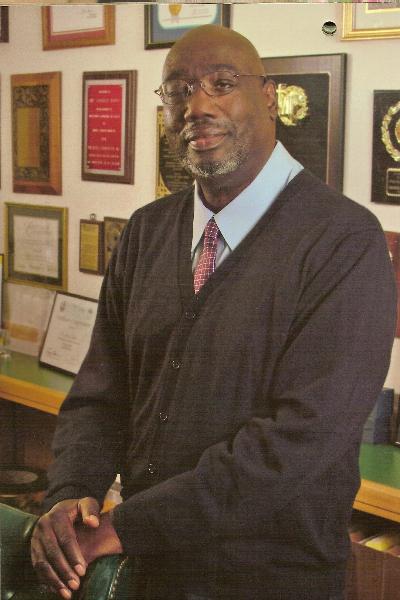
Dr. George Davis

The San Francisco Bay Area lost an icon and hero last month when we lost Dr. George Davis. Dr. Davis was a true visionary, a community leader, renowned gerontologist, minister, soul food connoisseur, sports fanatic, and devoted husband.

First there are his many worldly accomplishments: He led San Francisco’s Bayview-Hunters Point Multipurpose Senior Center for 32 years, and was ordained as an Associate Pastor at the neighborhood’s Metropolitan Missionary Baptist Church. He continued working, even after losing most of his sight to diabetes and fighting three types of cancer.

He received numerous awards and recognition for his 32 years of service, including awards from Senator Feinstein, House Speaker Nancy Pelosi, Senator Mark Leno, Supervisor Sophie Maxwell, and the National Council of Negro Women. He was the founder of the National Black Aging Network and was an associate faculty member at Stanford’s Geriatric Education center.

If you grew up in Oakland you might have met George Davis at Oakland’s McClymonds High School. Or maybe you played pool with him when he was known as Oakland Slim in the pool halls. Or, later after he had earned his Ph.D., he might have been your professor at San Francisco State University where he taught gerontology.

But one thing is certain: If you lived in the Bayview district you knew and loved Dr. Davis. Bayview-Hunter’s Point is a largely African American, underserved neighborhood on San Francisco’s southeastern edge. Dr. Davis got his start there as an intern at the local senior center. By 1978 he had became its executive director. He led it for 32 years, until his death on March 8th at the age of 68.

Today, the Senior Center offers recreational activities, free food distribution, and diverse social services. A separate adult health center provides health care to seniors that enable them to remain in their homes while receiving care at the center Monday through Friday. But Dr. Davis had much bigger plans for the area’s seniors—and that’s how we met him.

Six years ago Brenda Wright, a Senior Vice President at Wells Fargo Bank, asked us to help Dr. Davis and his wife Cathy create a strategy to raise funds for an “Aging Campus” in the Bayview. The first of its kind in the country, the Aging Campus is Dr. Davis and Cathy Davis’ innovative plan to provide housing and services for seniors in the area. We worked with Dr.  Davis and Cathy, and fell in love with them both. Dr. D, or “Doc”, as he was affectionately called, and his wife were an inseparable team.

He was a common man who never forgot his own humble roots in the projects of Richmond and Oakland. He was ‘old school;’ he was a man of his word. More than anything he taught us the importance of relationships, of humility, and patience. Even when he had major health struggles, he never let his personal challenges get him down. When the average person would have said, “no way can we do this,” Dr. Davis said “we can and we will!”

Dr. Davis was a steady champion for the rights and dignity of a demographic largely forgotten in our modern society: African American seniors. He fought to change the policies and economics that leave our elders neglected, isolated, and without services in their own community. He fought to ensure that those who had contributed to the growth of the City had a place to call home as they aged. He embraced Bayview — a neighborhood plagued with poverty, crime, and environmental pollutants from its former life as a naval shipyard – when few others did and sought to give it, and its residents, the dignity they deserve.

Dr. D’s vision for seniors includes high quality housing, healthcare services, and activities that promote physical and mental health. He wanted the needs of African American seniors to be the starting point for the design of buildings and services that would allow them to remain in the Bayview as they aged.

We believe in this vision and we believe in Dr. Davis. The man we loved and admired left us too soon. But he left us with an important mission to fulfill: the creation of the Aging Campus.

The idea of the Aging Campus has been endorsed by the local San Francisco Redevelopment Agency’s Project Area Committee (PAC) and is recommended as a key component of the area’s redevelopment plan.  Partnerships, coordination, and resources are required to make his vision a reality.  The time is now to take this dream and make it happen for the current and future seniors of Bayview Hunters Point.

We ask you to help realize this important vision and support dignity for seniors in the Bayview by making a gift to the Dr. George W. Davis Legacy Fund, c/o Bayview Hunters Point Multipurpose Senior Services (BHPMSS), 1706 Yosemite, S.F., CA  94124. Their website is: http://www.bhpmss.org/home.

Thanks to the Bayview Hunter’s Point Multipurpose Senior Services, Inc. for information used in this blog.

© Mel and Pearl Shaw 2010.

Take a page from the pros….

Hillary Clinton - International Fundraiser

How do you make the “case” for your organization, institution or project? Do you seek to raise funds from people you personally know? Do you call on others who can extend their influence on your behalf? Do you rely on how you will use the funds raised as way to motivate giving? Or do you promote the impact those funds will make?

 Secretary of state Hillary Clinton helped raise $54 million in just nine months for the United States national pavilion at the 2010 world’s fair in Shanghai China. She was legally prohibited from personally solicit gifts and no public money could be used for the project. While attending is not currently in our plans, we want to share with you what we have learned about how she worked her miracles.

  1.  She engaged two experienced fundraisers with whom she has strong relationships: Elizabeth Bagley and Jose Villarreal
  2. She kicked off the project with a conference call with ten of the nation’s top CEOs. According to the New York Times Chevron, PepsiCo and General Electric each pledged $5million. 
  3. PepsiCo’s CEO made calls to other CEOs
  4. Bagley and Villarreal reached out to companies with operations in China
  5. The initial pitch was patriotism “How can the US be one of only two countries without a presence at the world’s fair in Shanghai?”
  6. The second pitch was “commercial diplomacy.” In other words, helping to fund the US pavilion will help open doors for future business.
  7. While Mrs. Clinton did not solicit gifts, she did meet with sponsors when she visited the actual site.

 While those with the connections of Hillary or Bill Clinton are few and far between, we want to call your attention to the process she used. Here it is for the rest of us:

  1. Engage people you know who are committed to your personal and professional success and who have relationships and connections with other people who can help you achieve your fundraising goal
  2. Solicit the biggest gifts first. Identify those you believe can give the largest gifts and talk with them first. Learn how they respond to your project. Address their questions or objections. Ask for their financial support and their involvement with your fundraising effort.
  3. Ask your early donors to ask others to make a comparable gift to your campaign
  4. Identify who will benefit when you reach your fundraising goal. For example, if you want to build a new youth center, consider asking businesses in the immediate area to make a gift. When the youth center is completed more young people and families will be frequenting the area bringing with them the potential for increased sales.
  5. Review how you position your fundraising campaign. Do people respond more to “raising funds for scholarships” or to “funding our future leaders?”
  6. Embrace your funders and donors. Give them the red carpet treatment at all times. Their financial support helps you meet your goals.

 And remember to keep having a FUNdraising Good Time!

© 2010 – Mel and Pearl Shaw

Creating an earned revenue stream

CJ Hayden

CJ Hayden

Over the past few weeks we have featured a question and answer session with C.J. Hayden, a social venture advisor to entrepreneurs, nonprofits, and activists. This week C.J. offers suggestions for how to grow your own earned income stream and resources for more information.

Saad & Shaw: What suggestions  would you offer to non-profit leaders who are seeking to develop an earned income revenue stream?

CJ Hayden: Look first at business models that would align well with your organization’s primary mission. For example, it makes sense for an organization like Delancey Street to operate a restaurant, because it provides employment and job skills training for the population they serve. But if you operate an animal shelter, running a café would have little to do with your mission. You might want to consider offering veterinary services instead.

It’s not always possible to develop an earned income stream that also directly serves your mission. But if you are considering an unrelated business, look carefully at whether you have – or can afford to hire – the type of expertise you’ll need. Succeeding with enterprises like a thrift store or print shop will require knowledge and experience you may not have in your organization.

Also, your enterprise is more likely to become a success if your existing audience includes many people who are potential customers for your products and services. An animal shelter that decides to offer veterinary services would have a built-in customer base made up of their animal-loving donors and people who adopt from the shelter. But if they chose to open a café instead, they would have to expand their outreach considerably in order to turn a profit.

One word of caution – while social enterprise can be an excellent option for long-term funding, launching a venture is not a wise solution for an immediate funding crisis. Just as with a for-profit business, your enterprise will require some level of startup funding and may take time to become profitable.

Saad & Shaw: What resources are available for people who want to learn more about social enterprise?

CJ Hayden: Social Enterprise Alliance, www.se-alliance.org. SEA also has a Bay Area chapter, and their annual conference is coming to San Francisco in April 2010.

Social Edge, www.socialedge.org. A project of the Skoll Foundation designed to support social entrepreneurs and social enterprise.

Venture Forth: The Essential Guide to Starting a Moneymaking Business in Your Nonprofit Organization, by Rolfe Larson. A practical, step-by-step guidebook to selecting, planning, and launching a social enterprise.

Find out more about C.J. at www.cjhayden.com.

And as always, have a FUNdraising Good Time!

What is social enterprise?

CJ Hayden

CJ Hayden

Our recent blog entry addressed the topic of social entrepreneurism. This week the topic is social enterprise. We talked again with C.J. Hayden  the author of three books and over 300 articles on marketing, entrepreneurship, and social change. She serves as a social venture advisor to entrepreneurs, nonprofits, and activists.

Saad & Shaw: How do you define social enterprise?

CJ Hayden: A social enterprise is an organization or project dedicated to a social mission which uses business methods to generate revenue, regardless of whether the entity is for-profit or nonprofit. A nonprofit that operates a business to fund its mission is a social enterprise. A business that exists for the primary purpose of achieving a social mission, and which funnels a significant percentage of profits toward that mission, is also a social enterprise.

A business with the primary purpose of generating profits for its owners or stockholders, which also happens to donate a percentage of its profits to social causes, is not a social enterprise.

Saad & Shaw: Can you share some examples of businesses or non-profit organizations that are social enterprises?

CJ Hayden: One of the earliest and best-known examples of a social enterprise is Goodwill Industries, which since 1902 has been operating thrift stores to fund its mission of providing employment and job skills training for disadvantaged populations. Another well-known social enterprise project is Girl Scout Cookies, which provides funding for the operations of local Girl Scout councils and troops. Cookie sales also help the Scouts to achieve their mission by giving girls an opportunity to learn life skills like goal-setting, teamwork, and money management.

Both Goodwill and the Girl Scouts are nonprofits, but there are many for-profit social enterprises, for example:

  • Newman’s Own – Manufactures and sells salad dressing and other food products, donating all after-tax profits to charity
  • Working Assets – Provider of long distance and credit card services that donates a percentage of each call or transaction to charities selected by its customers
  • Tom’s Shoes – Shoe company that gives a new pair of shoes to a child in need for every pair they sell

Saad & Shaw: What differentiates a traditional non-profit organization from a social enterprise?

CJ Hayden: Traditional nonprofits rely on grants, donations, sponsorships, or government funding, while social enterprises make substantial use of earned income strategies. Many nonprofits have small social enterprise projects, such as selling t-shirts or books. But these usually generate only a minor portion of the organization’s funding. A full-scale social enterprise aims to provide a significant percentage of funding for their mission through business activities.

Find out more about C.J. at www.cjhayden.com.

And as always, continue to have a FUNdraising Good Time!

Are you a 50% Giver?

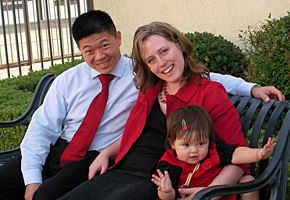
Hsieh Family Chooses to Give

Hsieh Family Chooses to Give

Bolder-Giving

“My wife and I decided to give away all our income above the U.S. median household income.” – Tom Hsieh

Do you know anyone who gives away 50% of their income? Believe it or not, people do. And they feel good. Read Tom Hsieh’s story.

Anne and Christopher Ellinger know 125 people who give away at least half of their income. They created Bolder Giving in Extraordinary Times to encourage bold giving.

“We live in a time of historic crisis and opportunity, when contributions of time and money could make a crucial difference.Yet most of us – even if well-off – give at a fraction of our capacity. Bolder Giving’s mission is to inspire us to give at our full potential by providing remarkable role models and practical support.”

Bolder Giving’s 50% Leagaue is one way they encourage more of us to give more.  You could be a millionaire and participate, or you have a much smaller income. The only requirement is that you have donated 50% or more of your income or business profits for at least three years, or 50% or more of net worth at some point in their lifetime, to causes that reflect your deepest values. (FYI, average U.S. giving is under 3% of income.)

“There’s nothing to counteract a feeling of scarcity like generosity.” – Anne Ellinger, founder Bolder Giving in Extraordinary Times

Read People who give half their money away in the SF Chronicle that inspired this blog

Women celebrities who give back

SelmaHayekThe May 2009 issue of More magazine features Ten Women Who Give Back. If you didn’t have a chance to read it you can view the slideshow online. So many women are busy giving not only of their time  but of their money. These are women who are involved with cause marketing programs, raising funds for non-profits, and managing their own foundations. Read philanthropy profiles Oprah Winfrey (of course!) as well as Salma Hayek, Gloria Estefan, Bette Midler and More! Learn who is supporting multiple sclerosis research, YouthAIDS, the ASPCA, New York City’s parks, breast cancer support services and research, victims of violence and abuse and more!

Fundraising – Your New Career

new_careerLinks updated: 2014

Is it time for you to start a new career? Is it time to make a difference in the world? To use your best skills for the benefit of those things you believe in the most? If so it may be time for you to become a fundraiser. Fundraising was listed as one of the top 30 careers for 2009 by US News and World Reports. (Thanks for Michael Magane for bringing this article to our attention!) What exactly is fundraising and why would anyone want to be a fundraiser?

Fundraising is a career with many opportunities for people with a variety of skills. We wrote about this  at the beginning of 2008. At that time real estate agents and mortgage brokers were reeling from changes in the housing market. We wanted people to know that the skills people have developed in these industries could be transferrable to fundraising. Today there is an even greater pool of people with strong skills, connections and experiences who can help build and sustain the fundraising capacity of non-profit organizations, hospitals, colleges, universities and churches. We updated our columns in 2009. (Links available at end of post)

We define fundraising as the process of bringing together organizations and institutions with the people and resources they need to deliver on their mission. It’s not arm twisting. Its’ not begging. It’s about partnership. It’s about helping individuals, families, businesses, corporations, foundations and government agencies identify those organizations who share their beliefs and who are bringing them to life.

Here is what we know about fundraising. People give to a diverse array of institutions, causes and programs. And there is a role for people with diverse skills, backgrounds, personalities and connections. Fundraising is conducted by professionals and even more so by volunteers. As a profession with a career-path there is room for introverts and extroverts, big-picture thinkers as well as people who are detail-oriented. It is for people who lean right politically and those who lean left. It is for people who are in career-transition, who are looking to make a difference and who are willing to learn. And it is for African Americans, Hispanics, Asian Americans and other people who until recently have not been well represented in all aspects of the profession. With changes in American demographics and the growth of the non-profit sector the need to diversify the profession creates new opportunities who people who have been volunteering with their churches, sororities, local schools, colleges and universities. And there are opportunities for people who are changing careers – whether voluntarily or involuntarily.

We believe our three-part series on the topic of careers in fundraising  may be even  more relevant now than it was originally written.  Here are a few key points:

  1. Positions are available with grassroots organizations, colleges, hospitals, national organizations, foundations, advocacy organizations, research institutes, churches, radio and television stations… — all types of organizations and institutions that are categorized as “nonprofits.”
  2. If you are able to secure work with a hospital, college or public radio or television station, you will learn the systems and procedures that represent best practices in fund development and fundraising. Working for one of these institutions can provide you with insight into the many different strategies and activities that comprise fundraising.
  3. If you can remember that your work is about the organization and those it serves and not about you, then you can be successful. People won’t be giving to you; they will be giving to the organization you represent. Your job will be to best promote its successes, the vision of its leadership and how donations are used to advance goals and programs.
  4. There are many entry-level, midcareer and senior-level positions within fundraising and fund development. There is also a gap between the number of positions that need to be filled and the number of individuals who are qualified to fill them. (Part three of the article lists common fundraising job titles and provides descriptions for these).

Part One  – Fundraising and fund development in the nonprofit sector are close cousins to sales and marketing in the private sector.  Learn about the benefits of a career in fundraising and fund development.

Part Two  – Find out what positions are available within the fields of fundraising and fund development


Learn about grantwriting from a former program officer!

darlenehallTake advantage of this new NONPROFIT FUNDRAISING WORKSHOP SERIES. Here’s your chance to learn in a small group, interactive setting about what makes a proposal stand out. Learn how to frame your story, and how to get to know foundation staff given the cultural and power dynamics impacting relationship building. Learn from Learn from Darlene Hall a former program officer of color with 6 years experience in philanthropy at family and community foundation.

Community-based workshop locations in San Francisco and Oakland, California.

Workshop 1: Writing Your Best Proposal in April
April 2, 14, and 21 in San Francisco
April 15 and 23 in Oakland

Workshop 2: Building Relationships with Funders in May
May 7, 12, 19 in San Francisco
May 13 and 21 in Oakland
Costs:
• $40 for one workshop/$70 for both workshops
• Limited space! Sign up today!

Call Darlene A. Hall, Ph.D. at Intersections Conulsting for more information at 415.297.7265 or email her at
IntersectionsConsulting@gmail.com

Darlene brings 20 years experience in the nonprofit and philanthropic sectors that crosses several fields including mental health, teaching/training, youth development, social justice and social services, and sports/athletics.

One million women for women

Barack Obama has introduced his economic stimulus package. Cities and states around the country are creating theirs. What will be the women’s economic stimulus package? How can we as individual women and men invest in changing the current and future conditions for women and girls in California and ultimately our country and the world? The One Million Women for Women Campaign launched by the Women’s Foundation of California is one way to invest in this change.

This campaign is asking one million women (and men!) to support change in California. Together we can increase women’s economic prosperity, access to affordable healthcare, safety and leadership. With one million women (and men!) giving $10 each The Women’s Foundation of California will raise $10 million to help change public policy and conditions in our homes, on our streets, and in the workplace.

Giving $10 each we can stimulate investment in organizations and advocates who change the conditions of women’s lives.

Together we can fund grassroots organizations focused on changing the economic conditions of women working in low-wage jobs, part-time jobs, and jobs where women are still not paid a wage equal to that of men. Our $10 gifts – when combined – can fund advocacy and services that provide women with access to affordable health care including a full range of reproductive health services. Together we can provide funding that increases the safety of women and children in our homes, schools, workplaces and communities. And together we can train and mentor California’s women in the ins-and-outs of Sacramento and how to successfully advocate for policy changes that positively impact large numbers of women. Right now 32 women from all over California are participating in the Women’s Policy Institute working on environmental health, reproductive justice, economic and educational justice, criminal justice and elder women’s issues.

As a nonprofit public foundation The Women’s Foundation of California invests in women and girls to build a more just and equitable society for all. The Foundation believes that California’s potential will only be realized when women and girls lead and thrive as full participants at all levels of society.

Let’s join together with our gifts of $10 (or more!) and invest in a stimulus package for California’s women. Take the time to invest in our future and change the lives of California’s women and children.

Copyright © 2009 – Mel and Pearl Shaw