Tag Archives: philanthropy

Let’s Have Faith

Faith-based organizations across the country are making a difference in communities large and small. One such congregation is St. Andrew African Methodist Episcopal Church in Memphis, Tennessee. Led by husband and wife team Rev. Kenneth Robinson, M.D. and Rev. Marilyn Robinson the church is committed to ministering to Memphis – Spirit, Soul and Body. Together the Reverends Robinson and the St. Andrew AME church have grown their ministries into what is known as The Enterprise. They believe churches have unique attributes that can drive positive social transformation — and they have set out to demonstrate that.

The Enterprise includes the church’s ministries, and The Works, an independent Community Development Corporation (CDC) associated with the church. The Enterprise is comprised of:

  1. The St. Andrew AME congregation founded in 1866
  2. The church’s many social ministries and Community Life Center
  3. An independent, but church-affiliated Community Development Corporation (CDC) called The WORKS
  4. The Ernestine Rivers Child Care Center
  5. The Circles of Success Learning Academy (COSLA) – a nationally recognized charter school
  6. The South Memphis Renaissance Collaborative – a community collaborative dedicated to long-term redevelopment.

These programs are examples of how the St. Andrew AME church and The Enterprise bring their overlapping and inter-connected missions to life. Take a look:

The mission of the church is to minister to the spiritual, intellectual, physical, emotional and environmental needs of all people. The congregation embraces holistic approaches to health and well-being, spiritual enrichment, personal empowerment and community service, using the theme “Ministering to Memphis – Spirit, Soul and Body.”

The mission of The Enterprise is to serve as the vehicle for St. Andrew AME Church to accomplish its mission of works in the world through a continuum of programs, services and affiliated organizations, as well as through focused collaborations and broad partnerships.

The work of The Enterprise is guided by the need for innovative new approaches to foster social transformation and the unique attributes churches bring to drive such innovations.

The Reverends Robinson, St. Andrew AME congregation, and The Enterprise believe that the church can be a powerful catalyst, driver and fiscal agent for community transformation both in their South Memphis neighborhood and throughout the city of Memphis. They believe the model they are building can be replicated by other churches in Memphis and across the country. They believe – and are demonstrating – that a church (or other faith community) can uniquely resource social transformation. The human, spiritual, and financial resources that a church brings to the process of social transformation are unique.

At St. Andrew church tithes and gifts from church members have provided The Enterprise with funds for “seed funding” for new projects; “bridge funding” for projects that are growing and have not yet secured funds from other sources; and “gap funding” that helps programs weather the ups and downs that are part of non-profit finances. This is a unique form of funding that is not available to non-church-related organizations.

As a powerful collaboration The Enterprise provides a diverse array of needed services to church members and the larger Memphis community.

Below are the eight principles that guide the work of The Enterprise. The first two relate to social transformation. The remaining six principles focus on the unique attributes a church brings to drive such transformation.

The need for innovative new approaches to foster social transformation…

1.    Individuals and families need proactive, easy access to an integrated set of resources that meet the full range of their needs and development potential.

2.    The full range of resources and services must be imbedded within local neighborhoods for comprehensive community transformation that rebuilds physical infrastructure, helps change defeating attitudes and beliefs, and connects people to education, cultural and employment opportunities in the region.

…and the unique attributes churches bring to drive such innovations.

3.    A church of any size and any stage of development can leverage its members’ time, talent and treasure to serve as catalysts for community transformation.

4.    A church can be an appropriate organizational structure for bringing public and private funding and forging collaborative partnerships for non-religious social programs and community transformation.

5.    Community transformation and social ministry are essential to a living faith experience, and create a mutually-beneficial relationship between the faith congregation and the larger community.

6.    Faith-based values can permeate, enhance, and lend credibility to secular endeavors and programs.

7.    All social issues and aspects of human life can be addressed with the non-judgmental and unconditional “language of Christ.”

8.    All resources, programs and services put forth in the name of the Church must demonstrate the highest quality standards, and communicate a high level of worth/value.

Giving of time, talent and treasure by church members provides The Enterprise with seed money and gap funding as well as:

  1. $90,000 a year for the Community Life Center’s outreach programs.
  2. Thousands of hours of service provided by church members each year.
  3. Lower-than-market rent for the charter school. The school has a 25-year lease with the church that yields an annual savings of $50,000 over market-based rent.
  4. $30,000 a year to subsidize operating costs of the Ernestine Rivers Child Care Center.

Tithes and gifts from church members have allowed The Enterprise to grow its programming and services so that it now stewards nearly $5 million annually from diverse funding sources – church giving, earned income (tuition, fees) private grants, donations, and public funding.

The Reverends Robinson, the St. Andrew AME Congregation, associated independent organizations, community stakeholders, government and private funders are all working together to demonstrate and document that churches have unique attributes that can drive social transformation.

To learn more about churches and their role in social transformation contact Rev. Kenneth Robinson by email at RevKSRMD [at] gmail [dot] com or by phone at (901) 948-3441.

This article is based on conversations with Rev. Kenneth Robinson, M.D., and the St. Andrew Enterprise Business Plan: 2009 prepared by Consilience Group, LLC www.consiliencegroup.com.

Would You Give Away 50 Percent?

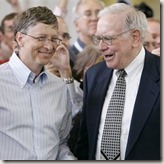
Bill Gates & Warren Buffett

By now you may have heard about The Giving Pledge. It is a movement started by Bill Gates and Warren Buffett to encourage other billionaires to pledge to give away at least 50% of their wealth. They want to encourage the richest people in the world to commit to charitable giving either while they are living or upon their passing. And they want each person or family who takes the pledge to make their pledge public and ask their peers to do the same. The goal: increased funding for philanthropy across the globe.

People taking the pledge are not asked to give to any specific charity or cause – they are simply asked to give. It is not a legally binding pledge but rather a morally binding one.

The idea grew out of a series of dinners hosted by Bill and Melinda Gates and Warren Buffet over the course of a year. Many of their peers have already made very substantial gifts and pledges. Now they are asked to publicly affiliate with others who are doing the same. The idea is for billionaires to inspire conversations with their peers about their giving, their intentions, and what they are learning through the process.

The impact will be felt for generations to come. When the Giving Pledge was announced earlier this month there were 40 billionaires who had signed on. These include 14 from California, 12 from New York, two from Texas and Georgia, one from Missouri and Michigan. Here are what a few have to say.

Michele Chan: Our passion, our mission is to transform health and health care, in America and beyond.

Tom Steyer and Kat Taylor: “We want to leave our kids a different kind of inheritance…we pledge the bulk of our assets to philanthropic activities carried out over the course of our lifetimes.”

Jim and Virginia Stowers: “More than 99% of our wealth will go to philanthropy during our lifetime or at death. We have already started our giving.”

Finally, here is what Vicki and Roger Sant have to say. “Our support of various not for profit organizations has given us enormous satisfaction particularly where we have been personally involved with the boards or committees of those institutions.”

We call special attention to their quote because it highlights the value people receive when they give their time and money. If you work or volunteer with an organization or institution do not be embarrassed to ask others to join you in giving their time, money and resources. Giving is an important part of life whether or not you are a billionaire. Think about this: you can make your own giving pledge. It doesn’t have to be 50% of anything. What it should be is a moral commitment you make to yourself. Do it. And ask others to join you. Together we are creating the world we want to live in.

To learn more about the Giving Pledge visit www.givingpledge.org.

Fundraising for Haiti – what you need to know

Clinton and Bush Raising Funds for Haiti

Disasters are a time when we come together to support each other as human beings. Plain and simple. It’s not about politics. It’s not about religion. It’s about people. Saving lives. Food. Medical care. Clean water. A place to sleep. Everyone is getting involved. President Obama has allocated $100 million via  USAID. Former Presidents Bill Clinton and George Bush are busy fundraising. And so are many others.

Disasters are also a time when Americans give generously as a country and as individuals, families, and local communities. We give and we fundraise. We also need to be paying attention to how we give, who we give to, and how we fundraise.

Here are some links you can check out for more information.

Advice on Giving to Haiti Support – guidance from the Better Business Bureau regarding how to make your gift to support Haiti.

Good Intentions Are Not Enough – learn the Do’s and Don’ts of Diaster Giving

Text and Give – how to give via text messaging. Includes a list of 21 different organizations you can give to via a text message. $16 million have been given via text messages as we write this blog!

Giving to the Red Cross – links for how to direct your giving

Updates on Giving to Haiti – stay up-to-date with information about giving and fundraising for Haiti. Information provided by the Association of Fundraising Professionals.

That’s it for now. And as always, remember to have a FUNdraising Good Time! You can make a difference.

Individual Donor Research – San Francisco Workshop

DERMajor Gifts on Limited Time: Using Research to Prioritize Prospects
Presented by Barbara Pierce
Friday, August 14, 2009, 12:00 to 1:30 p.m.
Development Executives Roundtable (DER)
Location: The Foundation Center, 312 Sutter Street, 2nd Floor, San Francisco
Co-sponsored by The Foundation Center

With so many responsibilities, how do you decide how to use your time most wisely? In this workshop, you’ll learn valuable tools to use in making time-efficient decisions about which prospects to focus on for the best results. We’ll discuss what prospect research can (and cannot) answer for you, where to start your search, tips on best research sites, an introduction to electronic wealth screening and finally, how to utilize the information you do find to cultivate and solicit potential donors.

About Barbara:
Since she was handed a list of 1,500 prospects at her first development job, Barbara has been an avid student of how to quickly identify the best prospects through research. Based in San Francisco, she is a development consultant with 15 years of experience in working with major gift prospects on gifts ranging from $10,000 to $1 million plus. She has worked with organizations including: California League of Conservation Voters, Planned Parenthood, Mills College, REDF (formerly The Roberts Enterprise Development Fund) and the George Lucas Educational Foundation. She can be reached at pierceconsulting2002@yahoo.com

Information/Registration:
Cost for Luncheon: DER members = $12, non-members = $20. Lunch is included in your fee. Because of DER’s special relationship with the Foundation Center, participants who wish to bring their own lunch can attend the meeting for no cost, but you still MUST register at the DER website. Please reserve by Wednesday, August 12 at www.dersf.org. Programs often sell out so don’t delay!

Are you a 50% Giver?

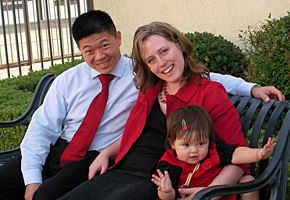
Hsieh Family Chooses to Give

Hsieh Family Chooses to Give

Bolder-Giving

“My wife and I decided to give away all our income above the U.S. median household income.” – Tom Hsieh

Do you know anyone who gives away 50% of their income? Believe it or not, people do. And they feel good. Read Tom Hsieh’s story.

Anne and Christopher Ellinger know 125 people who give away at least half of their income. They created Bolder Giving in Extraordinary Times to encourage bold giving.

“We live in a time of historic crisis and opportunity, when contributions of time and money could make a crucial difference.Yet most of us – even if well-off – give at a fraction of our capacity. Bolder Giving’s mission is to inspire us to give at our full potential by providing remarkable role models and practical support.”

Bolder Giving’s 50% Leagaue is one way they encourage more of us to give more.  You could be a millionaire and participate, or you have a much smaller income. The only requirement is that you have donated 50% or more of your income or business profits for at least three years, or 50% or more of net worth at some point in their lifetime, to causes that reflect your deepest values. (FYI, average U.S. giving is under 3% of income.)

“There’s nothing to counteract a feeling of scarcity like generosity.” – Anne Ellinger, founder Bolder Giving in Extraordinary Times

Read People who give half their money away in the SF Chronicle that inspired this blog

Passion, Creativity and Fundraising

Passionate Philanthropist

Vernon Foster: Passionate Philanthropist

When you work with a non-profit organization that is in line with your personal mission and values then everything is possible. Your creativity is sparked and you look to engage people with your non-profit and how you can advance its work.

Vernon Foster is an example of an individual who has combined his life passion with his philanthropy. A businessman who benefited from all that his father shared with him, Vernon has set out to offer to other young men what his father offered to him. After his father passed Vernon created the Charles P. Foster Foundation (CPFF) in his honor. The mission of the foundation is to assist African American youth, their parents and family members in leading meaningful, positive, successful lives and becoming productive citizens of society.  Vernon has worked to bring that mission to life by partnering with other people and organizations with a similar vision. He participates in collaboratives, has sought out national funding, and has begun piloting a model of what he would like to create – with others – to benefit young black men in the Bay Area.

For example, in 2001, Vernon donated 51 percent of the revenue from his company to CPFF for the purpose of providing jobs for graduates of the foundation’s Family Restoration Program and to help make the foundation financially self sufficient.

His most recent project is the publication of My Father Said: A Collection of Life Lessons. This book is another way that Vernon carries on his father’s legacy. It is designed for readers of all ages. Through the book Vernon brings to life his father’s message with stories from his childhood with his dad, photos and interviews with those who knew his dad. Throughout the book you will find life lessons from Charles Patrick Foster such as:

  • “Just because you go down the wrong road in life does not mean you can’t turn around.”
  • “If you speak the words, mean them, if not keep your mouth shut.
  • “Boy, here (in America) there is a recipe for everything to be successful. Your problem is you don’t want to follow the recipe.”

Vernon is offering his book as a gift to everyone who makes a gift the CPFF. You give to help advance the mission of the foundation, and the foundation gives you a gift to give to young people in your life. Visit the website at www.cpffoundation.org – give, get and give.

Ed McMahon and black history

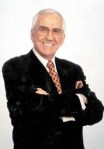
Ed McMahon - co-host of the Lou Rawls Parade of Stars

Ed McMahon - co-host of the Lou Rawls Parade of Stars

This week America mourns the passing of Ed McMahon an entertainment giant, household name, and trusted American icon. He is remembered by the general public for his 30 years as Johnny Carson’s side-kick on The Tonight Show, his 12 years as the host of Star Search and his 16 years co-hosting TV’s Bloopers and Practical Jokes with Dick Clark.

He earned a place in American cultural history. And he earned a place in African American history.

As the creator and producer of the United Negro College Fund (UNCF) Lou Rawls Parade of Stars telethon I want to salute Ed McMahon for his work as the show’s co-host for over 17 years.

From the very beginning Ed lent his name, his prestige and his connections to the telethon. His role as co-host helped UNCF raise over $500 million and helped send thousands of young African Americans to college.

McMahon shared his celebrity, his reputation and his integrity with the telethon. His involvement helped to bring well established non-black entertainers onto the show giving it a “Good Housekeeping Seal of Approval.” His continuous role as co-host helped to extend the college fund into white homes who otherwise might have dismissed the telethon – and its important work of raising scholarship funds – as a “black thing.” Ed brought a diverse audience to the telethon. He gave the show credibility. He helped make the education of young black students an issue for all Americans to embrace.

When we wanted to engage a non-black entertainer Ed would make it happen. He would come into a room where we were meeting, pull out his little black book and personally call the entertainers we wanted on the show. He would ask and they would say yes.

You can’t buy what Ed McMahon gave. He was flexible and patient. He never asked for special treatment. He didn’t have an ego problem. He was a consummate professional. You could put a new script before him and he would read his lines as if he had been practicing for weeks.

He was so well liked by all. Of all the hundreds of stars who appeared on the show he was the easiest person to work with. He would spend enormous hours rehearsing. He never complained about all retakes and retaping. His famous line was “Point me where to go and I’ll do it.”

Ed McMahon is part of African American history!

Help is on the way

San Francisco Foundation logo

San Francisco Foundation's new non-profit transitions fund

If your organization is grappling with whether or not to merge with another organization or close altogether, you are not alone. The current economic climate is posing many challenges to the very existence of some organizations. For many donations are down, grants are smaller or postponed, and government funding that used to be relied on may simply no longer be available.

If your organization is grappling with difficult issues due to the downturn in the economy, there is help. The San Francisco Foundation has created a new fund called the Nonprofit Transitions Fund to help organizations reduce costs, increase productivity, merge, dissolve, or reorganize. The following is a list of the activities they are prepared to support.

  • Back office collaborations (including rent, equipment, group insurance joint purchasing, and centralizing human resources, payroll, and benefits administration and financial and grants management). Such collaborations can reduce operating and administrative costs.
  • Merger, acquisition or consolidation
  • Dissolution (voluntary/involuntary)
  • Bankruptcy or reorganization
  • Post-merger integration or closure costs
  • Service delivery joint ventures

If your organization would benefit from any of these activities you may want to consider completing the Foundation’s short and straightforward application form. You will be asked to identify which activity your organization is considering, the efforts you have already made in pursuing such an option, and what condition or situation is triggering this consideration. The application is online at http://www.sff.org or you can call (415) 733-8527.

All applications will be reviewed and select organizations will be asked to submit a more detailed proposal. That proposal will ask you to communicate information such as:

  • Evidence of buy-in from staff, board, and constituencies
  • Clear and realistic expectations of benefits/risks
  • What niche or role your organization(s) serves locally or regionally
  • An understanding of your organization’s relative competitive position and its financial strengths

If you are considering a merger, the Foundation will want to know about mission compatibility between the two or more organizations and the extent of a cultural fit, including board and staff compatibility. You should also be prepared to communicate your awareness of obstacles such as asset restrictions, endowment/bequest issues, current liabilities, deferred revenue, and other legal barriers.

While economic conditions may be the driving force behind these considerations, some organizations may become stronger and more effective by pursuing difficult choices.

There are a lot of things to consider and help is available.

Copyright 2009 – Mel and Pearl Shaw

Perspectives on philanthropy

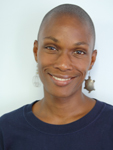
Cedric Brown - Director, Mitchell Kapor Foundation

Cedric Brown - Director, Mitchell Kapor Foundation

Changes in the economy, the stock market and employment rates impact non-profit organizations and the foundations that provide funding to them. We posed a few questions to Cedric Brown, director of the Mitchell Kapor Foundation related to these changes.

1. How is the current economic climate impacting giving by Foundations?
The endowments and total assets of many foundations have “taken a hit,” a term I’ve heard repeatedly around the philanthropic community. This means that many foundations, like nonprofits, are re-examining and scaling back to most-essential programs and administration.
The recession has had a mixed effect on the grant monies that foundations are giving out – some funders are scaling back, while others see the need to make even more grants in order to help nonprofit organizations to sustain their work in these uncertain times.

2. What gets your attention in a positive way when you are reviewing proposals?
The best grant requests are concise, giving as much information as possible in as few words as possible. Additionally, I appreciate grant requests that outline the overlap between the grantseeker’s work and the funder’s priorities. I’m also intrigued by new ideas, in thoughtful expansion plans for effective work, and in collaborations between organizations.

3. What gets your attention in a negative way when you are reviewing proposals?
It’s vital to read the funder’s guidelines and follow the directions! I’ll admit that I initially scan grant requests to make sure that the work aligns with our funding priorities. If it’s off, I’ll know in a matter of seconds and will discard the grant request. I’m also biased against typos, poorly-written requests, and overly-written requests – that is, proposals stuffed with lingo and flowerly language.

4. What is the one piece of advice that you would offer to a non-profit that is considering applying for a grant?
I advise nonprofits to do three things before applying: 1) read the potential funder’s website to learn about their funding priorities and their application process; 2) call a program officer to briefly discuss whether or not your work is a good match for the foundation (and don’t try to make it fit if it isn’t); and 3) have someone else read and edit your written materials to make sure that it sounds coherent before submitting it to a funder.

5. What is an example of a project you funded that exceeded expectations?
We work with so many fantastic organizations that I’m hard-pressed to choose one. Overall I’ll say that my grantmaking has largely been an investment in dynamic and competent leadership combined with a solid work plan. So in this respect, nothing has surprised me.

I am pleased, though, that we were an early supporter of Van Jones’ work on green jobs (through Ella Baker Center and Green for All), which he’s taken from Oakland to the New York Times bestseller list to the White House!

 6. What would happen if an organization did not accomplish what it said it would do when applying for a grant? Does that automatically mean they could not get another grant? How is this handled?
While I believe in accountability, I also believe in being flexible and reasonable. Nonprofits (and foundations, too, for that matter) are subjected to changing information and conditions that can re-shape their ability to accomplish their original goals. I think adaptability is an important trait to possess, allowing community organizations to appropriately adjust their work and expectations. But it’s critical for nonprofits to talk with their funders about substantial changes, not to seek “permission” or to “spin” (which is very transparent and annoying), but to say “This is what we’ve encountered and this is our response. What advice do you have to give us?” This way the nonprofit can appropriately involve the funder in the re-strategizing.

In my experience, the majority of nonprofits accomplish much of what they set out to do. It may be a different product in the end, but most do good and worthy work. Of course, there are the occasional “wayward” organizations; I have no qualms about cutting them off and chalking it up to a lesson learned about what NOT to do.

7. Are there any other comments or information you would like to share with our readers?
Small, startup nonprofits are going to have a very difficult time securing support in this economy. There’s a feeling in the nonprofit and foundation sectors that too many nonprofits exist. My best advice is that if you’re thinking about starting a nonprofit, first make absolutely sure that nobody else is doing what you’re proposing to do. If there are similar programs, ask how you might work with them to help deepen or expand their reach, rather than starting a new effort altogether.

Learn more about the Mitchell Kapor Foundation at www.mkf.org.

Learn about grantwriting from a former program officer!

darlenehallTake advantage of this new NONPROFIT FUNDRAISING WORKSHOP SERIES. Here’s your chance to learn in a small group, interactive setting about what makes a proposal stand out. Learn how to frame your story, and how to get to know foundation staff given the cultural and power dynamics impacting relationship building. Learn from Learn from Darlene Hall a former program officer of color with 6 years experience in philanthropy at family and community foundation.

Community-based workshop locations in San Francisco and Oakland, California.

Workshop 1: Writing Your Best Proposal in April
April 2, 14, and 21 in San Francisco
April 15 and 23 in Oakland

Workshop 2: Building Relationships with Funders in May
May 7, 12, 19 in San Francisco
May 13 and 21 in Oakland
Costs:
• $40 for one workshop/$70 for both workshops
• Limited space! Sign up today!

Call Darlene A. Hall, Ph.D. at Intersections Conulsting for more information at 415.297.7265 or email her at
IntersectionsConsulting@gmail.com

Darlene brings 20 years experience in the nonprofit and philanthropic sectors that crosses several fields including mental health, teaching/training, youth development, social justice and social services, and sports/athletics.