Tag Archives: fundraising

Statements fund development professionals hate to hear

Part one in a two part series.
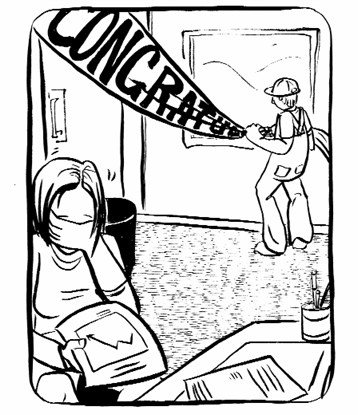
congratsDo you wonder why you can’t keep development staff? Maybe it is “their fault.” Or maybe your expectations have people running for the door. Here is a short list of things executive directors and college presidents have been known to say that get development staff running to monster.com. Do you hear yourself in these comments? What can you do to change?

  1. “Let my assistant to arrange a time for us to talk.” This is a favorite because it often takes weeks to secure an appointment.
  2. “Once you have done your homework, call me and I will close the deal.” Does this make any sense? How many nonprofit leaders are so sought after that their presence at the point of solicitation will “close the deal?”
  3. “It’s your job to raise the money.” This belief is a luxury no executive can afford. Regardless the number of development professionals employed, you are the chief fundraiser. Your staff’s ability to raise money requires your active participation.
  4. “I want you to make at least 20 calls a week. Another favorite. Who will your staff call, who will want to talk with them, and what are they calling donors about?
  5. “I want you to chair the homecoming dance committee.” There are many variations on this theme: all pull development staff away from fundraising. Unless there are clear revenue goals keep your development staff out of events.
  6. “Have you asked the board members for their gifts?” Major red flag. Expecting staff to solicit board members is a recipe for low giving. This is the responsibility of the board chair or chair of the board development committee.
  7. “You don’t need to know my travel plans.” This closes the door to fund development and fundraising opportunities. Your staff can suggest visits to current or potential major donors and influencers, help coordinate a friendraiser, or a visit to a foundation or corporation who funds nonprofits similar to yours.

Other favorites include:

  1. “I want you to raise 50% more than you did last year.”
  2. “I’m launching the campaign in spite of what the feasibility study says.”
  3. “We don’t need to be spending money on a feasibility study.”
  4. “I underestimated: we have a short fall of 20% that you will need to raise.”
  5. “I want you to represent me at the chamber meeting.”
  6. “I want you to make the case before the community foundation, I need to be at the Save the Duck conference in Idaho.”
  7. “What should be our fundraising priorities be for this year (this campaign?)”
  8. “Who were our top five donors last year?”
  9. “Send me an email about your fundraising plans.”
  10. “Tell me, who is currently on the development committee.”
  11. “I don’t want you talking to any board members.”
  12. “I need to cut the budget by 10% – that includes your department as well. And I need you to raise an additional 15%.”
  13. “I’m sorry, you will have to host our VIP guests.”
  14. “I think we can do the campaign without an increase in staff or budget.”

Statements like these drive development professionals crazy, contributing to high turnover. If you don’t know why these statements can put your organization or institution at risk ask your development staff. If you’re not that brave, ask a peer who is a successful fundraiser.

Next week: things development professionals say.

Mel and Pearl Shaw are the authors of “Prerequisites for Fundraising Success” and “The Fundraiser’s Guide to Soliciting Gifts.” They provide fundraising counsel to nonprofits. Visit them at www.saadandshaw.com. Follow them on Twitter: @saadshaw.
 

How to use business cards as a prospecting tool

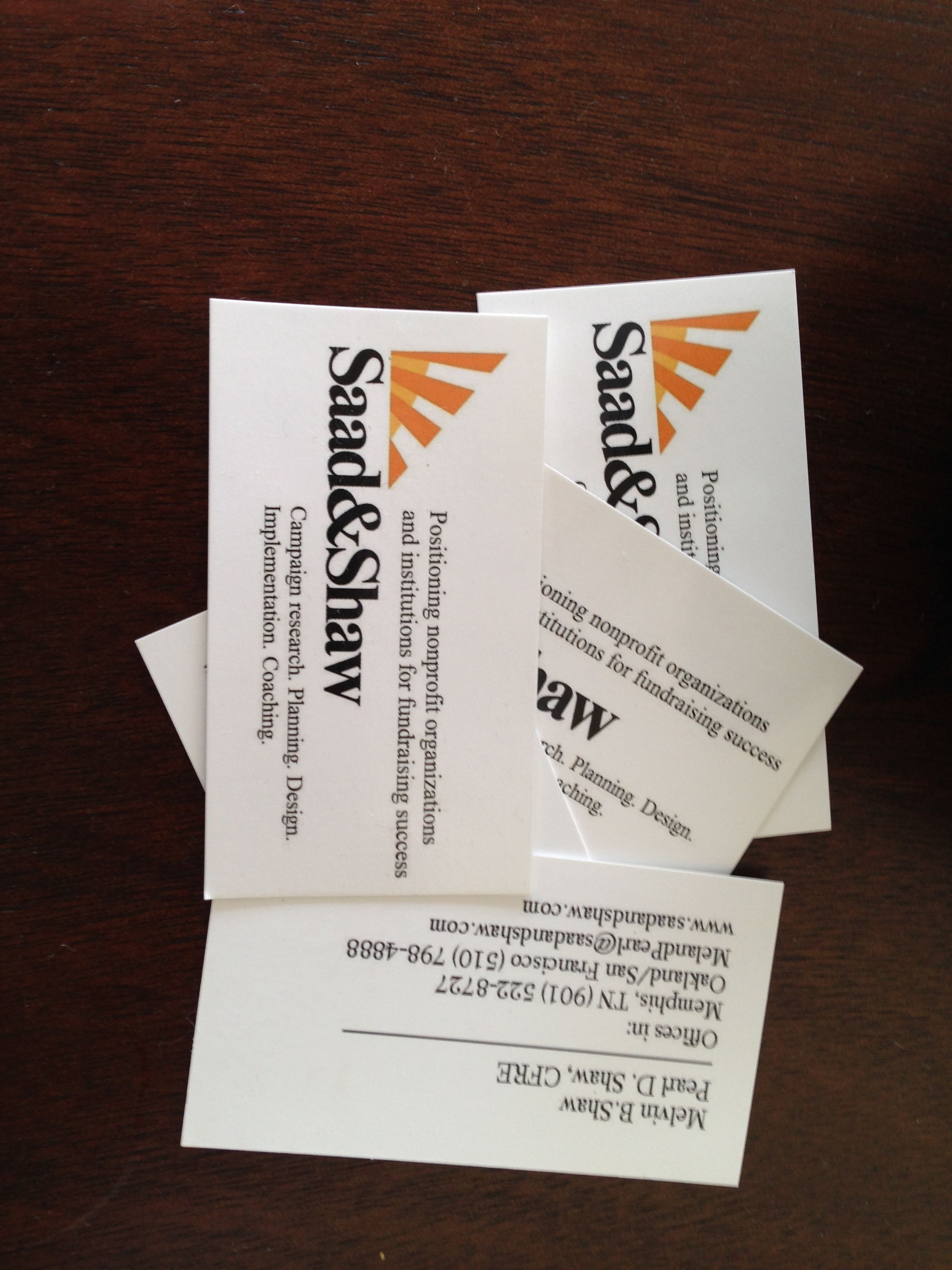
mprove your relationship w your development director: idea for joint prospectingNonprofit CEOs, board chairs, and college presidents are constantly out and about meeting people and picking up business cards. Here’s what we know: you can use those cards to stack the deck in favor of your fundraising success. Business cards also hold the key strengthening your relationship with your development director or vice president for advancement. Our recommendation is tried and true: collect the cards, when you have a moment at the end of the day write short notes about each of your meetings. Send the notes and a photo of the cards back to your staff when you are on the road. Or submit them when back in the office. This gets the names, contact information, and notes about relationships and opportunities into your database. Next step: partnering with your development person.

Call a debriefing session with your development director or vice president. Review each of the business cards you collected. Share with her the key insights you learned from each of your meetings. Working together, prioritize next steps for how to engage each person you met. Some follow up items are simple: sending a report or web resource you discussed; making an introduction; ensuring an invitation to upcoming events is sent. Others are more complex. Perhaps one of the people you met with could assist in evaluating a partnership you want to pursue. Maybe you met a corporate manager who wants to engage her employees in a day of service at your nonprofit. Determine who is responsible for taking the relationship to the next level and by when. Set check-in and follow-up dates with each other and keep them.

This practice gives you a “door opener” for regularly meeting with your development person, a way to be actively engaged with her in developing new relationships and partnerships. You are sharing contacts and information with her – “bringing something to the table” instead of always asking her how much money she has raised. You are increasing the prospects you both can work with, sharing some details of your work, and creating an opportunity for the two of you to strategize together. This process can be a stimulus for new ideas and perspectives. You can work shoulder to shoulder, learning from each other, co-creating goals and opportunities, and making commitments to each other regarding how to follow up with and engage the people you have met. It can energize you, expand your mind-set and help build a culture of fundraising.

Here are two truths about business cards and fundraising: a card can’t open a door if its sitting in a pile on your desk. Your development person can’t turn a pile of cards into relationships. The two of you need to work together, be creative, and follow up.

Mel and Pearl Shaw are the authors of “Prerequisites for Fundraising Success” and “The Fundraiser’s Guide to Soliciting Gifts.” They provide fundraising counsel to nonprofits. Visit them at www.saadandshaw.com. Follow them on Twitter: @saadshaw.

Are you begging or fundraising?

Are you begging or fundraising

Fundraising is a noble profession. As a fundraiser you meet some of the best people around. You provide people with information and opportunities that allow them to pursue things that are important to them: “things” that really can’t be bought. You can’t buy an end to world hunger, gun violence, AIDS or domestic violence: you have to give. When you ask people to give you bring people together with projects, programs and institutions that align with their beliefs. You help people realize some of their highest aspirations.

Money doesn’t change the world: it funds organizations and institutions who bring together people who change the world. Giving – and knowing which organizations to give to – is vitally important. And that’s where fundraisers come in. Whether as a professional or a volunteer, fundraisers are bringing together people, resources and organizations so that visions can become reality.

Fundraising is far from begging and yet that is the message too many of us have internalized. We hesitate to ask others to give to nonprofits we believe in. We think of ourselves as “beggars” and unconsciously teach our children that fundraising is begging. Think about the language we use: “Oh, they’re always begging for money.” Or, “I can’t even go to church without all that begging.” Or, “he’s always trying to get his hand in my pocket.”

These negative messages keep us from feeling confident when inviting others to join us in giving. If you feel negative it is hard to inspire others. Sometimes the negativity comes from not knowing how to answer questions people may ask. That can be fixed – read up on the organization and ask for support in role playing.

Here are some other considerations. Maybe you feel insecure asking for money for yourself and you project that onto soliciting gifts for a nonprofit. Maybe you feel uncomfortable talking about money, period. The feeling of “begging” can arise when soliciting people who are not your peers. That can put you in a “one down” position, and bring up feelings of powerlessness or resentment. To cure this, we suggest asking people who are of similar financial means to you.

Maybe you are afraid of rejection. We have a cure for that too: remember, if someone doesn’t give they are not rejecting you. They may not have the money. Or, your project may not be the one they want to give to. People have different priorities. Finally, you may not want to ask because then you will feel obligated to “return the favor” and you don’t want to be beholden to anyone. These are all reasonable fears. But they can be overcome. Look at what’s driving your behavior and learn how to overcome your fears and become a driving force in fundraising.

Image courtesy of imagerymajestic / FreeDigitalPhotos.net

Mel and Pearl Shaw are the authors of “Prerequisites for Fundraising Success” and “The Fundraiser’s Guide to Soliciting Gifts.” They provide fundraising counsel to nonprofits. Visit them at www.saadandshaw.com. Follow them on Twitter: @saadshaw.

Six Things You Can Do As a Board Member

InitiativeCalling all nonprofit board members: Do you sometimes wonder what value you bring to the nonprofits you serve? Do you wish you were more engaged, or that “they” took more advantage of the talents you bring to the board? We have the solution for you: take initiative! Don’t wait for someone to ask you to get involved.

Here are six things you can do between now and the next board meeting to energize yourself and your fellow board members. Choose one or more that sounds like fun to you. Each can help engage new supporters, increase awareness and raise money. These tips work if you are involved with university, a grassroots organization, or any size nonprofit in-between.

First, write a thank you note or personally call a donor to thank them for their gift. Allocate five minutes for the conversation. Ask what encouraged them to give and what attracts them to your organization. Listen. Respond to any questions they may have. Thank them again.

Second, invite a potential supporter to visit the organization’s facilities and observe its programs. Agree on a date and time to meet at the nonprofit and tour together. Request that a staff member join you – one who can share information and answer questions.

Third, visit staff members to get to know them and ask “what can I do to help?” Follow through on what you learn.

Fourth, have lunch with a fellow board member to discuss how the two of you can work together to increase awareness or raise funds. Hatch a plan that can be implemented without staff involvement. Follow through on your ideas.

Fifth, make arrangements to speak before a local organization to share information about your nonprofit. It could be your church, the rotary, or your book club. Keep your comments brief and engaging.

Sixth, host a small fundraising event. Invite a few close friends and associates to your home or office for coffee or an evening glass of wine. Spend five minutes sharing information about the nonprofit you serve and ask each guest to make a gift equal to or greater than your gift.

Before implementing these suggestions, take a moment to identify the three things you want to communicate about why you give your time and talent to serve on the board. Share these in conversation or through your presentation. Let people know you are accessible if they have questions in the future, or if they want to get involved. Share your contact information. Bring a simple brochure to share.

Anyone of these activities will extend the reach of your nonprofit. They will energize you. You will have something new to report at the next board meeting. Don’t wait for someone to “assign” you to a task. Jump in!

Image courtesy of Stuart Miles / FreeDigitalPhotos.net

Mel and Pearl Shaw are the authors of “Prerequisites for Fundraising Success” and “The Fundraiser’s Guide to Soliciting Gifts.” They provide fundraising counsel to nonprofits. Visit them at www.saadandshaw.com. Follow them on Twitter: @saadshaw.

Four Benefits of a Comprehensive Fundraising Campaign

Part one of a two part series

comprehensive fundaraising campaigns,  annual campaign, capital campaign, comprehensive campaign, coordinating fundraising campaigns, fundraising, fundraising campaig, how to grow your fundraising, nonprofit campaigns

Do you need to raise money for your nonprofit? If you answer “yes”, you are in good company. Fundraising is critical for most nonprofits and it takes time to build relationships that generate the revenue needed to operate. Organizing your fundraising into a campaign with specific financial goals and timelines is one way to focus on revenue and invite others to join you in fundraising.

The most common campaign is the annual campaign. This is a campaign to raise funds for annual programs and operations. Funding may come from foundation or corporate grants, individuals and families, events, and/or government sources. Gifts may be large or small. Another type of campaign is the capital campaign. This is a campaign to raise funds for assets such as buildings, equipment, furnishings or an endowment. The financial goal is typically such that it cannot be paid for with an increase in annual funds. It is a milestone occurrence within the life of the nonprofit that requires major investment. A major gifts campaign refers to a campaign to raise funds through large gifts. Unlike the other campaigns, funds may be used for multiple purposes as the name refers to the types of gifts a nonprofit seeks to secure. A comprehensive campaign is a campaign that coordinates multiple campaigns into one.

A major benefit of conducting a comprehensive campaign is that it focuses an organization’s energies into one campaign with multiple goals and revenue sources. It reduces confusion amongst prospective donors, allows them to make a one-time decision on how to support your diverse needs, and reduces duplication of efforts on the part of the nonprofit. For example, if you are raising funds for annual needs and simultaneously raising funds for a building you may find that an annual solicitation was made of an individual with the capacity and interest to give to your capital campaign. If the two campaigns are not coordinated you may receive a meaningful annual gift, but lose the opportunity to ask for a gift that combines annual and capital giving. Returning to donors multiple times within a year is not always possible, and the donor may have thought the first solicitation represented your needs for the year.

A comprehensive campaign also allows donors who give small gifts to feel a part of a major campaign. The value of their annual giving is made clear through campaign marketing messages and they are encouraged to be a part of the larger campaign as well. With a larger financial goal a comprehensive campaign can create buzz and excitement that re-engages lapsed annual donors, or encourages annual donors to increase their giving. A comprehensive campaign is not “business as usual” and that excitement can attract new donors and fundraising volunteers.

Next week: comprehensive campaign challenges.

Mel and Pearl Shaw are the authors of “Prerequisites for Fundraising Success” and “The Fundraiser’s Guide to Soliciting Gifts.” They provide fundraising counsel to nonprofits. Visit them at www.saadandshaw.com. Follow them on Twitter: @saadshaw.

Four Ways to Grow Your Alumni Association

Part two of a two part series on alumni fundraising

Four ways to grow your alumni association

Alumni associations offer memberships and raise funds for the colleges and universities they are associated with. Many are independent nonprofit organizations, others operate as part of the institution’s alumni relations department. Some colleges have both an alumni relations department and an independent alumni association. Sometimes alumni fundraising efforts are coordinated, sometimes they are haphazard, and other times there is overt conflict between alumni and their alma mater. In our work with colleges and alumni we witness the good, the bad and the ugly. Here are four suggestions for how to grow your alumni association’s fundraising program.

First, open communication between alumni and college leadership is a must. If you are an alumni leader we recommend regularly scheduled meetings with the president or chancellor Develop a relationship. Learn his or her vision for the institution. Ask questions. Explore ways in which alumni can partner to advance the vision. Most importantly learn the president’s fundraising priorities and expectations of alumni as donors. Share the concerns and interests of alumni. Most importantly find common ground. Differences of opinion will always exist. Move beyond those to create a shared vision that strengthens the relationship between alumni, their alma mater and current and future students.

Second, don’t confuse membership and fundraising. Purchasing an alumni association membership is the first step not the only one. In general membership provides networking opportunities with other alumni and benefits such as discounts and access to events. Giving to your alumni association – or to your alma mater through the alumni association – is how you provide financial support for the institution and current/future students. When giving to your alumni association ask what your gift will support. If you are responsible for soliciting alumni, make sure your solicitations clearly communicate the use of funds. Let your members know when they are supporting the work of the association and when they are supporting their alma mater. Be transparent.

Third, before launching a meaningful alumni giving program conduct a feasibility study to learn how alumni want to be engaged, what they want to give to, what is important to them in their relationship with their alma mater, and why they don’t give. Just because you think something is a good idea doesn’t mean alumni will give.

Finally, when engaging recent college graduates encourage giving that is appropriate for early career salaries. Be aware of the financial impact of student loan payments. Remember that alumni who are the first in their family to obtain a college degree who may be supporting other family members. Offer opportunities for engagement such as assisting with student recruitment, serving as a mentor for a potential or current student, hosting an event, or volunteering at an on-campus or local college event.

Mel and Pearl Shaw are the authors of “Prerequisites for Fundraising Success” and “The Fundraiser’s Guide to Soliciting Gifts.” They provide fundraising counsel to nonprofits. Visit them at www.saadandshaw.com. Follow them on Twitter: @saadshaw.

Black Gives Back

Tracy Webb, women fundraisers, women philanthropists, next generation philanthropists, African American philanthropy, fundraising, BlackGivesBackIf you want to challenge your thinking on the relationship between African Americans and philanthropy you need to follow BlackGivesBack.com. Founded by Tracey Webb in 2007, BlackGivesBack.com takes the stereotype of African Americans as the recipients of others’ philanthropy and illustrates – with images and words – that African Americans are busy giving to diverse causes.

We met with Webb this past fall, and followed up with her recently, asking about the driving force behind BlackGivesBack. “I grew tired of not seeing the rich stories of African American giving in the media. We’re often stereotyped as recipients of philanthropy when in fact we give away 25% more of our income than whites. This has been documented by the W.K. Kellogg Foundation’s Cultures of Giving report published in 2012. Black giving is what created many churches and institutions still in existence today.”

An active donor, Webb is also the founder of Black Benefactors, a giving circle in Washington, DC. She gives and encourages others to join together and increase the impact of their giving. “I have learned that while we want to give back, we may not have the knowledge on where to start or how to do it effectively to create desired change. By joining a giving circle, you can learn more in depth about needs in your community and how to give more strategically. I have observed in the past few years that this type of collaborative giving model is on the rise, especially among millennials.”

“One event that I have found inspiring is the annual Community Investment Network (CIN) conference. CIN is an organization that provides support and resources to giving circles in communities of color. As the founder of a giving circle, there’s something powerful about being surrounded by grassroots givers – everyday people committed to giving back in their communities. They are celebrating their 10th anniversary this October in Raleigh, North Carolina.”

Webb was inspired at an early age. “Philanthropists that are the most inspiring to me are my parents and family. I grew up in a family of givers and I was never told to give back. I learned it from watching them. I’m about to embark on researching my family history and I’m excited to learn more about the giving of my ancestors. I’ve heard some amazing stories!”

Webb is busy growing BlackGivesBack. “My hope and vision for BlackGivesBack.com is to revamp the site with new features and expanded content. I want it to serve as a hub for learning about issues impacting our community and the organizations and individuals committed to addressing them. And as our buying power continues to increase, I hope that readers will include giving in their family budget to support non-profit organizations in addition to their place of worship.

Learn more at www.BlackGivesBack.com and www.thecommunityinvestment.org.

Mel and Pearl Shaw are the authors of “Prerequisites for Fundraising Success” and “The Fundraiser’s Guide to Soliciting Gifts.” They provide fundraising counsel to nonprofits. Visit them at www.saadandshaw.com. Follow them on Twitter: @saadshaw.

Is your nonprofit meeting the needs of your community?

Meeting the needs of the community, fundraising, nonprofit, evaluation, community needs“What do you do when an organization wants to raise money, but there really isn’t a need for the organization?” That was the question we were asked recently. We were taken aback by the bluntness, but recognized its value. Here are our thoughts.

Most people we meet believe passionately in the organizations they are involved with. They see the impact being made and want it to continue. The challenge is to step outside of the organization and look at it within the context of the community. Are there other organizations now offering similar, competing, or more effective services? Is the need for your nonprofit as great as it was ten years ago? Have demographic shifts increased or decreased the need for your work? Have new needs emerged within the community that require funders and individuals to reallocate their giving?

The needs that nonprofits respond to and advocate for change over time. And the priority that others place on our needs change. Some changes we can anticipate, others we can’t. Sometimes we are proactive, and sometimes all we can do is react and retrench.  Because of this each organization needs to periodically assess its role within the community. What – if anything – do you need to change? Which organizations are you competing against? How could you be more effective? Ask donors and funders. Ask those who support you and those who have never provided funding.

Nonprofits who have received federal funds either directly or indirectly know about decreasing revenue streams. Grants have been decreasing and disappearing for a long time now. Continuing to cut programs and services and make do with less is one way to address this market challenge. Another is to look to collaborate, partner and as appropriate merge organizations. You may need to restructure how you provide services. You may need to be bold and launch a major fundraising campaign. Consider engaging your board in a dialog that looks beyond “how do we get through this fiscal year?” to asking deeper questions about how the organization can best serve its market.

Here is the hardest question: is your nonprofit relevant? Does it really meet a need? Even if you are successful with your fundraising, could the funds invested in your organization better benefit the community if invested in another nonprofit? If you are a new organization: were your founding assumptions accurate? If you have a history of service, are younger organizations better able to meet emerging needs? Don’t be afraid to ask these hard questions: doing so may open new doors. Assuming that your organization should continue to exist – without testing those assumptions – may prevent you from being of greatest value to those you serve. Only you and your board can provide the answers.

Image courtesy of xedos4 / FreeDigitalPhotos.net

Mel and Pearl Shaw are the authors of “Prerequisites for Fundraising Success” and “The Fundraiser’s Guide to Soliciting Gifts.” They provide fundraising counsel to nonprofits. Visit them at www.saadandshaw.com. Follow them on Twitter: @saadshaw.

How to engage funders in a meaningful mutual conversation

 fundraising, cultivation, soliciting, fundraising tipsAs you  prepare for your next meeting with a current or potential donor, funder or sponsor we suggest focusing on what you want to learn from the meeting. This is distinctly different from a focus on what you want to share. Of course you need to be prepared to discuss the accomplishments, challenges, and vision of the nonprofit organization or institution you represent. But that is not enough. As you prepare determine what you want to accomplish as a result of the meeting, which three pieces of information you want to share, what you would like to learn, and how you can engage the person you are meeting with.

Here’s what you don’t want: a one-sided meeting where you share all the wonderful things your nonprofit has accomplished followed by an ask for a gift or involvement. You definitely don’t want a meeting where you talk about all the challenges that are threatening your nonprofit. Even if you were to walk away with a big check, we believe you would have neglected to secure the most valuable resource: the birth or growth of a mutually beneficial relationship.

Here’s an alternative: Engage your current and prospective donors in meaningful conversation. Think about it this way: if you were going out to lunch with a friend, would you want to spend all of your time hearing about how wonderful she is? Wouldn’t you want her to ask about you, your successes, your challenges? Maybe you want the opportunity to congratulate her on her successes, to connect her with likeminded men and women, or to offer guidance for how she can grow to the next level. If she does all the talking, you leave without having shared your suggestions for how she can experience even more success.

Here are a few questions you can consider including in your conversation: From your vantage point, what do you see as our strengths? Our challenges? How does our work fit with what you are seeking to achieve through your philanthropy? Do you have suggestions or guidance you could offer on how we could sustain and grow our organization? What trends are you seeing nationally? How are these manifesting in our community?

Practice having a conversation with another member of your board or a fellow volunteer. Make a video so you can review your presentation and make appropriate adjustments. Practice until you like what you see and hear. Leave room in the conversation – and in your heart – for guidance and suggestions. Know when to be quiet. Listen.

The more people feel they can help you succeed the more successful you can be. You can accomplish more with others than you can on your own.

Image courtesy of Ambro / FreeDigitalPhotos.net

Mel and Pearl Shaw are the authors of “Prerequisites for Fundraising Success” and “The Fundraiser’s Guide to Soliciting Gifts.” They provide fundraising counsel to nonprofits. Visit them at www.saadandshaw.com. Follow them on Twitter: @saadshaw.

Young Women Philanthropists

Young Women Philanthropists, Saad and Shaw, Philanthropists

Photo credit: Young Women Philanthropists

We were recently inspired by a group of young professional women who came together on a Saturday morning to discuss fundraising for their upcoming conference. These women were under 40, energized, and engaged. They were getting ready to launch their sponsorship program and wanted guidance regarding how to solicit.

We appreciated their reaching out and inviting us to meet with them. During our time together they discussed conference goals and content, brainstormed potential sponsors, and practiced role playing. They closed with a list of action items and a date (the following Wednesday!) for their next meeting. All this was accomplished in less than 90 minutes. These are women of action.

We were inspired to be in their presence for a number of reasons. First, they launched their inaugural conference in 2013 in response to their need for a way to connect with other young professional women, to learn from women who are a bit more established in their careers, and to create a supportive environment of like-minded women here in Memphis. They called their conference the Modern Day Woman Conference (MDWC) and it was a great success with over 200 women attending. The 2014 conference topic is balance: how do we create balance in our lives? How can we grow in our careers, be active in our communities, and enjoy our roles within our families? These are questions women of all ages grapple with. Too often we grapple with them as individuals, or with a small circle of friends. The MDWC 2014 creates a public forum for the discussion.

The conference is organized by Young Women Philanthropists (YWP) an auxiliary of the Women’s Foundation for a Greater Memphis. Here’s how they define themselves on Facebook: “We are young, energetic, professional, resourceful, confident, family-oriented, insightful, influential, persuasive women committed to learning, contributing, and owning… PHILANTHROPY!!”

We love that! They focus on educating, empowering and training the next generation of philanthropic women leaders through active participation in fundraising. “We are training today to fill the shoes of the more experienced philanthropists tomorrow.”

This racially diverse group of women is busy setting their agenda, helping to create the city they want to live and work in, and giving back. They are supporting each other, and looking to women who are a bit more experienced in life, work and philanthropy to help guide their growth. We share their story to inspire you to join with others in creating community solutions.  If you are under 40, you are the future of your community and our country. We need your collective engagement. Claim the title of “philanthropist” – one who loves humanity – and join with others in creating the world you want to live in.

Learn more about young women philanthropists at www.wfgm.org.

Like them on Facebook

Mel and Pearl Shaw are the authors of “Prerequisites for Fundraising Success” and “The Fundraiser’s Guide to Soliciting Gifts.” They provide fundraising counsel to nonprofits. Visit them at www.saadandshaw.com. Follow them on Twitter: @saadshaw.