The best and the finest

In less than 24 hours we ran into or communicated with five people we admire who help make our world a better place. Let us introduce you to Melanie DeMore, Sally Baker, Linda Dails, Theodora Lee, and Charles Simpson.

Melanie DeMore

1. Melanie DeMore.  This singer/songwriter/conductor teaches music to children. Hundreds of them. She’s reached thousands over the years. We ran into her the other day in Oakland, CA and she shared about the Christmas pagent at her school and how it is okay for any child to play any part. That means a boy can play Mary, a girl can play Kind Herrod. There can be two girls playing Mary and Joseph. A small but radical notion. What artificial barriers have kept you from pursuing your dreams? Let ’em go and get ready to grow in 2010.  Learn more about Melanie.

2. Sally Baker. WEE POETS is Sally’s baby. She birthed this cable program 27 years ago and continues to encourage young people to improve their reading, writing, public speaking and self-esteem. Young people read their origianl poetry on TV. They can also serve as technical interns on the show. Taking a quick peak on the internet to learn more about Sally we found that as of 2005 WEE POETS had reached over 27,000 children and trained more than 370 interns, 95 percent of who subsequently major in broadcasting. Go Sally! 

3. Linda Dails. Linda has worked at the Bay Area Black United Fund for 17 years. She is the backbone of the organization, an unsung hero. And as of Friday a married woman! That’s right, Linda married her long-time love Marcus Stewart! Here’s to Mr. & Mrs. Stewart. 

Theodora Lee

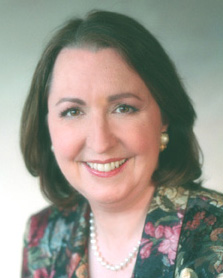
4. Theodora Lee. A talented and experienced attorney Theodora is also a community leader. She credits her parents for her drive saying “to whom much is given, much is expected.” Her parents are retired teachers and the publishers of the Dallas Post Tribune. Theodora serves on the  Board of Directors of the Yerba Buena Center for the Arts, Bay Area Legal Aid and the UNCF Northern California Board. She is a woman of power!

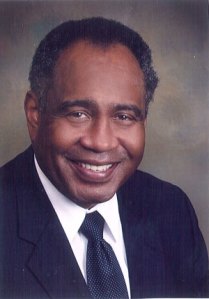
5. Charles Simpson. This father of two is a long-time football and baseball coach. Year after year he commits himself to the boys and young men of Phlugerville, TX giving of his time and talent. Last week he traveled to Florida to watch the PopWarner League finals and learn more about what makes a winning team. His goal: bring it all home to the young people he coaches. Go Charles!

6. You. Where would we be without you? You make the world a better place. Keep at it! We support you and salute you! Here’s to a great 2010! Have a FUNdraising Good Time!

Mel and Pearl Shaw

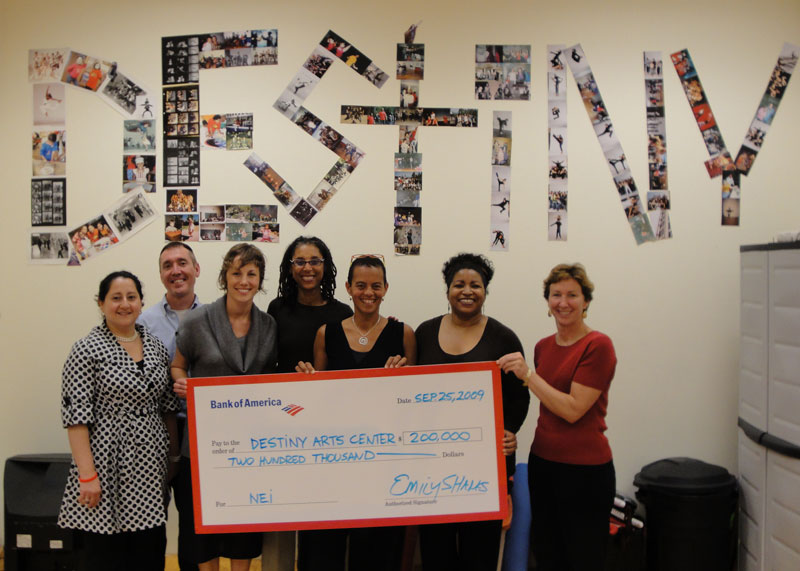
$200,000 for Destiny Arts Center from Bank of America


Destiny Arts Center Received $200,000 from BofA

Destiny accepts $200,000 check from Bank of America

We love our work. And we love the organizations we work with. They are up to good. We worked with Destiny Arts Center in Oakland, CA throughout 2009 as they prepared for their Raise the Roof Campaign. Last month Destiny was recognized for their good works with a $200,000 grant from Bank of America. Here is the press release. Join us in congratulating Destiny Arts Center.

Bank of America Charitable Foundation Invests More Than $3.6 Million in California Nonprofits to Strengthen Communities  

SAN FRANCISCO, CALIF. – The Bank of America Charitable Foundation is providing more than $3.6 million in unrestricted funding to 18 nonprofits across California to help strengthen communities through the bank’s Neighborhood Excellence Initiative (NEI). Since introducing the program in 2004, Bank of America has invested $22.5 million throughout the state to help nonprofits increase their long-term viability and most recently to help sustain them during this challenging economic environment.

Each organization, named “2009 Neighborhood Builders®,” will receive $200,000 in unrestricted grant funding and participate in Bank of America’s Neighborhood Excellence Leadership Program® with other nonprofit leaders from 45 communities across the country and London.

“Nonprofits and community leaders are instrumental in providing critical neighborhood services and Bank of America is proud to support their work through the Neighborhood Excellence Initiative and other lending, investing and community development programs that align with our overall corporate social responsibility efforts,” said Janet Lamkin, California President at Bank of America.  “Not only does this program recognize some of the truly stand-out organizations and leaders in California, but it also offers valuable unrestricted financial support and professional development opportunities – critical to the long-term success of our communities.”

In the East Bay $200,000 awards will be given to Destiny Arts Center and the Urban Strategies Council.

Oakland’s Destiny Arts Center is helping to end isolation, prejudice, and violence in the lives of young people by using martial arts, dance, theater, and leadership training as tools for motivating youth.

The Urban Strategies Council eliminates poverty by working with partners to transform low-income neighborhoods into vibrant, healthy communities with increased employment and economic opportunities.

About the Neighborhood Excellence Initiative
The Bank of America Charitable Foundation’s Neighborhood Excellence Initiative annually recognizes organizations, individuals and students who have shown a commitment to improving their communities. In its sixth year, the Bank of America Charitable Foundation has committed more than $110 million globally to the NEI program since its inception.

By the end of 2009, more than 800 leaders from the nonprofit awardees will have participated in the Neighborhood Excellence Leadership Program®, which builds a network of community leaders across the country to share learning and insight in areas including strategic communications, financial management, succession planning, and long-term development. Through NEI, Bank of America has also encouraged community leadership at the grassroots level by recognizing more than 1,200 high school students and 1,200 community leaders over the last six years.

Bank of America Corporate Philanthropy
Building on a long-standing tradition of investing in the communities it serves, Bank of America this year embarked on a new, ten-year goal to donate $2 billion to nonprofit organizations engaged in improving the health and vitality of their neighborhoods. Funded by Bank of America, the Bank of America Charitable Foundation gave more than $200 million in 2008, making the bank the most generous financial institution in the world and the second largest donor of all U.S. corporations in cash contributions. Bank of America approaches investing through a national strategy called “neighborhood excellence” under which it works with local leaders to identify and meet the most pressing needs of individual communities. Bank associate volunteers contributed more than 900,000 hours in 2008 to enhance the quality of life in their communities nationwide. For more information about Bank of America Corporate Philanthropy, please visit www.bankofamerica.com/foundation.

Creating an earned revenue stream

CJ Hayden

CJ Hayden

Over the past few weeks we have featured a question and answer session with C.J. Hayden, a social venture advisor to entrepreneurs, nonprofits, and activists. This week C.J. offers suggestions for how to grow your own earned income stream and resources for more information.

Saad & Shaw: What suggestions  would you offer to non-profit leaders who are seeking to develop an earned income revenue stream?

CJ Hayden: Look first at business models that would align well with your organization’s primary mission. For example, it makes sense for an organization like Delancey Street to operate a restaurant, because it provides employment and job skills training for the population they serve. But if you operate an animal shelter, running a café would have little to do with your mission. You might want to consider offering veterinary services instead.

It’s not always possible to develop an earned income stream that also directly serves your mission. But if you are considering an unrelated business, look carefully at whether you have – or can afford to hire – the type of expertise you’ll need. Succeeding with enterprises like a thrift store or print shop will require knowledge and experience you may not have in your organization.

Also, your enterprise is more likely to become a success if your existing audience includes many people who are potential customers for your products and services. An animal shelter that decides to offer veterinary services would have a built-in customer base made up of their animal-loving donors and people who adopt from the shelter. But if they chose to open a café instead, they would have to expand their outreach considerably in order to turn a profit.

One word of caution – while social enterprise can be an excellent option for long-term funding, launching a venture is not a wise solution for an immediate funding crisis. Just as with a for-profit business, your enterprise will require some level of startup funding and may take time to become profitable.

Saad & Shaw: What resources are available for people who want to learn more about social enterprise?

CJ Hayden: Social Enterprise Alliance, www.se-alliance.org. SEA also has a Bay Area chapter, and their annual conference is coming to San Francisco in April 2010.

Social Edge, www.socialedge.org. A project of the Skoll Foundation designed to support social entrepreneurs and social enterprise.

Venture Forth: The Essential Guide to Starting a Moneymaking Business in Your Nonprofit Organization, by Rolfe Larson. A practical, step-by-step guidebook to selecting, planning, and launching a social enterprise.

Find out more about C.J. at www.cjhayden.com.

And as always, have a FUNdraising Good Time!

What is social enterprise?

CJ Hayden

CJ Hayden

Our recent blog entry addressed the topic of social entrepreneurism. This week the topic is social enterprise. We talked again with C.J. Hayden  the author of three books and over 300 articles on marketing, entrepreneurship, and social change. She serves as a social venture advisor to entrepreneurs, nonprofits, and activists.

Saad & Shaw: How do you define social enterprise?

CJ Hayden: A social enterprise is an organization or project dedicated to a social mission which uses business methods to generate revenue, regardless of whether the entity is for-profit or nonprofit. A nonprofit that operates a business to fund its mission is a social enterprise. A business that exists for the primary purpose of achieving a social mission, and which funnels a significant percentage of profits toward that mission, is also a social enterprise.

A business with the primary purpose of generating profits for its owners or stockholders, which also happens to donate a percentage of its profits to social causes, is not a social enterprise.

Saad & Shaw: Can you share some examples of businesses or non-profit organizations that are social enterprises?

CJ Hayden: One of the earliest and best-known examples of a social enterprise is Goodwill Industries, which since 1902 has been operating thrift stores to fund its mission of providing employment and job skills training for disadvantaged populations. Another well-known social enterprise project is Girl Scout Cookies, which provides funding for the operations of local Girl Scout councils and troops. Cookie sales also help the Scouts to achieve their mission by giving girls an opportunity to learn life skills like goal-setting, teamwork, and money management.

Both Goodwill and the Girl Scouts are nonprofits, but there are many for-profit social enterprises, for example:

  • Newman’s Own – Manufactures and sells salad dressing and other food products, donating all after-tax profits to charity
  • Working Assets – Provider of long distance and credit card services that donates a percentage of each call or transaction to charities selected by its customers
  • Tom’s Shoes – Shoe company that gives a new pair of shoes to a child in need for every pair they sell

Saad & Shaw: What differentiates a traditional non-profit organization from a social enterprise?

CJ Hayden: Traditional nonprofits rely on grants, donations, sponsorships, or government funding, while social enterprises make substantial use of earned income strategies. Many nonprofits have small social enterprise projects, such as selling t-shirts or books. But these usually generate only a minor portion of the organization’s funding. A full-scale social enterprise aims to provide a significant percentage of funding for their mission through business activities.

Find out more about C.J. at www.cjhayden.com.

And as always, continue to have a FUNdraising Good Time!

What is social entrepreneurship?

CJ Hayden

CJ Hayden

Social entrepreneurship is a new buzz word amongst people who want to make positive social changes locally and/or globally. But what does it mean? To find out we posed a few questions on your behalf with C.J. Hayden  the author of three books and over 300 articles on marketing, entrepreneurship, and social change. She serves as a social venture advisor to entrepreneurs, nonprofits, and activists.

Saad & Shaw: How do you define social entrepreneurship?

CJ Hayden: There probably as many different definitions for this term as there are people who use it. Some define a social entrepreneurship venture as one operated by a nonprofit organization that earns a substantial portion of its income by selling products and services. Others define social entrepreneurship more broadly as any enterprise dedicated to the public good that uses business methods to generate revenue, regardless of whether the entity is for-profit or nonprofit. And some define the term more broadly still, labeling as a social entrepreneur anyone who uses innovative strategies to address social problems on a replicable scale, regardless of whether they are using an income-earning model at all.

This last definition is the one that I favor. Just as a business entrepreneur creates monetary value by applying creative solutions to problems in the marketplace, a social entrepreneur creates social value by introducing changes with the potential to produce a lasting benefit to society.

Saad & Shaw: Can you share some examples of individuals or organizations that are social entrepreneurs?

CJ Hayden: Examples of well-known social entrepreneurs in history include Florence Nightingale, who established nursing as a respected profession, and launched the first-ever nursing school. Another example would be conservationist John Muir, who established the National Park System and helped found the Sierra Club. Social entrepreneurs active today include:

  • Muhammad Yunus, winner of the Nobel Peace Prize for founding the Grameen Bank, which provides collateral-free microloans to impoverished people in Bangladesh
  • Wendy Kopp, founder of Teach for America, which brings new college graduates into low-income schools as full-time teachers
  • Fabio Rosa, whose innovations have brought affordable electric power to rural Brazil
  • Nicholas Negroponte, founder of One Laptop per Child, which provides durable, solar-powered laptops to children in the developing world

Saad & Shaw: What resources are available for people who want to learn more about social entrepreneurship?

CJ Hayden: Ashoka, www.ashoka.org, provides resources and support for social entrepreneurs and people who wish to assist their efforts.

SocialEdge, www.socialedge.org, a project of the Skoll Foundation. Their website and newsletter provide a wealth of free information.

How to Change the World: Social Entrepreneurs and the Power of New Ideas, a book by  David Bornstein

Find out more about C.J. at www.cjhayden.com.

Use Your Non-Profit Marketing Dollars Wisely

Sheila E. Lewis, President Flyin’ West Marketing

Sheila E. Lewis, President Flyin’ West Marketing

Fundraising must be tied to marketing. You need to generate awareness and excitement in order to generate revenue. Guest blogger Sheila E. Lewis shares six tips for marketing success.

Marketing is often a management challenge for non-profit organizations. After all, non-profits exist to provide services to targeted communities, not to sell revenue-generating products. Additionally, most small to medium-sized NPOs do not have marketing positions, often assigning communications projects to fundraising professionals.

For many NPOs, spending money on marketing means fewer dollars that could be used for programming and other direct services. However, most non-profit managers understand that communication campaigns are necessary to raise awareness and funds. The conflict between serving clients, building the organization’s brand, and generating funds requires that NPOs maximize limited marketing budgets.

When considering the best allocation of scarce marketing dollars, ask yourself the following questions:

  1. How much money do you want to commit to the project? If you don’t have a budget in mind, everything will seem too expensive. You’ll get what you pay for so the least expensive solution may cost you more in the long run.
  2. What results do you want? How will you measure the results? It is important to view marketing dollars as “working” funds for a NPO. Spend with the end in mind.
  3. Who is your target audience and what messages will be most effective? Messages resonate differently with each target audience. It’s important to know who they are and what will motivate them to act.
  4. How many times must your target audience hear or see your message before moving to action? Should you employ more than one communication tool or channel? Does that require several different messages?
  5. How much time do you have before the first materials need to be available? And, how long will the campaign run? It is best to have a project plan that helps keep you and your resources on track—delays cost money.
  6. Who will manage the communication campaign? Will the work be completed in-house or do you require external resources? There are several marketing firms or independent consultants focusing specifically on NPOs and thus bring a heightened sensitivity to your work. You will find a range of fees for these services. Feel comfortable negotiating if you believe the fees to be too high.

You may be able to secure pro bono assistance, but be sure that the firm or individual has the level of experience and the capacity to complete your work successfully and on time.

Either way, it is a good practice to seek referrals from other NPOs whose materials you like. You may also choose to speak with a representative from the local chapter of The American Marketing Association or a non-profit management service organization providing capacity-building support for non-profit organizations. Check references and the work product of any firm or individual before hiring them.

The most effective communication campaigns—whether geared toward a special event, fundraising, or building awareness among your community—require good planning, an appropriate budget and skilled resources for implementation. Know your target audience and speak their language.

Sheila E. Lewis is the President of Flyin’ West Marketing in Fremont, CA, a full service marketing firm with several clients in the non-profit sector. www.flyinwestmarketing.com. (510) 668.0351

It’s all about leadership

Dr. Ennix Coyness

Dr. Coyness Ennix

Do you hire staff to raise money for your organization or are staff members responsible for identifying and motivating volunteers who have the passion and connections to secure the money you need?

We believe it is volunteers who are responsible for raising funds for non-profit organizations. The Alameda County Health Care Foundation’s current campaign to raise $2.6 million for an angiography suite for Highland Hospital is a great example of volunteer leadership.

Working together the foundation’s executive director and the CEO of Alameda County Medical Center are engaging individuals from across Oakland to help raise the last $750,000 needed by the campaign. Cherlyn Spencer, the executive director, and Wright Lassiter III, the CEO have recruited an impressive group of Oakland’s finest to help ensure that all Oakland residents have access to state-of-the-art life-saving equipment that helps patients suffering from trauma and those who have heart conditions or vascular problems.

Volunteer leaders reported on their fundraising activities this past week with a reception at the new Lake Chalet Bar and Grill Restaurant. The costs of the reception were paid for by a foundation board member as a way of demonstrating support and reducing fundraising costs. At the meeting the chairs of the campaign’s divisions shared their plans and activities. Participating were Paul Gallagher, a Senior Vice President at Wells Fargo, who reported on the work of the major gifts division and the foundation’s board of directors; Dr. Coyness  Ennix from the medical center who reported on the medical community’s participation; Reverend David Kiteley of Shiloh Christian Fellowship and International Ministries and Father James Matthews of St. Benedict Parish who are engaging the faith community; and Tony Lynch of Alta Alliance Bank and Anthony Thompson, Vice President of Bank of Alameda who are co-chairing the corporate and business division.

These volunteers will be supported by foundation staff who are providing campaign information materials as well as suggestions and strategies to help volunteer leaders meet their fundraising goal. Staff also secured a matching grant of $1 million. This provides motivation for giving as each $1 donated will result in $2 for the campaign. More importantly all funds raised will help ensure that anyone suffering chest pains – regardless of their health insurance status – can have access to the equipment that makes a difference between full recovery and long-term disability, and even between life and death.

To get involved or make a contribution call (510) 437-8366 or visit www.achcf.org.

Is your fundraising connected to your strategic plan?

jigsaw_puzzleLast week we conducted two different workshops for board members from two distinctly different organizations on different sides of the country. One was a board comprised of medical professionals, the other was a University foundation board with diverse membership. One has an annual fundraising goal of less than $500,000 and the other has a $4.2 million goal. Yet the results of both workshops were the same. Board members ended each meeting agreeing to “update our strategic plan.”

The purpose of these workshops was not strategic planning. These were workshops designed to educate and engage board members about their responsibility for fundraising and their accountability to each other. During each workshop we reviewed the prerequisites for fundraising success that we have identified through our years of working with diverse organizations. Both boards focused on prerequisite number five “A compelling case for financial support that ties back to the strategic plan.”

The case for support is what people communicate to potential donors about the impact of their organization and the reasons for supporting its work. But these need to be connected to a strategic plan. If, for example, your organization’s strategic plan calls for increasing access to health care by 15% for children within a specific geographic area, then your fundraising should be organized around asking people, businesses and foundations to support you in this effort. If, instead, you are raising money to extend services to newly unemployed adults then your fundraising is not tied to your strategic plan.

There are plenty of good reasons why healthcare should be extended to the unemployed. The only problem is that this is not the identified focus of the organization. Taking the time to review, and as necessary, revise your organization’s strategic plan helps make sure that your activities and the use of your resources are in line with your strategic plan.

Many donors, particularly those who give larger sums of money, pay close attention to the congruence between fundraising and your strategic plan. We believe it is simply a good business practice.

So, maybe we shouldn’t have been surprised that both organizations decided to begin their work with a focus on strategic planning. This doesn’t have to be a difficult and time consuming task. At its best strategic planning focuses an organization’s energy, resources, activities, public relations and fundraising. Working from a current strategic plan helps everyone determine how to best use limited resources.

– Mel and Pearl Shaw!

Planning for change – executive transition

ByronJohnson

Byron Johnson, Project Director, Compasspoint Nonprofit Services

Change is a part of our personal lives and a part of organizational life. We asked Byron Johnson at CompassPoint Nonprofit Services a few questions about the process of planning for a change in executive leadership.

What is a succession plan and why is it important for a non-profit organization to have one?
Succession planning builds staff skills towards achieving an organization’s strategic vision, builds the leadership capacity of staff, and develops a pool of potential management successors.  It also provides the opportunity for some organizations to diversify their agency leadership.

What should the succession plan include?
There are two types of written succession plans: 1) an emergency succession plan, and 2) a departure-defined succession plan.

An emergency succession plan ensures that key leadership and administrative functions and services continue without disruption in the event of an unplanned, temporary absence of an administrator. It should include the following components:
1. A current description of the key functions of the executive director
2. A list of functions that would be covered by an acting director, what his or her authority would be, and which functions would be covered by other staff, e.g., government funder relations covered by the Director of Programs.
3. Who has the authority to appoint the acting director.
4. Standing appointee(s) to the position of acting director (with first and second back-ups) and compensation for acting director(s).
5. A cross-training plan for the identified back-ups that ensures they develop their abilities to carry out the executive director’s key functions.
6. A description of how the Board will support and supervise an acting director.
7. A communication plan in the event of an emergency succession (who gets notified and when).
8. An outline of procedures to be followed in the event that an emergency absence becomes a permanent absence.

What are the challenges we might face if our executive left and we didn’t have a plan in place?
Lack of succession planning can result in what we call a post-transition “meltdown”.  An organization can become so traumatized when faced with the prospect of dealing with an unplanned leadership transition that program delivery, funding, and by extension, the whole community can be adversely affected.

What is a departure-defined success plan?
A departure-defined succession plan is created when an organization’s leader has announced they will leave in two or more years.  This plan includes identifying the agency’s goals moving forward, determines what the skills their successor will need to achieve those goals, and identifies what in the agency needs “upgrading” (board governance abilities or fundraising capacity, as examples) in order for the agency to advance their goals.  The two year planning timeline gives the departing executive and others time to address some of the upgrades before the successor comes on board.

Related to this is another way of thinking about succession planning: Strategic Leader Development, which is the ongoing practice of defining an organization’s strategic vision, identifying the leadership and managerial skills necessary to carry out that vision, and recruiting and maintaining talented individuals who have or can develop those skills.  This is also sometimes referred to as “building the bench”.

What should a departure-defined succession plan include?
It should include the following elements:

a) A plan for dealing with the personal and professional barriers for the executive director who’s leaving.
b) Setting a date for the executive director’s last day in the office.
c) Any plans for grooming their successor (when appropriate).
d) Integrating the succession plan into the agency’s broader strategic plan.
e) A communications plan—who will be told when about the executive’s planned departure?
f) Conducting a “Sustainability Audit” to identify the operational upgrades needed.
g) Plans for solidifying the management team, if applicable.
h) Identifying board and staff back-ups for the executive’s key relationships.
i) A plan for putting finances in order.
j) A plan for building financial reserves and securing multi-year funding.
k) Agreement on the ED’s emeritus role, if the departing executive will have an ongoing formal relationship with the agency.

How does the presence or absence of a succession plan impact fundraising?
Most funders and supporters breathe a sigh of relief when there is some form of succession planning rooted in an organization.  Knowing that the organization can and will continue in the face of leadership transition makes everyone feel at ease and as a result prevents many fundraising hiccups that may occur during a transition.

For more detailed information on success planning visit www.compasspoint.org or www.transitionguides.com.

Byron Johnson, CFRE is a Project Director for CompassPoint Nonprofit Services, one of the country’s leading nonprofit consulting organizations, based in the San Francisco Bay Area. Prior to joining CompassPoint, he worked in senior development positions for San Francisco State University, the East Bay Asian Local Development Corporation, and the YMCA of the East Bay. A past board member of the Golden Gate chapter of the Association of Fundraising Professionals, he is currently an advisory board member of the Multi Cultural Alliance, a special year-round fellowship program designed to diversify the fundraising profession and to develop skills among aspiring under-represented fundraising professionals. Mr. Johnson consults in fund development and other areas of organizational capacity building, which include fundraising planning and coaching, strengthening foundation and individual donor development work, and donor solicitation training.


There’s always more to accomplish

Harness Your CreativityLast week we met with the executive director and board chair for an organization that is interested in raising money so they can expand their reach to serve people they aren’t yet reaching. Their history and current successes are strong and impressive. But that’s not enough for them. In fact their focus is on “how can we realign and increase our resources so we can serve those we aren’t yet reaching.”

Yes, they want to engage in fundraising. But they are also looking at revenue-producing partnerships. They have identified their assests – property and programs – and are looking at how they can use these to expand services, increase impact and increase revenue. They are looking forward. And they are making decisions and taking actions to deliver on their vision.

We were impressed. We would be impressed with this organization at any point in time. But we are particularly impressed right now. Like so many other organizations they are in jepordy of budget cuts, decreased revenue, expiring grants. But that is not their focus. Their focus is finding creative ways to engage others in helping them deliver on their mission.

Think about your successes. Think about who you are serving and who you are not yet serving. Then think about how you could serve them. Consider who you could partner with. How could you create a mutually beneficial partnership?It might seem difficult. It might feel impossible. But maybe not. We encourage you to look forward, to think creatively, and focus on your mission. You may just find answers and possibilities that can take you in new directions.