Don’t Miss Fundraising Day: June 16 in San Francisco

Where can you go to learn everything you need to know about fundraising? Is there a one-stop-shop for information about fundraising that can help fundraising professionals, board members, volunteers, consultants, and executive directors? Is there a place to learn how to improve your direct mail campaign? How to write better proposals? What about the right use of technology? Well, Fundraising Day 2010 has all the answers you are looking for.

Mark your calendar for June 16, 2010, 8:00 am to 5:00 pm and show up at the Marriott Hotel at 55 4th Street in San Francisco.

Fundraising Day is a one-day nonprofit fundraising training for the Northern California nonprofit community. Organizations of all sizes and types are invited. With 40 workshops scheduled, there is something for everyone. One thousand people are expected to attend with an average of 100 attendees per workshop. And don’t worry – food is provided. There will be a continental breakfast, two coffee breaks, and lunch, with vegetarian options available.

Here are some examples of the types of workshops offered:

  1. How to Deliver Superlative Donor Care
  2. The Science of Direct Mail: How Does It Measure Up?
  3. Rebuilding Your Board
  4. How to Approach a Foundation: From Initial Contact to Getting Funded — What Does it Take?
  5. Anticipating Foundation Trends: What Philanthropy Insiders Predict
  6. Raising Money Online: A Savvy Guide to Fundraising Success
  7. Everything You Ever Wanted to Ask About Fundraising Technology But Were Afraid to Ask
  8. Working Smarter not Harder: Fundraising Planning for Small Shops

The event is presented by the Association of Fundraising Professionals, Golden Gate Chapter  and the Development Executives Roundtable. Both of these organizations offer workshops and programming throughout the year to support the work of non-profit organizations across the Bay Area. They come together to present this conference to help strengthen the many organizations providing vital services, strong advocacy, and inspiring arts productions.

“The line-up of speakers, workshops and panels at this year’s Fundraising Day is incredible. Our stellar volunteer program committee outdid themselves in putting the program together this year. We really do have something for everyone, with workshops designed for every level of fundraiser, from the volunteer new to fundraising to seasoned professionals who qualify for our Masters track. We can’t think of a time when this conference has been more important, and we are really delivering,” Leyna Bernstein & Cheryl Clarke, Co-Chairs, Fundraising Day 2010

The conference also includes an Ask the Experts Pavilion where you can sign up to talk one-on-one with an experienced professional about a specific fundraising question. The Career Café provides an opportunity for people who work in the nonprofit sector to talk with a coach or other individual for guidance on how to build their career or find a new job.

To learn more, or to register visit www.afp-ggc.org/frd2010 or call (415) 404-6501.

© Mel and Pearl Shaw 2010.

Are You Ready For a Reality Check?

How do you know if your organization is headed in the right direction? Who do you talk to? How do you know whether or not to believe what people say?

What would it mean if you knew what people think of your organization? Would you offer different services? Engage in new forms of advocacy? Host different art exhibits? Offer translation services? Rethink your budget? Consider merging with another organization?

Below are a few questions you can ask. Ask those who are close to you and who may know all about your ups-and-downs. Ask those who use your services. Ask donors, volunteers, funders, you staff, newsletter readers, and your neighbors. The goal is to find out what people think about what you are doing.

You may find out that your perceptions are echoed by those you ask. Or you may find a divide. Both findings are valuable and good. They give you information you can use to evaluate what you are doing and where you are headed.

You can have the following printed on an easy-to-read card that you hand out or distribute as a direct mail piece.  Or you can use them to create an internet-based survey using free software such as www.SurveyMonkey.com. Or you can personally ask people these questions in an interview format. If yours is a larger, or more established organization you may want to consider engaging a professional marketing or fundraising firm.

  1. Are we headed in the right direction?
  2. Are we living up to our mission?
  3. Do you know what our current programs are?
  4. Do you know what our vision for the future is? Do you support it?
  5. Do you trust the management and leadership of this organization?
  6. Are you willing to continue to advocate for this organization and to provide support?

For many of us the past 18 months have been very challenging. When you explore how to do more with less it is good to consider what others think. You may be surprised by what you learn. This is especially important for organizations that have a long history of service. There may be new and creative ways to do things that your current leaders haven’t yet tapped. It’s always good to take the pulse of the community you are a part of. Your organization’s next good idea may be just a question away. Take the chance and find out what others think.

© Mel and Pearl Shaw 2010.


What You Can Learn From a Fundraising Feasibility Study

Too often organizations are focused on how quickly they can begin fundraising. “We need the money now!” is a common cry. Our response is simply it’s not how quickly you begin raising money, it’s how quickly you reach your fundraising goal.

If you start your fund-raising without finding out how local stakeholders and potential donors will respond to the specifics of your campaign, you will probably raise some money, but the real question is “will you raise all the money you need? Fundraising campaigns that launch without the market research that a fundraising feasibility study provides can later find themselves in the midst of what is known as ‘campaign stall’ – they have raised a percentage of their goal, but they can’t raise the remaining funds.

Conducting a fundraising feasibility study or survey is one way to avoid such stall. This is because the results of the study will let you know important information such as:

  1. How do those interviewed really feel about your proposed fundraising campaign? Do they understand what you are raising money for and how those funds will help you deliver on your mission?
  2. Do your current and prospective donors believe the organization or institution is headed in the right direction?
  3. How do they rate your CEO, board members, and staff?
  4. Do people believe your organization fulfills an important role in the community? Do they know your mission, vision, and major programs?
  5. Are they willing to give to your proposed fundraising campaign? Why or why not? If yes, at what level? If no, would they consider making a gift at a later date?
  6. Are there others they know who would want to financially support your organization?
  7. Who can provide volunteer fundraising leadership? Who amongst those interviewed would be willing to give their time to help you raise the money you need? Who else can they recommend to provide such leadership?
  8. Who can provide in-kind resources to help offset costs associated with fundraising and annual operations? Can a local company provide your printing? Can a realtor help you secure donated office space?
  9. Most importantly, do those interviewed believe you can reach your fundraising goal, and how much time do they think it will take for you to do so?

That last point is the most important. If the people you intend to ask to financially support your organization are not willing to do so, it is important for you to know their objections, to take the time to address them (if you choose to do so), and as needed to find other individuals and institutions who feel more favorably towards your organization, its leadership, mission and goals.

The information gained from feasibility interviews can help you modify your proposed fundraising strategies and activities. It can also help you address the concerns of those interviewed and to take advantage of opportunities you may not have otherwise known of.

© Mel and Pearl Shaw 2010.

Feasibility Studies: Information is Power

A key element to successful fundraising is accurately judging how your efforts will be received by potential donors and your community at large. Your board, executive director and development director can make decisions about the amount of funds to be raised and how they should be used — but will people outside your organization or institution agree with their assessment? Will they give and encourage others to do so?

How can you get this crucial information? You may not know where to turn or what questions to ask.

The best way to answer these questions is to conduct a feasibility study or survey. Information is powerful–and one of the most useful tools an organization can employ is a survey or study to help design its fundraising strategy.

A feasibility study or survey is the process of interviewing key individuals who will provide you with the funding, resources, and influence that will assure the success of your fundraising efforts. It can also include interviews with those who may oppose your organization and its quest to raise money. The purpose of the interviews is to find out how your community responds to your proposed fundraising before you begin the process of asking people for money. In this way you can better shape your campaign and address any objections before they arise.

Both studies and surveys should include 12 to 45 interviews conducted in person when possible. The number of interviews is influenced by the amount of money you need to raise.

A study provides detailed analysis and statistics of the responses to each question, key findings, and suggested next steps. A survey typically includes key findings and suggested next steps. The main difference between the two is cost and time. A study takes more time and costs more money. Most institutions raising large sums of money require a study because the detailed analysis provides a higher level of due-diligence.

Whether a study or a survey the information obtained from the interviewees is not attributed to specific individuals, allowing them to speak more freely. This is important because sometimes it is hard for people who know us to tell us what we may most need to know.

Conducting a feasibility study or survey begins with providing interviewees a detailed document to read before their interview. This document outlines your organization’s mission, vision, successes, leadership, how much you want to raise, how the funds will be used, and the impact they will have.

The actual study or survey is usually conducted by an independent consultant. This is for several reasons:

1.    People will often tell a consultant things they are unwilling to say to the executive director or an individual associated with your organization.

2.    Most organizations don’t have staff or board members who know how to conduct a feasibility study or survey and analyze the results.

In next week’s blog post we’ll tell you what kinds of crucial information can be obtained from a feasibility study or survey. Stay tuned!

© Mel and Pearl Shaw 2010.

Giving Begets Getting

Give first, then ask others...

Let’s start at the end: You can’t ask someone else to give until you have made your gift first.

Now, for how I got there. When considering how to secure funds for a non-profit organization or institution many people first think about “rich” people who could give such as Oprah, Bill Gates, or Bill Cosby. Still others think about securing government funds, ideally an “earmark” or special appropriation for a large project. Others recommend to start by hiring a grant writer to secure foundation grants.

Yes, these are all way for securing funds. However, they don’t start at the beginning, which is with you. If you are associated with a non-profit organization or institution as a board member, volunteer, employee, student, participant, patient, or client the giving has to start with youwhether it’s money, time — whatever.

Amazing, but true. If you – the people most closely involved with an organization or institution – don’t give, why should anyone else? If we don’t believe in ourselves, why should anyone else?

Here’s four reasons this is true:

  1. Your giving demonstrates your commitment. When you make a financial gift to an organization you are involved with you are communicating the value the organization has to you. You are signaling to others that a specific church, college, food bank, museum, hospital, youth program or advocacy group is important enough for you to give of your hard-earned money. That is really the bottom line. You are letting your money talk.
  2. Funders want to know the level of support that exists for an organization or institution. Funders such as foundations, corporations, and government agencies want to know the number of donors who give each year and the total value of their collective gifts. That’s people, not institutions. They also want to know that all board members give, and they often want to know how much they give, as well as the total amount of money they raise from others. If an organization’s own board members don’t give it, why should someone else?
  3. The size of your gift is also important. While very few of us are millionaires, we all know when we are making a gift that is significant given our current circumstances and obligations. When you make a gift that represents a meaningful contribution you can then ask others to do the same.
  4. Giving feels good. It just does. It feels good to give to things you believe in. And when you make a gift you know you are part of the solution. It makes it easier—and truer — to ask others to give because you have made your gift first.

That’s it for now! Until our next post, remember to have a FUNdraising Good Time! – Mel and Pearl

What’s a Board Member To Do?

Having worked with hundreds of board members in all kinds of organizations we really understand the challenges that board members face in their fundraising efforts.

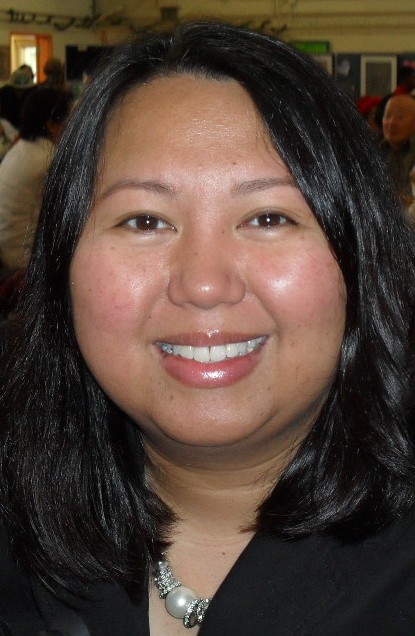
Maricar Boyle

So we sought the guidance of Maricar Boyle, MPA and Assistant Director of Corporate and Private Foundation Relations at Children’s Hospital and Research Center Foundation.

Boyle is a fundraising professional who has also served as a volunteer board member and board chair. She knows about fundraising from both sides and offers her words of wisdom.

Saad & Shaw: Based on your experience as both a board member and as a fundraising professional, what advice can you offer our readers about how to strengthen the partnership between fundraising staff and board members?

Maricar Boyle: It is important to understand that board members and staff are mutually responsible for the success of the organization. One way to strengthen the partnership between staff and board members is to learn about the specific roles that each individual plays within the organization, especially when it comes to the fundraising process.

The fundraising roles that board members fulfill vary from board to board. Roles can include responsibility for identifying potential donors, or serving as a spokesperson for the organization, or being present when it’s time to ask for a gift to the organization. When it comes to this last point – asking for a gift – it is always important to know in advance who will ask for a gift and who will close the meeting.  Highly successful fundraising campaigns have always been borne out of a combined effort between board members and staff (and a good strategic plan!).

Saad & Shaw: What is your experience with board members as fundraisers? What makes a board member willing to fundraise?

Maricar Boyle: Having served on three non-profit boards to date, the organizations I served and continue to serve were very clear about board member expectations from the very beginning. There was no ambiguity, especially if you were expected to personally contribute and help in fundraising. That was important to me. My willingness to raise funds as a volunteer really stemmed out of my belief in the mission of the organization and the desire to see it succeed.

Saad & Shaw: What advice would you give  board members at this particular point in time?

Maricar Boyle: Be an active participant in ensuring that the organization you serve continues to advance its mission. Ask questions. Volunteer to be on committees — especially on the Fund Development Committee. Ask to be trained by staff in the art and beauty of asking for money for a cause you truly believe in — it will be incredibly rewarding.

© Mel and Pearl Shaw 2010.

Keeping Alive the Dream of a Better Life for San Francisco’s Bayview Seniors

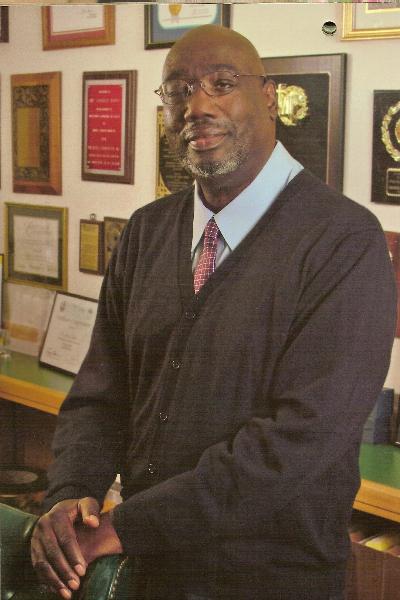
Dr. George Davis

The San Francisco Bay Area lost an icon and hero last month when we lost Dr. George Davis. Dr. Davis was a true visionary, a community leader, renowned gerontologist, minister, soul food connoisseur, sports fanatic, and devoted husband.

First there are his many worldly accomplishments: He led San Francisco’s Bayview-Hunters Point Multipurpose Senior Center for 32 years, and was ordained as an Associate Pastor at the neighborhood’s Metropolitan Missionary Baptist Church. He continued working, even after losing most of his sight to diabetes and fighting three types of cancer.

He received numerous awards and recognition for his 32 years of service, including awards from Senator Feinstein, House Speaker Nancy Pelosi, Senator Mark Leno, Supervisor Sophie Maxwell, and the National Council of Negro Women. He was the founder of the National Black Aging Network and was an associate faculty member at Stanford’s Geriatric Education center.

If you grew up in Oakland you might have met George Davis at Oakland’s McClymonds High School. Or maybe you played pool with him when he was known as Oakland Slim in the pool halls. Or, later after he had earned his Ph.D., he might have been your professor at San Francisco State University where he taught gerontology.

But one thing is certain: If you lived in the Bayview district you knew and loved Dr. Davis. Bayview-Hunter’s Point is a largely African American, underserved neighborhood on San Francisco’s southeastern edge. Dr. Davis got his start there as an intern at the local senior center. By 1978 he had became its executive director. He led it for 32 years, until his death on March 8th at the age of 68.

Today, the Senior Center offers recreational activities, free food distribution, and diverse social services. A separate adult health center provides health care to seniors that enable them to remain in their homes while receiving care at the center Monday through Friday. But Dr. Davis had much bigger plans for the area’s seniors—and that’s how we met him.

Six years ago Brenda Wright, a Senior Vice President at Wells Fargo Bank, asked us to help Dr. Davis and his wife Cathy create a strategy to raise funds for an “Aging Campus” in the Bayview. The first of its kind in the country, the Aging Campus is Dr. Davis and Cathy Davis’ innovative plan to provide housing and services for seniors in the area. We worked with Dr.  Davis and Cathy, and fell in love with them both. Dr. D, or “Doc”, as he was affectionately called, and his wife were an inseparable team.

He was a common man who never forgot his own humble roots in the projects of Richmond and Oakland. He was ‘old school;’ he was a man of his word. More than anything he taught us the importance of relationships, of humility, and patience. Even when he had major health struggles, he never let his personal challenges get him down. When the average person would have said, “no way can we do this,” Dr. Davis said “we can and we will!”

Dr. Davis was a steady champion for the rights and dignity of a demographic largely forgotten in our modern society: African American seniors. He fought to change the policies and economics that leave our elders neglected, isolated, and without services in their own community. He fought to ensure that those who had contributed to the growth of the City had a place to call home as they aged. He embraced Bayview — a neighborhood plagued with poverty, crime, and environmental pollutants from its former life as a naval shipyard – when few others did and sought to give it, and its residents, the dignity they deserve.

Dr. D’s vision for seniors includes high quality housing, healthcare services, and activities that promote physical and mental health. He wanted the needs of African American seniors to be the starting point for the design of buildings and services that would allow them to remain in the Bayview as they aged.

We believe in this vision and we believe in Dr. Davis. The man we loved and admired left us too soon. But he left us with an important mission to fulfill: the creation of the Aging Campus.

The idea of the Aging Campus has been endorsed by the local San Francisco Redevelopment Agency’s Project Area Committee (PAC) and is recommended as a key component of the area’s redevelopment plan.  Partnerships, coordination, and resources are required to make his vision a reality.  The time is now to take this dream and make it happen for the current and future seniors of Bayview Hunters Point.

We ask you to help realize this important vision and support dignity for seniors in the Bayview by making a gift to the Dr. George W. Davis Legacy Fund, c/o Bayview Hunters Point Multipurpose Senior Services (BHPMSS), 1706 Yosemite, S.F., CA  94124. Their website is: http://www.bhpmss.org/home.

Thanks to the Bayview Hunter’s Point Multipurpose Senior Services, Inc. for information used in this blog.

© Mel and Pearl Shaw 2010.

Where’s the Money?

So often we are asked “how do I find people who want to support our organization?” There are many answers to the question. One way is to engage in donor research.  To cut through the mystery around “donor research” we talked with Kevin Burns recently and asked him some questions on your behalf.  Kevin is an experienced researcher who has worked in higher education and health care for over eight years.

Saad & Shaw: Why should an organization or institution consider donor research?

Kevin Burns: There are three main reasons. The first is to gain basic information about your current and prospective donors. This can include publicly available information such as privately held company information, memberships on other nonprofit boards, and contributions to political candidates.  A researcher can also help identify new prospective donors. Finally, the work of a researcher can help your team focus and prioritize their efforts so they focus their time and energy on those individuals or businesses with the greatest interest in your organization coupled with the financial capacity to make a meaningful gift.

Saad & Shaw: Where and how do you look for information?

Kevin Burns: Prospect researchers use a variety of tools, primarily databases, to locate, cross reference and verify publicly available information. All of the information gathered is publicly available information.  Prospect researchers do not use private information sources such as credit agency information or private investigation.  Researchers adhere to a code of ethics developed by The Association of Professional Researchers for Advancement (APRA). Sources include real estate assessment and sales databases, Securities Exchange Commission (SEC) documents, Federal Election Commission (FEC) documents and general news databases.

Saad & Shaw: What kind of research do you do?

Kevin Burns: There are three main types of research. Reactive research is when a researcher is asked to find an answer to a question or series of questions. Proactive research is when a researcher is asked to search for new prospects or to qualify the giving capacity of current donors. Both proactive and reactive research can include a wealth screen. The term wealth screen refers to having a third party screening company “score” or match your data to a collection of data sources that can include philanthropic gifts to other organizations, stock holdings and sales, and memberships on nonprofit boards or foundations. Screening is a great way to prioritize and segment your donor or prospect population.

Saad & Shaw: Are there other tasks a researcher can help with?

Kevin Burns: Most definitely. Other tasks include building a campaign pyramid that illustrates the number of prospective donors at specific levels needed to meet a fundraising goal, prospecting for specific funding needs, creating pipeline reports which show how individual prospective donors are responding to cultivation and solicitation activities, and tracking news at specific organizations of interest.

Saad & Shaw: Are there sources of information you can share with our readers?

Kevin Burns: Absolutely. Lexis Nexis is an indispensable tool. However, there is a fee associated with using it. Free sources include Google and Zillow (www.zillow.com) for information on property, county assessor websites such as www.acgov.org/assessor/  for Alameda County, or Guidestar (www.guidestar.org) for foundation research.

For more information on donor research you can contact Kevin directly at keviniburns@gmail.com.

© Mel and Pearl Shaw 2010.

Yes We Can – Again!

President Obama

On March 28th the House of Representatives passed historic health care reform. We were ecstatic! Millions of Americans and their families will soon experience a direct change in the reality of their lives – in their access to health insurance, and most importantly, in health care itself.

The next morning we received an email message from President Obama thanking us. In the email, which addressed us by our first names, Obama didn’t write about his prowess as a negotiator, or about how he is delivering on his campaign promises, or about how this impacts future elections. No. He focused his message on gratitude to us. Gratitude to the American people. His was clear. He communicated the tangible and intangible benefits that we as Americans will receive with the legislation’s passage. And he ended by reinforcing and repeating  the same empowering message he has consistently delivered – “Yes we can!”

Here’s a little bit of what he wrote to us — and millions of others:

Mel and Pearl – For the first time in our nation’s history, Congress has passed comprehensive health care reform. America waited a hundred years and fought for decades to reach this moment. Tonight, thanks to you, we are finally here.

Consider the staggering scope of what you have just accomplished:

Because of you, every American will finally be guaranteed high quality, affordable health care coverage.

Every American will be covered under the toughest patient protections in history. Arbitrary premium hikes, insurance cancellations, and discrimination against pre-existing conditions will now be gone forever.

And we’ll finally start reducing the cost of care — creating millions of jobs, preventing families and businesses from plunging into bankruptcy, and removing over a trillion dollars of debt from the backs of our children.

But the victory that matters most tonight goes beyond the laws and far past the numbers.

It is the peace of mind enjoyed by every American, no longer one injury or illness away from catastrophe.

It is the workers and entrepreneurs who are now freed to pursue their slice of the American dream without fear of losing coverage or facing a crippling bill.

And it is the immeasurable joy of families in every part of this great nation, living happier, healthier lives together because they can finally receive the vital care they need.

This is what change looks like….

Tonight, thanks to your mighty efforts, the answer is indisputable: Yes we can.

Thank you,

President Barack Obama

Once again, we suggest you take a page from the President’s playbook – be gracious, consistent, strong, smart, and focused. Always thank those who help you deliver on the mission and vision of your organization. Remember, it is not about you – it is about the cause you serve and the people who help you bring an important vision and mission to life.

© Mel and Pearl Shaw 2010.

Saad & Shaw is Growing

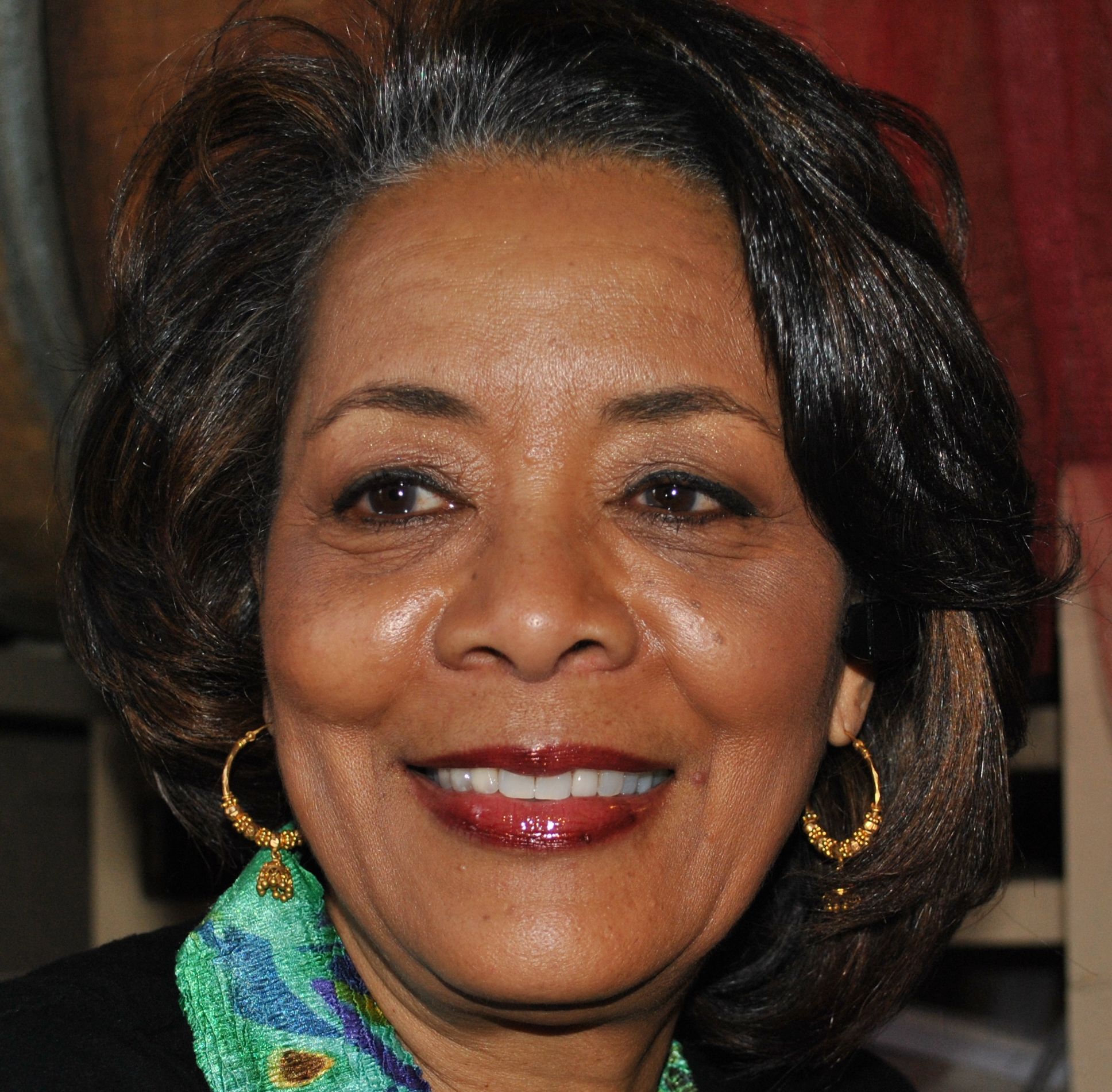
Chiquita Tuttle

Spring brings not only new offices, but also new team members. We are pleased to welcome a new member of the Saad & Shaw team – Chiquita Tuttle, our new Director of Fund Development Services for the West Coast.

Ms. Tuttle has an MBA in Health Services Administration and brings over a decade of strong marketing, organizational development, strategic planning and leadership experience in health service, social service and community organizations to this position. She has run her own consulting firm since 1998 working with numerous health service, social service and community organizations. Tuttle has assisted several leading faith-based and community organizations in establishing major donor and development fund programs. Her experience also includes redesigning organizational structures, administrative and financial management systems, for community trust organizations. Tuttle works with several boards in the SF Bay Area including Catholic Charities for Human Development, and has a special interest in working with communities of color on HIV/AIDS.

As Director of Fund Development Services Ms. Tuttle will work with non-profit organizations to help identify their fundraising strengths and opportunities and to explore how Saad & Shaw can help them rethink their revenue sources.

If your organization is ready to take a quantum leap, contact Chiquita Tuttle at (510) 867-7177 or Chiquita@saadandshaw.com