The time has come!

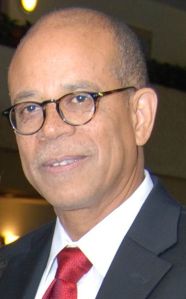
Clarence DavisThe Affordable Care Act is here! Knowing that nonprofits play a key role in connecting people to services we asked a few questions of Dr. Clarence Davis, Medical Director, Government Business with Blue Cross Blue Shield of Tennessee.

We first wanted to know what the Affordable Care Act – or Obamacare– means to people who already have insurance and those who currently don’t. Clarence shared with us, “For those that already have insurance through an employer, nothing should change for you. When the Affordable Care Act was signed into law, it carried with it a promise of expanding access to quality, affordable health coverage for millions of American families and small businesses.  Some individuals have already begun to experience the benefits of the Affordable Care Act with coverage that includes preventive care like mammograms, physicals, screening for diabetes and more at no out-of-pocket cost. Additionally, children who may have been without health insurance can now stay on their parents plans until age 26. For people without health insurance, including those with pre-existing conditions, the Marketplace may allow for more affordable access to care with the help of federal cost savings.

We also wanted to know about the importance of October 1st. “On October 1, a new health insurance marketplace opened in every state, giving individuals a new way to shop for health insurance.  All plans are required to cover a set of benefits that includes hospital stays, prescriptions, maternity and newborn care, preventive and wellness services, and other benefits that have been deemed essential.

We wanted to know if purchasing insurance would be different in states that are implementing exchanges, and states that are not. Dr. Davis set us straight, sharing, “All states will have exchanges whether run by their state government or the federal government. And the requirement for people to have coverage applies equally in all states, no matter which kind of marketplace they have. If individuals are currently uninsured or have a limited benefit plan, the marketplace will allow them to review various coverage options and make comparisons of plans before they make a decision.  Financial assistance may be available for individuals depending upon their income and household size. They can go to www.healthcare.gov to see if they qualify.

Finally we wanted to know what role nonprofits can play in getting out information to people they serve.  Dr. Davis’ words of wisdom: “Nonprofits can definitely assist with providing information and education to their client base.  If interested, they can sign up to be Certified Application Counselors or Champions of Coverage for the Affordable Care Act.  Applications for Certified Application Counselors are available at http://marketplace.cms.gov/help-us/cac-apply.html. And finally, the one place to learn more about the Affordable Care Act is www.healthcare.gov.

Mel and Pearl Shaw are the authors of “Prerequisites for Fundraising Success” and “The Fundraiser’s Guide to Soliciting Gifts.” They provide fundraising counsel to nonprofits. Visit them at www.saadandshaw.com. Follow them @saadshaw.


Encouraged and optimistic: If you build it they will come … good business model?

Part three of a three part series

Grace Stanislaus

Photo credit: Rodger Allen.

The African American and African Diaspora museums and cultural institutions that have emerged across the United States are a testimony to perseverance.  At the same time they, like many other cultural institutions, face many challenges. Nonprofit CEO, capacity building consultant, master strategist and cultural arts worker Grace C. Stanislaus recently shared her perspectives on African American and African Diaspora giving, philanthropy, and the role of cultural and arts institutions.

“Our present level of giving to social justice, civil rights, poverty, health, education, and other social and political causes, and to the arts, is truly remarkable. Our giving to the arts is especially remarkable given the systematic denigration of our contributions to American and world culture, and decades of exclusion from art history books and from mainstream museums.”

“Yet coupled with our remarkable progress are challenges,” Stanislaus continued. “One challenge is the dramatic scale up in the size of the architectural edifices we’ve built in the past several decades to house our art and to tell our stories.  We’re suffering from the disparity between the increase in the economy of scale and the economic reality of what’s required to operate and sustain these multimillion dollar facilities.  The “if you build it they will come” approach as a business model doesn’t work without strong financial and operational foundations such as endowments or reserves.  It certainly doesn’t work when marketing funds are inadequate to nonexistent, and development departments are inadequately staffed.”

“In general our institutions experience a lack of diversity of funding sources and an over-reliance on a small and over tapped community of funders,” she continued. “We need to focus on building high performing boards that in their makeup represents the diversity of our society and whose members deeply understand their role in bringing the right balance of wealth, wisdom and work to the equation.”

“More time and resources have to be put into cultivating the philanthropic/giving culture among members of our African American and African Diaspora communities, old and young.  We need to recognize the changing climate of philanthropy in general, and find new and entrepreneurial approaches to sustaining and growing these valuable institutions.”

She ended the interview with a focus on the future, saying, “I’m encouraged when our museums establish young professional affiliate groups.  While we continue to aggressively cultivate and expand our current donor base, and to establish planned giving programs, we must prepare a future generation of members, patrons, board members, angel investors, impassioned volunteers and ambassadors to take stewardship of our museums.  The Studio Museum in Harlem has its Contemporary Friends program, MoAD has its dynamic MoAD Vanguard, and the National Museum of African American History and Culture is ahead of the curve in establishing its Ambassadors program. We have fought for our institutions; we now need to strategically ensure their survival and growth.”

Contact Grace C. Stanislaus at gcsart@aol.com

Part One: Encouraged and optimistic: African American philanthropy and museums

Part Two: Encouraged and optimistic: Pressing Questions, limited resources and support of the arts

Mel and Pearl Shaw are the authors of “Prerequisites for Fundraising Success” and “The Fundraiser’s Guide to Soliciting Gifts.” They provide fundraising counsel to nonprofits. Visit them at www.saadandshaw.com. Follow them @saadshaw.

Encouraged and optimistic: Pressing Questions, Limited Resources and Support of the Arts

Part two of a three part series

Grace Stanislaus

Photo credit: Rodger Allen.

“While our museums face many challenges, there are as many opportunities.   Collectively we need to determine what steps we’re prepared to take and how aggressive we’re prepared to be to ensure the current and future relevancy and sustainability of our museums.”

That’s how Grace C. Stanislaus, former Executive Director of the Museum of the African Diaspora and former President and CEO of the Romare Bearden Foundation, sums up the future of African American museums and cultural institutions.

Knowing that foundations, corporations and philanthropists often want to see support from those directly impacted before making an investment, we asked Stanislaus if she finds that African American communities support local and national museums.

“In general, yes.  Members of the African American and the African Diaspora communities have supported and continue to support our museums.  The many regional and national museums and cultural centers that have been established over the past decades attest to it.  And the impressive support that continues to move the long held dream of a National Museum of African American History and Culture to fruition affirms it.  But, it’s a qualified yes.  It requires that we broaden the definition of support beyond merely financial and that we include in our considerations the many socio-political and economic factors that impact charitable giving among African Americans.

“Statistically African Americans make more charitable donations of their income per year than whites despite the fact that over the past several decades the wealth gap between blacks and whites has become a nearly unbridgeable chasm.  This is the case even between middle income white households and high income African Americans – the result of many factors, but primarily of ongoing discrimination and unfair practices.”

“The pressing questions are: Where does support for the arts fall on the list of priorities as the wealth disparity gap widens and as African Americans fall behind in wealth and legacy building and move ahead in debt accumulation?   At what juncture does support for museums and other cultural institutions enter into the dialogue as critical decisions are made about saving for college education, weathering a prolonged period of unemployment, paying for health insurance and care giving, planning for retirement, and supporting extended family members and unemployed friends?

Today many of our nonprofit cultural organizations, museums, cultural centers and theaters across the nation are facing financial challenges because the level of support needed to assure their long term financial, operational and programmatic sustainability is simply not in place.  Many if not most have no to nominal endowments and not enough cash reserve to operate without distress.  While this is not specific to African American museums, it’s particularly impactful on our organizations when coupled with other social and economic challenges facing our communities.”

Part One: Encouraged and optimistic: African American philanthropy and museums

Next week: Encouraged and optimistic: If you build it they will come…good business model

Photo credit: Rodger Allen

Contact Grace C. Stanislaus at gcsart@aol.com

Mel and Pearl Shaw are the authors of “Prerequisites for Fundraising Success” and “The Fundraiser’s Guide to Soliciting Gifts.” They provide fundraising counsel to nonprofits. Visit them at www.saadandshaw.com. Follow them @saadshaw.

Encouraged and optimistic: African American philanthropy and museums

Part one of a three part series

Grace Stanislaus

Photo credit: Rodger Allen

“Self-empowerment is one among many strategies people of African descent have employed to ensure our survival in the New World. This includes the creation of museums and cultural centers that document, recognize and celebrate the art, culture, history and contributions of African Americans. These institutions, many of which were established as a result of public/private partnerships, bear testimony to the hard battles fought to bring dreams to fruition.”

Arts professional and nonprofit CEO Grace C. Stanislaus is encouraged by the very existence of museums and cultural centers such as the National Museum of African American History and Culture, The Studio Museum in Harlem, the California African American Museum, the DuSable Museum of Art, the Charles H. Wright Museum of African American History, The Reginald F. Lewis Museum of Maryland, and the Museum of the African Diaspora (MoAD). With 20+ years experience directing and building arts institutions Stanislaus shares her perspective on African American arts and culture institutions and philanthropy.

“I consider the existence of these institutions remarkable especially in light of the history of enslavement, oppression, discrimination and economic, social, cultural and political disenfranchisement,” Stanislaus commented. “But not so remarkable in the context of a parallel history, dating back to the 18th century, of civic and charitable giving that supported and in turn generated support from mutual aid societies, the Black Church, and fraternities and sororities.”

She reminds us of the important role historically black colleges and universities have played. “HBCUs such as Clark Atlanta, Hampton, Howard, Fisk, North Carolina Central and Tuskegee, played significant roles in establishing galleries and museums to house, preserve, interpret, display, and celebrate African American art, artists, and cultural achievements.

When asked about the future of these arts institutions Stanislaus recommend an internal examination and a close look at external funding realities.

“We need dynamic visions and robust programs that engage diverse constituencies. Staff and board leaders need to ask questions that can reveal best practices. These include: Are our organizations and programs relevant and of interest to our local communities? Do we advocate effectively within our communities for the value that we add? Are we building loyalty? Are our program offerings broad in ways that engages diverse, cross cultural audiences? Are we allocating sufficient resources to market and promote and to raise funds for our museums and programs? Are we investing in the professional development of our staff? Have we found the right balance between our scholarly mission and our commercial interests? Do we have a strategic plan, program plan and business plan that guide our decisions and the allocation of our resources? Are our mission, values and vision clear and being effectively communicated to our community/stakeholders? Do we have a succession plan for the executive and the board leadership? This particular item has derailed the progress forward of many of our cultural organizations.”

Part Two: Encouraged and optimistic: Pressing Questions, Limited resources and support of the arts

Part Three: Encouraged and optimistic: If you build it they will come…good business model?

Photo credit: Rodger Allen

Contact Grace C. Stanislaus at gcsart@aol.com

Mel and Pearl Shaw are the authors of “Prerequisites for Fundraising Success” and “The Fundraiser’s Guide to Soliciting Gifts.” They provide fundraising counsel to nonprofits. Visit them at www.saadandshaw.com. Follow them @saadshaw.

Fundraising: investment or afterthought?

Investment or afterthoughtInvesting in the fundraising operations of a nonprofit is an investment in the organization’s future. It takes time to build a fundraising program that is capable of securing revenue from multiple sources. It takes vision, planning, leadership and resources – including money.  And, it doesn’t necessarily “pay off” right away. A fundraising program takes time and attention to mature. Often three-to-five years. And during that time the investment in fundraising needs to be consistent. Once a fundraising program is well established it can support a nonprofit organization or institution in meeting its revenue goals. But, again, it takes time. And even once established, it cannot be put on “automatic pilot.”

Fundraising needs consistent attention from the organization’s top leadership. That means the CEO and board members have to be willing to cultivate and solicit gifts all the time, not once in a while. The focus needs to be on building and sustaining a pool of prospective donors and funders. You need a pool who can collectively give three times the fundraising goal because not everyone who wants to give will be in a position to do so when asked. You have to know who these people are. You have to be in contact with them. You have to know what they want from a funding or giving relationship with your organization.

Don’t wait until the organization needs money to build a fundraising program. That’s when it’s too late. Our recommendation: attract the people and expertise to build and sustain your programs and simultaneously attract the people and expertise needed to raise money for the program in future years. It can take a minimum of 12 to 18 months to secure meaningful investments from foundations, corporations or individuals. Having a strong program that meets community needs doesn’t mean an organization will be able to raise money when funds are needed. Successful fundraising is the result of consistent planning and engagement.

With the economy turning around and money beginning to flow again now is the time for nonprofits to build sustainable fundraising programs. Prepare for future challenges. Get your house in order. Be proactive, not reactive. Build a program that attracts unrestricted funding as well as the “easier” to obtain restricted funding. Yes, it takes time and creativity to find ways to secure unrestricted funding: but if you don’t make the investment you won’t have the unrestricted funds. Ensure your board and CEO are committed to fundraising. Seek out volunteers who are fearless fundraisers. Create a fundraising plan that seeks funds from multiple revenue sources – not only foundation or government grants. Attract, train and invest in committed and experienced staff.  Review and refine your case for support. Articulate your uniqueness. Align your organization with community needs. Respond to the market. You can do it: it takes vision, planning, commitment and your time.

Mel and Pearl Shaw are the authors of “Prerequisites for Fundraising Success” and “The Fundraiser’s Guide to Soliciting Gifts.” They provide fundraising counsel to nonprofits. Visit them at www.saadandshaw.com. Follow them @saadshaw.
How will you fund your strategic plan?

Strategic Planning www.fundraisinggoodtimes.comStrategic planning is the process that drives the work of many nonprofit organizations and institutions. It takes different forms depending on the culture and policies of the nonprofit. Some complete the process at a retreat, others hire a facilitator to work with a committee of the board, still others hire a firm to survey best practices and emerging trends amongst competitors and collaborators. The outcome – a strategic plan – will drive operations and decision making over a multi-year period.

We encourage strategic planning that answers the question “where will the money come from” as part of the process. Determining future directions without seriously evaluating how they will be funded can create an unhealthy stress for nonprofits of any size. Assuming that the development director or vice president will raise the money needed to bring a strategic plan to life without planning and budgeting for his or her success is irresponsible. Here are three things to consider:

If fundraising planning is not integrated into the strategic plan, you may find out later that the plan’s underlying assumptions don’t materialize. Assuming a consistent (or increasing) level of funding without planning for how those funds will be raised, can put the organization itself in jeopardy. Creating operating budgets without a market-based assessment of whether or not the required income can be generated can also put your nonprofit at risk.

If the strategic planning committee envisions a major fundraising campaign as part of the organization’s future be sure to poll your board members to learn whether or not they would be willing to give an increased amount of their time, money and resources to that campaign. If your board isn’t willing to lead and give, including such a campaign in your strategic plan may not make sense.

Unless your nonprofit is funded through a well managed, unrestricted endowment, someone within the organization will ultimately be charged with raising the funds required to bring the strategic plan to life. The extent to which he or she can raise the required funds is often impacted by the extent to which the nonprofit’s strategic direction aligns with funding priorities of local and national foundations, corporations or individuals who have the financial capacity to make major gifts.

One way to integrate fundraising planning into the strategic planning process is to invite input from select donors and funders. Ask program officers and corporate leaders about the vision, strategic directions, goals and objectives of the foundations and businesses they represent. Your CEO and fundraising staff can also provide the strategic planning team with information they have gained over the years regarding giving trends and requirements.

When you know your nonprofit will need to invest time and money to grow a new pool of donors and funders you can budget and schedule growth to align with realistic revenue projections. Incorporating this into your strategic plan can help set realistic expectations.

Mel and Pearl Shaw are the authors of “Prerequisites for Fundraising Success” and “The Fundraiser’s Guide to Soliciting Gifts.” They provide fundraising counsel to nonprofits. Visit them at www.saadandshaw.com. Follow them @saadshaw.

What’s Your Policy?

www.saadandshaw.comMost people who volunteer with nonprofits are ethical and deeply committed to the organizations and institutions they serve. But sometimes in the midst of doing good there may be a tendency to sidestep best practices that build credibility. One way to ensure credibility is for the board to craft, approve, and implement fundraising guidelines, policies, and procedures. These should be clearly worded and should support the work of board members, volunteers, staff, and donors.

We advise our clients to take the time to identify the full spectrum of guidelines, policies, and procedures needed to support their fundraising efforts — before launching a campaign. Choosing to adopt policies on an “as needed” basis is choosing to be reactive instead of proactive. When policies and procedures are clearly communicated, the work of fundraising is made easier.

For example, if you do not have a pledge policy in place, it can be frustrating for a volunteer solicitor to learn that the three-year pledge she secured from a local business leader requires a signed pledge form. If she had known, she would have informed the donor at the time she solicited the pledge. Having to come back to secure a signed pledge form means reopening negotiations. It provides the donor with an opportunity to reconsider her giving. It sends the signal that your organization does not have its house in order. It can frustrate volunteers who are giving their valuable time.

Take the guesswork out of fundraising. Define your policies and procedures. If unusual circumstances arise, respond to them. But have the fundamentals in place and apply them consistently. Nothing can lose the goodwill of an investor or volunteer more quickly than a situation where the rules are changing constantly. Take time and work with your board, staff, volunteers, and donors to develop guidelines, policies, and procedures that are credible and in line with your mission and culture.

Here is a three-step process you can use as you put policies in place. Step one: the development committee of the board is responsible for drafting guidelines, policies, and procedures. They can work with your development staff, with a consultant, or with Internet resources to craft these. Step two: the documents created in step one should be brought to the full board for approval. Step three: once approved, the guidelines, policies, and procedures should be implemented by staff and referred to on an ongoing basis.

Details on policies and procedures for consideration are available from the Association of Fundraising Professionals (AFP) website www.afpnet.org. We also include examples of policies (and what they related to) in our recent book Prerequsites for Fundraising Success. Following the AFP Donor Bill of Rights and the AFP Code of Ethics are two items all nonprofits should review and consider adopting as part of their fundraising policies.

Mel and Pearl Shaw are the authors of “Prerequisites for Fundraising Success” and “The Fundraiser’s Guide to Soliciting Gifts.” They provide fundraising counsel to nonprofits. Visit them at www.saadandshaw.com. Follow them @saadshaw.


Nonprofit values and efficiency

Board members with experience and connections in the private sector can help nonprofit organizations grow and think in new ways. And nonprofit service can help board members from the private sector to grow and think in new ways, too.

www.fundraisinggoodtimes.comEfficiency and cost reductions often contribute to business success. Time and energy is devoted to developing and implementing strategies that increase the efficiency, value and profit while decreasing costs.  Technology, collaboration, and innovation have factored greatly in this process.

Technology, collaboration and innovation are also prevalent within the nonprofit sector. At the same time many nonprofits are often seen as inefficient. Sometimes even board members question the “results” of the nonprofits they serve. While questions are always welcome within organizations that value the full participation of all members, it is also important to consider some of the ways in which nonprofits, in general, are different from the private sector, in general.

Many nonprofits place trust, relationships, community building and diversity at the heart of their values and operations. This enables them to do the hard work that takes time – and sometimes generations – to accomplish. Ending poverty, eliminating health disparities, decreasing family violence and increasing educational attainment often require strong relationships, trust and a knowledge and understanding of the people being served. An efficiency-focused organization might, for example, choose to consolidate services in one location, eliminating neighborhood-based services. This can reduce operating costs and benefit staff who can work together more closely in one office instead of five smaller ones. But, this might not be what is best for the families being served. Removing service providers from the fabric of the community can decrease an organization’s understanding of the issues, concerns and assets of a neighborhood. It can make it more difficult for people to access services due to transportation issues. It can work to break down the trust that has been built up over years – a trust that encourages people to take different actions in an effort to achieve different outcomes.

Likewise, it may not be apparent to board members that a long-term receptionist is one of the most important people within the organization because of the relationships she has developed with families the nonprofit serves. She could be replaced with a new phone system, but what else might the organization loose that is core to its mission?

And that is the difference – nonprofits measure success by their ability to deliver on their mission. Sometimes that process is very similar to that used by the private sector. Sometimes it is different, or may appear inefficient. If you provide leadership for a nonprofit take time to understand the core values that drive the organization and how these are made manifest in operations.

Mel and Pearl Shaw are the authors of “Prerequisites for Fundraising Success” and “The Fundraiser’s Guide to Soliciting Gifts.” They provide fundraising counsel to nonprofits. Visit them at www.saadandshaw.com. Follow them @saadshaw.

Nonprofit success: more than “feel good”

Part two of a two part interview…View part one here

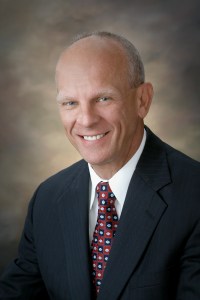
Mike Bruns www.fundraisingggodtimes.comSuccess in business is not enough. In fact, nonprofit involvement –and giving – can be a greater “buzz” than continued business growth. “After becoming reasonably able to share, a person realizes that the buzz you get from sharing can be greater than the buzz you get from daily life in business. Ten percent growth year-after-year doesn’t always equal the buzz of giving ten percent to the community.” That’s the experience of Mike Bruns, founder of Comtrak Logistics, a national transportation and logistics company headquartered in Memphis.

“The true donor misses the boat if they don’t get just as much back in their heart, meeting people and making friends,” Bruns continued.  “Involvement brings satisfaction – it makes the donor feel good.  I was chair of Youth Villages for so many years, and they did as much for me as I could ever do for the organization.”

Youth Villages, also headquartered in Memphis, is a leading national nonprofit dedicated to providing the most effective local solutions to help emotionally and behaviorally troubled children and their families live successfully.

“Youth Villages grew as a result of a wonderful culture, incredible leadership team, and a management team that knew this was a business. Nonprofit is more than a feel-good. Many stall out because the person who started the organization didn’t surround themselves with good business people. At Youth Villages the leadership surrounded themselves with business people who helped them run the organization like a business, but not at the expense of their passion. They serve 60,000 young people and they measure everything.  ‘Feel good’ doesn’t last long if the business model doesn’t work.”

That goes for the board as well. The biggest challenges Bruns has experienced arise when board members don’t know what is expected of them. “That has to be done on the front end. You can’t read a board manual to people. You need to explain their job description, financial expectations, and share with them why they were recruited. They have to become involved with the organization and passionate about it. Board members who are engaged and feel a part of something come to meetings. This solves the problem some boards have where they spend almost half their time worrying about the best time to get attendance. As board chair I focused on getting engagement. So many boards operate without engagement.”

Bruns closed with his perspective on board members’ reluctance to fundraise. “When a board member is not prepared, and is not personally passionate, the gifts he solicits become a ‘trap’ wherein he now ‘owes’ an equal gift to the donor’s nonprofit of choice.” The solution: “Be prepared and sell the nonprofit on its merits; then people give to the organization and not to you. You then are free to make your gifts based on merit too.”

You can’t sell what you don’t know

Part one of a two part interview with Mike Bruns

Mike Bruns www.fundraisingggodtimes.comMike Bruns possesses the characteristics of an ideal board member: deeply engaged with the organizations he supports, generous as a donor, and he treats his nonprofit involvement with the same seriousness he applies to business ventures. He has a great sense of humor, a kind heart and a warm smile. He’s also the founder of Comtrak Logistics, a national transportation and logistics company headquartered in Memphis, and chairman emeritus of Youth Villages, a national nonprofit. We recently talked with Bruns to learn the secrets to his success as a nonprofit volunteer leader.

We asked what he looks for in a nonprofit when deciding whether or not to become involved. His response was straight-forward, “I do not want to be a part of an organization that is a fixer-upper, or is trying to make payroll by Friday. I want to support organizations who want to grow to the next level. The ‘heart tug’ is always trumped by an organization that is well run. With a well run organization I can work with other board members to help grow it to the next level.”

It’s not that he is opposed to the “heart tug.” In fact, Bruns is passionate about the organizations he is involved with. “I truly believe in the organizations I become a part of. And I expect that of fellow board members. There’s nothing worse than leadership that is begrudging or ‘resume building.’ The secret to success lies in the passion of the leadership.”

Equally straight-forward were his comments regarding expectations of fellow board members in the area of fundraising. He cited the lack of board giving as the number one obstacle to fundraising success. “There’s nothing worse than a board member soliciting money and they haven’t made a meaningful gift. It doesn’t always have to be all money – it can be meaningful giving of time. But they have to believe in the organization and be engaged.”

Comparing fundraising to sales, Bruns was critical of board members who are not qualified to “sell the product.” For that he places responsibility squarely on the shoulders of leadership, “What is the orientation? Without proper training, orientation, knowledge, feeling and involvement a board member can’t ‘sell’ the nonprofit to potential donors. You can’t sell what you don’t know or believe in.”

Next week: Nonprofit success: more than “feel good”

Mel and Pearl Shaw are the authors of “Prerequisites for Fundraising Success” and “The Fundraiser’s Guide to Soliciting Gifts.”  They provide fundraising counsel to nonprofits. Visit them at www.saadandshaw.com. Follow them @saadshaw.