Category Archives: FUNdraising Good Times

Fundraising commentary, tips and information.

Nonprofit overhead costs

20130701-120949.jpg
A public discussion is stirring on the topic of nonprofit overhead and the extent to which overhead costs should influence giving. The three leading sources of information about nonprofits recently issued a call to action asking individual and institutional donors to stop using “overhead” as the measure of a nonprofit’s success. GuideStar, Charity Navigator, and BBB Wise Giving Alliance have issued a call to donors to move beyond the “Overhead Myth.”

Here’s the background. Nonprofits are required to report administrative costs and fundraising costs when they file their 990 form with the IRS. These are costs that are not directly related to nonprofit services or programs. Administrative costs include things such as human resources and accounting personnel, information technology and management systems. Fundraising costs include staff time and materials dedicated to donor development, and fundraising events among others. Together these represent “overhead.”

Some people believe that low overhead is a sign of an effective and well run nonprofit. We join GuideStar, Charity Navigator, and BBB Wise Giving Alliance and others in taking a different stance. Long time readers know that we believe “impact” is the measure of a nonprofit. And, for many organizations and institutions high impact requires an investment in what we refer to as “capacity and infrastructure” or “overhead.” Nonprofits need to invest in technology and talented staff. They need to compensate employees with competitive salaries and benefits and provide them with the tools they need to best deliver on their mission and vision.

Overhead ratios do not communicate effectiveness. Emphasizing these ratios as a basis for funding and giving decisions has led to what the Stanford Social Innovation Review has called the The Nonprofit Starvation Cycle and what the Center on Nonprofits and Philanthropy, Urban Institute & Center on Philanthropy at Indiana University refers to as Getting What We Pay For: Low Overhead Limits Nonprofit Effectiveness.

Overhead costs and ratios may vary from year to year, and from institution to institution. There are always new ways to consider minimizing costs, but a “race to the bottom” is not what the nonprofit sector needs. Consider looking at impact instead. Encourage the nonprofits you believe in to participate in Charting Impact (www.ChartingImpact.org). Prepare to answer these five questions: What is your organization aiming to accomplish? What are your strategies for making this happen? What are your organization’s capabilities for doing this? How will your organization know if you are making progress? What have and haven’t you accomplished so far?

If you are concerned about how donated funds are used by a nonprofit you support, take the time to review their annual report, their 990 form (posted online at wwww.Guidestar.org, and ask to speak with management. Looking at overhead costs won’t answer your questions.

Learn more at www.overheadmyth.com.

Mel and Pearl Shaw are the authors of “Prerequisites for Fundraising Success” and “The Fundraiser’s Guide to Soliciting Gifts.” They provide fundraising counsel to nonprofits. Visit them at www.saadandshaw.com. Follow them @saadshaw.

Start Small, Think Big

Economic-Impact

Let’s talk about data: the exciting information hidden within your nonprofit’s donor database. There’s much to be learned by running reports, and many reports to run. The most in-demand: funds raised to date. But what about less popular reports and the secrets they can reveal? What about your “top-tier small donors?”

Use your summer months to produce and study reports showing donors who have given in each of the past three or five years. Look for those who consistently give at the highest levels of your “small donor” category. Those included in this group will vary from nonprofit to nonprofit. For a college, this group may be those who give $1,000 each year. For a national nonprofit, the group may be $500 annual donors. For a grassroots organization, it may be those who give $100 annually. The most important thing is to know who falls into this group – let’s call them “top-tier small donors” – at your nonprofit.

Take the time to create and implement a strategy for reaching out to these donors and growing their collective impact. They are the backbone of individual giving programs: a segment of your donors who can be cultivated for larger gifts, to serve as ambassadors, or to encourage others to give. They need to be tended to and summer is a perfect time to reach out.

Craft a personalized outreach program where someone from your organization or institution calls these donors to thank them for giving over the years. Create a script that includes a request that the donor consider a slightly increased amount when she makes her next gift. Determine who within your nonprofit would be ideal at making such calls. Set up a short training program and get into action.

When reviewing your list of “top-tier small donors” look for who you know and who you don’t. Invite a mix of these donors to a small reception, especially those who have not been invited to visit with your nonprofit before. Better yet, consider scheduling a personal visit to their home or office.

When reviewing lists of lapsed “top-tier small donors” consider a call or email to reengage each. Thank him for his prior support, share a few updates on your impact, and ask for his consideration when he makes his future giving decisions. No hard sell. A simple call from someone who works for, volunteers at, or benefits from your nonprofit.

If you believe specific donors will respond better to an email than a phone call consider a “real” email – short and personal; not an “e-blast.”

We offer these suggestions as a way to retain and grow current donors who may be able to make a larger impact: as a way to get to know them. Pick up the phone, say hello. Don’t take your donors for granted – show them you care.

Mel and Pearl Shaw are the authors of “Prerequisites for Fundraising Success” and “The Fundraiser’s Guide to Soliciting Gifts.”  They provide fundraising counsel to nonprofits. Visit them at www.saadandshaw.com. Follow them @saadshaw.

Setting an annual fundraising goal

How do you set your annual fundraising goal?

moneyWe were recently asked what we thought about setting a fundraising goal for fiscal year 2014 by simply adding 10% to the 2013 goal. Good question. And of course we had questions of our own. The first of which was “did the nonprofit meet its 2013 goal?” The answer – and the reasons why – will be important to take into consideration when setting a goal for 2014.

Here are a few other things to take into consideration. What are the organization’s financial needs and how will these fluctuate based on changes in projected operating expenses and program costs? For some organizations the fundraising goal is set based on projected revenue from earned income, multi-year grants and other “secured” funding streams. These numbers are subtracted from the nonprofit’s expenses and the balance becomes the fundraising goal. That is one way to determine a goal, but it may or may not be a goal that can be met.

The time and attention paid to setting the goal can impact the extent to which you can meet it. Here are a few things to consider when creating a fundraising goal. Were there any unusual large gifts in 2013 that may not be repeated in 2014? (In order to sustain 2013 giving levels you will need to determine how these can be replaced if you believe they were one time gifts.) How many donors give annually, and how much do they give? What is your “donor attrition rate” – how many people who give one year don’t give the following year? (Knowing the attrition rate can help inform how many new gifts you need to maintain at prior year’s level.) Who are the prospective donors you have identified? What is the likelihood they will give in the coming year? What has been your organization’s track record in turning prospective donors into actual donors? How many donors increase their giving year over year.

Other issues to consider include, who will ensure your special events meet their revenue projections? Has event revenue been growing or declining? Who will solicit corporate sponsors and underwriters? Can your marketing team create awareness that drives giving? Who will ensure that direct mail and/or e-giving campaigns are produced on schedule? Which of the foundations that have provided support in the past might make a grant in 2014? Have you identified new sources of foundation or corporate support? Who will solicit these?

Finally, review your fundraising goal against your capacity. Consider how fundraising volunteers can positively impact (increase) funds raised. Compare the number of staff, board members and volunteers against what needs to be accomplished. Last but not least, compare 2013 fundraising revenue against 2014 projections.  We believe that taking all of the above into account is a better way to determine a fundraising goal. What are your experiences?


Summer Reading Can Increase Revenue in the Fall

Cynthia Hopson http://www.saadandshaw.comTo be the best, learn from the best – and in fundraising, Pearl Saad and her husband Melvin B. Shaw, have the creds to not just teach fundraising essentials but to literally “write the books” about it. In an updated version of The Fundraiser’s Guide to Soliciting Gifts, first published in 2008, everything you need to know is laid out in this small but powerful compilation in the form of how to’s for the novice and gentle reminders for the veteran.

These amazing 33 pages are a quick but empowering read from an accomplished couple with more than 30 years of experience in innovative fund development, capital campaign research, planning, design and implementation. Topics covered include the language and philosophy of the “ask,” how to cultivate, honor, recognize and involve donors, preparing for solicitation visits, and the importance of personal and meaningful interaction with potentials.

As someone who has to inspire gifts and investment into my cause, (I manage The Black College Fund which supports the 11 United Methodist Church-related historically Black colleges and universities) I felt better prepared, even inspired to go out and “win friends and influence people” to share. While I never try to sell anything I don’t invest or believe in, their “It’s an honor to be selected as the person who asks others to give” philosophy was refreshing and empowering.  I am all the things listed in the title of their new book, Prerequisites for Fundraising Success, 18 Things Every Fundraising Professional, Board Member, or Volunteer Needs to Know, so reading it was a logical next step.

Prerequisites, is a homerun, slam dunk and a touchdown! Whether you’re trying to figure out which way is up or down, this is the book you want to get this year. “Fundraising is a competitive endeavor” was my favorite quote and if you are ill equipped for the competition, get this book and then proceed. They cover funding your fundraising, the importance of teamwork and commitment to the cause, and every chapter has a checklist and action steps to keep you on course. If you’re serious about improving your fundraising success, and who isn’t these days, this resource will be a blessing for everybody who goes out in your name to raise money. Fundraising is an art and a science and those who excel at it must understand the processes and intricacies that lead to success. Again, this roadmap will enable the newcomer and provide additional tools for the pro—either way, you’re bound to learn something new.

Pearl and Mel are consummate professionals and they continue to impress and amaze me with their creativity, insights and extensive knowledge of all things fund related. With these two books, they take comprehensive fundraising, development and management to a new and more accessible level. Both are available from their website, www.fundraisinggoodtimes.com, and are economical enough to get one for each team member.

Cynthia Bond Hopson, Ph.D., is an author and assistant general secretary of the United Methodist Church’s Black College Fund in Nashville, TN. chopson@gbhem.org

Mel and Pearl Shaw are the authors of “Prerequisites for Fundraising Success” and “The Fundraiser’s Guide to Soliciting Gifts.”  They provide fundraising counsel to nonprofits. Visit them at www.saadandshaw.com. Follow them @saadshaw.

Donor Research

Start by asking “why?”

Part three of three part series on transformational giving

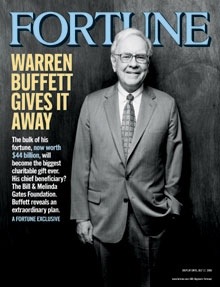
Warren BuffetDo major gifts to nonprofits fall from the sky, or are they more typically the result of deep commitment, relationships, and the ability to use the tools and data available to nonprofits? We asked Barbara Pierce, founder of Transformative Giving, about how donor research supports transformational giving.

“Since a transformational gift is one that can move the nonprofit to a different level of operating, it will be a large gift by necessity,” she began.  “Donor research will identify those donors capable of such a gift so you can focus your cultivation efforts with an aim toward deepening relationships with a small number of top donors.  We are all limited by time so you need to prioritize.  Donor research allows you to make these choices based on data.”

We closed our interview with Pierce asking her to reflect on her experience and share what she has found to be the factors that influence major donor’s largest gifts.

“There is so much talk around evaluation and donors do want to know you have a method of determining progress.  Beyond these basics, donors making their largest gifts based on advancing the causes that mean the most to them personally and that express their most deeply held values.  They are not choosing the organization based solely on their metrics,” Pierce commented.

“The desire to leave a legacy beyond their financial success is what I have found influences donors the most. They have more money than they need according to their own standards and they want to make an impact on something bigger than themselves.  While it can be a planned gift, transformational gifts are often while the person is alive—the transformation goes both ways in that the donor is changed also through the process.”

She shared an experience of visiting with a very prominent venture capitalist who was known to be rather hard-edged.  She was armed with reams of data in anticipation of his questions.    “I was surprised he was taking the time to see us and I asked why he cared about this environmental cause.  He turned to a photo of his children and said, ‘all of this doesn’t matter if my children can’t enjoy the same beauty that I have been so lucky to know.’  If I hadn’t asked ‘why,’ we would’ve missed out on an opportunity to understand what drives him to make transformational gifts.”

This led to Pierce’s closing remarks and the topic of working with people who can give at the highest levels: “You need to start with the most basic question of ‘why?’  Otherwise, you may be making a lot of assumptions about what they care about most and gearing your pitch based on your thinking versus theirs.”

Visit Barbara Pierce at  www.transformativegiving.com.

Mel and Pearl Shaw are the authors of “Prerequisites for Fundraising Success” and “The Fundraiser’s Guide to Soliciting Gifts.” They provide fundraising counsel to nonprofits. Visit them at www.saadandshaw.com. Follow them @saadshaw.


How to engage major donors

Part two of three part series on transformational giving

Giving Pledge

Photo credit: Fortune Magazine

Why does one nonprofit receive $1,000 from a donor when another receives $1 million? What is the difference between fundraising and the process of securing transformational gifts? To get some answers we talked with Barbara Pierce, founder of Transformative Giving.

Pierce got right to the point: “Transformational gifts come out of a partnership with a donor, built on a common goal that neither the donor nor the organization can accomplish on their own.   Fundraising is about getting gifts to meet a budget; transformative giving is about achieving a vision.  Without fundraising and the financial foundation it provides, you cannot engage in transformative giving.”

She elaborated further, sharing what it means to be “donor focused.” “Usually, nonprofits are driven by their own budget on their own timeline, i.e. fiscal year, solicitation cycle, board meeting schedule,” she began.  “To be donor focused is to focus on the donor’s timeline versus your own.   Most transformative gifts take more than a year to transpire but too many organizations forfeit a larger, more meaningful gift for a smaller, immediate one to fit their own calendar.”

“When you are donor-centric, you don’t think in terms of ‘they should give us X; they are really rich,’ which is something I’ve heard many times.   You also have an attitude of exploring common areas of interest versus believing you have to ‘educate’ donors on all aspects of your organization before they are qualified to play a meaningful role in your discussions.”

“Institutionally, it is an approach that says, ‘we want to understand who our donors are, what drives their decisions and what type of involvement is important to them,’ Pierce continued. “Any successful for-profit company takes a deep interest in understanding who their customers are and how they can be of service to them.  I see this as a critical gap in nonprofits engaging with those donors most able to make a transformative gift.”

Vision, leadership, capacity, stewardship. These are at the core of successful nonprofit fundraising. They are magnified and held to a higher standard when talking with individuals who can give at the highest levels. How donors are perceived and treated can impact if and when they make a meaningful investment.

“I believe one of the biggest factors that impede groups from attracting such gifts is their lack of interest or ability to see donors as partners versus a source of funds, Pierce advised.  “There are a lot of assumptions about ‘rich people’ among many nonprofit staff members, including the idea that a donor will have undue influence on the organization’s mission if they accept a large gift.  People don’t make transformative gifts to organizations that aren’t already embracing a vision they both hold in common.”

Next week: Part Three – Start by asking “why?”

Visit Barbara Pierce at  www.transformativegiving.com.

Mel and Pearl Shaw are the authors of “Prerequisites for Fundraising Success” and “The Fundraiser’s Guide to Soliciting Gifts.”  They provide fundraising counsel to nonprofits. Visit them at www.saadandshaw.com. Follow them @saadshaw.

Preparing for your Capital Campaign-Asking the right questions

ChangeA capital campaign – or any other quantum leap in your fundraising – will pull at every fiber of your nonprofit. These are not “business as usual” activities. If you want to grow from one level of donated revenue to another you have to do things differently. It’s no different than a business seeking to enter a new market or release a new product. New, more and different thinking, actions and people are required for new, more and different results.

We know this means more work for nonprofits that are often already operating beyond capacity. But you have to find a way to operate differently if you want different results. We are not saying that everything has to change all at once, but the rate at which you engage potential donors and funders is the rate at which you will begin to see a change in revenue.

Change can begin with an honest assessment of the road ahead. Your institution may need to raise money for new facilities or technologies. Your nonprofit may need to replace a government contract or grant that won’t be renewed. In these examples the first step is to identify the amount of money that needs to be raised. This is the starting point for an important organizational conversation. For too many nonprofits, it is also the end point.

Knowing what you need to raise is not enough. What needs to take place is a conversation about “how” the money will be raised, and what it will cost. Fundraising costs include money, time, talent and resources. You can hire a fundraising consultant to talk with your leadership team, or you can begin the conversation on your own. Questions to discuss include: Where will the money come from?  Who could provide how much? Can we identify three-times as many potential donors as we will need to meet our goal? Why would a donor or funder want to give? Who would ask them to give? How will we organize ourselves? Who will manage and coordinate our fundraising? What resources will he have available? How will a capital campaign impact our annual fundraising? How will we sustain and grow our current donors while attracting new ones? What new policies are needed? What impact will new buildings or technologies have on our operating budget? How will we budget to maintain these?

Open and honest conversations can be both sobering and revealing. Most importantly they contribute to organizational and financial health. They are an opportunity to candidly assess your capabilities and options before launching into a major campaign. When successful a capital campaign – or any quantum leap in your fundraising – will have a major impact on the life of your nonprofit: you will have the funds you need to deliver on your mission and expand your impact.

Mel and Pearl Shaw are the authors of “Prerequisites for Fundraising Success” and “The Fundraiser’s Guide to Soliciting Gifts.”  They provide fundraising counsel to nonprofits. Visit them at www.saadandshaw.com. Follow them @saadshaw.

Social Capital

Patricia Brandes“Trusting relationships and reflection/rejuvenation are required for building strong networks and collaborations.” That’s the word from Patricia Brandes, executive director of the Barr Foundation. She didn’t say more funding, more collaboration, lower expenses or greater impact. She focuses on the three R’s – relationships, reflection and rejuvenation.

We had the opportunity to hear Brandes speak recently, and she encouraged the audience to value “being” as well as “doing”, acknowledging that “doing” is our culture’s more highly prized verb. Focusing on “being vs. doing” she asked “which will really move a nonprofit forward? Which really supports relationships? Where and how is trust built?”

While many funders invest in “doing” the Barr Foundation invests in “being.” It offers local nonprofit leaders the opportunity to answer the above questions through a fellows program Brandes launched in 2005. The Barr Fellowship is a leadership network designed to celebrate, connect, and empower diverse leaders across Boston.

The fellows program provides three-month paid sabbaticals for Boston nonprofit leaders. Each “fellow” can experience the 3 R’s: no work for three months. No calling in, no emails…. The one requirement: participate in two week-long group learning journeys to locations such as South Africa and Zimbabwe, Brazil, and Haiti.

Back at the nonprofit, board members and employees have to operate without their known leader. This provides new opportunities for interim leaders and the Barr Foundation helps out here too, providing these leaders with peer support and facilitated learning environments. The foundation has found that employees and board members step up in unexpected ways while their leader is on sabbatical.

This fellows program is an example of what Brandes calls “creative disruption.” A sabbatical is highly prized – but awfully disruptive! No more business as usual for the nonprofit, and even more importantly, for the leader. When on sabbatical leaders confront “being” as their primary experience. This often leads to personal discovery and recommitment to what brought them to work in the nonprofit sector in the first place. The group learning journeys take this change process to another level, bringing leaders together across differences and boundaries. As they share time unstructured time together fellows have the opportunity to “be” together and in that process build trust. These trusting relationships later inform new and deeper levels of partnership and collaboration.

Over time the deep value of this fellowship expresses itself. Boston now has a rich network of diverse leaders who have sustained relationships over the years, built social capital, and remained in the nonprofit sector. The foundation found that five years after their sabbatical, 75% of fellow were still at their organizations, 92% were still active in the civic sector in Boston, and 92% were still active in the civic sector nationally.

The results are radically different from the turnover and burnout experienced within many nonprofits. Investment anyone?

Mel and Pearl Shaw are the authors of “Prerequisites for Fundraising Success” and “The Fundraiser’s Guide to Soliciting Gifts.”  They provide fundraising counsel to nonprofits. Visit them at www.saadandshaw.com. Follow them @saadshaw.

COOP-Continuity of Operation Plan

Are you ready?

Creating a continuity of operation plan for your nonprofit
Part two of a two-part series

ReadyShelby.orgEmergencies and disasters are unthinkable everyday occurrences. Some big, some small. They impact us as individuals, families, communities and sometimes as a nation. The question is not if an emergency or disaster will occur, but when. Being prepared makes a difference. As a nonprofit leader your responsibilities in the area of preparation extend beyond those we have as individuals and family members. You are responsible for creating a COOP – a continuity of operation plan for your nonprofit.

As the name implies, you need to plan for your nonprofit’s continuity. But continuity requires more than a plan. Attitude, adaptability and flexibility all influence individual and organizational survival. Continuity isn’t just about surviving the first day of a disaster: it is about continuing operations in what may be a very different environment. Emergency preparation can save lives, but organizational survival will depend upon how well your nonprofit can adapt to a new environment; new needs and demands from current and new clients; and how you operate without key personnel, data, or your building. Flexibility, innovative thinking and an entrepreneurial perspective help nonprofits survive, and most importantly serve the community.

Creating and implementing a plan, training all employees and volunteers in the mechanics of the plan, and regularly updating it can reduce the impact of an unexpected event and prepare your organization to best be of service: perhaps in the greatest hour of need.

Your COOP may be complex or relatively simple, depending on the specifics of your organization. You will need to know the risks and vulnerabilities associated with your organization, and what can you do to survive them. Many nonprofits will have common elements to their plans – who is in charge? how do we communicate with employees and clients? how do we perform mission-critical functions? You will need to document how the organization will respond to the different emergencies that may arise, and what to do in case of a disaster.

In creating a continuity plan it is important to think of employees: How will they get in touch with their families if they are at work? If they are at home, how will you reach them? What accommodations will be made so employees can care for their families and still fulfill their important work responsibilities? How will they get paid?

If you haven’t already done so, bring together a cross-functional team of employees to create your COOP. The process of creating the plan, putting in place the documents, processes and training will strengthen your organization’s ability to survive and serve. In the case of a disaster your employees will be the organization’s first responders. Help make sure everyone is prepared. Your life – and the people you serve – depend on it.

You can download easy-to-use resources from www.readyshelby.org/resources.

Mel and Pearl Shaw are the authors of “Prerequisites for Fundraising Success” and “The Fundraiser’s Guide to Soliciting Gifts.”  They provide fundraising counsel to nonprofits. Visit them at www.saadandshaw.com. Follow them @saadshaw.

5 Ways to Prepare for a Natural Disaster

Get Ready!

CERT (Community Emergency Response Team)

A bombing and city-wide lockdown in Boston, a chemical explosion in West, Texas; threats of flooding along the Mississippi River; the beginning of hurricane season; earthquakes; and the everyday house fire. These are a few of the disasters we all need to prepare for. We need to prepare at home with our families, at work, at our places of worship, and at the nonprofits where we spend our time. Most emergencies come with little warning. Many are unthinkable. Some are a once in a life-time experience. Others – such as fires – occur every day. How will you get ready?

We recently talked with Dr. Jan Young, a major general in the Air National Guard (retired), and executive director of the Assisi Foundation of Greater Memphis Inc. She has witnessed recovery efforts around the globe and knows first-hand that suffering and loss of life can be reduced through preparation. She shared with us the importance of disaster preparation, “People respond with such generosity after a disaster. But we really need to invest in preparation. Emergency and disaster preparation saves lives.”

Think back on recent disasters such as Hurricane Katrina, the tornadoes that devastated Joplin Missouri in 2011, and more recently Hurricane Sandy. What will you do during the first 72 hours of a disaster when the likelihood of “help” arriving is low? Will you have food and water? Do you know how to let others know you are okay? Do you have a first aid kit? As a community, how will we check on elderly and disabled people living in nursing homes, or home alone? What about the small children in pre-school programs? What will happen to people with chronic diseases who run out of medicine?

The Federal Emergency Management Agency (FEMA), and your local Office of Emergency Management deal with these issues on the macro level. It’s up to each of us to personally prepare.

5 Ways to prepare for a Natural Disaster

  1. Create a family communication plan
  2. Know the safe place at home, work, school, and place of worship
  3. Build an emergency/disaster response kit
  4. Learn compression-only CPR
  5. Take Community Emergency Response Team (CERT) training

You can learn specifics about how to create your family communication plan and emergency kit at www.readyshelby.org.

The Red Cross teaches “compression-only CPR” which is a way to save a life using only your two hands. The local Office of Emergency Management coordinates CERT training. The program includes training in basic disaster response skills, such as fire safety, light search and rescue, team organization, and disaster medical operations. People with CERT training can play a critical role during emergencies when professional responders are not available.

“It won’t happen to me” is a common response. But it doesn’t have to be yours. Get Ready!

Next week: continuity plans for nonprofits.

Mel and Pearl Shaw are the authors of “Prerequisites for Fundraising Success” and “The Fundraiser’s Guide to Soliciting Gifts.”  They provide fundraising counsel to nonprofits. Visit them at www.saadandshaw.com. Follow them @saadshaw.