Tag Archives: boards

Leaders in our community – NABA

National Association of Black Accountants

Earlier this month we were in Houston, TX to conduct a workshop at the quarterly board meeting of the National Association of Black Accountants, Inc. We were impressed by the high level of commitment and leadership we witnessed. With local, regional and students chapters across the country NABA is an example of a well run volunteer-led national organization. Founded 39 years ago NABA represents the interests of more than 100,000 minorities as they further their educational, professional, and career aspirations in the related business fields of accounting, consulting, finance, and information technology.

We had the opportunity to talk with Moire Rasmussen from NABA’s San Francisco Bay Area Chapter who shared some of her passion for NABA with us. Moire has been a NABA member for 13 years, is a former national board member, and currently serves on the resource committee. She works for PriceWaterhouseCoopers where she is a market diversity leader.

The San Francisco Bay Area chapter has over 100 members. The chapter supports members’ professional development and encourages young people to pursue accounting careers. One of their programs is the Accounting Careers and Awareness Program, a week-long residency program for high school students that teaches students the basics of accounting including balancing checkbooks, understanding credit, gives scholarships ($15,000 last year), and provides help to young people as they apply to college.

We asked Moire why gives so much of her time to NABA and why she serves on the resource committee. She said “I’ve been given opportunities that would not have been afforded to me anywhere else. The people I’ve met and the guidance I’ve been given has allowed me to grow professionally. I want to help others see the value NABA has to offer, and that takes resources.”

She – and NABA as an organization – is committed to helping others enter the accounting profession and to grow in the profession. She carries a special message to young people in high school and college.

“Accounting is the foundation of business. Business is the foundation of how our country survives. No matter what you do in life you need to understand the basics of business. Accounting will give you those basics. Even if you do not become a Certified Public Accountant, majoring in accounting will open more doors than you can imagine.”

If you are interested in a career in accounting or want to grow in your career visit www.nabainc.org.

It’s all about leadership

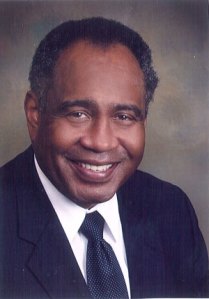
Dr. Ennix Coyness

Dr. Coyness Ennix

Do you hire staff to raise money for your organization or are staff members responsible for identifying and motivating volunteers who have the passion and connections to secure the money you need?

We believe it is volunteers who are responsible for raising funds for non-profit organizations. The Alameda County Health Care Foundation’s current campaign to raise $2.6 million for an angiography suite for Highland Hospital is a great example of volunteer leadership.

Working together the foundation’s executive director and the CEO of Alameda County Medical Center are engaging individuals from across Oakland to help raise the last $750,000 needed by the campaign. Cherlyn Spencer, the executive director, and Wright Lassiter III, the CEO have recruited an impressive group of Oakland’s finest to help ensure that all Oakland residents have access to state-of-the-art life-saving equipment that helps patients suffering from trauma and those who have heart conditions or vascular problems.

Volunteer leaders reported on their fundraising activities this past week with a reception at the new Lake Chalet Bar and Grill Restaurant. The costs of the reception were paid for by a foundation board member as a way of demonstrating support and reducing fundraising costs. At the meeting the chairs of the campaign’s divisions shared their plans and activities. Participating were Paul Gallagher, a Senior Vice President at Wells Fargo, who reported on the work of the major gifts division and the foundation’s board of directors; Dr. Coyness  Ennix from the medical center who reported on the medical community’s participation; Reverend David Kiteley of Shiloh Christian Fellowship and International Ministries and Father James Matthews of St. Benedict Parish who are engaging the faith community; and Tony Lynch of Alta Alliance Bank and Anthony Thompson, Vice President of Bank of Alameda who are co-chairing the corporate and business division.

These volunteers will be supported by foundation staff who are providing campaign information materials as well as suggestions and strategies to help volunteer leaders meet their fundraising goal. Staff also secured a matching grant of $1 million. This provides motivation for giving as each $1 donated will result in $2 for the campaign. More importantly all funds raised will help ensure that anyone suffering chest pains – regardless of their health insurance status – can have access to the equipment that makes a difference between full recovery and long-term disability, and even between life and death.

To get involved or make a contribution call (510) 437-8366 or visit www.achcf.org.

Planning for change – executive transition

ByronJohnson

Byron Johnson, Project Director, Compasspoint Nonprofit Services

Change is a part of our personal lives and a part of organizational life. We asked Byron Johnson at CompassPoint Nonprofit Services a few questions about the process of planning for a change in executive leadership.

What is a succession plan and why is it important for a non-profit organization to have one?
Succession planning builds staff skills towards achieving an organization’s strategic vision, builds the leadership capacity of staff, and develops a pool of potential management successors.  It also provides the opportunity for some organizations to diversify their agency leadership.

What should the succession plan include?
There are two types of written succession plans: 1) an emergency succession plan, and 2) a departure-defined succession plan.

An emergency succession plan ensures that key leadership and administrative functions and services continue without disruption in the event of an unplanned, temporary absence of an administrator. It should include the following components:
1. A current description of the key functions of the executive director
2. A list of functions that would be covered by an acting director, what his or her authority would be, and which functions would be covered by other staff, e.g., government funder relations covered by the Director of Programs.
3. Who has the authority to appoint the acting director.
4. Standing appointee(s) to the position of acting director (with first and second back-ups) and compensation for acting director(s).
5. A cross-training plan for the identified back-ups that ensures they develop their abilities to carry out the executive director’s key functions.
6. A description of how the Board will support and supervise an acting director.
7. A communication plan in the event of an emergency succession (who gets notified and when).
8. An outline of procedures to be followed in the event that an emergency absence becomes a permanent absence.

What are the challenges we might face if our executive left and we didn’t have a plan in place?
Lack of succession planning can result in what we call a post-transition “meltdown”.  An organization can become so traumatized when faced with the prospect of dealing with an unplanned leadership transition that program delivery, funding, and by extension, the whole community can be adversely affected.

What is a departure-defined success plan?
A departure-defined succession plan is created when an organization’s leader has announced they will leave in two or more years.  This plan includes identifying the agency’s goals moving forward, determines what the skills their successor will need to achieve those goals, and identifies what in the agency needs “upgrading” (board governance abilities or fundraising capacity, as examples) in order for the agency to advance their goals.  The two year planning timeline gives the departing executive and others time to address some of the upgrades before the successor comes on board.

Related to this is another way of thinking about succession planning: Strategic Leader Development, which is the ongoing practice of defining an organization’s strategic vision, identifying the leadership and managerial skills necessary to carry out that vision, and recruiting and maintaining talented individuals who have or can develop those skills.  This is also sometimes referred to as “building the bench”.

What should a departure-defined succession plan include?
It should include the following elements:

a) A plan for dealing with the personal and professional barriers for the executive director who’s leaving.
b) Setting a date for the executive director’s last day in the office.
c) Any plans for grooming their successor (when appropriate).
d) Integrating the succession plan into the agency’s broader strategic plan.
e) A communications plan—who will be told when about the executive’s planned departure?
f) Conducting a “Sustainability Audit” to identify the operational upgrades needed.
g) Plans for solidifying the management team, if applicable.
h) Identifying board and staff back-ups for the executive’s key relationships.
i) A plan for putting finances in order.
j) A plan for building financial reserves and securing multi-year funding.
k) Agreement on the ED’s emeritus role, if the departing executive will have an ongoing formal relationship with the agency.

How does the presence or absence of a succession plan impact fundraising?
Most funders and supporters breathe a sigh of relief when there is some form of succession planning rooted in an organization.  Knowing that the organization can and will continue in the face of leadership transition makes everyone feel at ease and as a result prevents many fundraising hiccups that may occur during a transition.

For more detailed information on success planning visit www.compasspoint.org or www.transitionguides.com.

Byron Johnson, CFRE is a Project Director for CompassPoint Nonprofit Services, one of the country’s leading nonprofit consulting organizations, based in the San Francisco Bay Area. Prior to joining CompassPoint, he worked in senior development positions for San Francisco State University, the East Bay Asian Local Development Corporation, and the YMCA of the East Bay. A past board member of the Golden Gate chapter of the Association of Fundraising Professionals, he is currently an advisory board member of the Multi Cultural Alliance, a special year-round fellowship program designed to diversify the fundraising profession and to develop skills among aspiring under-represented fundraising professionals. Mr. Johnson consults in fund development and other areas of organizational capacity building, which include fundraising planning and coaching, strengthening foundation and individual donor development work, and donor solicitation training.


Boards and Fundraising: Common Complaints and Proposed Solutions

Is Your Board a Fundraising Board?

Is Your Board a Fundraising Board?

We hear a lot about boards and fundraising.  Below are comments and questions we hear from leadership and staff of organizations and from board members.  Do these sound familiar? Take a look.

Common staff comments and questions:

  1. How can we get our board more involved with fundraising?
  2. We give them a goal each year, but they never meet it.
  3. We can’t get 100% of our board to give.
  4. Our board is more interested in policy than in fundraising.
  5. Everyone agrees on our fundraising plan at the board meeting, but board members just don’t follow through.

Common board comments and questions:

  1. We are willing to get involved, but the goals are unreasonable.
  2. I didn’t join the board to raise money.
  3. They keep changing the fundraising goal – I need a strong and consistent case for support before I introduce my contacts to the institution.
  4. The CEO is unwilling to meet with prospective donors.
  5. I keep asking for training but I really haven’t gotten any yet.

It is always easier to point the finger at someone other than ourselves when we fall short of our goals. Here are some actions for staff and board members to take that can help increase collaboration in the area of fundraising. Circle each of the actions you are willing to take.

Staff Actions

  1. I am willing to meet individually with each board member to review our fundraising goals and objectives and to ask each board member how she or he would be willing to help us meet these goals.
  2. I am willing to let the board determine its fundraising goal.
  3. I am willing to secure ongoing fundraising training for the board that includes time for role playing, time for the board itself to agree upon a fundraising goal, and time for the development of strategies regarding how board members will achieve their agreed upon goal.
  4. I am willing to integrate quick and fun activities into all our board meetings that build the fundraising skills of the board.
  5. I am willing to work with the board president to learn how she would like to personally solicit each board member. I am willing to provide her with support, coaching, materials and training as needed so that she can take ownership of the board solicitation process and ensure 100% giving by all board members.
  6. I am willing to create a culture within our organization that is accountable, transparent and responsive to donor questions and requests.

Board Actions

  1. I am willing to make a gift to the institution that represents one of my largest annual philanthropic donations.
  2. I am willing to engage in fundraising as part of my responsibility as a board member even if feels uncomfortable to me.
  3. I am willing to invest the time it takes to become conversant in the mission, goals, programs and strategic plan of the organization I serve.
  4. I am willing to ask those I know whose values are in alignment with those of the institution I serve to make a gift to the institution or to a specific project.
  5. I am willing to ask questions of the organization’s leadership so that I can best respond to questions that other people may have about the organization. I am willing to ask the difficult questions that people talk about privately but won’t address publicly.
  6. I am willing to take the initiative to make sure that our board meetings always include active discussion and reporting by board members on the topic of fundraising and what we are doing to fulfill our agreed upon fundraising agreements.

It is always easier to point the finger at others. Our question is this – what are you willing to do?

Saad & Shaw provides organizations and institutions with creative and engaging board workshops. If you would like for us to work with you, please let us know. An easy first step is to work with How to Solicit a Gift: Turning Prospects into Donors. This book is written for fundraising volunteers. It walks the novice and the professional through the process of preparing to solicit, as well as guidelines for making the ask, and following up.

How diverse is your board?

How do you define diversity?The board of directors of a non-profit organization is responsible for the organization’s financial health. The board is also charged with hiring and evaluating the executive director, creating policies and procedures that guide the work of board and staff,  with articulating the organization’s mission and vision, and ensuring the organization has access to the funds it needs to deliver on its mission.

But who are these board members? Who is making decisions for the organizations we rely on and are engaged with? If you are a member of a church or other religious organization, attend or work at a community college, seek food from a local non-profit or food bank, visit a museum, ride the bus or visit a hospital you are interacting with one of the thousands of Bay Area non-profits. And each is governed by a board of directors. They are making decisions that impact which services are offered, how donated funds are used, which government grants are pursued, and ultimately how these organizations will help – or not help – individuals, families and communities.

Board members who govern public agencies such as transit authorities and community colleges are elected. Others such as board members of faith-based organizations, private colleges and grass roots organizations are selected by people who are already sitting on the board. Still others are elected by members of the organization. This is true of membership organizations such as the Sierra Club.

The composition of the board is increasingly important to funders, donors, staff and the very people served by an organization. But what is diversity? The San Francisco Foundation holds diversity as a core value that guides its work. They define diversity as “the range and variety of characteristics and beliefs of individuals that encompasses, but is not limited to, race, ethnicity, gender, gender identity, sexual orientation, disability, age, economic class, immigration status, and religious belief.”

Here is our question for your organization – how do you balance your board’s membership? How do you ensure your board represents the people you serve? That it also includes people with access to wealth and decision makers? Do you engage individuals who can provide guidance in the areas of financial management, fundraising, personnel, and emerging trends in your content area? Are your board members required to conform to a specific viewpoint? Is agreeing with the board chair or executive director a requirement for membership? Each organization answers these questions differently. How does your organization give life to diversity?

© Copyright 2009 – Mel and Pearl Shaw