Tag Archives: blacks in philanthropy and fundraising

Community College Trends


Community colleges play a vital role in educating people of all ages across our country. Enrollments are increasing as people look to gain new skills in our changing and challenging economy. Those seeking a four year degree are often beginning their educations at their local community college. They know they can receive quality education at a much lower price. At the same time community colleges are facing challenges such as decreased state funding, and the need to provide services and scholarships not covered by funds from state government allocations or federal grants.

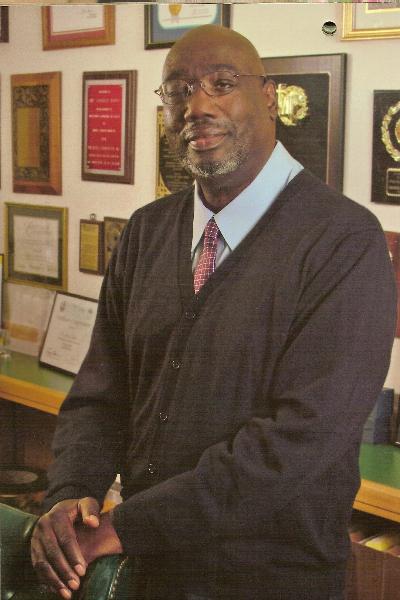
We wanted to know more about community college trends and so we reached out to Robert “Bobby” McDonald, a member of the California Community Colleges Board of Governors. If you have met Bobby you won’t forget him! He began his education at a community college – Los Angeles Harbor College – and is a strong advocate for community colleges.

Saad & Shaw – What are current and emerging trends within community colleges?


Bobby McDonald – I really believe the most critical trend is understanding that the usual sources of income have dried up.  Funding from federal and state, due to our current financial climate, will force community colleges to seek that innovative and entrepreneurial spirit.  Community colleges will have to revamp and outreach in the community, both public and private, to garner resources. It’s no longer business as usual.  Outside sources of revenue will be needed for program development, athletics and scholarships.  Community colleges will have to build stronger relationships and partnerships while securing stronger relevance, like the four year institutions, especially in the fundraising arena.

Saad & Shaw – What is the profile of California’s community college student?


McDonald – The profile of California community college students is as varied and diverse as the 112 campus system.  The 2.9 million students range from high school students using the community college for additional classes or AP courses; to the returning veteran’s reintegration process with education, career technical support and adjustment; to the laid-off worker or career changing individual who is seeking a necessary skill set change.  The age group is from 17 to 68, more women than men, but very, very multicultural, cross-cultural and diversified, similar to the make up of our communities.

Saad & Shaw – What do you envision as the future role of community colleges?


McDonald: The mission of the California Community College’s Board of Governor’s is “Empowering Community Colleges through Leadership, Advocacy and Support.”  During these difficult financial times, the Board will play a significant role for the future, especially maintaining the precepts and enhancing the mission. We are forced to review, revise and re-evaluate the way we go to market.  Key issues such as basic skills, transfer, career technical training, counseling, and graduating are paramount.  As we look into the upcoming “Green Era,” major corporations are already investing in the community colleges to begin to train and educate students for these jobs. We will always be there for that second chance, for that new wave of technology and more importantly, for that student or employer that needs that special training or help with training.

Keeping Alive the Dream of a Better Life for San Francisco’s Bayview Seniors

Dr. George Davis

The San Francisco Bay Area lost an icon and hero last month when we lost Dr. George Davis. Dr. Davis was a true visionary, a community leader, renowned gerontologist, minister, soul food connoisseur, sports fanatic, and devoted husband.

First there are his many worldly accomplishments: He led San Francisco’s Bayview-Hunters Point Multipurpose Senior Center for 32 years, and was ordained as an Associate Pastor at the neighborhood’s Metropolitan Missionary Baptist Church. He continued working, even after losing most of his sight to diabetes and fighting three types of cancer.

He received numerous awards and recognition for his 32 years of service, including awards from Senator Feinstein, House Speaker Nancy Pelosi, Senator Mark Leno, Supervisor Sophie Maxwell, and the National Council of Negro Women. He was the founder of the National Black Aging Network and was an associate faculty member at Stanford’s Geriatric Education center.

If you grew up in Oakland you might have met George Davis at Oakland’s McClymonds High School. Or maybe you played pool with him when he was known as Oakland Slim in the pool halls. Or, later after he had earned his Ph.D., he might have been your professor at San Francisco State University where he taught gerontology.

But one thing is certain: If you lived in the Bayview district you knew and loved Dr. Davis. Bayview-Hunter’s Point is a largely African American, underserved neighborhood on San Francisco’s southeastern edge. Dr. Davis got his start there as an intern at the local senior center. By 1978 he had became its executive director. He led it for 32 years, until his death on March 8th at the age of 68.

Today, the Senior Center offers recreational activities, free food distribution, and diverse social services. A separate adult health center provides health care to seniors that enable them to remain in their homes while receiving care at the center Monday through Friday. But Dr. Davis had much bigger plans for the area’s seniors—and that’s how we met him.

Six years ago Brenda Wright, a Senior Vice President at Wells Fargo Bank, asked us to help Dr. Davis and his wife Cathy create a strategy to raise funds for an “Aging Campus” in the Bayview. The first of its kind in the country, the Aging Campus is Dr. Davis and Cathy Davis’ innovative plan to provide housing and services for seniors in the area. We worked with Dr.  Davis and Cathy, and fell in love with them both. Dr. D, or “Doc”, as he was affectionately called, and his wife were an inseparable team.

He was a common man who never forgot his own humble roots in the projects of Richmond and Oakland. He was ‘old school;’ he was a man of his word. More than anything he taught us the importance of relationships, of humility, and patience. Even when he had major health struggles, he never let his personal challenges get him down. When the average person would have said, “no way can we do this,” Dr. Davis said “we can and we will!”

Dr. Davis was a steady champion for the rights and dignity of a demographic largely forgotten in our modern society: African American seniors. He fought to change the policies and economics that leave our elders neglected, isolated, and without services in their own community. He fought to ensure that those who had contributed to the growth of the City had a place to call home as they aged. He embraced Bayview — a neighborhood plagued with poverty, crime, and environmental pollutants from its former life as a naval shipyard – when few others did and sought to give it, and its residents, the dignity they deserve.

Dr. D’s vision for seniors includes high quality housing, healthcare services, and activities that promote physical and mental health. He wanted the needs of African American seniors to be the starting point for the design of buildings and services that would allow them to remain in the Bayview as they aged.

We believe in this vision and we believe in Dr. Davis. The man we loved and admired left us too soon. But he left us with an important mission to fulfill: the creation of the Aging Campus.

The idea of the Aging Campus has been endorsed by the local San Francisco Redevelopment Agency’s Project Area Committee (PAC) and is recommended as a key component of the area’s redevelopment plan.  Partnerships, coordination, and resources are required to make his vision a reality.  The time is now to take this dream and make it happen for the current and future seniors of Bayview Hunters Point.

We ask you to help realize this important vision and support dignity for seniors in the Bayview by making a gift to the Dr. George W. Davis Legacy Fund, c/o Bayview Hunters Point Multipurpose Senior Services (BHPMSS), 1706 Yosemite, S.F., CA  94124. Their website is: http://www.bhpmss.org/home.

Thanks to the Bayview Hunter’s Point Multipurpose Senior Services, Inc. for information used in this blog.

© Mel and Pearl Shaw 2010.

Yes We Can – Again!

President Obama

On March 28th the House of Representatives passed historic health care reform. We were ecstatic! Millions of Americans and their families will soon experience a direct change in the reality of their lives – in their access to health insurance, and most importantly, in health care itself.

The next morning we received an email message from President Obama thanking us. In the email, which addressed us by our first names, Obama didn’t write about his prowess as a negotiator, or about how he is delivering on his campaign promises, or about how this impacts future elections. No. He focused his message on gratitude to us. Gratitude to the American people. His was clear. He communicated the tangible and intangible benefits that we as Americans will receive with the legislation’s passage. And he ended by reinforcing and repeating  the same empowering message he has consistently delivered – “Yes we can!”

Here’s a little bit of what he wrote to us — and millions of others:

Mel and Pearl – For the first time in our nation’s history, Congress has passed comprehensive health care reform. America waited a hundred years and fought for decades to reach this moment. Tonight, thanks to you, we are finally here.

Consider the staggering scope of what you have just accomplished:

Because of you, every American will finally be guaranteed high quality, affordable health care coverage.

Every American will be covered under the toughest patient protections in history. Arbitrary premium hikes, insurance cancellations, and discrimination against pre-existing conditions will now be gone forever.

And we’ll finally start reducing the cost of care — creating millions of jobs, preventing families and businesses from plunging into bankruptcy, and removing over a trillion dollars of debt from the backs of our children.

But the victory that matters most tonight goes beyond the laws and far past the numbers.

It is the peace of mind enjoyed by every American, no longer one injury or illness away from catastrophe.

It is the workers and entrepreneurs who are now freed to pursue their slice of the American dream without fear of losing coverage or facing a crippling bill.

And it is the immeasurable joy of families in every part of this great nation, living happier, healthier lives together because they can finally receive the vital care they need.

This is what change looks like….

Tonight, thanks to your mighty efforts, the answer is indisputable: Yes we can.

Thank you,

President Barack Obama

Once again, we suggest you take a page from the President’s playbook – be gracious, consistent, strong, smart, and focused. Always thank those who help you deliver on the mission and vision of your organization. Remember, it is not about you – it is about the cause you serve and the people who help you bring an important vision and mission to life.

© Mel and Pearl Shaw 2010.

HBCU support – its alive on the West Coast!

James Mayo II, Vice President, UNCF

James Mayo II, Vice President, UNCF

“All that I am and ever hope to be I owe to my family and to Howard University, an HBCU” – James H. Mayo II

We recently talked with James Mayo, Western Regional Vice President for the United Negro College Fund about the role of historically black colleges and universities (HBCUs). Here is some of what he had to share.

Saad & Shaw: What do you see as the important role of HBCU’s today?

James Mayo: There are three principle reasons why our HBCUs are as indispensible today as they were when they were founded more than 150 years ago. First, these institutions provide a level of affirmation and care that allows our students to learn and grow in a climate where people are genuinely concerned that they survive and thrive. Faculty and administrators come from similar economic situations, and they know the challenges that so many of our students face. Second, the cost of a college education at an HBCU is one third of that charged by majority institutions.

HBCU’s stretch funds farther than larger majority institutions. This is our history. This is what we have done since our founding.  The third reason is the low faculty-to-pupil ratio that affords students the opportunity to work more one-on-one with faculty members.  There is nothing more compelling, more urgent, more immediate than to afford higher education opportunities to those African American students who, but for HBCUs, would never have access to the low faculty-to-pupil ratio that results in the attention and care that they need and succeed with.

Saad & Shaw: In your experience, why do people in California support the UNCF?

James Mayo: First of all, the one thing we can all agree upon as Americans is the importance of education. People support UNCF in largest measure because of the quality of education that is provided at a very low cost. People on the west coast support UNCF because of the many testimonies provided by people who have attended our colleges. Likewise, corporations see the investment. They understand that the cost ratio is low. These institutions do more with less than most majority institutions. These schools have soul. Soul is the ability to take nothing and make something out of it. HBCUs take students from all environments and they stretch a small amount of funds to create an environment where our students can succeed.

We have always had as our mission to go forth and provide service to those who do not have. “Enter to learn. Go forth to serve.” Service is at the core of our colleges and universities. This is another reason why people support UNCF. HBCUs are as vital today as they were on the day they were first founded. Their historical mission is as important as it was when envisioned by their founders. We are working not only for our local communities, but for our nation, our world, and for all mankind…

Join UNCF supporters at the annual UNCF gala on Saturday February 27th at the Oakland Marriott. For more information call (415) 956 – 1018 or visit www.uncf.org.

And as always, have a FUNdraising good time! – Mel and Pearl Shaw

Timing is everything. Or is it?

Allen Temple reaches $1 million mark

Allen Temple Baptist Church of Oakland, CA launched its $5million capital campaign in October 2008. If you can recall that was the month of the American economic meltdown. Newscasters were crying the sky is falling….

But the church had been preparing for almost a year to launch their campaign to pay off the mortgage on their family life center building, renovate their training center, and build an endowment for social justice programming. They kept with their schedule not knowing that the remainder of 2008 and all of 2009 would prove to be very difficult times for fundraising in general.

But this volunteer-led campaign raised $1million in gifts and pledges during the first year of the campaign. They are 33% towards their goal of raising $3million from within the church family. They seek to raise an additional $2million from community stakeholders, foundation and corporations. And work on that has begun…

How did they do it? Here’s what campaign chairs Willis White and Connie Walker attribute their success to:

  1. At the core of our work is the belief that through God, all things are possible.
  2. This is something we believe is important to the life of the church and our community.
  3. We spent time securing buy-in from the church’s leadership. And we got it. We talked, we listened to objections, we made adjustments. The full congregation was behind the campaign before we launched. And our church leaders volunteered to provide campaign leadership as well.
  4. We put in place a system to ensure that funds given to the campaign by church members will be used to accelerate payments on the mortgage for our Family Life Center.
  5. We know our church culture and we designed a campaign that works with our church culture.
  6. We hired professional fundraising counsel to guide us, train us, and help us prepare.
  7. The pastor supports the campaign, the church trustees support the campaign, our deacons, ministers and other leaders support the campaign.
  8. We looked at how we had approached fundraising in prior campaigns and learned from our past experiences. We knew what we wanted from counsel and how we wanted counsel to work with us.
  9. We committed to treating every church member as an equal and committed to ensuring we talked personally with each member regardless of what size gift we thought they could give to the campaign.
  10. We engaged in a transparent process and regularly reported campaign results to the full congregation.

Join us in congratulating Allen Temple Baptist church and encouraging them as they move forward in 2010. Their campaign illustrates that when people believe in the importance of a specific campaign they are willing to give and get involved. It’s about more than timing.

Leaders in our community – NABA

National Association of Black Accountants

Earlier this month we were in Houston, TX to conduct a workshop at the quarterly board meeting of the National Association of Black Accountants, Inc. We were impressed by the high level of commitment and leadership we witnessed. With local, regional and students chapters across the country NABA is an example of a well run volunteer-led national organization. Founded 39 years ago NABA represents the interests of more than 100,000 minorities as they further their educational, professional, and career aspirations in the related business fields of accounting, consulting, finance, and information technology.

We had the opportunity to talk with Moire Rasmussen from NABA’s San Francisco Bay Area Chapter who shared some of her passion for NABA with us. Moire has been a NABA member for 13 years, is a former national board member, and currently serves on the resource committee. She works for PriceWaterhouseCoopers where she is a market diversity leader.

The San Francisco Bay Area chapter has over 100 members. The chapter supports members’ professional development and encourages young people to pursue accounting careers. One of their programs is the Accounting Careers and Awareness Program, a week-long residency program for high school students that teaches students the basics of accounting including balancing checkbooks, understanding credit, gives scholarships ($15,000 last year), and provides help to young people as they apply to college.

We asked Moire why gives so much of her time to NABA and why she serves on the resource committee. She said “I’ve been given opportunities that would not have been afforded to me anywhere else. The people I’ve met and the guidance I’ve been given has allowed me to grow professionally. I want to help others see the value NABA has to offer, and that takes resources.”

She – and NABA as an organization – is committed to helping others enter the accounting profession and to grow in the profession. She carries a special message to young people in high school and college.

“Accounting is the foundation of business. Business is the foundation of how our country survives. No matter what you do in life you need to understand the basics of business. Accounting will give you those basics. Even if you do not become a Certified Public Accountant, majoring in accounting will open more doors than you can imagine.”

If you are interested in a career in accounting or want to grow in your career visit www.nabainc.org.

Yes We Can – Building HBCU Endowments

Dr. John Berry

Dr. John Berry

Endowments are an important component of institutional stability and sustainability. They are a way to help address future needs and to leverage fundraising now and in the future. The growth of endowments at all colleges and universities has come under increasing scrutiny as those institutions with meaningful endowments examine their investment policies, and those with small or developing endowments look at how to grow theirs.

We asked Dr. John Berry to provide his insights in this guest blog. Dr. Berry’s dissertation focused on effective fund raising operations for endowment development.  Let us know your thoughts.

It’s safe to write that these are times in which greatness comes to the fore, as development professionals manage to make a way out of no way. It seems that all around us the fund raising landscape looks extremely bleak.

If you work in higher education in this country, these are challenging times.  Large, midsized, and small colleges and universities are struggling with the reality of shrinking lines of credit or perhaps no line of credit at all. This situation has the potential to cause a catastrophic system failure for numerous colleges and universities, which is an unimaginable scenario.

At the Historically Black University where I am employed, my weekly directors’ meetings have become dire, to say the least. It’s clear from all of the power centers within the university that this institution is experiencing the onset of a massive reduction in its operational budget, stemming from the extremely poor condition of the national economy. The briefing that I’ve received is sobering.

But the circumstances surrounding my institution are not isolated. This university is not the exception but rather the rule, as its leadership grapples with the very difficult decisions of scaling down programs, disciplines,  and the very heart of any college or university—its faculty and staff.

The drastic funding concerns of higher education nationwide are simple and yet complex in their formulation. Historically, the primary resource formula is based on a college’s or university’s projected student recruitment. The more students successfully enrolled, the more tuition fees paid by Pell grants, along with scholarships, fellowships, and students loans to supplement financial aid packages. These are the power centers/funding streams of colleges and universities’ chief financial officers.

The present economic climate of institutions indicates that students from low-income households or those facing the loss of parental employment and federal grants no longer will no longer be able to cover the full cost of tuition. These students often must defer their dreams of pursing a college degree.  In the past, a viable option for a family’s tuition shortfall was applying for a private-sector student loan which generally supplements an existing federal grant thereby resulting in a zero balance with a college or university for the academic year.

At public universities such as mine, we have seen our state economy drop. Therefore state tax revenue has dropped, meaning massive operational budget cuts along with the act of reverting existing allocated funds back to the state’s treasury.

The question then becomes, what are the options for small to midsized schools like those within the HBCU sector? As a professional development officer/fundraiser at an HBCU, I have—along with many of my colleagues at other HBCUs—seen the handwriting on the wall. But I have been for the most part unable to build up counter measures to address difficult times such as this unprecedented economic downturn. All but a very few colleges and universities, if called upon to do, so could fully cover their annual operating budgets by drawing on the school’s private reserves resources. The critical aspect to this sustainability function is that the larger a college or university endowment, the more options an institution’s leadership has to ward off periodic economic downturns.

The fundamental question for higher education leadership of small and midsized colleges and universities must be “what is the annual yield of primarily unrestricted funds coming from their respective institutions’ endowment portfolios?’ The pure income from a college- or university-invested endowment has become of the utmost importance to chief financial officers. The leadership at HBCUs will be called upon to aggressively manage these funds for maximum growth toward annual income yield.

The Challenges for Leadership
Given the grim economic prognosis for the United States—perhaps for the next few years—nationally, higher education will be called upon to do more with less government-allocated and philanthropic resources. However, the reality is that colleges and universities with larger endowments portfolios will probably fare better than those that do not. The late Dr. Benjamin E. Mays, former president of Morehouse College in Atlanta, Georgia, said once in an affirming speech to “always think big.” This should be the rallying cry for 21st century HBCU sector leadership.

The Nobel Laureate and Yale economist James Tobin said in regard to higher education leadership and endowment management responsibility in 1974, “The trustees of endowed institutions are the guardians of the future against the claims of the present. It is their task to preserve equity among generations.”

The challenge in the early part of the 21st century is daunting for most institutions of higher education, but one could argue even more so for the HBCU sector and these institutions fund raising officers.  However, if history does nothing else in this kind of situation, it can provide a road map from which a plan of action can be developed and implemented to achieve a new desired outcome. Case in point:  Dr. Mary McLeod-Bethune, founder and president of the college which bears her worthy name, started that institution with $2.50. However when Dr. Bethune stepped down as president of the college, it had a $2 million endowment. As noted in her biography, Dr. Bethune herself cooked and sold fried-fish sandwiches to enhance the schools fund raising efforts. A word to the wise is sufficient: We are able.

John M. Berry
Chief Development Officer
South Carolina State University Student Affairs

Planning for change – executive transition

ByronJohnson

Byron Johnson, Project Director, Compasspoint Nonprofit Services

Change is a part of our personal lives and a part of organizational life. We asked Byron Johnson at CompassPoint Nonprofit Services a few questions about the process of planning for a change in executive leadership.

What is a succession plan and why is it important for a non-profit organization to have one?
Succession planning builds staff skills towards achieving an organization’s strategic vision, builds the leadership capacity of staff, and develops a pool of potential management successors.  It also provides the opportunity for some organizations to diversify their agency leadership.

What should the succession plan include?
There are two types of written succession plans: 1) an emergency succession plan, and 2) a departure-defined succession plan.

An emergency succession plan ensures that key leadership and administrative functions and services continue without disruption in the event of an unplanned, temporary absence of an administrator. It should include the following components:
1. A current description of the key functions of the executive director
2. A list of functions that would be covered by an acting director, what his or her authority would be, and which functions would be covered by other staff, e.g., government funder relations covered by the Director of Programs.
3. Who has the authority to appoint the acting director.
4. Standing appointee(s) to the position of acting director (with first and second back-ups) and compensation for acting director(s).
5. A cross-training plan for the identified back-ups that ensures they develop their abilities to carry out the executive director’s key functions.
6. A description of how the Board will support and supervise an acting director.
7. A communication plan in the event of an emergency succession (who gets notified and when).
8. An outline of procedures to be followed in the event that an emergency absence becomes a permanent absence.

What are the challenges we might face if our executive left and we didn’t have a plan in place?
Lack of succession planning can result in what we call a post-transition “meltdown”.  An organization can become so traumatized when faced with the prospect of dealing with an unplanned leadership transition that program delivery, funding, and by extension, the whole community can be adversely affected.

What is a departure-defined success plan?
A departure-defined succession plan is created when an organization’s leader has announced they will leave in two or more years.  This plan includes identifying the agency’s goals moving forward, determines what the skills their successor will need to achieve those goals, and identifies what in the agency needs “upgrading” (board governance abilities or fundraising capacity, as examples) in order for the agency to advance their goals.  The two year planning timeline gives the departing executive and others time to address some of the upgrades before the successor comes on board.

Related to this is another way of thinking about succession planning: Strategic Leader Development, which is the ongoing practice of defining an organization’s strategic vision, identifying the leadership and managerial skills necessary to carry out that vision, and recruiting and maintaining talented individuals who have or can develop those skills.  This is also sometimes referred to as “building the bench”.

What should a departure-defined succession plan include?
It should include the following elements:

a) A plan for dealing with the personal and professional barriers for the executive director who’s leaving.
b) Setting a date for the executive director’s last day in the office.
c) Any plans for grooming their successor (when appropriate).
d) Integrating the succession plan into the agency’s broader strategic plan.
e) A communications plan—who will be told when about the executive’s planned departure?
f) Conducting a “Sustainability Audit” to identify the operational upgrades needed.
g) Plans for solidifying the management team, if applicable.
h) Identifying board and staff back-ups for the executive’s key relationships.
i) A plan for putting finances in order.
j) A plan for building financial reserves and securing multi-year funding.
k) Agreement on the ED’s emeritus role, if the departing executive will have an ongoing formal relationship with the agency.

How does the presence or absence of a succession plan impact fundraising?
Most funders and supporters breathe a sigh of relief when there is some form of succession planning rooted in an organization.  Knowing that the organization can and will continue in the face of leadership transition makes everyone feel at ease and as a result prevents many fundraising hiccups that may occur during a transition.

For more detailed information on success planning visit www.compasspoint.org or www.transitionguides.com.

Byron Johnson, CFRE is a Project Director for CompassPoint Nonprofit Services, one of the country’s leading nonprofit consulting organizations, based in the San Francisco Bay Area. Prior to joining CompassPoint, he worked in senior development positions for San Francisco State University, the East Bay Asian Local Development Corporation, and the YMCA of the East Bay. A past board member of the Golden Gate chapter of the Association of Fundraising Professionals, he is currently an advisory board member of the Multi Cultural Alliance, a special year-round fellowship program designed to diversify the fundraising profession and to develop skills among aspiring under-represented fundraising professionals. Mr. Johnson consults in fund development and other areas of organizational capacity building, which include fundraising planning and coaching, strengthening foundation and individual donor development work, and donor solicitation training.

Passion, Creativity and Fundraising

Passionate Philanthropist

Vernon Foster: Passionate Philanthropist

When you work with a non-profit organization that is in line with your personal mission and values then everything is possible. Your creativity is sparked and you look to engage people with your non-profit and how you can advance its work.

Vernon Foster is an example of an individual who has combined his life passion with his philanthropy. A businessman who benefited from all that his father shared with him, Vernon has set out to offer to other young men what his father offered to him. After his father passed Vernon created the Charles P. Foster Foundation (CPFF) in his honor. The mission of the foundation is to assist African American youth, their parents and family members in leading meaningful, positive, successful lives and becoming productive citizens of society.  Vernon has worked to bring that mission to life by partnering with other people and organizations with a similar vision. He participates in collaboratives, has sought out national funding, and has begun piloting a model of what he would like to create – with others – to benefit young black men in the Bay Area.

For example, in 2001, Vernon donated 51 percent of the revenue from his company to CPFF for the purpose of providing jobs for graduates of the foundation’s Family Restoration Program and to help make the foundation financially self sufficient.

His most recent project is the publication of My Father Said: A Collection of Life Lessons. This book is another way that Vernon carries on his father’s legacy. It is designed for readers of all ages. Through the book Vernon brings to life his father’s message with stories from his childhood with his dad, photos and interviews with those who knew his dad. Throughout the book you will find life lessons from Charles Patrick Foster such as:

  • “Just because you go down the wrong road in life does not mean you can’t turn around.”
  • “If you speak the words, mean them, if not keep your mouth shut.
  • “Boy, here (in America) there is a recipe for everything to be successful. Your problem is you don’t want to follow the recipe.”

Vernon is offering his book as a gift to everyone who makes a gift the CPFF. You give to help advance the mission of the foundation, and the foundation gives you a gift to give to young people in your life. Visit the website at www.cpffoundation.org – give, get and give.

Fundraising – Your New Career

new_careerLinks updated: 2014

Is it time for you to start a new career? Is it time to make a difference in the world? To use your best skills for the benefit of those things you believe in the most? If so it may be time for you to become a fundraiser. Fundraising was listed as one of the top 30 careers for 2009 by US News and World Reports. (Thanks for Michael Magane for bringing this article to our attention!) What exactly is fundraising and why would anyone want to be a fundraiser?

Fundraising is a career with many opportunities for people with a variety of skills. We wrote about this  at the beginning of 2008. At that time real estate agents and mortgage brokers were reeling from changes in the housing market. We wanted people to know that the skills people have developed in these industries could be transferrable to fundraising. Today there is an even greater pool of people with strong skills, connections and experiences who can help build and sustain the fundraising capacity of non-profit organizations, hospitals, colleges, universities and churches. We updated our columns in 2009. (Links available at end of post)

We define fundraising as the process of bringing together organizations and institutions with the people and resources they need to deliver on their mission. It’s not arm twisting. Its’ not begging. It’s about partnership. It’s about helping individuals, families, businesses, corporations, foundations and government agencies identify those organizations who share their beliefs and who are bringing them to life.

Here is what we know about fundraising. People give to a diverse array of institutions, causes and programs. And there is a role for people with diverse skills, backgrounds, personalities and connections. Fundraising is conducted by professionals and even more so by volunteers. As a profession with a career-path there is room for introverts and extroverts, big-picture thinkers as well as people who are detail-oriented. It is for people who lean right politically and those who lean left. It is for people who are in career-transition, who are looking to make a difference and who are willing to learn. And it is for African Americans, Hispanics, Asian Americans and other people who until recently have not been well represented in all aspects of the profession. With changes in American demographics and the growth of the non-profit sector the need to diversify the profession creates new opportunities who people who have been volunteering with their churches, sororities, local schools, colleges and universities. And there are opportunities for people who are changing careers – whether voluntarily or involuntarily.

We believe our three-part series on the topic of careers in fundraising  may be even  more relevant now than it was originally written.  Here are a few key points:

  1. Positions are available with grassroots organizations, colleges, hospitals, national organizations, foundations, advocacy organizations, research institutes, churches, radio and television stations… — all types of organizations and institutions that are categorized as “nonprofits.”
  2. If you are able to secure work with a hospital, college or public radio or television station, you will learn the systems and procedures that represent best practices in fund development and fundraising. Working for one of these institutions can provide you with insight into the many different strategies and activities that comprise fundraising.
  3. If you can remember that your work is about the organization and those it serves and not about you, then you can be successful. People won’t be giving to you; they will be giving to the organization you represent. Your job will be to best promote its successes, the vision of its leadership and how donations are used to advance goals and programs.
  4. There are many entry-level, midcareer and senior-level positions within fundraising and fund development. There is also a gap between the number of positions that need to be filled and the number of individuals who are qualified to fill them. (Part three of the article lists common fundraising job titles and provides descriptions for these).

Part One  – Fundraising and fund development in the nonprofit sector are close cousins to sales and marketing in the private sector.  Learn about the benefits of a career in fundraising and fund development.

Part Two  – Find out what positions are available within the fields of fundraising and fund development