Is Your Board Engaged?

In our decades of work with non-profits we have worked with boards of all sizes, from large institutions to small grass roots organizations. We have worked with board presidents, members of development committees, and everything in between. This experience has taught us some valuable lessons about the crucial role of the board.

Here’s one key lesson: all organizations benefit from having an engaged  board. When your board is engaged it sets a tone and direction that is inspiring to all members of the organization.

Engaged board members attend meetings and show up prepared and on time. They serve as advocates for the institution, sharing their knowledge of its vision, mission, activities, future directions and impact. They understand the challenges facing the institution and are creative in helping find solutions and attract resources. They are team members who respect each other and are willing to check their egos at the door. The good of the institution is paramount.  As team members they are willing to roll up their sleeves and help make things happen. They are accessible and willing to partner with the executive director and staff members, volunteers, donors and funders to create solutions that help the organization deliver on its mission.

Engaged board members welcome transparency and accountability, and understand the need for honesty and policies that guard against conflicts of interest. They commit – as a collective body – to raising a meaningful percentage of the organization’s budget. Each member makes a significant gift to the organization. Significant is in relation to income, assets and connections.

Engaged committee chairs convene their committees and ensure goals and activities tie to the organization’s larger strategic direction. And those committees encourage participation by individuals from outside the board who can contribute expertise, skills and resources. Committee reports are distributed in advance of the board meeting so members can read them in advance.

Engaged board members are proactive in identifying opportunities and in alerting each other –and the staff – to potential challenges. When they have questions, they ask them. If they feel the organization is not headed in the right direction, they encourage thoughtful discussion. When they learn of developments in the field that could impact the organization, they share the information. When an outside perspective could help, they suggest consultants, workshops, or a visit from the leader of a comparable organization.

When we hear an executive director say, “my board supports me 100%,” our ears perk up. We wonder, “is that a good thing?” A board that questions, and encourages additional ways of looking at a situation can contribute to organizational health. When a board rubber-stamps the work of an executive director it may be a signal that board members are not engaged. Take a look at your board – what do you see?

What do you think? Let us know.


Replace Yourself – Sustain Your Board

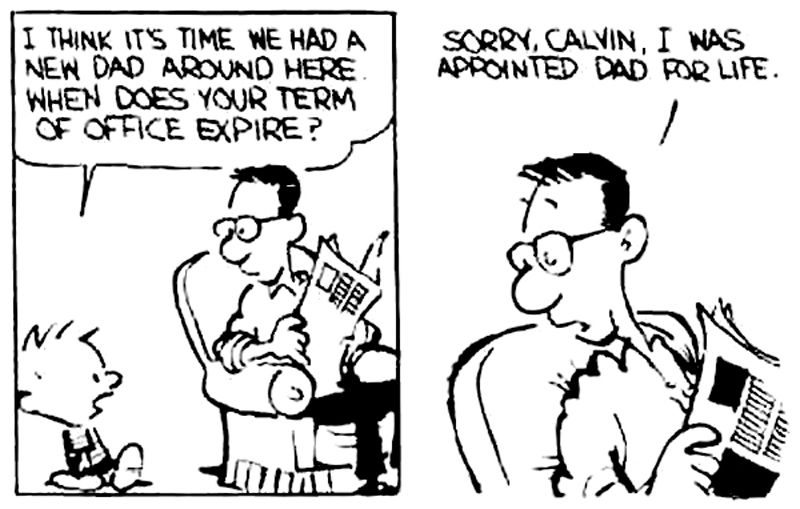
It is neither good nor advisable to serve on a board forever. While you may be deeply committed to the organization or institution you serve, you need to rotate off the board at the appropriate time. At least for a little while. Term limits help a board sustain a freshness and new perspective that can be lacking when too many board members have served more than four to five years. It can be hard for an organization to change when its leadership is static and lacking in “new blood.” With too many people who have been on the board a long time new board members can also feel frustrated when their ideas are not accepted, or the board seems “stuck in its ways.”

Term Limits

Rotating off the board can be good for the organization and good for you. Take a breather. Spend more time with your family. Take a class. Join the gym. Or volunteer for another board and learn how another organization or institution approaches similar or different issues.

But, before you leave, you need to replace yourself. We know – you’re irreplaceable. Given that truth, come as close as you can. Or – here’s a heresy – find someone to serve who could be an even more committed and engaged board member than you have been.

As a board member you know the organization’s strengths and challenges, and the skill sets, relationships, and access to funding represented within the board. You can help identify someone with a different skill set, perspective or constituency that will add value to the board. Think about who you know – personally or professionally – who is committed to the values and mission of the organization. Take the time to introduce them to other board members in a social setting. Invite them to meet the CEO or executive director, and to witness the organization in action. Share with your friend or colleague why you serve on the board, and ask him or her to consider serving as well.

As a committed board member you are almost morally committed to ensure the organization can move forward with strong board leadership. Do not leave it to the CEO or board chair to replace you. Be proactive and identify potential new board members who can help take the organization to the next level of its growth. Express your commitment by identifying new leadership. While ultimately it is the responsibility of the development committee to recommend new board members to the full board for consideration, you can ensure a strong pool of potential candidates. You’ve been effective – now bring someone else in to help build on your success.

Let us know what you think!


Federal Grants in Changing Times

Alan Kirschner

Many organizations and institutions have been fortunate to receive federal funding for one or more projects. These many have been small one-year grants, but many have received grants that are large in relation to the size of the organization’s overall budget. Many of these have been multi-year grants.

These grants have allowed many organizations and institutions to focus on program delivery knowing that their funding is “secure.” Some organizations have been fortunate enough to receive state, federal and local funding. Yes, there are a lot of hoops to jump through and lots of paper work, but at the end of the day this funding has been vital to communities and educational institutions across this country. Some of the funding may have been highly visible.  An example would be the federal stimulus grants that helped inject funding into the economy in recent years. Yet most funding is invisible to the people who are benefiting.

Some organizations and institutions that do not receive government grants have felt challenged to compete with those who have access to such funds, even though they too had a valuable service to offer.

Now, many organizations that have depended on government funding are finding their very existence may be in jeopardy due to cuts in federal funding and the impact these cuts are also having on state and local funding.

In order to get a better perspective on what is happening in the area of government funding we turned to Alan Kirschner, President of Kirschner and Associates, a consulting firm that helps nonprofits with program development, capital campaigns and fundraising.

Saad & Shaw – Let’s start at the beginning. With so many people critical of the federal government these days some of our readers may have forgotten why the federal government has offered grants.

Alan Kirschner – The federal government makes grant support available in areas it deems important to the national interest.  Of course, what’s in the national interest varies with the times, political clout, and the availability of resources. Much federal grant support goes to the state, which in turn redistributes the awards to local governments and to nonprofits.

Federal grant support is used to support a range of activities, including scientific research, environmental awareness and protection, career awareness, educational access, access to housing, health education and many other activities.  Many of the innovations we take for granted were based on research funded by the federal government, such as the discovery of DNA.  Much of the progress we’ve made in elevating access to education for low income students has been through federal grant programs, such as Pell Grants and Head Start. Careers that are considered vital to our nation’s future, such as in science, technology, math and engineering, have been promoted for many years with the help of federal grant support to nonprofits.

Nonprofits are a significant beneficiary of federal support.  It is estimated that about 8% of the budgets of nonprofits nationally come from federal grants.  If we include fees from government services, like Medicaid and Medicare, federal support to nonprofits provides almost one-third of the budgets of nonprofits nationally.

Saad & Shaw – How has the process of applying for federal grants changed over the years?

Alan Kirschner – Applying for federal grants varies with the agencies involved and the type of program.  Generally federal grants require more paper work and more documentation than similar grants in the philanthropic world. It often requires more cultivation in terms of getting to know the people involved and their getting to know your organization. The reporting and evaluation are very similar to what major foundations require.

Saad & Shaw – You have a long history of working to secure federal funds for nonprofit organizations and institutions, especially historically black colleges and universities (HBCUs). Can you share with our readers what your experience has been over the years (with a few examples)

Alan Kirschner – I look at the federal government as simply the largest funder by far of the nonprofit sector.  They are like the Gates Foundation on steroids.  And they touch virtually all aspects of the work of the nonprofit sectors, not just those that a particular funder chooses to support. It’s very important from a nonprofit perspective to at least be aware of the potential for support from the federal sector.

Over the years what has surprised me about federal grants is the openness and flexibility of many federal agencies to award major grants that aren’t necessarily a part of a formal request for proposals (RFP). These are known as discretionary grants. Virtually all agencies have budgets which award discretionary grants and the individual awards can be sizeable – 6 and 7 figures.  Nonprofits should think about ways that by keeping within their own missions, they may be able to help address the goals of particular federal agencies.  When an agency sees that a nonprofit can help the agency achieve its bottom line by making a direct award to the nonprofit, it’s a win/win and the agency is more likely to consider a partnership.  The federal agency benefits by investing in a nonprofit that offers to make a measurable difference in its space, and the nonprofit benefits by carrying out its mission through support of the federal agency.

I’ve been involved with a number of such programs. For example, the Department of Defense was interested in expanding participation of minority serving institutions in their grant and contract programs.  They awarded a contract with the United Negro College Fund to increase participation of HBCUs in DOD programs.  HHS wanted to increase involvement of HBCUs in AIDS awareness programs.  Rather than working individually with HBCUs, HHS awarded a grant to UNCF to increase representation of HBCUs in AIDS awareness.  The Department of Energy wanted to expose students from low-income and underrepresented minority backgrounds to careers at DOE.  They awarded a grant to UNCF to administer a summer internship that exposed students to a variety of careers. Each of these awards came through discretionary grants administered by federal agencies.

Saad and Shaw – What about the current and future landscape? How have recent economic changes and changes in the political environment impacted government funding for nonprofits?

Alan Kirschner – With the federal stimulus funding over, current budgets for federal grants are tightening.  The prospects for future funding through the federal government are very uncertain.  The Administration may identify a few areas for increased support that are necessary to keep America safe and competitive. For the most part, federal grant support is almost certain to decline in the next several years and some of the budget cuts will be severe and many have already begun.

Saad & Shaw – What advice can you offer to organizations who are already seeing their budgets cut as funds are reduced?

Alan Kirschner –   It’s very important for nonprofits that have grown dependent on federal support to develop strategies for replacing federal funding with private dollars. It’s critical to have a plan for doing this.  Private philanthropy won’t be interested in replacing federal dollars.  New strategies must be developed to appeal to new funding interests.

Saad & Shaw – would you share with our readers an example of how an organization or institution has successfully transitioned from a dependence on federal funding, to other forms of funding?

Alan Kirschner – I would offer the example of the Partnership for Public Service, a national nonprofit that focuses on federal public service.  They had received federal support to encourage young people to consider federal careers.  As those funds were drying up, the Partnership developed a plan to seek support from foundations interested in higher education and public service.  Through this targeted strategy, PPS  received a larger, multi-year commitment from the Annenberg Foundation that exceeded what they were receiving from the federal government.  In addition to seeking private funders, consider whether it’s possible to develop a sustainable revenue stream through charging a fee for the service or activity provided.

Saad & Shaw – without naming names, would you share what has happened to organizations/institutions who knew they would be facing cuts (or elimination of funding), but did nothing about it?

Alan Kirschner –   It’s important for organizations receiving large federal grants to make sure they are in a position to cut a federally funded program without unduly impacting the rest of the organization.  Such programs should operate as fifth wheels, not as a core part of the organization’s funding. The organizations I’m familiar with that have been hit hard by federal cuts have either paired their federal operations as funding declined or were absorbed by other nonprofits.

Saad & Shaw – Where can our readers turn for more information about federal funding in specific and government funding in general?

Alan Kirschner –   The best source for federal grant information would be the website of the agency that your organization is interested in.  That will provide the most detail and should be most useful. Grants.gov is also a useful information source.

Saad & Shaw – Our last question, what words of wisdom do you want to share with our readers?

Alan Kirschner –  It’s never a good idea to be totally dependent on any one source of funding.  The federal government will remain the largest source of philanthropic funding in America even with dramatic cuts.  It will remain an important place to seek support. If you’re a current federal grant recipient, this is a time to renew your contacts with federal agencies and try to get as much information as possible about the prospects for continued support.    Your program people in the agencies can be advocates for your organization and the more you are on their radar the more likely you will be able to weather any coming storms. If your nonprofit doesn’t currently receive federal support, it’s important to recognize that federal grant research and development is a time-consuming process. It’s critical to have staff that can devote a significant portion of time to finding opportunities and following up.

To learn more about Kirschner and Associates call (301) 365-1773 or email a_kirschner@yahoo.com.

Let us know what you think. And, as always, have a FUNdraising Good Time! – Mel and Pearl Shaw

© Copyright Mel and Pearl Shaw. Mel and Pearl Shaw are the owners of Saad & Shaw. They help non-profit organizations and institutions rethink revenue sources. They are the authors of How to Solicit a Gift: Turning Prospects into Donors. Visit them at www.saadandshaw.com or call (901) 522-8727.


Is Your Phone Hurting Your Fundraising?

In the world of email, Facebook, Twitter, texts and blogs sometimes the phone gets overlooked. But it is a powerful tool. Especially, as demographers note, for people over a certain age. Many people grew up with the phone being the most immediate form of contact – the way to reach out and touch someone. Other ways are available, but there is an intimacy and yes, immediacy, that other methods don’t offer. With the phone you can actually talk with someone. You hear their voice, they hear yours. You can laugh, connect, make decisions, schedule appointments and then move on.

Don’t Let Voicemail Trip You Up

Once upon a time a great advance in the life of phone communication was voicemail. What began as a time saver can actually be a nightmare for many nonprofits, small and large. We suggest you take a moment to call someone in your organization from an outside phone and see what happens. Whether you are a hospital, college, or grassroots organization, you may be amazed by what you find. See how many menus you have to work through to get a voicemail recording for the person who may be the right one to help you. Then wait to see how long you have to wait to get a call back. If you are in the business of serving people – as many nonprofits are – test to see if phones help or hinder your service.

Beware the Gate Keeper Mentality

If you are an executive, an assistant can make all the difference in your life. But, what if he or she is actually a gatekeeper instead of a door opener? A non-profit leader we know told us a story that changed his perspective on business. One day he was trying to make an appointment to see an executive of a certain high profile agency. The receptionist was grilling him on who he was, and the nature of his requested meeting. In the middle of the conversation the executive walked out of his office and told the receptionist, “I hired you to make sure I stayed connected to the community, to open doors, not to close them.” Non-profits large and small need to have an open door, accessible culture.

Here’s a few reasons why – first, you never know who the person on the other end of the phone is. Your voicemail or your assistant may be “screening” a potential major donor. Or maybe he is creating a barrier between you and a potential volunteer. One organization we often call puts through all calls to the executive director without screening. She will talk with anyone, creating a warm and welcoming environment even if she is not the person who can really help you.

Here’s our point – take a moment to see if your phone is enhancing your organization or detracting from it.

Let us know what you think. And as always, remember to have a FUNdraising Good Time! – Mel and Pearl Shaw

Economic Impact of the Non-Profit Sector

Economic ImpactThe importance of non-profit organizations in our communities, as well as in our economy is sometimes underestimated. Food banks, sports teams, charter schools, museums, senior centers, research institutes, opera, job training programs, after-school programs, as well as many hospitals and colleges – are all non-profit organizations. And that means they all engage in fundraising of some kind.

If you are one of those people who fundraise for one of those important organizations –and they are all important — this column is written for you. According to the Independent Sector, a Washington, D.C.-based coalition of nonprofits that also works on policy issues, in 2009 nonprofits employed 13.5 million people, approximately 10 percent of the country’s workforce and 5.5 percent of the country’s gross domestic product. That’s a lot of people and a lot of jobs. And behind those people and jobs are fundraisers – both paid and volunteer.

Some non-profits such as hospitals and colleges have an “earned revenue stream,” comprised of fees for services or tuition. Many nonprofits depend on donated funds for or all or part of their revenue. And that includes hospitals and colleges. Employees and volunteers write funding proposals to public agencies, foundations, and corporations requesting their support. They host special events, send out letters, encourage people to give via text messaging, or using an on-line donate-now button. Some ask people in person to make a large gift. Others help families include their churches or beloved organization in their will or estate plan. Still others facilitate consumer-focused marketing ventures that bring together a non-profit and a business/ corporation that provide mutual benefits for the business, the non-profit, and the consumer. These are referred to as “cause marketing programs.”

But fundraisers don’t do it alone. Board  members play a special role in both fundraising and governing these organizations. They have a responsibility for the nonprofit’s financial health. They hire – and if necessary fire – the executive director. They oversee the organization’s fundraising. And – though many don’t want to accept this – they are responsible for making a meaningful gift to the organization and asking others to do so.

We must not forget donors and volunteers, who are at the heart of the non-profit sector, giving money, time and resources. Most of us are donors. We give to organizations we believe in, in hopes of making a difference. Last year individuals gave generously to nonprofits. Some gave $50 million. Others gave $50. Together the total, according to Giving USA, was over $211 billion.

We honor all of you, and the important economic impact you make locally and across the country. Your organization may be small, or it may be a multi-million dollar operation. What we know is that together we make a difference in providing services, enhancing lives, and sustaining our economy.

We appreciate all of you. Thanks for making a difference.

Let us know what you think.

How to Create a Family Reunion Giving Program

Making a Difference Across the Generations

Part two of a two part series

As your family plans its family reunion you can plan for your family to make a positive impact on the community you call “home” or the community where you celebrate your reunion. One way you can do this by choosing a non-profit organization for the family to give to; together such a financial contribution will have a powerful impact. Here are some suggestions for making this go smoothly.

Make sure the idea for including giving as part of the family reunion is put forward by those in leadership within your family. They should communicate the idea to all family members using the methods that work best for your family; that may be in-person conversations, phone calls, conference calls, letters, email or Facebook. The main thing is that family leaders introduce the concept and encourage others to buy into it. Take the time to grow a consensus in your family about the importance of giving as a family value and tradition that should be expressed through your family reunion and beyond.

Once there is agreement within the family, a group or committee should take this idea and bring it to life. Their main responsibility is to identify a few organizations as candidates for family giving, and provide information about each. Where possible they should visit each organization to learn about their work and to establish a personal connection. The committee should also suggest an amount for the family to give as a whole, and an amount for individual members to contribute towards the goal.

For example, your family may want to support a college that helped family members get their start in life. Or you may want to support a hospital that saved the life of a family member. Or maybe the choice will be an advocacy organization that represents ideals the family believes in. Other ideas include an after school program, or senior services program in the community your family calls home, or in the community where you celebrate your reunion.

Take a family vote to decide who to support and how much to give. Vote using the method that works best for your family.

After the voting, the committee should reach out to the selected organization and let them know of your family’s intentions. Make arrangements to present a check during the reunion, and where possible, make arrangements for the family to volunteer to help with a project.

Remember to make the giving fun and a part of your family’s history. Write up information about the organization, why it was selected, and how much was raised. Take pictures!

After the reunion, be sure to stay in touch to learn how the organization is progressing. Share information with family members on a timely basis. Have the organization send updates directly to family members where possible.

Together we make a difference – our families are powerful!

© Copyright Mel and Pearl Shaw.  www.saadandshaw.com or call (901) 522-8727.

It’s a Family Affair – Reunions and Giving

Creating a History of Giving

Summer time is a time for family reunions. If you’ve been to one you know they are priceless; but they can also be expensive. Reunions bring families together across the generations to celebrate history, to take pride in accomplishments, and to pass down family history and traditions. It takes a lot of work to plan a reunion and a lot of attention to detail.

We recently learned of the family reunion planner published by the Louisville Convention & Visitors Bureau. What we found most interesting was the reasoning behind the publication – economic impact. Louisville annually hosts more than 40 family reunions, with an average of 100 people at each reunion and a total annual economic impact of $1.5 million.

That got us thinking – what could the philanthropic impact be if families committed to giving time and money as part of the family reunion experience?

With all the expenses related to a reunion we sometimes forget the power of our giving. Airline tickets, gas, hotels, food, decorations, excursions…. All of these add up. But one “expense” is usually missing…. contributing to a family legacy of good.

If you are responsible for planning your family reunion, you can help ensure the good feelings live on in between reunions. You can encourage a new tradition of giving: each family contributing a certain amount of money to an agreed upon charity or non-profit organization.

Businesses reap the economic impact of family reunions, but the organizations and institutions that have supported our families are often overlooked. Sure we talk about the summer camp, or school that made a difference. The hospital that saved a beloved family member. The church group who made sure we received gifts at Christmas. But what do we do to ensure other families will receive these benefits?

With all the storytelling, family reunions are an ideal time to put our money where our mouth is — and where our hearts are. Now it’s our turn to give back to the communities we come from and the communities where we gather to celebrate our reunions. In our giving we recognize our history and we create a new tradition for younger generations: a history of giving.

Where you give can become part of the reunion as well. Your family may want to set aside time to paint a community center or school, clean up a neighborhood, read to children, or visit a senior center. Whatever your family gives, be sure to give money as well as time or materials. Too many non-profits are stretched thin and just don’t have the funds to meet community needs. Reunion giving helps keep your family legacy alive and well in the organizations you care about.

Up next: Suggestions for Family Reunion Giving.

© Copyright Mel and Pearl Shaw. www.saadandshaw.com

Your Campaign is in Trouble When…


Summertime Blues – A Cure for Volunteers and Donors

Do you serve as a board member for a non-profit organization, a college or university, or perhaps for your church? Do you give of your time as a volunteer? Of your money? If you answered “yes,” this column is for you.

ReflectPreviously, we focused on those things that people who work in fundraising can do to help beat those summertime blues. This column is for the rest of us. While sweating out the summer months you can think about things philanthropic. With a glass of iced tea in hand you can think about how you are involved in making the world a better place. While there is no shortage of ways to make a difference, we challenge you to think about your values and your beliefs. What one or two things are most important to you and your family? Is it helping to end world hunger? Eliminating the spread of AIDS? Increasing women’s participation in sports or governance? Perhaps it is ensuring access to clean drinking water across the globe, or increasing education and decreasing poverty right here at home.

Do you give of your time and money in a way that matches with your priority values and beliefs? If the answer is yes, consider talking or visiting with someone at the organizations or institutions you support to learn more about their upcoming plans. Ask what one thing you can do in the coming year to help make a difference. If you can do that one thing, make a plan to do so. Mark your calendar. Consider inviting a friend to partner with you.

If your giving is not in alignment with your values and beliefs take some time to investigate local, national or international organizations that could be a match for you. Ask your neighbors, friends and work associates for suggestions. Check out the organizations on the web, with a phone call or visit, and at www.guidestar.org, a website that provides information about non-profit organizations.

Summer is also a great time to look at your budget for the upcoming months. Can you given an additional $25 a month? If you have the means, can you give an extra $250? Talk with your employer to find out if there is a “matching gifts” program. Companies use such programs to give to organizations that their employees support, often doubling and sometimes tripling the impact of your giving.

You are at the very heart of our country’s non-profit sector. Your time, money, and commitment make a difference. Invite your friends over to sit on the patio or the porch, and make your plans for making a difference.

© Copyright Mel and Pearl Shaw.
Mel and Pearl Shaw are the owners of Saad & Shaw. They help non-profit organizations and institutions rethink revenue sources. They are the authors of How to Solicit a Gift: Turning Prospects into Donors. Visit them at www.saadandshaw.com or call (901) 522-8727.

Summertime Blues – What’s a Fundraiser to Do?

For some organizations summertime is “downtime,” in terms of fundraising. The special events of spring are over, families are on vacation, and year-end appeal letters won’t go out for months. So what’s a fundraiser to do? Here are some ideas.

Use the summer months to review lists of current and prospective donors. Take time to consider their relationship with your institution or organization. What would be the best way to increase their engagement and giving? Who knows them? What are their interests? Why do they give? Take time to meet with select donors, especially those who give year after year. Summer months are ideal for a small get together at a supporter’s home where information can be shared about programs, advocacy, challenges, or growth. Identify an ideal host and guests who would enjoy each other’s company. Engage your host and support him or her in making the gathering come together. Move quickly, as summer will be over in the blink of an eye. For a free copy of our friendraiser checklist, please give us a call at (901) 522-8727 or email info@saadandshaw.com.

Share Your VisionIf you are an executive director or college president, take time to meet with individual board members. You may want to focus on those who are most engaged or least involved. Share your vision for the coming year. Ask for feedback regarding the role of the board. Work with your board chair to create a plan for improving board meetings and increasing the impact your board makes. Host a few members for lunch and thank them for their leadership.

Write

Summer is also a great time to write your year-end appeal letter, to review and perhaps segment your mailing list. Spend some time reviewing the benefits your offer to donors and as appropriate update these to increase their value and encourage giving. Review the benefits that are offered to those businesses and foundations who sponsor your programs, events, and activities. Talk with your sponsors to learn why they sponsor your organization or institution and what could help increase the value they receive as a benefit of sponsorship. You may be surprised to learn why your sponsors are involved. The reason may not be what you think!

Pull out a proposal you submitted during the past year and read it with fresh eyes. What do you think? Is it clear? Would you give or encourage giving if you received the proposal? What should be rewritten? Sharpen your pencil and revise as appropriate.

Pull out your calendar and schedule your work for the remainder of the year. What do you and your team of staff members and volunteers need to accomplish in order to meet your fundraising goals? Plan now, for December 31st will be here before you know it.

© Copyright Mel and Pearl Shaw.
Mel and Pearl Shaw are the owners of Saad & Shaw. They help non-profit organizations and institutions rethink revenue sources. They are the authors of How to Solicit a Gift: Turning Prospects into Donors. Visit them at www.saadandshaw.com or call (901) 522-8727.