Category Archives: People

People who make fundraising come alive!

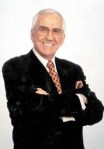
Ed McMahon and black history

Ed McMahon - co-host of the Lou Rawls Parade of Stars

Ed McMahon - co-host of the Lou Rawls Parade of Stars

This week America mourns the passing of Ed McMahon an entertainment giant, household name, and trusted American icon. He is remembered by the general public for his 30 years as Johnny Carson’s side-kick on The Tonight Show, his 12 years as the host of Star Search and his 16 years co-hosting TV’s Bloopers and Practical Jokes with Dick Clark.

He earned a place in American cultural history. And he earned a place in African American history.

As the creator and producer of the United Negro College Fund (UNCF) Lou Rawls Parade of Stars telethon I want to salute Ed McMahon for his work as the show’s co-host for over 17 years.

From the very beginning Ed lent his name, his prestige and his connections to the telethon. His role as co-host helped UNCF raise over $500 million and helped send thousands of young African Americans to college.

McMahon shared his celebrity, his reputation and his integrity with the telethon. His involvement helped to bring well established non-black entertainers onto the show giving it a “Good Housekeeping Seal of Approval.” His continuous role as co-host helped to extend the college fund into white homes who otherwise might have dismissed the telethon – and its important work of raising scholarship funds – as a “black thing.” Ed brought a diverse audience to the telethon. He gave the show credibility. He helped make the education of young black students an issue for all Americans to embrace.

When we wanted to engage a non-black entertainer Ed would make it happen. He would come into a room where we were meeting, pull out his little black book and personally call the entertainers we wanted on the show. He would ask and they would say yes.

You can’t buy what Ed McMahon gave. He was flexible and patient. He never asked for special treatment. He didn’t have an ego problem. He was a consummate professional. You could put a new script before him and he would read his lines as if he had been practicing for weeks.

He was so well liked by all. Of all the hundreds of stars who appeared on the show he was the easiest person to work with. He would spend enormous hours rehearsing. He never complained about all retakes and retaping. His famous line was “Point me where to go and I’ll do it.”

Ed McMahon is part of African American history!

Women celebrities who give back

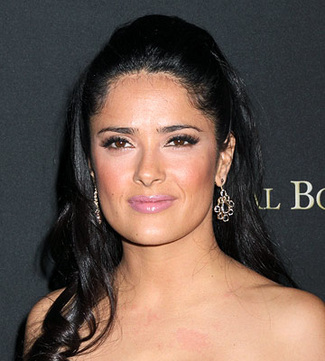
SelmaHayekThe May 2009 issue of More magazine features Ten Women Who Give Back. If you didn’t have a chance to read it you can view the slideshow online. So many women are busy giving not only of their time  but of their money. These are women who are involved with cause marketing programs, raising funds for non-profits, and managing their own foundations. Read philanthropy profiles Oprah Winfrey (of course!) as well as Salma Hayek, Gloria Estefan, Bette Midler and More! Learn who is supporting multiple sclerosis research, YouthAIDS, the ASPCA, New York City’s parks, breast cancer support services and research, victims of violence and abuse and more!

Perspectives on philanthropy

Cedric Brown - Director, Mitchell Kapor Foundation

Cedric Brown - Director, Mitchell Kapor Foundation

Changes in the economy, the stock market and employment rates impact non-profit organizations and the foundations that provide funding to them. We posed a few questions to Cedric Brown, director of the Mitchell Kapor Foundation related to these changes.

1. How is the current economic climate impacting giving by Foundations?
The endowments and total assets of many foundations have “taken a hit,” a term I’ve heard repeatedly around the philanthropic community. This means that many foundations, like nonprofits, are re-examining and scaling back to most-essential programs and administration.
The recession has had a mixed effect on the grant monies that foundations are giving out – some funders are scaling back, while others see the need to make even more grants in order to help nonprofit organizations to sustain their work in these uncertain times.

2. What gets your attention in a positive way when you are reviewing proposals?
The best grant requests are concise, giving as much information as possible in as few words as possible. Additionally, I appreciate grant requests that outline the overlap between the grantseeker’s work and the funder’s priorities. I’m also intrigued by new ideas, in thoughtful expansion plans for effective work, and in collaborations between organizations.

3. What gets your attention in a negative way when you are reviewing proposals?
It’s vital to read the funder’s guidelines and follow the directions! I’ll admit that I initially scan grant requests to make sure that the work aligns with our funding priorities. If it’s off, I’ll know in a matter of seconds and will discard the grant request. I’m also biased against typos, poorly-written requests, and overly-written requests – that is, proposals stuffed with lingo and flowerly language.

4. What is the one piece of advice that you would offer to a non-profit that is considering applying for a grant?
I advise nonprofits to do three things before applying: 1) read the potential funder’s website to learn about their funding priorities and their application process; 2) call a program officer to briefly discuss whether or not your work is a good match for the foundation (and don’t try to make it fit if it isn’t); and 3) have someone else read and edit your written materials to make sure that it sounds coherent before submitting it to a funder.

5. What is an example of a project you funded that exceeded expectations?
We work with so many fantastic organizations that I’m hard-pressed to choose one. Overall I’ll say that my grantmaking has largely been an investment in dynamic and competent leadership combined with a solid work plan. So in this respect, nothing has surprised me.

I am pleased, though, that we were an early supporter of Van Jones’ work on green jobs (through Ella Baker Center and Green for All), which he’s taken from Oakland to the New York Times bestseller list to the White House!

 6. What would happen if an organization did not accomplish what it said it would do when applying for a grant? Does that automatically mean they could not get another grant? How is this handled?
While I believe in accountability, I also believe in being flexible and reasonable. Nonprofits (and foundations, too, for that matter) are subjected to changing information and conditions that can re-shape their ability to accomplish their original goals. I think adaptability is an important trait to possess, allowing community organizations to appropriately adjust their work and expectations. But it’s critical for nonprofits to talk with their funders about substantial changes, not to seek “permission” or to “spin” (which is very transparent and annoying), but to say “This is what we’ve encountered and this is our response. What advice do you have to give us?” This way the nonprofit can appropriately involve the funder in the re-strategizing.

In my experience, the majority of nonprofits accomplish much of what they set out to do. It may be a different product in the end, but most do good and worthy work. Of course, there are the occasional “wayward” organizations; I have no qualms about cutting them off and chalking it up to a lesson learned about what NOT to do.

7. Are there any other comments or information you would like to share with our readers?
Small, startup nonprofits are going to have a very difficult time securing support in this economy. There’s a feeling in the nonprofit and foundation sectors that too many nonprofits exist. My best advice is that if you’re thinking about starting a nonprofit, first make absolutely sure that nobody else is doing what you’re proposing to do. If there are similar programs, ask how you might work with them to help deepen or expand their reach, rather than starting a new effort altogether.

Learn more about the Mitchell Kapor Foundation at www.mkf.org.

Fundraising People in the News – February 2009

February 2009 - Fundraising People in the News!

February 2009 - Fundraising People in the News!

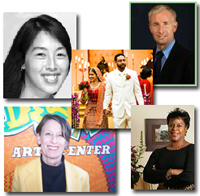
Join us in welcoming Priscilla Hung, Executive Director to her new position as the executive director of the Grassroots Institute for Fundraising Training, Elize Brown to the position of Administrative Director (Acting) Community Research Collaboration and HIPAA Privacy at Kaiser Permanente Department of Research, and Sean Sullivan to his new position as Development Director for Equality California. Congratulations to Renee Heider executive director of Destiny Arts Center for her selection as a LeaderSpring Leadership Institute Fellow and to Gurdeep Sihota on her marriage to Ahmad He’Bert.

College President Runs Fundraising Marathon in the South Pole

President Delbert Baker - Oakwood University

President Delbert Baker - Oakwood University

What’s unique about your organization or institution? Do you know how to take advantage of your uniqueness and your passion and share it with others? Oakwood University (UNCF) in Huntsville, Alabama knows how. The university’s president Dr. Delbert Baker, born in Oakland, is a 56 year old marathon runner. Maybe you are a marathon runner too. But have you – or anyone you know – used your passion to create a unique international fundraiser?

Baker and Oakwood University have created a Running for Scholarships campaign. The president has pledged to run a marathon in every state of the United States of America, and on every continent under the slogans of “50 States for Students” and “Seven Continents for Students.” Each race is underwritten by the Florida Hospital’s CREATION Health Model, allowing every penny raised to go to Oakwood University student scholarships and endowment. Every penny.

The unique fundraising program raises awareness about the importance of health and it is raising awareness (and funds) for the University and providing Florida Hospital with a unique promotional opportunity. Other organizations and businesses are sponsoring the marathons and Baker wears their logos on his running outfits. The program is so successful that 16 out of the 17 potential sponsors who were asked to participate said yes.

And these are not “easy” marathons. At the end of December Baker successfully completed the Antarctic Ice Marathon (AIM) in Antarctica running in temperatures of -12°C. He finished the race in just under seven hours, clocking in at 6 hours, 53 minutes, and 15 seconds.

Baker described the race as “beautiful and brutal,” remarking that it was the most difficult event he had ever attempted. He noted that this success was possible only with the inspiration of his wife, Susan, the students, faculty, and staff of Oakwood University, and the generous donors who pledged more than $80,000 in scholarship and endowment funds for the Running for Scholarships Endowment, if Baker completed the race.

With the completion of the AIM, Baker has successfully completed 6 marathons on 7 continents and 28 marathons in 50 states.

What is your passion? What is unique about your organization or institution? What about the people you work with? Anything unique about your board chair or CEO? Put on your thinking cap and get ready for 2009. It is time to be creative, to think outside the box, to partner, and to offer value to all parties.

© Copyright 2009 Mel and Pearl Shaw.

Increasing Diversity in Fundraising

Multicultural Alliance - Association of Fundraising Professionals, Golden Gate Chapter

Multicultural Alliance - Association of Fundraising Professionals, Golden Gate Chapter

Too many of us know there are too few trained and experienced fundraising professionals of color. We can bemoan the fact or learn from the model developed by the Multicultural Alliance (MCA) of the Association of Fundraising Professionals Golden Gate Chapter. Learn more by reading Mary Schmidt’s article about MCA.