Category Archives: People

People who make fundraising come alive!

Community College Trends, Part Two

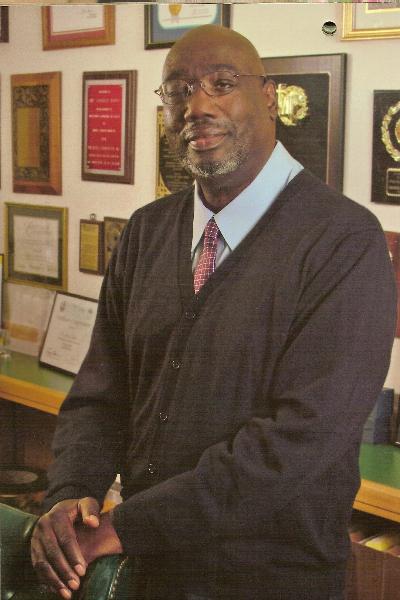
Last week Robert “Bobby” McDonald, a member of the California Community Colleges Board of Governors, talked with us about community college trends. This week he discusses the importance of fundraising by community colleges.

Saad & Shaw – Why do community colleges need to engage in fundraising?

McDonald –In 2008, California’s Community Colleges made history, when they received the largest gift to community colleges. The Bernard Osher Foundation made a commitment of $50 million to the California Community Colleges, which created a new trend in community college philanthropy, helping raise awareness of the need to increase scholarship support to California’s community college students. With an additional $50 million funds, raised by our community colleges and the scholarship endowment, the total could reach $100 million.

The goal of the California Community Colleges Scholarship Endowment is to support student success and opportunity by creating a permanent fund for scholarships, offering long-term relief to the rising costs that keep many students from completing their education.  Our communities need to actively support the fundraising goals of the community colleges in their area to help support a winning opportunity that has a clear total impact on our future.

Saad & Shaw – What are the challenges that impact district chancellors and college presidents as they begin the work of fundraising?

McDonald – Before our financial crisis, there wasn’t a strong emphasis to fundraise. Now there is a need to find good development/foundation consultants, community organizations, grant writers and the like.  The new breed of leaders now must look at entrepreneurial opportunities from the public and private sectors, in the communities, as a regular way of garnering resources.

Saad & Shaw – There must be hundreds of thousands of community college alumni in California alone. How can alumni get involved? What should they do?

McDonald – Hopefully, the directors of the community college foundations have been challenged and engaged to use the Osher gift as impetus to grow their college foundations.  Now more than ever alums need to be asked to give and support. Whether it be a name on a building, a special art or science wing, an athletic field, a nursing facility, whatever is part of the mission and vision of the campus. Just ask!!

Saad & Shaw – Beyond alumni, who should support and invest in community colleges?

McDonald – We are serving 2.9 million students. We are setting, maintaining and enhancing the educational opportunities for everyone in our communities.   Veterans continuing their education, students of fire science, police science, criminal justice, and nursing, just to name a few, are being served by our community colleges.  We serve everyone and anyone that wants to improve their business or their quality of life. Everyone should invest in our community colleges. It is the best investment in our country.

Community College Trends


Community colleges play a vital role in educating people of all ages across our country. Enrollments are increasing as people look to gain new skills in our changing and challenging economy. Those seeking a four year degree are often beginning their educations at their local community college. They know they can receive quality education at a much lower price. At the same time community colleges are facing challenges such as decreased state funding, and the need to provide services and scholarships not covered by funds from state government allocations or federal grants.

We wanted to know more about community college trends and so we reached out to Robert “Bobby” McDonald, a member of the California Community Colleges Board of Governors. If you have met Bobby you won’t forget him! He began his education at a community college – Los Angeles Harbor College – and is a strong advocate for community colleges.

Saad & Shaw – What are current and emerging trends within community colleges?


Bobby McDonald – I really believe the most critical trend is understanding that the usual sources of income have dried up.  Funding from federal and state, due to our current financial climate, will force community colleges to seek that innovative and entrepreneurial spirit.  Community colleges will have to revamp and outreach in the community, both public and private, to garner resources. It’s no longer business as usual.  Outside sources of revenue will be needed for program development, athletics and scholarships.  Community colleges will have to build stronger relationships and partnerships while securing stronger relevance, like the four year institutions, especially in the fundraising arena.

Saad & Shaw – What is the profile of California’s community college student?


McDonald – The profile of California community college students is as varied and diverse as the 112 campus system.  The 2.9 million students range from high school students using the community college for additional classes or AP courses; to the returning veteran’s reintegration process with education, career technical support and adjustment; to the laid-off worker or career changing individual who is seeking a necessary skill set change.  The age group is from 17 to 68, more women than men, but very, very multicultural, cross-cultural and diversified, similar to the make up of our communities.

Saad & Shaw – What do you envision as the future role of community colleges?


McDonald: The mission of the California Community College’s Board of Governor’s is “Empowering Community Colleges through Leadership, Advocacy and Support.”  During these difficult financial times, the Board will play a significant role for the future, especially maintaining the precepts and enhancing the mission. We are forced to review, revise and re-evaluate the way we go to market.  Key issues such as basic skills, transfer, career technical training, counseling, and graduating are paramount.  As we look into the upcoming “Green Era,” major corporations are already investing in the community colleges to begin to train and educate students for these jobs. We will always be there for that second chance, for that new wave of technology and more importantly, for that student or employer that needs that special training or help with training.

What’s a Board Member To Do?

Having worked with hundreds of board members in all kinds of organizations we really understand the challenges that board members face in their fundraising efforts.

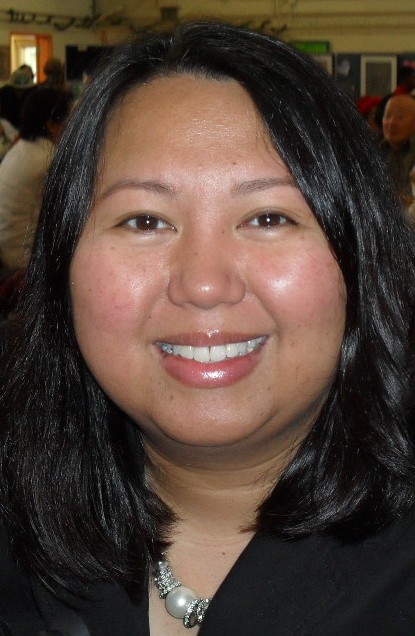
Maricar Boyle

So we sought the guidance of Maricar Boyle, MPA and Assistant Director of Corporate and Private Foundation Relations at Children’s Hospital and Research Center Foundation.

Boyle is a fundraising professional who has also served as a volunteer board member and board chair. She knows about fundraising from both sides and offers her words of wisdom.

Saad & Shaw: Based on your experience as both a board member and as a fundraising professional, what advice can you offer our readers about how to strengthen the partnership between fundraising staff and board members?

Maricar Boyle: It is important to understand that board members and staff are mutually responsible for the success of the organization. One way to strengthen the partnership between staff and board members is to learn about the specific roles that each individual plays within the organization, especially when it comes to the fundraising process.

The fundraising roles that board members fulfill vary from board to board. Roles can include responsibility for identifying potential donors, or serving as a spokesperson for the organization, or being present when it’s time to ask for a gift to the organization. When it comes to this last point – asking for a gift – it is always important to know in advance who will ask for a gift and who will close the meeting.  Highly successful fundraising campaigns have always been borne out of a combined effort between board members and staff (and a good strategic plan!).

Saad & Shaw: What is your experience with board members as fundraisers? What makes a board member willing to fundraise?

Maricar Boyle: Having served on three non-profit boards to date, the organizations I served and continue to serve were very clear about board member expectations from the very beginning. There was no ambiguity, especially if you were expected to personally contribute and help in fundraising. That was important to me. My willingness to raise funds as a volunteer really stemmed out of my belief in the mission of the organization and the desire to see it succeed.

Saad & Shaw: What advice would you give  board members at this particular point in time?

Maricar Boyle: Be an active participant in ensuring that the organization you serve continues to advance its mission. Ask questions. Volunteer to be on committees — especially on the Fund Development Committee. Ask to be trained by staff in the art and beauty of asking for money for a cause you truly believe in — it will be incredibly rewarding.

© Mel and Pearl Shaw 2010.

Keeping Alive the Dream of a Better Life for San Francisco’s Bayview Seniors

Dr. George Davis

The San Francisco Bay Area lost an icon and hero last month when we lost Dr. George Davis. Dr. Davis was a true visionary, a community leader, renowned gerontologist, minister, soul food connoisseur, sports fanatic, and devoted husband.

First there are his many worldly accomplishments: He led San Francisco’s Bayview-Hunters Point Multipurpose Senior Center for 32 years, and was ordained as an Associate Pastor at the neighborhood’s Metropolitan Missionary Baptist Church. He continued working, even after losing most of his sight to diabetes and fighting three types of cancer.

He received numerous awards and recognition for his 32 years of service, including awards from Senator Feinstein, House Speaker Nancy Pelosi, Senator Mark Leno, Supervisor Sophie Maxwell, and the National Council of Negro Women. He was the founder of the National Black Aging Network and was an associate faculty member at Stanford’s Geriatric Education center.

If you grew up in Oakland you might have met George Davis at Oakland’s McClymonds High School. Or maybe you played pool with him when he was known as Oakland Slim in the pool halls. Or, later after he had earned his Ph.D., he might have been your professor at San Francisco State University where he taught gerontology.

But one thing is certain: If you lived in the Bayview district you knew and loved Dr. Davis. Bayview-Hunter’s Point is a largely African American, underserved neighborhood on San Francisco’s southeastern edge. Dr. Davis got his start there as an intern at the local senior center. By 1978 he had became its executive director. He led it for 32 years, until his death on March 8th at the age of 68.

Today, the Senior Center offers recreational activities, free food distribution, and diverse social services. A separate adult health center provides health care to seniors that enable them to remain in their homes while receiving care at the center Monday through Friday. But Dr. Davis had much bigger plans for the area’s seniors—and that’s how we met him.

Six years ago Brenda Wright, a Senior Vice President at Wells Fargo Bank, asked us to help Dr. Davis and his wife Cathy create a strategy to raise funds for an “Aging Campus” in the Bayview. The first of its kind in the country, the Aging Campus is Dr. Davis and Cathy Davis’ innovative plan to provide housing and services for seniors in the area. We worked with Dr.  Davis and Cathy, and fell in love with them both. Dr. D, or “Doc”, as he was affectionately called, and his wife were an inseparable team.

He was a common man who never forgot his own humble roots in the projects of Richmond and Oakland. He was ‘old school;’ he was a man of his word. More than anything he taught us the importance of relationships, of humility, and patience. Even when he had major health struggles, he never let his personal challenges get him down. When the average person would have said, “no way can we do this,” Dr. Davis said “we can and we will!”

Dr. Davis was a steady champion for the rights and dignity of a demographic largely forgotten in our modern society: African American seniors. He fought to change the policies and economics that leave our elders neglected, isolated, and without services in their own community. He fought to ensure that those who had contributed to the growth of the City had a place to call home as they aged. He embraced Bayview — a neighborhood plagued with poverty, crime, and environmental pollutants from its former life as a naval shipyard – when few others did and sought to give it, and its residents, the dignity they deserve.

Dr. D’s vision for seniors includes high quality housing, healthcare services, and activities that promote physical and mental health. He wanted the needs of African American seniors to be the starting point for the design of buildings and services that would allow them to remain in the Bayview as they aged.

We believe in this vision and we believe in Dr. Davis. The man we loved and admired left us too soon. But he left us with an important mission to fulfill: the creation of the Aging Campus.

The idea of the Aging Campus has been endorsed by the local San Francisco Redevelopment Agency’s Project Area Committee (PAC) and is recommended as a key component of the area’s redevelopment plan.  Partnerships, coordination, and resources are required to make his vision a reality.  The time is now to take this dream and make it happen for the current and future seniors of Bayview Hunters Point.

We ask you to help realize this important vision and support dignity for seniors in the Bayview by making a gift to the Dr. George W. Davis Legacy Fund, c/o Bayview Hunters Point Multipurpose Senior Services (BHPMSS), 1706 Yosemite, S.F., CA  94124. Their website is: http://www.bhpmss.org/home.

Thanks to the Bayview Hunter’s Point Multipurpose Senior Services, Inc. for information used in this blog.

© Mel and Pearl Shaw 2010.

Where’s the Money?

So often we are asked “how do I find people who want to support our organization?” There are many answers to the question. One way is to engage in donor research.  To cut through the mystery around “donor research” we talked with Kevin Burns recently and asked him some questions on your behalf.  Kevin is an experienced researcher who has worked in higher education and health care for over eight years.

Saad & Shaw: Why should an organization or institution consider donor research?

Kevin Burns: There are three main reasons. The first is to gain basic information about your current and prospective donors. This can include publicly available information such as privately held company information, memberships on other nonprofit boards, and contributions to political candidates.  A researcher can also help identify new prospective donors. Finally, the work of a researcher can help your team focus and prioritize their efforts so they focus their time and energy on those individuals or businesses with the greatest interest in your organization coupled with the financial capacity to make a meaningful gift.

Saad & Shaw: Where and how do you look for information?

Kevin Burns: Prospect researchers use a variety of tools, primarily databases, to locate, cross reference and verify publicly available information. All of the information gathered is publicly available information.  Prospect researchers do not use private information sources such as credit agency information or private investigation.  Researchers adhere to a code of ethics developed by The Association of Professional Researchers for Advancement (APRA). Sources include real estate assessment and sales databases, Securities Exchange Commission (SEC) documents, Federal Election Commission (FEC) documents and general news databases.

Saad & Shaw: What kind of research do you do?

Kevin Burns: There are three main types of research. Reactive research is when a researcher is asked to find an answer to a question or series of questions. Proactive research is when a researcher is asked to search for new prospects or to qualify the giving capacity of current donors. Both proactive and reactive research can include a wealth screen. The term wealth screen refers to having a third party screening company “score” or match your data to a collection of data sources that can include philanthropic gifts to other organizations, stock holdings and sales, and memberships on nonprofit boards or foundations. Screening is a great way to prioritize and segment your donor or prospect population.

Saad & Shaw: Are there other tasks a researcher can help with?

Kevin Burns: Most definitely. Other tasks include building a campaign pyramid that illustrates the number of prospective donors at specific levels needed to meet a fundraising goal, prospecting for specific funding needs, creating pipeline reports which show how individual prospective donors are responding to cultivation and solicitation activities, and tracking news at specific organizations of interest.

Saad & Shaw: Are there sources of information you can share with our readers?

Kevin Burns: Absolutely. Lexis Nexis is an indispensable tool. However, there is a fee associated with using it. Free sources include Google and Zillow (www.zillow.com) for information on property, county assessor websites such as www.acgov.org/assessor/  for Alameda County, or Guidestar (www.guidestar.org) for foundation research.

For more information on donor research you can contact Kevin directly at keviniburns@gmail.com.

© Mel and Pearl Shaw 2010.

Cultivating Foundations

Patrick J. Heryford

Writing grants is a major source of revenue for many non-profits. However, writing the proposal is only one part of the process. We asked Patrick Heryford, the director of corporate and foundation relations for the YMCA of San Francisco to share his experience.

Saad & Shaw: You mentioned that there is so much more to grantsmanship than writing a proposal and sending it off to a funder. Would you share with our readers a little bit about what that “so much more” is?

Patrick Heryford: An accurate and well-written proposal is essential, however, building open and trusting relationships with funders is considerably more important. It is easier for a foundation to say “no” to an anonymous piece of paper than it is to a human being. By the time you submit a proposal, you should have already had conversations with foundation officers and you should have a good idea as to whether or not you will be funded. If you do not have existing relationships, attend industry events where you will have access to officers. In the Bay Area, Development Executives Roundtable (www.dersf.org) frequently hosts “Meet the Grantmaker” type panels, and the San Francisco Business Times hosts an annual Corporate Philanthropy Summit.

Saad & Shaw: What do you consider the top five things an organization should include as part of their stewardship of grantmakers?

Patrick Heryford:
1. Do Good Work: If you do good work that has a positive impact in the community, funders will recognize this and it will make your fundraising efforts much easier. And remember that foundation officers talk to one another. An officer who is well-versed on your mission could very well become your advocate with other funders.
2. Research Funders: Be sure you are applying to the right funder for the right program and not wasting the officer’s time (or yours). My favorite online research tool is the Foundation Center’s Online Directory (www.foundationcenter.org).
3. Meet Deadlines: Use whatever record-keeping system you need to ensure you meet application and reporting deadlines. For reports, if you can’t make a deadline, let the funder know well in advance. My experience has been that they will give you an extension provided you are up front with them.
4. Communicate: During the grant period, you must let the funder know of significant staffing or organizational changes, or any reallocations to the budget you presented with the proposal. Invite them to events connected with the funded program, and send them updates related to the program. If your proposal is declined, send a brief hand-written note to thank them for considering your request; it will help them remember you next time you apply.
5. Check In With Your Program Staff: Schedule regular meetings with the people who are running the program at your organization. Are they making progress toward the goals and objectives? Are they using the funds for the appropriate items? Better to keep tabs on this during the grant period than at the end when a report is due.

Saad & Shaw: Any last words of advice?

Patrick Heryford: Some may think that due to the struggling economy and foundations’ reduced assets, a nonprofit should scale back their stewardship. The opposite is true. Now is the time to ramp up your stewardship program. When was the last time you communicated with past funders? You need to stay on their minds so that when the economy turns around, they will know you and your organization’s mission.

Patrick Heryford can be reached at pheryford@ymcasf.org.

© Mel and Pearl Shaw 2010.

HBCU support – its alive on the West Coast!

James Mayo II, Vice President, UNCF

James Mayo II, Vice President, UNCF

“All that I am and ever hope to be I owe to my family and to Howard University, an HBCU” – James H. Mayo II

We recently talked with James Mayo, Western Regional Vice President for the United Negro College Fund about the role of historically black colleges and universities (HBCUs). Here is some of what he had to share.

Saad & Shaw: What do you see as the important role of HBCU’s today?

James Mayo: There are three principle reasons why our HBCUs are as indispensible today as they were when they were founded more than 150 years ago. First, these institutions provide a level of affirmation and care that allows our students to learn and grow in a climate where people are genuinely concerned that they survive and thrive. Faculty and administrators come from similar economic situations, and they know the challenges that so many of our students face. Second, the cost of a college education at an HBCU is one third of that charged by majority institutions.

HBCU’s stretch funds farther than larger majority institutions. This is our history. This is what we have done since our founding.  The third reason is the low faculty-to-pupil ratio that affords students the opportunity to work more one-on-one with faculty members.  There is nothing more compelling, more urgent, more immediate than to afford higher education opportunities to those African American students who, but for HBCUs, would never have access to the low faculty-to-pupil ratio that results in the attention and care that they need and succeed with.

Saad & Shaw: In your experience, why do people in California support the UNCF?

James Mayo: First of all, the one thing we can all agree upon as Americans is the importance of education. People support UNCF in largest measure because of the quality of education that is provided at a very low cost. People on the west coast support UNCF because of the many testimonies provided by people who have attended our colleges. Likewise, corporations see the investment. They understand that the cost ratio is low. These institutions do more with less than most majority institutions. These schools have soul. Soul is the ability to take nothing and make something out of it. HBCUs take students from all environments and they stretch a small amount of funds to create an environment where our students can succeed.

We have always had as our mission to go forth and provide service to those who do not have. “Enter to learn. Go forth to serve.” Service is at the core of our colleges and universities. This is another reason why people support UNCF. HBCUs are as vital today as they were on the day they were first founded. Their historical mission is as important as it was when envisioned by their founders. We are working not only for our local communities, but for our nation, our world, and for all mankind…

Join UNCF supporters at the annual UNCF gala on Saturday February 27th at the Oakland Marriott. For more information call (415) 956 – 1018 or visit www.uncf.org.

And as always, have a FUNdraising good time! – Mel and Pearl Shaw

Fundraising for Haiti – what you need to know

Clinton and Bush Raising Funds for Haiti

Disasters are a time when we come together to support each other as human beings. Plain and simple. It’s not about politics. It’s not about religion. It’s about people. Saving lives. Food. Medical care. Clean water. A place to sleep. Everyone is getting involved. President Obama has allocated $100 million via  USAID. Former Presidents Bill Clinton and George Bush are busy fundraising. And so are many others.

Disasters are also a time when Americans give generously as a country and as individuals, families, and local communities. We give and we fundraise. We also need to be paying attention to how we give, who we give to, and how we fundraise.

Here are some links you can check out for more information.

Advice on Giving to Haiti Support – guidance from the Better Business Bureau regarding how to make your gift to support Haiti.

Good Intentions Are Not Enough – learn the Do’s and Don’ts of Diaster Giving

Text and Give – how to give via text messaging. Includes a list of 21 different organizations you can give to via a text message. $16 million have been given via text messages as we write this blog!

Giving to the Red Cross – links for how to direct your giving

Updates on Giving to Haiti – stay up-to-date with information about giving and fundraising for Haiti. Information provided by the Association of Fundraising Professionals.

That’s it for now. And as always, remember to have a FUNdraising Good Time! You can make a difference.

Take a page from the pros….

Hillary Clinton - International Fundraiser

How do you make the “case” for your organization, institution or project? Do you seek to raise funds from people you personally know? Do you call on others who can extend their influence on your behalf? Do you rely on how you will use the funds raised as way to motivate giving? Or do you promote the impact those funds will make?

 Secretary of state Hillary Clinton helped raise $54 million in just nine months for the United States national pavilion at the 2010 world’s fair in Shanghai China. She was legally prohibited from personally solicit gifts and no public money could be used for the project. While attending is not currently in our plans, we want to share with you what we have learned about how she worked her miracles.

  1.  She engaged two experienced fundraisers with whom she has strong relationships: Elizabeth Bagley and Jose Villarreal
  2. She kicked off the project with a conference call with ten of the nation’s top CEOs. According to the New York Times Chevron, PepsiCo and General Electric each pledged $5million. 
  3. PepsiCo’s CEO made calls to other CEOs
  4. Bagley and Villarreal reached out to companies with operations in China
  5. The initial pitch was patriotism “How can the US be one of only two countries without a presence at the world’s fair in Shanghai?”
  6. The second pitch was “commercial diplomacy.” In other words, helping to fund the US pavilion will help open doors for future business.
  7. While Mrs. Clinton did not solicit gifts, she did meet with sponsors when she visited the actual site.

 While those with the connections of Hillary or Bill Clinton are few and far between, we want to call your attention to the process she used. Here it is for the rest of us:

  1. Engage people you know who are committed to your personal and professional success and who have relationships and connections with other people who can help you achieve your fundraising goal
  2. Solicit the biggest gifts first. Identify those you believe can give the largest gifts and talk with them first. Learn how they respond to your project. Address their questions or objections. Ask for their financial support and their involvement with your fundraising effort.
  3. Ask your early donors to ask others to make a comparable gift to your campaign
  4. Identify who will benefit when you reach your fundraising goal. For example, if you want to build a new youth center, consider asking businesses in the immediate area to make a gift. When the youth center is completed more young people and families will be frequenting the area bringing with them the potential for increased sales.
  5. Review how you position your fundraising campaign. Do people respond more to “raising funds for scholarships” or to “funding our future leaders?”
  6. Embrace your funders and donors. Give them the red carpet treatment at all times. Their financial support helps you meet your goals.

 And remember to keep having a FUNdraising Good Time!

© 2010 – Mel and Pearl Shaw

Leaders in our community – NABA

National Association of Black Accountants

Earlier this month we were in Houston, TX to conduct a workshop at the quarterly board meeting of the National Association of Black Accountants, Inc. We were impressed by the high level of commitment and leadership we witnessed. With local, regional and students chapters across the country NABA is an example of a well run volunteer-led national organization. Founded 39 years ago NABA represents the interests of more than 100,000 minorities as they further their educational, professional, and career aspirations in the related business fields of accounting, consulting, finance, and information technology.

We had the opportunity to talk with Moire Rasmussen from NABA’s San Francisco Bay Area Chapter who shared some of her passion for NABA with us. Moire has been a NABA member for 13 years, is a former national board member, and currently serves on the resource committee. She works for PriceWaterhouseCoopers where she is a market diversity leader.

The San Francisco Bay Area chapter has over 100 members. The chapter supports members’ professional development and encourages young people to pursue accounting careers. One of their programs is the Accounting Careers and Awareness Program, a week-long residency program for high school students that teaches students the basics of accounting including balancing checkbooks, understanding credit, gives scholarships ($15,000 last year), and provides help to young people as they apply to college.

We asked Moire why gives so much of her time to NABA and why she serves on the resource committee. She said “I’ve been given opportunities that would not have been afforded to me anywhere else. The people I’ve met and the guidance I’ve been given has allowed me to grow professionally. I want to help others see the value NABA has to offer, and that takes resources.”

She – and NABA as an organization – is committed to helping others enter the accounting profession and to grow in the profession. She carries a special message to young people in high school and college.

“Accounting is the foundation of business. Business is the foundation of how our country survives. No matter what you do in life you need to understand the basics of business. Accounting will give you those basics. Even if you do not become a Certified Public Accountant, majoring in accounting will open more doors than you can imagine.”

If you are interested in a career in accounting or want to grow in your career visit www.nabainc.org.