Category Archives: People

People who make fundraising come alive!

Tips For Fundraising Success: Engaging Your President, Board and Others

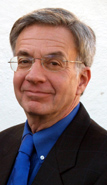
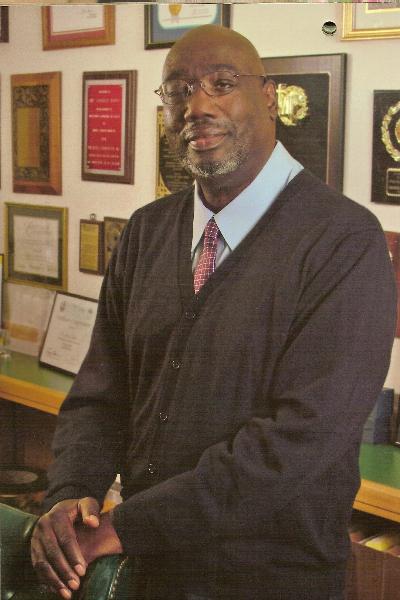
Robert Poole

Robert Poole

Engaging your president and board are key to ensuring your institution’s fundraising success. Engaging faculty, staff and students is also important. Engagement is a clear indicator of commitment, and commitment is a number one prerequisite for fundraising success. We have admired Robert S. Poole, Senior Vice President for Institutional Advancement, Meharry Medical College for his success in leading a strong fundraising team. A seasoned and successful advancement professional, Poole recently led Meharry through an historic $125 million campaign. In 2010 the College reach the $100 million endowment milestone. These successes are a result of strong philanthropic giving and prudent financial management, and one of the many reasons we admire Mr. Poole. We turned to Robert for specific information about how he engages the College’s board and president Dr. Wayne J. Riley . Our hope is that his tips and experience can help impact fundraising at your college, university, non-profit.

Saad & Shaw: How do you engage your president as a fundraiser?

Robert Poole: Here are five things we focus on at Meharry:

  • Developing and reviewing new funding opportunities with him based on the College’s strategic plan and in conjunction with the deans and other campus executive leaders.
  • Helping to maintain clarity regarding fundraising priorities.
  • Updating him on top prospects.
  • Conducting prospect briefing sessions before cultivation/solicitation visits.
  • Keeping him abreast of fundraising trends, best practices, and tracking and reporting on progress at peer institutions.

Saad & Shaw: How do you prepare and support your board in the area of fundraising?

Robert Poole: We communicate with the board’s advancement committee and its chairman regarding fundraising and marketing priorities and objectives. We provide prospect briefings for board members that participate in cultivation and solicitation calls as appropriate. We also involve board members in planning major fundraising initiatives both as policy makers and potential donors.

Saad & Shaw: How do you integrate the president into your fund development program?

Robert Poole: As lead spokesman and vital leader/partner in every development discipline the president is highly visible and engaged throughout the advancement program.  He’s involved in media (including op-ed features, video features, editorial board meetings, radio and TV interviews, health policy position statements, etc.), external affairs and government relations, donor prospect calls and campaign strategy, and alumni relations.

Saad & Shaw: How do you involve staff, faculty and students in your fundraising initiatives?

Robert Poole: We encourage them to share their perspectives on the institutional needs and opportunities that they would like to see addressed through philanthropy.   We provide education on how the fundraising process works and, where appropriate, involve them in fundraising cultivation, solicitation and stewardship.  For example, we’ve had great success in utilizing students during donor recognition and other events, students’ personal letters of thanks to scholarship donors have helped raise a lot of money as have their testimonies in solicitation appeals.  We work with faculty and other academic leaders to develop concepts that may ultimately become fundraising proposals or projects.  Additionally, faculty and deans have been very effective participants in donor visits.

Learn more – Read the full story.

Ruby Bright honored as leader in women’s funding movement

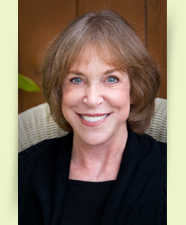
Ruby Bright

Ruby Bright

When women achieve economic security, they spread their success to their children, community and country.

When women help other women, everyone benefits.

These truths have only recently gained the international attention of economists and philanthropists, but members of the women’s funding movement have promoted them for many years.

One of these pioneers, Ruby Bright, was recently honored for her efforts to improve the lives of women and their children, both in the Memphis community and across the globe.

Bright received the Changing the Face of Philanthropy Award from the Women’s Funding Network on April 8 during the group’s annual conference in Brooklyn, N.Y. The award is presented annually to individuals, funds and foundations that have demonstrated a commitment to gender equity, diversity and social justice through philanthropy.

Bright has made “profound and influential contributions” to the women’s funding movement and “has been instrumental in bringing change to the Greater Memphis area and beyond,” wrote Ana Oliveira and Christine Grumm, board chair and president/CEO of the Women’s Funding Network, which represents more than 160 women’s funds across six continents.

As the executive director and chief administrative officer of the Women’s Foundation for a Greater Memphis (WFGM), Bright has increased grant distribution by more than 300 percent over the last decade. Since 1995, the WFGM has awarded $5 million to 330 programs and 120 grantee agencies.

Starting in 2004, Bright has led a groundbreaking public-private partnership between the WFGM, the city of Memphis and the Memphis Housing Authority to support mixed-income housing and urban revitalization. Under Bright’s leadership, more than $7 million has been raised for the Memphis HOPE project, targeting 700 former public housing residents. The WFGM is the first women’s fund to lead such a program and now serves as a national model for success.

The WFGM’s mission is to encourage philanthropy, foster leadership among women and enable women and children to reach their full potential. Bright, who has more than 25 years of experience in nonprofit operations management, marketing and fund development, plays a vital role in spreading this mission to a broad audience and demonstrating the power of women helping women.

The core values promoted by Bright and the WFGM have universal applications, far beyond Memphis, or even the United States. “Collectively, economically secure women create secure nations and a more stable globe,” explained the Women’s Funding Network.

As an extension of her commitment to women’s empowerment, Bright is involved with numerous national and local civic organizations. From 2008 to 2010, she served as the board chair of the Women’s Funding Network. She is a founding member of the Black Women Donor Action Group and the Women’s Economic Security Campaign.

Bright has been honored by the Memphis Urban League, Girls Inc., Girl Scouts of the Mid-South, Leadership Memphis and many other groups. In 2006, the WFGM was named the MPACT Memphis Foundation of the Year.

Learn more about the Women’s Foundation for a Greater Memphis and the Women’s Funding Network.

Stepping Up In time of Change

Managing Change
When its time for a change at the top…

 What would you do if your executive director unexpectedly left? Who would fill her shoes? Whether an executive transition is planned or unexpected, it is the role of an interim executive director to provide leadership.

Knowing that change is a constant in life, and in leadership, we talked with Chiquita Tuttle to learn more about the role of interim executive directors. Tuttle is an experienced interim executive director, so she knows all about change. She has worked with diverse organizations providing leadership and management during times of transition.

Saad & Shaw: What are some scenarios in which an organization needs to hire an interim executive director?

Chiquita Tuttle: Interim executive directors are usually called into an organization when there is some form of transition taking place. It may be the sudden loss of an executive director, the firing of an executive director, or an anticipated transition.

Saad & Shaw: What are typical key responsibilities of an interim executive director?

Chiquita Tuttle: Overall leadership and management of the organization; working with the management team; maintaining and rebuilding external relationships with funders; maintaining service delivery and client focus; and representing the agency in public forums are all key responsibilities.

Saad & Shaw: What is the role of the Board in working with an interim executive director?

Chiquita Tuttle: The Board has an absolute obligation to work with the interim executive director to assure that their expectations and the scope of work specified in the contract they have made are being met. Open communication and transparency are critical to a successful transition.

Saad & Shaw: What should a Board expect when working with an interim executive director?

Chiquita Tuttle: The Board can expect the interim executive director to be less involved in the daily political aspects of the agency. The interim executive director will be reviewing the operations and management with an external lens and making decisions based on his or her experience. The Board should be supportive of those decisions given the appropriate rationale and background. In some cases the interim executive director will tend to be a bit more assertive if he or she is there to implement a new direction for the agency.

Saad & Shaw:  How is an interim executive director evaluated?

Chiquita Tuttle: An interim executive director should be evaluated on the completion of the scope of work initially discussed and contracted for. In addition, the interim executive director should be evaluated on the relationship and respect developed among the staff as well as external clients such as funders, clients, partnerships, and collaborators.

Saad & Shaw: What have you noticed is the difference between a planned transition in executive leadership vs. a crisis transition? How does this affect the work of an interim executive director?

Chiquita Tuttle: Whether the interim executive director takes the role in a transition process or a crisis situation, the goals are the same. Management and leadership of the agency are primary. Being transparent and communicating with staff is critical. Working with the Board to keep them apprised of goals, objectives and decisions is paramount. Building trust and credibility will ensure a smooth transition in any circumstance. Also, this will determine how long the interim serves. Typically, interim executive director assignments range from 3 months to 18 months.

Saad & Shaw: We have noticed that some interim executive director’s fall into the “caretaker” model and some are brought in as “change agents.” Would you share your experience and perspective on these two different roles for an interim executive director and how a person serving as an interim executive director knows which role she is expected to fulfill?

Chiquita Tuttle: The caretaker role usually occurs when the current executive director has left the organization and the Board is engaged in a search for a permanent director. In this instance, the interim executive director is simply there to “hold down the fort” until that search is completed. That means working with existing staff, making sure the day to day operations are being enacted and clients are being served. Leadership, respect and managing are key elements where the interim executive director must take the lead.

If the interim executive director is hired to be a change agent, he or she will usually be charged with changing specific operations, policies, attitudes, expectations and/or accountability within the organization. This involves the participation and buy-in of the existing management team. In some instances, changes in the composition of the management team may have to be made. This kind of change is called for when systems and policies have not been working. Change agents are required when staff is not meeting goals, expectations and deliverables.

Then the interim becomes the enforcer of a new mind set and has the challenge of engaging staff to understand the rationale behind the change and acceptance of it. The interim executive director will need the assistance of change agents within the organization in making and taking the new direction. This process is often difficult, to say the least, because change is difficult. It can put staff in an uncomfortable situation; people may feel threatened and resist change.

When instituting change, it is always best to communicate the “situation at hand,” provide the rationale for the change and then implement the change. When staff fully understands the ramifications or consequences of not changing, they are oftentimes more accepting of change and will get on board. There will always be some resistance, but sometimes changes must be made.

Saad & Shaw: What are the ideal characteristics of an interim executive director?

Chiquita Tuttle: An ideal interim executive director is a good listener, an innovator, excellent leader, open to ideas, flexible, transparent, accountable, human, has superb relationship and management skills, understands how to deal with conflict, and knows how to build strong teams. They must be a good communicator because they are the messenger of good and bad news.

Most importantly the interim executive director understands that it is the staff that makes the agency’s culture and provides the service; therefore an ideal interim executive director should always acknowledge and thank the staff for their expertise and work.

Saad & Shaw: When hiring an interim executive director should an organization hire an experienced executive director who is currently between positions or should they look for someone experienced in serving as an interim executive director? In other words, how is an experienced interim executive director different from an experienced executive director?

Chiquita Tuttle: An interim executive director has the luxury, if you will, of having to “hit the ground running” in a variety of organizational types. Therefore, their advantage is their flexibility skill set.

An executive director in between jobs also comes to the table with a wealth of long standing experience that becomes valuable to any agency.

Experience in leadership, management and accountability are really what matters. Whether they got it in previous executive director jobs or as an interim executive director matters less.

Saad & Shaw: Have you noticed differences in the requirements of the executive director across organizational types – for example museums, vs. higher education vs. community organizations?

Chiquita Tuttle: Clearly, having expertise in an industry is a strong case, but in the non-profit world, being a generalist is also important. One can learn over time about an industry. It is the management skill set and the knowledge of the fund development process that non-profits look for. All organizations want to be led by someone who understands sustainability, financial viability, good stewardship, strong staffing and, at the end of the day, isproviding for the clients according to their mission statement and vision. Leadership and managerial skill sets are transferable.

Saad & Shaw: Any last thoughts or guidance for our readers?

Chiquita Tuttle: Being an interim executive director is a special niche. It is challenging and difficult at times to gain trust within the agency. We should not be viewed as the “hatchet” person, but should be accepted as vital leadership whose responsibility is to sustain the organization.

It is our responsibility to review current practices, question them and make recommendations for more effective delivery of services. It is always our goal to leave the agency in a healthier and more stable state than when we first arrived.

Chiquita Tuttle is a member of the Saad & Shaw team. She serves as the West Coast Director of Fund Development Services.

Salute to Bob Zimmerman!

Bob ZimmermanJoin us in celebrating the life and work of Robert “Bob” Zimmerman.

The end of 2010 brought sad news of the passing of Bob Zimmerman, a nationally known fundraising trainer and consultant who worked in the field of fundraising for over 35 years. A fundraising specialist, author and the President of Zimmerman Lehman, Bob was loved by many who appreciated his expertise, insight, and keen sense of humor.

We always enjoyed Bob’s appearance as a member of the Development Executive Roundtable’s (DER) world-famous “Show Me the Money Players” – a group of fundraising professionals who would entertain fellow professionals at the San Francisco DER Holiday Party with skits based on the trials, tribulations, and misconceptions associated with fundraising. Mel was fortunate enough to be included as one of the “players” one year, and in 2005 we both joined him on a panel for a NetImpact Conference at Stanford University. Regardless the venue, Bob could engage and energize.

Here’s how Leyna Bernstein, pays tribute to Bob. “Bob Zimmerman embodied all the best qualities of our profession. He was enormously generous with his time, was passionate about his work and the importance of our sector, and he cared deeply about helping others. He was a tireless advocate for the board’s role in fundraising, and had a knack for getting even the most reticent volunteers to believe they could raise money. Bob made friends wherever he went, and he has left many, many of us mourning his loss.”

Bob taught workshops for staffs members and boards in the United States and Europe. He taught boards to overcome their fear of fundraising and create successful campaigns. His dry wit, combined with a down-to-earth approach, was accessible to everyone, regardless of his or her level of sophistication in fundraising.

A graduate of Antioch College, Bob earned his M.A. from the University of Michigan. He served on the Board Golden Gate Chapter of the Association of Fundraising Professionals (AFP), and was the Co-chair of the ever-popular “Ask the Experts” panel at AFP’s 2009 and 2010 “Fundraising Day” in San Francisco. He taught on subjects that include major donor solicitation, grantseeking, hiring top-notch executive staff, and overcoming the fear of fundraising.

A well known writer Bob was the author Boards That Love Fundraising: A How-To Guide For Your Board, and Major Donors: The Key To Successful Fundraising, and Board Members Rule: How to Be a Strategic Advocate for Your Nonprofit and was a regular contributor to ZimNotes, a fundraising e-newsletter.

If you didn’t have the opportunity to work with Bob you can certainly learn from him through his many writings. And don’t forget the Zimmerman Lehman website as another source of information.

Bob’s loves included his wife and business partner Ann, son Gabe, Opera, baseball, dogs, cats and poker. He was loved by many and will be missed by many more. Join us in saluting Robert Zimmerman – a husband, father, community leader, and friend.

Team Building and Fundraising

Fundraising is all about teamwork!Teamwork is essential to fundraising. You can raise more as a member of a team than you can as an individual. With a team you have backup, support, increased connections and more people working toward a common goal. Some team members assist with marketing and communications, others invite businesses to sponsor your special event, and still others will craft your year-end appeal. The grant writer is busy writing, and learning who-knows-who on a grant selection committee in order to coordinate pre-decision conversations. Campaign co-chairs are mixing and mingling about town, advancing the “buzz” and encouraging the who’s-who to get involved and give. Everyone is sharing contact information and updates with your data management person. All gifts and pledges are recorded and donors promptly thanked.

Good will fills your team meetings….Or does it?

Why do some groups just click, while others are overcome by challenges?  To find out we talked with Dr. Lewis Rambo an internationally recognized leader and teacher in organizational development, team building, and executive coaching.

Saad & Shaw: What makes a successful team?

Dr. Rambo: I’d rather comment on what makes an effective team rather than a successful team.  Too often we think of team success simply in terms of winning and losing … as in sports.  An effective team is a group of talented, motivated people who are energetically and harmoniously focused, like a laser beam, on achieving mutually shared goals or objectives.

Saad & Shaw: What should people be aware of when working in a team?

Rambo: A team is not just a group of people working on something.  To be a truly effective team member you need to:

  • Know what is to be accomplished by the team.  All team members should have a clear understanding of the team’s goals and of what the organization expects of their team.
  • Help determine how the goal should be accomplished.  Input from everyone on the team is needed at this stage.  Your contribution and opinions are very important to the team’s final product.
  • Share mutual respect for your team members.   You have to be willing to trust the skill and expertise of other team members and to become interdependent, perhaps, giving up some of your independence.
  • Share in group decision-making.  Being a team member is a serious responsibility. Some people like to sit on the sidelines and remain silent, so they can say, if things fail, “I told you so!”  Good team members do not do that.  They are committed at the outset… and willing to expose their thoughts and feelings, for all to view.  It takes real courage to be a fully involved, collaborative, team player.
  • Share the glory with others.  You can’t claim credit for all the ideas that actually work, and then distance yourself from the team’s failures.  Being an effective team player takes effort. Most importantly it yields results!

Saad & Shaw: What about team accountability and the role of a team leader?

Dr. Rambo: Good questions! The team leader has to take full responsibility for guiding and motivating a group of people who probably have very different styles, patterns of behavior, ideas, abilities and, attitudes. Every team leader will face unique challenges, problems, and opportunities. While no perfect formula for effective leadership exists, most successful teams have leaders who:

  1. Communicate Clearly. Clear communication is the cornerstone of good teamwork:
  • Organize before you communicate.  If you are instructing a team member, run through the steps in your mind before you speak.
  • Monitor your tone.  A leader must often give corrective feedback. When speaking to a team member, be aware of the impact your words can have. Although you may feel you are simply pointing out the need for correcting a mistake, you may be crushing morale and encouraging resentment.  Suggestion:  Plan out exactly what you want to say.  Offhand comments can be easily misunderstood. Before giving a team member any negative feedback, ask yourself: “How would I feel if someone said that to me?”
  • Send clear messages.  Don’t let distracting behavior or body language dilute or confuse your message, especially important when listening to team members.  If you are reading a document, looking around the room, or fiddling with a pen when others are talking, they will know you are not paying attention.

2.    Establish and Enforce Standards

  • Communicate standards and expectations so they are concrete and measurable.  Objectives and goals should not be fuzzy or unclear.
  • Create a scoreboard.  Let team members know how they are measuring up against expectations goals and/or targets. Post team achievements and successes where everyone can see.

3.    Help Them See The Big Picture

  • Communicate the vision, mission and objectives to team members regularly.  Teams sometimes get so focused on day-to-day activities they forget the bigger picture.  It is the leader’s responsibility to help members remember their work is directly tied to the organization’s mission. 
  • Show the team its contribution.  For example: circulate reports showing funds raised to date, number of solicitations, number of new donors and other data.

4.    Develop Your Team Members. Your team members have their own hopes, ideas, and ambitions.  Try to connect their aspirations to the team’s goals and build powerful alliances. Help team members find mentors.  Have new members “buddy up” with established members until they learn the ropes.  Having a fellow team member who “really understands what is going on” as an advisor can be a powerful tool in a new member’s development and participation.

As the team’s leader, be accountable yourself: set an example, and work hard to communicate with your team members. That’s how  you will begin to master the art of team leadership.

Learn more about Dr. Rambo at www.lmrambo.com.

© Mel and Pearl Shaw 2010

Busy People Can Help You

“If you want to get something done, ask a busy person.” That’s right, ask a busy person. “Aren’t they too busy?” you might ask. Actually, we have learned that successful busy people manage their time well. They have to. If you ask a busy person for help they will ask what you need accomplished, and by when. If they can, they will commit and deliver. If they can’t, they won’t.

Here are some suggestions for engaging busy people to help your organization:

  1. Clearly define what you want the person to accomplish.
  2. Clearly define project time frame and deadlines.
  3. Consider what the person will need from you in order to accomplish the task. Be prepared to provide that assistance or information.
  4. Communicate the impact that their help will have on your organization or the community.
  5. Communicate a sense of calm urgency.
  6. Thank the person for her involvement.

Call your prospective volunteer and provide her with an overview of what you are seeking to accomplish and how she can help. Keep the conversation short. Send her the details via email. All of the points above should not be longer than 1-2 pages.

For example, if you were asking a museum curator to invite local artists to serve as judges for your youth art program here is a simple version of what you could write up.

Project: Local Artists Serve as Judges for 2011 Youth Exhibition

Goal: Engage four local artists to serve as judges for the Sprint Youth Art Exhibition. Artists should have local name recognition and represent different disciplines.

About the Youth: Most of the children we serve are Hispanic or African American ages 3 –11 from the surrounding neighborhood. They participate in our Youth Studio program on Saturday afternoons and visit a local museum each quarter. Art programs were eliminated from their elementary school two years ago. Our work engages young people with their creativity and provides them with access to basic arts education.

Key Dates: January 15 – artists confirmed; February 1 – artist information submitted (see below); April 1 –opening reception for artists and judges; April 17 – Exhibit and Judging; May 1 – Send out thank you letters with framed collage of winning works of art.

Information required: Photo of artist, 150 word bio, photo of artist’s work

Anticipated time required: 15 hours over a four month period

Be sure to check in at agreed upon times. Let your volunteer know you are there to support her. “Let’s touch base in a few days. If you find there is anything you need, let me know and I will get it for you.”

Finally, be sure to personally thank your volunteer and anyone she engages (in this case, the artists). At the end of the project you want volunteers to feel good about the experience, that they contributed something of value, so that they will want to continue involvement with your organization.

© Mel and Pearl Shaw 2010.

Let’s Have Faith

Faith-based organizations across the country are making a difference in communities large and small. One such congregation is St. Andrew African Methodist Episcopal Church in Memphis, Tennessee. Led by husband and wife team Rev. Kenneth Robinson, M.D. and Rev. Marilyn Robinson the church is committed to ministering to Memphis – Spirit, Soul and Body. Together the Reverends Robinson and the St. Andrew AME church have grown their ministries into what is known as The Enterprise. They believe churches have unique attributes that can drive positive social transformation — and they have set out to demonstrate that.

The Enterprise includes the church’s ministries, and The Works, an independent Community Development Corporation (CDC) associated with the church. The Enterprise is comprised of:

  1. The St. Andrew AME congregation founded in 1866
  2. The church’s many social ministries and Community Life Center
  3. An independent, but church-affiliated Community Development Corporation (CDC) called The WORKS
  4. The Ernestine Rivers Child Care Center
  5. The Circles of Success Learning Academy (COSLA) – a nationally recognized charter school
  6. The South Memphis Renaissance Collaborative – a community collaborative dedicated to long-term redevelopment.

These programs are examples of how the St. Andrew AME church and The Enterprise bring their overlapping and inter-connected missions to life. Take a look:

The mission of the church is to minister to the spiritual, intellectual, physical, emotional and environmental needs of all people. The congregation embraces holistic approaches to health and well-being, spiritual enrichment, personal empowerment and community service, using the theme “Ministering to Memphis – Spirit, Soul and Body.”

The mission of The Enterprise is to serve as the vehicle for St. Andrew AME Church to accomplish its mission of works in the world through a continuum of programs, services and affiliated organizations, as well as through focused collaborations and broad partnerships.

The work of The Enterprise is guided by the need for innovative new approaches to foster social transformation and the unique attributes churches bring to drive such innovations.

The Reverends Robinson, St. Andrew AME congregation, and The Enterprise believe that the church can be a powerful catalyst, driver and fiscal agent for community transformation both in their South Memphis neighborhood and throughout the city of Memphis. They believe the model they are building can be replicated by other churches in Memphis and across the country. They believe – and are demonstrating – that a church (or other faith community) can uniquely resource social transformation. The human, spiritual, and financial resources that a church brings to the process of social transformation are unique.

At St. Andrew church tithes and gifts from church members have provided The Enterprise with funds for “seed funding” for new projects; “bridge funding” for projects that are growing and have not yet secured funds from other sources; and “gap funding” that helps programs weather the ups and downs that are part of non-profit finances. This is a unique form of funding that is not available to non-church-related organizations.

As a powerful collaboration The Enterprise provides a diverse array of needed services to church members and the larger Memphis community.

Below are the eight principles that guide the work of The Enterprise. The first two relate to social transformation. The remaining six principles focus on the unique attributes a church brings to drive such transformation.

The need for innovative new approaches to foster social transformation…

1.    Individuals and families need proactive, easy access to an integrated set of resources that meet the full range of their needs and development potential.

2.    The full range of resources and services must be imbedded within local neighborhoods for comprehensive community transformation that rebuilds physical infrastructure, helps change defeating attitudes and beliefs, and connects people to education, cultural and employment opportunities in the region.

…and the unique attributes churches bring to drive such innovations.

3.    A church of any size and any stage of development can leverage its members’ time, talent and treasure to serve as catalysts for community transformation.

4.    A church can be an appropriate organizational structure for bringing public and private funding and forging collaborative partnerships for non-religious social programs and community transformation.

5.    Community transformation and social ministry are essential to a living faith experience, and create a mutually-beneficial relationship between the faith congregation and the larger community.

6.    Faith-based values can permeate, enhance, and lend credibility to secular endeavors and programs.

7.    All social issues and aspects of human life can be addressed with the non-judgmental and unconditional “language of Christ.”

8.    All resources, programs and services put forth in the name of the Church must demonstrate the highest quality standards, and communicate a high level of worth/value.

Giving of time, talent and treasure by church members provides The Enterprise with seed money and gap funding as well as:

  1. $90,000 a year for the Community Life Center’s outreach programs.
  2. Thousands of hours of service provided by church members each year.
  3. Lower-than-market rent for the charter school. The school has a 25-year lease with the church that yields an annual savings of $50,000 over market-based rent.
  4. $30,000 a year to subsidize operating costs of the Ernestine Rivers Child Care Center.

Tithes and gifts from church members have allowed The Enterprise to grow its programming and services so that it now stewards nearly $5 million annually from diverse funding sources – church giving, earned income (tuition, fees) private grants, donations, and public funding.

The Reverends Robinson, the St. Andrew AME Congregation, associated independent organizations, community stakeholders, government and private funders are all working together to demonstrate and document that churches have unique attributes that can drive social transformation.

To learn more about churches and their role in social transformation contact Rev. Kenneth Robinson by email at RevKSRMD [at] gmail [dot] com or by phone at (901) 948-3441.

This article is based on conversations with Rev. Kenneth Robinson, M.D., and the St. Andrew Enterprise Business Plan: 2009 prepared by Consilience Group, LLC www.consiliencegroup.com.

Come Support San Francisco’s Seniors

Dr. George Davis

Here’s something you can do to make a difference in the lives of seniors living in Bayview Hunters Point, San Francisco. Come out to support the development of much-needed housing and services for African American elders. Mark your calendar for Tuesday September 21st at 4:00pm and plan to attend the Redevelopment Commission Meeting at San Francisco’s City Hall, Room 416.

Here’s why this is so important. Services for elderly African Americans in the Bayview have been sorely lacking for decades. Years ago, a wonderful man named Dr. George Davis began championing the idea of an “Aging Campus” for the under-served neighborhood’s senior citizens. We asked Dr. Davis and his wife Cathy what they meant by an “aging campus.”  They explained that seniors in the community have to move out of the area — and often the City –when they need senior housing, assisted living, or specialized Alzheimer’s care. They saw this as fundamentally unjust. Seniors in other parts of the City don’t have the same challenge. Dr. Davis wanted the same services for African American seniors in the Bayview; thus the vision for the Aging Campus was born. The Davis’ asked us to develop a fundraising plan to accomplish this vision.

The idea of the Aging Campus has been endorsed by the local San Francisco Redevelopment Agency’s Project Area Committee (PAC) and is recommended as a key component of the area’s redevelopment plan. The next step in making this dream a reality is for the Redevelopment Agency to purchase the land. That’s where you come in. Your presence at San Francisco’s City Hall on Tuesday September 21st will demonstrate your support for seniors living in the Bayview.

First and foremost the vision for a Bayview Aging Campus is built on the vision of the community and the needs of local African American elders. The Aging Campus could include:

  • Senior housing
  • A state-of-the art Adult Day Health Center and Senior Center
  • Healthcare facilities such as medical and dental offices, a pharmacy and podiatrist
  • Case management services
  • Financial services
  • Retail shops, a restaurant and a grocery store
  • A community center with space for community events
  • Recreational facilities
  • Services and training for care givers and family members

The Aging Campus would provide seniors with access and proximity to different types of housing depending on their needs.  Families, ministers and friends would be able to visit frail loved ones at assisted living or nursing home housing without leaving the community.  Aging residents would be able to find housing connected to senior services and recreational facilities.

Early partners in the planning stage of the Aging Campus include: the Community Design Center, Levin-Menzies, Delancy Street, Bridge Housing, Business Development Inc., Wells Fargo Bank, and many others.

The Aging Campus was Dr. Davis’ driving mission. Sadly, he lost his battle with cancer earlier this year. Today we have to go forward without him — but not without his legacy. Come out on Tuesday September 21st. Serve as a witness to Dr. D’s vision.  For more information call 415-822-1444.

© Mel and Pearl Shaw 2010.

Would You Give Away 50 Percent?

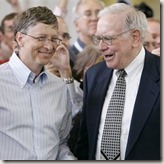
Bill Gates & Warren Buffett

By now you may have heard about The Giving Pledge. It is a movement started by Bill Gates and Warren Buffett to encourage other billionaires to pledge to give away at least 50% of their wealth. They want to encourage the richest people in the world to commit to charitable giving either while they are living or upon their passing. And they want each person or family who takes the pledge to make their pledge public and ask their peers to do the same. The goal: increased funding for philanthropy across the globe.

People taking the pledge are not asked to give to any specific charity or cause – they are simply asked to give. It is not a legally binding pledge but rather a morally binding one.

The idea grew out of a series of dinners hosted by Bill and Melinda Gates and Warren Buffet over the course of a year. Many of their peers have already made very substantial gifts and pledges. Now they are asked to publicly affiliate with others who are doing the same. The idea is for billionaires to inspire conversations with their peers about their giving, their intentions, and what they are learning through the process.

The impact will be felt for generations to come. When the Giving Pledge was announced earlier this month there were 40 billionaires who had signed on. These include 14 from California, 12 from New York, two from Texas and Georgia, one from Missouri and Michigan. Here are what a few have to say.

Michele Chan: Our passion, our mission is to transform health and health care, in America and beyond.

Tom Steyer and Kat Taylor: “We want to leave our kids a different kind of inheritance…we pledge the bulk of our assets to philanthropic activities carried out over the course of our lifetimes.”

Jim and Virginia Stowers: “More than 99% of our wealth will go to philanthropy during our lifetime or at death. We have already started our giving.”

Finally, here is what Vicki and Roger Sant have to say. “Our support of various not for profit organizations has given us enormous satisfaction particularly where we have been personally involved with the boards or committees of those institutions.”

We call special attention to their quote because it highlights the value people receive when they give their time and money. If you work or volunteer with an organization or institution do not be embarrassed to ask others to join you in giving their time, money and resources. Giving is an important part of life whether or not you are a billionaire. Think about this: you can make your own giving pledge. It doesn’t have to be 50% of anything. What it should be is a moral commitment you make to yourself. Do it. And ask others to join you. Together we are creating the world we want to live in.

To learn more about the Giving Pledge visit www.givingpledge.org.

Social Enterprise – Learn from an Expert!

There is currently a lot of buzz around social enterprise and earned revenue as ways for non-profit organizations to increase their financial resources. Some of these efforts are well-known, such as Good Will which generates 95 percent of its revenue from Good Will stores. Others are lesser known, such as SHOP, a social enterprise of A Miner Miracle in San Francisco, California.

SHOP is a clothing boutique that offers women and men designer fashions at greatly discounted prices. It opened its doors for business in 2003. The clothes are new, current, in season and sold at 50-80% below retail. The revenue from SHOP funds A Miner Miracle, a non-profit that provides professional clothing and image counseling to low-income to women and men seeking employment. Take a peek at their new video now showing on closed circuit television at select hotels in San Francisco. And take a look at how ABC TV covered SHOP in the evening news.

In order to learn more about what it has taken to grow this social enterprise we spoke with founder Kathy Miner.

Saad & Shaw – tell us a little about yourself, why you founded A Miner Miracle, and how SHOP came about?

Kathy Miner: I have a long history in the clothing industry, especially off-price, high-end clothing. Like many people, there came a point in my life where I wanted to combine my skills and passion with doing good. In 1995 I founded A Miner Miracle as a way of helping people who needed to dress for work for but didn’t have the clothes or money to do so. Things went well, and in 2001 I was recognized by Oprah Winfrey’s Angel Network. Then came the 2002 recession and I had to seek out new funding sources. I couldn’t continue to rely on foundation grants. I started hosting special shopping events – these were clothing sales where people could buy beautiful clothes at drastically reduced prices. All the money went to A Miner Miracle. With my background in clothing I went on a buying trip to Los Angeles and found designer label clothing and some financial donations.  I hosted four special clothing events before I finally decided to open a permanent store. I was lucky enough to be given a great location as a donation. That meant I didn’t have to pay rent. I tried many different concepts over a four year period before things really started to click.

In my fourth year I realized that I was going to have to go to New York to buy high end quality clothing and brand names. With this change SHOP became a fundraising vehicle for our agency and our target customer became anyone who likes a discount of 50-80% below retail for brands such as Ann Taylor, Calvin Klein, Michael Kors.

Saad & Shaw: A few questions about details. Is SHOP a part of A Miner Miracle or is it a separate 501c3 or is it a privately held business? And how does SHOP operate? What percentage of A Miner Miracle’s budget comes from SHOP revenue?

Kathy Miner: The name is “A Miner Miracle SHOP where giving is always fashionable.” We operate under one 501(C)3. SHOP operates like any retail store. I have a full staff who are hired with retail clothing experience. I also have an intern retail program to assist with some of the needs of processing and tagging the clothes. We train our interns in all areas of retail where we need help. At this point in time about 80% of the budget is supported by SHOP. Our goal is to have almost all the budget come from our store(s). In times like this, it has allowed us to continue serving over 600, men, women, young adults a year including those who have “aged out” of foster care and veterans who are homeless.

Saad & Shaw: What have been some of your biggest challenges and how have you overcome these?

Kathy Miner: The biggest challenge has been funding for SHOP. We started very slow with clothing events and then built up. We were only open three days a week in the beginning and built up to six days. That took four years and it was not easy by any means. Having a social enterprise support our agency means that really I am running two businesses at the same time. In our case it also meant doing it all with one small staff at the beginning. We have a line of credit and I also invested in the business. I don’t recommend doing that, but desperate times call for desperate measures.

Saad & Shaw: What role does in-kind services and donated merchandize play in SHOP’s success?

Kathy Miner: I have one great label donating all their samples to us. However, the shipping from NY costs over $50,000 alone. I have made relationships with many of the big brand names and they sell to SHOP at really good prices. Remember I sell everything at 50-80% below retail so I have to keep my buying price very low to make a profit. Having donated products is always preferable but for my concept not something that I could depend on. You have no choice when you get donations and many times it is hundreds of the same garment in one color. If you want a high quality store you have to choose – and often times buy – high quality merchandise.

Saad & Shaw: It seems as though you depend upon a great number of people to provide SHOP with in-kind goods and services or greatly reduced prices. How do you keep these businesses and individuals engaged with SHOP?

Kathy Miner: I keep as many people as I can engaged in our non-profit and the success of the business. I have a fashion advisory board, a business sponsor partnership, and I make sure that everyone gets recognition for helping us. It has been harder in this economy because the clothing business has been hit so hard it and many vendors have closed. I send photos, news pieces, and videos to keep them connected. I make sure I visit when I am back east and take San Francisco chocolates, sour dough bread and California wines. I let them know how much I appreciate all they do for us and make my success their success. People want to give. I do not ask anyone to donate except once a year for our big SHOP for Charity event. This means they don’t hide when I call or come to town. It is a win-win situation for all of us.

Saad & Shaw: What guidance would you offer to other organizations who would like to build a social enterprise to support their organization or institution?

Kathy Miner: Do something you know very well and love. If you can find something that ties into your service that is good. Don’t train on the job. Pick a service or product that is needed to a large population. Have a good board and do your due diligence and market research before starting anything.  Get as much donated as possible but consider your social enterprise a business and not a non-profit. Social enterprise is not necessarily the answer to your money problems and could in fact take more resources than you receive. Go slow, test every idea first.

Visit SHOP (and purchase wonderful clothes at a great price and help change the lives of others!)

A Miner Miracle SHOP
441 Sutter St (between Powell and Stockton)
San Francisco, CA 94108
(415) 398-2155

A Miner Miracle/ SHOP

 Be sure to tell them Mel and Pearl sent you! And as always, remember to have a FUNdraising Good Time!