Category Archives: People

People who make fundraising come alive!

Be Loud and Proud for More Business

In case you didn’t know, March is Women’s History month. We know women make history each day as fundraisers, philanthropists, businesswomen, volunteers, artists… We make history every day in every realm. To celebrate women business owners we asked Caterina Rando, a talented business coach and entrepreneur for her observations.

LoudAndProudThere are two very different and distinct groups of people: the Loud and Proud and the Keep it Quiet.

The Loud and Proud business go out of their way to meet people, share their expertise, speak, write and let people know what they do and the value they bring. They are friendly, always wear a smile, always look good because they are dressed for an insta-connection, a chance meeting or an unplanned conversation with a new potential donor at any moment.

Then there are the Keep it Quiets. They do not go out of their way to meet new people or to let people know about the value they bring. When asked what they do they do not respond succinctly with clarity and confidence.

Do you say you want to accomplish more in private and yet you are quiet about the value you bring to your potential clients/donors in public online and off?

Whatever your answer here are a few more things you can do to proclaim to the world that you are loud and proud and you have value to bring.

  1.  Your phone message enthusiastically talks about your business/mission and the value you bring.
  2.  Your email signature includes your phone number, email and website and any special events or promotions you are currently offering.
  3.  You are loud and proud about the value you bring on your Facebook and LinkedIn. You post your successes and those of your clients.
  4.  *You host your own events to connect with your clients, potential clients and community to provide them some value and connect with them live and in person.
  5.  You host a free webinar or teleclass regularly to share your value with new people and grow your list.
  6.  You write regularly of online or offline publications, you proliferate your articles and keep up with your blog. More importantly you get the word out about it.

Now that you have gotten some ideas ask yourself what you are going to do to be more loud and proud. The louder and prouder you are about the value you bring the more your business will thrive!

Caterina Rando’s life work is showing entrepreneurs how to be loud and proud about who they are and the value they bring. She shares ways to build a thriving business using public speaking, getting published and building your expert platform.

Download your free audio on How to Be A Sought After Speaker at http://www.soughtafterspeaker.com. Caterina can be reached at Cat@caterinarando.com or by phone at 415 668-4535.

Branding your capital campaign

Jennie Winton

Jennie Winton of Mission Minded

Our regular readers know we always push for a clear, concise and compelling case for support. Jennie Winton – a talented marketing strategist – takes it to the next level advocating that nonprofits need more than a case: capital campaigns need a brand. We agree with her. Take a look at her blog and let us know your thoughts…. http://bit.ly/13RiPsO

Triple your special events revenue

Special events can help one of the most exciting ways to raise money. They can also be the most challenging.

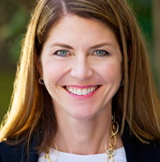
MelanieMesser2In October of 2011 Melanie Messer joined the Jacksonville Speech & Hearing Center as its first full-time development director. One year later she had tripled special event revenue, reduced expenses, and doubled sponsorship revenue.

Here’s her story:

As the new development director Melanie faced two challenges: creating a fundraising program that expanded beyond the organization’s well-attended major special event, “FinFest”; and doubling FinFest sponsorship revenue within one year.

Melanie began her work by establishing a donor cultivation program that included monthly “meet-and-greets” and bi-monthly home receptions. She talked with board members and community leaders to encourage them to host receptions and to visit the center for a “meet-and-greet.” She developed a structure that supported board members in becoming more involved with cultivating current and prospective donors.

Melanie also worked to change the culture of giving across the organization. She began with setting expectations for giving from board members. She moved on to increasing special event revenue. She laid out new sponsorship levels and encouraged the event committee to increase the giving level associated with each type of sponsorship. She encouraged the committee to approve an approach that asked potential sponsors to give financially, and to also ask the lead sponsor to give in-kind support such as printing and design services that would reduce event costs.

While we admire Melanie’s spirit and leadership, we know that no one person can change a culture. We asked her what organizational strengths were working in her favor. She replied, “Being supported by a leader – our executive director – who is willing to take risks, who allows new ideas, and encourages organizational change.” Other supports were highly invested individual and corporate stakeholders who put their passion and financial investment behind the center’s mission and vision. “Bill McQuilkin, the executive director, and I spent a lot of time strengthening existing relationships and building new ones.

“I had the support of my executive director and I had the support of colleagues across the organization. We were fortunate to identify and develop a core of “cheerleaders” or leaders of influence who were helpful in rallying their colleagues towards supporting our efforts,” she shared.

“This moral support was important because the revenue expectations for the event were high,” Melanie continued. “The goal was to increase sponsorship revenue from $50,000 to $100,000, which was a daunting challenge.”

While the challenge may have been daunting, the results were inspiring. “Not only did we reach our $100,000 sponsorship goal, we tripled our overall event net revenue from 2011 to 2012,” Melanie shared.

We asked her for words of guidance for her fellow development directors, or for those taking on a new fundraising job. “Do your homework before setting lofty fundraising goals but do not be afraid to take risks if you have the right backing and sound advice to pave the way,” she replied. “Also, remain transparent with leadership and your board and seek out potential individual and corporate partners in the community, who are able to be connected to your organization, whether through a board member introduction or funder.”

She closed her comments with words that delighted us, “Do not be afraid to apply or seek support to bring in advisors such as Saad & Shaw with a proven track record to bring your goals into reality.”

Back story: We met Melanie when she called us and asked us to work with her using our Counsel on Demand service. We admire Melanie’s talent and strategic thinking, and we have never met! We worked with her and Bill by phone and by email, listening to their ideas, reviewing their plans, and offering strategies for engaging donors, board members and sponsors. Let us do the same for you.

Mel and Pearl Shaw are the authors of “Prerequisites for Fundraising Success” and “The Fundraiser’s Guide to Soliciting Gifts.” They provide fundraising counsel to nonprofits. Visit them at www.saadandshaw.com. Follow on Twitter @saadshaw.

Know Your Legal Responsibilities

You may not be a lawyer, but you should know your non-profit related legal responsibilities…

What legal issues should you be aware of regarding your involvement with non-profit organizations? Wanting to provide executive directors, board members, employees and volunteers with information, we talked with Mr. Van Turner a partner in the law firm of BRITTENUM BRUCE, pllc (“Brittenum Bruce”). Mr. Turner’s law practice is concentrated in the areas of business and commercial litigation, business transactions, government relations, municipal law, and estate planning. Most importantly he is also an experienced board member.

Understanding that no interview can take the place of legal counsel, we asked Mr. Turner to help provide a high-level overview of the types of legal issues that can emerge within the non-profit sector. We started at the beginning, asking Turner what it means to be a “501 c 3” organization and what it takes to start one, and we continued with questions about managing endowments, fiduciary responsibilities, taxes, and who is “really in charge” – the board or the executive director.

Our interview is below, followed by more information about Attorney Turner.

Saad & Shaw: Let’s start at the beginning. What does it really mean when an organization is a nonprofit organization? What is a “501 c 3” organization?

Attorney Turner: A nonprofit association is a corporation or corporate entity which is not primarily organized to make a profit. In fact, nonprofits are organized and operated exclusively for religious, charitable, or educational purposes. The “501 c 3” language comes from the United States Internal Revenue Code and section which defines the types of organizations which are exempt from federal income taxes. In essence, for profit corporations must pay federal income taxes and nonprofit corporations do not have to pay federal income taxes.

Saad & Shaw: Related to that, what does it take to start a non-profit?

Attorney Turner:In order to start a nonprofit, an individual must first complete and file a 1023 Form with the IRS. One must also file the Articles of Incorporation with the Secretary of State in which the company will be headquartered, form a board of directors to govern the company and develop by-laws to govern the board of directors.

Saad & Shaw: What about the board of directors? What are the legal responsibilities of the board of directors? What is their role? Do they run the organization or does the executive director or CEO?

Attorney Turner: The board of directors has a fiduciary obligation to the organization. The legal definition of fiduciary is a person or entity entrusted with the duty to act for the benefit of someone else or something else. A person acting in a fiduciary role must exercise a high degree of care and must subordinate his or her own personal interests in the event that there is a conflict. While the executive director may handle the day to day obligations of the nonprofit, ultimately, the legal responsibility for the organization lies with the board of directors. For example, if the board must decide between what the executive director wants to do and what is in the best interest of the nonprofit, the board has a responsibility to do what is best for the nonprofit.

Saad & Shaw: What should the leadership of a non-profit be aware of when it comes to entering into contracts for goods, services and/or property?

Attorney Turner: The leadership should be aware that he or she is an agent for the nonprofit when entering into contracts. If the board of directors allows the leadership or the officers to negotiate and handle contracts, then everyone must understand that the executive director is binding the nonprofit to the deal. Therefore, if the board later decides that the contract is not good, they cannot come back and rescind the contract without a validly legal reason. The board of directors must make it clear in the by-laws whether it wants to approve every contract or allow the leadership to handle the contracts without board approval. What I usually see is that the board allows the leadership to contract up to a set amount and anything above that amount must be approved by the board.

Saad & Shaw: What about financial management? Are there specific oversights, policies or procedures that need to be in place? What happens if the money just disappears?

Attorney Turner: Yes, of course. A nonprofit is like any other business in that regard. Solid financial management is a must. It is advisable to address a system of checks and balances in the by-laws and to require an annual audit of the financial records. If the money just disappears and the board allows it to happen, then the board will be held accountable along with whoever took the money. If the board had strong procedures and the officers simply stole the money, then the board should probably investigate seeking criminal as well and civil remedies against the bad actor. The nonprofit could also purchase insurance to help cover the cost of theft or embezzlement.

Saad & Shaw: What about gifts and pledges? What should a nonprofit be aware of when accepting a gift or pledge?

Attorney Turner: I suggest that the nonprofit develop a gift acceptance policy. This policy will assist developing a planned and orderly method of knowing which gifts to accept and how to handle the gifts when accepted. For instance, if property is donated to the nonprofit, the nonprofit must develop a procedure for making sure they are receiving good title and that they are not accepting a landmine which would cause more headaches. Also, the policy could assist with spelling out some of the tax issues which may come-up with certain types of gifts.

Saad & Shaw: Is a written pledge really legally binding? If a donor commits to giving a certain amount to an organization, can that person really be held accountable?

Attorney Turner: A written pledge can be legally binding in some states if there is consideration involved. However, this is a state-specific issue and may vary from state to state. Consideration is simply “the thing of value” each party to a contract agrees to give in exchange for what he or she receives. So, for instance, if a nonprofit was going to name a building for someone who pledged a large sum of money and the nonprofit began construction on the project, the court may rule that there was consideration and find that the donor is legally bound to the pledge.

Saad & Shaw: Many of the leaders we talk with are interested in growing an endowment for their organization. Are there specific legal requirements associated with growing and managing an endowment?

Attorney Turner: I would again suggest creating a policy to handle the endowment. One particular issue that I see with an endowment is that the board would likely need to contract with another entity to assist with the financial planning and management of the endowment. The endowment needs to be invested correctly, and the board should have a policy in place to make sure an expert is retained to handle the endowment funds.

Saad & Shaw: What about receiving property from a donor? Or selling property?

Attorney Turner: I believe that the gift acceptance policy should specifically spell out what happens with donated property. Buying and selling property requires much more than executing a simple contract. The title of the property must be analyzed, insurance must be purchased, the proper disclosures need to be made, and the financing, if any, must be analyzed very carefully.

Saad & Shaw: Everyone says nonprofits don’t have to pay taxes. Is this true?

Attorney Turner: Yes, nonprofits are exempt from paying federal income taxes as long as they maintain their charitable purpose, apolitical purpose. I must note here that nonprofits are forbidden from engaging directly in politics. While 501 (c)(3) nonprofit corporations can encourage the franchise of voting by encouraging citizens to vote, they cannot support one candidate or one political party over the other.

Saad & Shaw: let’s talk about the not-so-pleasant possibilities. What about embezzlement and misappropriation of funds? What happens if someone suspects that this is going on? What actions should be taken by the board or executive leader?

Attorney Turner: The board should immediately remove the executive leader from the bank accounts. Further, the board should then request an audit to see what has been misappropriated. Furthermore, the board should also alert the authorities as to what has occurred. The board should also seize the executive’s computer. Even if the executive has deleted emails and materials on the computer, those materials can be retrieved and can assist in trying to figure out what happened with the money.

Saad & Shaw: We have covered a lot of issues in this conversation. Do you have any last words of wisdom for our readers?

Attorney Turner: Remember that the board has a fiduciary obligation to run the nonprofit. This means that if the board does not have the expertise, it should retain the expertise to make sure it is correctly conducting the business of the nonprofit. As the old saying goes, “an ounce of prevention is worth a pound of cure,” and this simply means that taking time out on the front-end to develop solid by-laws and policy and procedures can prevent several issues later on as the nonprofit develops and grows.

Saad & Shaw: Thank you Attorney Turner.

About Attorney Van D. Turner

Van D. Turner, Jr. is a partner in the law firm of BRITTENUM BRUCE, PLLC (“Brittenum Bruce”). Mr. Turner’s law practice is concentrated in the areas of business and commercial litigation, business transactions, government relations, municipal law, and estate planning. Before joining Brittenum Bruce, Attorney Turner was of counsel at Butler, Snow, O’Mara, Cannada & Stevens, PLLC (“Butler Snow”). Prior to practicing at Butler Snow, Mr. Turner served as Associate General Counsel for the Board of Education of the Memphis City Schools and as judicial law clerk for the Honorable Samuel Hardy Mays, Jr., federal judge for the United States District Court for the Western District of Tennessee.

Attorney Turner participates and has served on the board of directors of several legal professional organizations, including the American Bar Association, the National Bar Association, the Tennessee Bar Association, the Mississippi Bar Association, and the Memphis Bar Association. Mr. Turner’s most notable honors include Memphis Business Journal, 2007 “Top Forty Under 40”, Super Law Magazine, Mid-South Rising Stars for 2010 and 2011 in the areas of litigation and government relations, and selection as a Barrister in the Leo Bearman Sr., American Inns of Court. Mr. Turner has also served as an adjunct professor at the University of Memphis, C.C. Humphreys School of Law.

Mr. Turner earned his Bachelor of Arts degree from Morehouse College in Atlanta, Georgia in 1997, with Phi Beta Kappa and magna cum laude distinctions. After serving as an Assistant Teacher of English with the Japanese Exchange and Teaching Program in Yamanashi, Japan, Attorney Turner returned to the United States and attended the University of Tennessee College of Law, where he earned his Doctor of Jurisprudence in 2002. Mr. Turner is licensed to practice law in Tennessee and Mississippi.

You can reach Attorney Turner at vturner@brittenumbruce.com  or (901) 271-3794.

Church Giving Supports HBCUs

The United Methodist Church and HBCUs – behind the scenes at the Black College Fund…

The power of your church giving may be stronger than you know. For example, did you know that when you give to the United Methodist Church you are supporting eleven historically black colleges or universities in addition to supporting your congregation? That’s right. You are part of a long tradition that is now managed by the church’s Black College Fund under the leadership of Dr. Cynthia Bond Hopson.

As you may be aware, black colleges and universities have been transforming the lives of individuals, communities and our country since before the Civil War. Eleven of these 105 institutions are private-church related colleges founded by the United Methodist Church. In order to learn more about the relationship between these colleges and the church, we talked with Dr. Cynthia Bond Hopson and share our conversation with you.

Saad & Shaw:   Why did the church establish these colleges and why has it continued to support them?

Dr. Cynthia Bond Hopson:   The Methodist Church has always had a passion, tradition and belief in the power of knowledge and as the Civil War ended, it was painfully clear that the education that had long been denied to slaves would severely hamper their self sufficiency if not addressed. The people called Methodists (through the Freedmen’s Aid Society, founded during the 1860s) saw an urgent need and addressed it. This ministry to the educationally underserved remains and we see it as essential to empowerment and self determination. According to a history of the Black College Fund written by Dillard University President Emeritus Dr. Samuel DuBois Cook, “Without question, the UMC has no peer or competitor, either quantitatively or qualitatively, in terms of church support for its HBCU. No other mainline communion approaches the United Methodist level of generous and sustained financial support.” We believe in higher education and generously invest in it.

Saad & Shaw:   How does the church support these colleges? (Do you provide funding, conferences, technical assistance…)

Dr. Hopson:   All the above, but mainly the financial piece; our (mostly unrestricted) funding goes directly to the institutions to help keep their tuition and fees low, to enhance the infrastructure, to create new programming—whatever it takes to stay competitive. There is a capital projects designation and we also offer/share the United Methodist Connection of people, information and resources.

Saad & Shaw:   Why do you feel HBCUs are important today?

Dr. Hopson:  They are uniquely suited historically and otherwise to nurture, challenge and mentor their graduates to be instruments of change whether they’re running a school board, multi-national corporation or a university. These institutions attract the best and brightest in addition to those who have the potential to be great and they inspire them to “find a way or make one” as the Clark Atlanta University motto says. The small class sizes and low teacher/student ratios allow the faculty, staff and administration an opportunity to provide personalized attention and a family-like environment. Students can’t help but flourish and soar.

Saad & Shaw:   What role do these colleges play in the life of the church?

Dr. Hopson:    We get some of our most effective, committed, talented and innovative leaders from these institutions. Supporting leadership for life is not just a motto for us— we invest in it. The choirs tour and perform in local churches and our Project Athletic Ambassador program links congregations with the BCF basketball teams when they’re on the road for games. Also, in the Southeast, our institutions host the Youth Harambee, an annual gathering of youth groups from around the jurisdiction. Many of the schools were founded in local churches and that historic bond is a tremendous source of pride.

Saad & Shaw:   How do these church-related institutions work together? Do they engage in joint programming or joint fundraising?

Dr. Hopson:   The Council of Presidents (active presidents and retirees who have served more than ten years) help plan programming and promotion. Further, my office hosts a biennial continuing education event for public relations and advancement directors.

Saad & Shaw:   Is giving to these colleges a “black thing” or do all church members give?

Dr. Hopson:  Every United Methodist Church in the United States is assessed an amount to pay and many local churches and annual conferences (a group of geographically grouped churches) take enormous pride in paying their 100 percent share. We love those! We also receive memorial and estate gifts from supporters occasionally.

Saad & Shaw:   Has giving by churches to the Black College Fund increased or decreased during this economic downturn? (Whether increase or decrease, how has giving affected the fund and its work?)

Dr. Hopson:   I am delighted that our funding has held steady, and if anything, it has increased percentage wise. This year we received about 87 percent of $11 million, but our students’ needs continue to outpace the funding so we are constantly striving to reach potential new students and donors.”

Saad & Shaw:   Does the support of these church-related colleges and universities perpetuate segregated institutions?

Dr. Hopson:   Absolutely not! These schools are and have always been open to anybody with a hope and a dream, regardless of race, class, gender, ethnicity or national origin. They are our most diverse campuses with students and faculty from around the world.

Saad & Shaw:   What else would you like to share with our readers about the Black College Fund in specific or HBCUs in general?

Dr. Hopson:  Our 11 institutions come in all shapes and sizes and there’s bound to be one that fits your needs or interests. If you haven’t visited one of them, stop by and be impressed by the critical research, innovative programming and some of the best and brightest students anywhere on the planet! And, if you want to invest in excellence, the Black College Fund is a great choice. Our administrative costs are less than four percent and your contributions are tax deductible. We support leadership for life.

Saad & Shaw:   Any last words on the power of collective giving such as giving through one’s church?

Dr. Hopson:  Our schools are a great investment and together we can do so much more than any one of us individually could do. I continue to be amazed at what happens when everyone gives their best gifts—together we are a force to be reckoned with!

Saad & Shaw:   Thank you for your time!

To learn more about the UMC Black College Fund visit www.gbhem.org/bcf or call (615) 340-7378.

Financial Health Matters!

Financial health is about more than spreadsheets, bank statements, headaches and heart aches. It extends beyond the CFO’s or bookkeeper’s office and includes honest, direct conversations about money that build trust. Carol Cantwell, founder of Fun with Financials believes financial health is attainable – even in these times – and she believes organizations can have fun while pursuing financial sustainability.

Wanting to provide our readers with new insights into financial health and management we asked her questions that we hope will help you in your role as a board member, finance officer, executive director or donor.

Saad & Shaw:  Carol, what do you look for as indicators of organizational health when you review the financials of a non-profit organization?

Cantwell:  The main thing I look at is the amount of Unrestricted Net Assets on the balance sheet. Unrestricted Net Assets is just the technical name for reserves. A lot of nonprofits will set up a separate bank account and call that their “reserve fund” or “board reserves.” But, if you owe money from taking out a loan, for example, then some of the funds in those bank accounts may have a claim on them. Looking at Unrestricted Net Assets takes that into account so gives a better picture of financial health. Unrestricted Net Assets also excludes grant funds that are meant to be spent in a future time period [also called Temporarily Restricted Net Assets] so it really is an indicator of how much cushion you have if your budget doesn’t work out as planned. At this point in the economic cycle, I’d say any group that has Unrestricted Net Assets equal to between 2-3 months worth of their expenses has been managing their funds well.

Saad & Shaw:  Based on your experience, what are the biggest challenges currently facing non-profits?

Cantwell:  The biggest challenges are funding squeeze, funding squeeze, and funding squeeze. Endowed foundations are still seeing decreases in their payout levels because of the stock market downturn in 2008-2009. Government funding at all levels is being cut. So even groups that started out with very healthy reserves 3 years ago have had to use them to maintain their budgets. And those that didn’t have reserves have had to make very painful cut backs in salaries and staffing.

Saad & Shaw:  What suggestions would you share with our readers regarding how to best address these challenges, or at least minimize their impact?

Cantwell:  In the short-term, individual donors, despite the tough economy, are still holding up well. That’s not to say there haven’t been decreases but individual donors tend to be loyal. This is definitely a time when you want to make sure that you are saying thank you for that loyalty and staying in regular touch with your donors. For those organizations that still have 3 months or more of reserves, I’d say this is the time to be using those funds to maintain your staffing and programs. Being effective during this downturn will leave you in a strong position when funding recovers in the future.

For the long-term, and by that I mean post-2013, I’d advise organizations to try to rebuild their reserves or build them for the first time. That way, you’ll have more stability and flexibility when the next downturn comes.

Saad & Shaw:  What are the top three things board members should focus on to help ensure the financial health of the organizations they serve?Cantwell:  At Fun with Financials, I focus on 3 Keys to Financial Health. The first is: don’t borrow from your future. What I mean by that is make sure you plan to spend your grant funds over their full time period. Even if you get a general operating grant that you can spend in one or two months, if it’s a one year grant, try to plan to spend it over a year’s time.

The second key is: build reserves in good times so you can use them in hard times. By good times, I mean periods when funding is increasing. During 2004-2008, many private foundation payouts were growing so for organizations that are primarily foundation funded that was the time to build up reserves. Then you are able to absorb deficits during downturns in funding like we’re in now.

The third key is that your budget is your plan for not borrowing from your future and managing your reserves. Many organizations just think of their budget as a one-year spending plan. But board members especially need to think of the annual budget as part of a larger plan to build financial health. If you need to grow your reserves, then you need to plan for a surplus in your budget. If you’ve got reserves to use, then you can plan for a deficit budget. Obviously, you can’t run a deficit budget every year so you need to plan carefully.

There are downloadable files on my website that helps board members project their reserves and think about their budgets. On this page there is a spreadsheet called “Cashflow Spreadsheet” that can be downloaded, and there is a pdf file called “Monthly General Ledger Review.” Your readers can link to these and download for their use.

Saad & Shaw:  What is your definition of “financial health” or a “financial health framework” for non-profit organizations and institutions?

Cantwell:  Most nonprofits are trying to create some sort of change in society or respond to a need. Most times the change or need is going to take a long time to address. So we have these big visions that will take many years but then when it comes to finances we often only think in a one-year time frame when we do an annual budget. I want organizations to be around for the long haul. That means thinking and planning with a longer horizon.

So in addition to the Three Keys to Financial Health, which is the “how” of financial health, I’d say that the “why” of a financial health framework is to build more stability to ride out the ups and downs of funding effectively. And most importantly, financial health also brings the flexibility and independence to fund the work that’s most important to your mission and not just what’s most important to funders at the moment. So it really allows organizations to move from a place of fear and crisis to a more powerful position of strength and rootedness in your core values.

Saad & Shaw:  Funders and donors are encouraging non-profit organizations and institutions to increase their collaborations and to “work collaboratively.” What guidance can you offer our readers in the area of collaborations and fundraising? How is financial information shared within collaboration? Are their things to look out for when budgeting for collaboration?

Carol Cantwell, founder of Fun with Financials

Carol Cantwell

Cantwell:  My first response is that the collaborations should be genuine and organic. If they are just about pleasing a funder or getting access to money, that’s usually a recipe for disaster. But if it is a collaboration that you would do anyway, then I’d say to make sure you have an open culture around finances within your organization first. Does everyone on your own board and staff understand your financial reports and budget?

Once you have your house in order, then you want to work with partners that also have an open culture. You don’t necessarily need to share your financial reports with each other [although it’s not a bad idea either], but you do need to understand what each partner needs financially from the collaboration. For one partner this might be a very high priority for their funding strategy and another may be willing to walk away if there are too many funder hoops. So you want to be clear about that up front.

Also, if one organization will be the lead in terms of accepting the funds and then re-granting to the other partners, then you need to discuss up front how that role will be compensated since they are taking on additional administrative work and legal liability. Finally, make sure to budget enough to compensate everyone for the time it takes to really build communication in the collaboration. You don’t want to skimp on face-to-face meeting time, which is so important so building a lasting relationship.

Saad & Shaw:  What guidance can you offer our readers regarding budgeting and their financials and how these tie to (and often impact) fundraising in general?

Cantwell:  In many organizations, the budget process begins with the staff essentially deciding how much they want to spend. Then, they plug in an income figure to match that level of spending and at the end of the process ask the board to sign off on that balanced budget. I think the process should be flipped on its head.

The board should have their budget discussion early in the last quarter of the year. They should be talking about the current level of reserves and whether the upcoming budget should plan for a surplus to grow reserves or a deficit because you have enough reserves to spend some. Then the staff needs to figure out what a realistic plan is for revenue. Once you know how much revenue you can realistically bring in and you know how much of a surplus you need to generate or a deficit you can handle, you know how much you can spend. That’s a good budget process.

The difference between a budget and a fundraising plan is that the fundraising plan should have a lot more revenue in it than the budget. You want your budget to be what you can mostly count on. That doesn’t mean that there are no unknowns in your budget but you do want to be conservative with your assumptions. The fundraising plan is the place to push and stretch yourselves to do more so you can not only make the budget but beat it!

Saad & Shaw:  What about proposals? What should our readers think about when creating budgets for inclusion in funding proposals?

Cantwell:  In terms of budgeting for proposals, I wish funders would stop asking for budgets in the first place. I know that’s a radical thing to say but I really believe it. But given that funders do ask for budgets, most times you do need to give them a balanced budget because that’s what they’re used to seeing. So you will have to make some adjustments to your internal budget’s revenue assumptions to reflect that.

Your readers should know that I just wrote a blog post about this, so they can learn more about my thoughts on why funders should stop asking for budgets.

Saad & Shaw:  FUN with Financials. That’s a great name for your business. Please share with our readers your perspective on “fun.” Tell us a little about yourself, what motivates your work, and one fun thing from your career.

Cantwell:  I can’t take credit for the name Fun with Financials. I was actually named by one of my clients, Jobs with Justice. They said I really did make it Fun with Financials and the name stuck. I think fun is essential especially for those of us who are doing social change work. It’s often hard work and the change can be slow in coming. I see fun as a way of combating the fatigue that can set in. So I do take my fun very seriously!

I have a very clear vision of the kind of just and equitable world I’d like to live in. And nonprofits are often leading in creating that world. So it’s very motivating for me to support organizations that I care about get to a place of financial health where their work can be more effective with less stress and more fun.

Aside from the many baseball games that I get my clients to go to with me, the most fun thing from my career is seeing organizations that I’ve helped using these tools with their partners and allies. It’s great to see Fun with Financials become a community effort.

Saad & Shaw:  Thank you Carol! Continue to have Fun with Financials!

Federal Grants in Changing Times

Alan Kirschner

Many organizations and institutions have been fortunate to receive federal funding for one or more projects. These many have been small one-year grants, but many have received grants that are large in relation to the size of the organization’s overall budget. Many of these have been multi-year grants.

These grants have allowed many organizations and institutions to focus on program delivery knowing that their funding is “secure.” Some organizations have been fortunate enough to receive state, federal and local funding. Yes, there are a lot of hoops to jump through and lots of paper work, but at the end of the day this funding has been vital to communities and educational institutions across this country. Some of the funding may have been highly visible.  An example would be the federal stimulus grants that helped inject funding into the economy in recent years. Yet most funding is invisible to the people who are benefiting.

Some organizations and institutions that do not receive government grants have felt challenged to compete with those who have access to such funds, even though they too had a valuable service to offer.

Now, many organizations that have depended on government funding are finding their very existence may be in jeopardy due to cuts in federal funding and the impact these cuts are also having on state and local funding.

In order to get a better perspective on what is happening in the area of government funding we turned to Alan Kirschner, President of Kirschner and Associates, a consulting firm that helps nonprofits with program development, capital campaigns and fundraising.

Saad & Shaw – Let’s start at the beginning. With so many people critical of the federal government these days some of our readers may have forgotten why the federal government has offered grants.

Alan Kirschner – The federal government makes grant support available in areas it deems important to the national interest.  Of course, what’s in the national interest varies with the times, political clout, and the availability of resources. Much federal grant support goes to the state, which in turn redistributes the awards to local governments and to nonprofits.

Federal grant support is used to support a range of activities, including scientific research, environmental awareness and protection, career awareness, educational access, access to housing, health education and many other activities.  Many of the innovations we take for granted were based on research funded by the federal government, such as the discovery of DNA.  Much of the progress we’ve made in elevating access to education for low income students has been through federal grant programs, such as Pell Grants and Head Start. Careers that are considered vital to our nation’s future, such as in science, technology, math and engineering, have been promoted for many years with the help of federal grant support to nonprofits.

Nonprofits are a significant beneficiary of federal support.  It is estimated that about 8% of the budgets of nonprofits nationally come from federal grants.  If we include fees from government services, like Medicaid and Medicare, federal support to nonprofits provides almost one-third of the budgets of nonprofits nationally.

Saad & Shaw – How has the process of applying for federal grants changed over the years?

Alan Kirschner – Applying for federal grants varies with the agencies involved and the type of program.  Generally federal grants require more paper work and more documentation than similar grants in the philanthropic world. It often requires more cultivation in terms of getting to know the people involved and their getting to know your organization. The reporting and evaluation are very similar to what major foundations require.

Saad & Shaw – You have a long history of working to secure federal funds for nonprofit organizations and institutions, especially historically black colleges and universities (HBCUs). Can you share with our readers what your experience has been over the years (with a few examples)

Alan Kirschner – I look at the federal government as simply the largest funder by far of the nonprofit sector.  They are like the Gates Foundation on steroids.  And they touch virtually all aspects of the work of the nonprofit sectors, not just those that a particular funder chooses to support. It’s very important from a nonprofit perspective to at least be aware of the potential for support from the federal sector.

Over the years what has surprised me about federal grants is the openness and flexibility of many federal agencies to award major grants that aren’t necessarily a part of a formal request for proposals (RFP). These are known as discretionary grants. Virtually all agencies have budgets which award discretionary grants and the individual awards can be sizeable – 6 and 7 figures.  Nonprofits should think about ways that by keeping within their own missions, they may be able to help address the goals of particular federal agencies.  When an agency sees that a nonprofit can help the agency achieve its bottom line by making a direct award to the nonprofit, it’s a win/win and the agency is more likely to consider a partnership.  The federal agency benefits by investing in a nonprofit that offers to make a measurable difference in its space, and the nonprofit benefits by carrying out its mission through support of the federal agency.

I’ve been involved with a number of such programs. For example, the Department of Defense was interested in expanding participation of minority serving institutions in their grant and contract programs.  They awarded a contract with the United Negro College Fund to increase participation of HBCUs in DOD programs.  HHS wanted to increase involvement of HBCUs in AIDS awareness programs.  Rather than working individually with HBCUs, HHS awarded a grant to UNCF to increase representation of HBCUs in AIDS awareness.  The Department of Energy wanted to expose students from low-income and underrepresented minority backgrounds to careers at DOE.  They awarded a grant to UNCF to administer a summer internship that exposed students to a variety of careers. Each of these awards came through discretionary grants administered by federal agencies.

Saad and Shaw – What about the current and future landscape? How have recent economic changes and changes in the political environment impacted government funding for nonprofits?

Alan Kirschner – With the federal stimulus funding over, current budgets for federal grants are tightening.  The prospects for future funding through the federal government are very uncertain.  The Administration may identify a few areas for increased support that are necessary to keep America safe and competitive. For the most part, federal grant support is almost certain to decline in the next several years and some of the budget cuts will be severe and many have already begun.

Saad & Shaw – What advice can you offer to organizations who are already seeing their budgets cut as funds are reduced?

Alan Kirschner –   It’s very important for nonprofits that have grown dependent on federal support to develop strategies for replacing federal funding with private dollars. It’s critical to have a plan for doing this.  Private philanthropy won’t be interested in replacing federal dollars.  New strategies must be developed to appeal to new funding interests.

Saad & Shaw – would you share with our readers an example of how an organization or institution has successfully transitioned from a dependence on federal funding, to other forms of funding?

Alan Kirschner – I would offer the example of the Partnership for Public Service, a national nonprofit that focuses on federal public service.  They had received federal support to encourage young people to consider federal careers.  As those funds were drying up, the Partnership developed a plan to seek support from foundations interested in higher education and public service.  Through this targeted strategy, PPS  received a larger, multi-year commitment from the Annenberg Foundation that exceeded what they were receiving from the federal government.  In addition to seeking private funders, consider whether it’s possible to develop a sustainable revenue stream through charging a fee for the service or activity provided.

Saad & Shaw – without naming names, would you share what has happened to organizations/institutions who knew they would be facing cuts (or elimination of funding), but did nothing about it?

Alan Kirschner –   It’s important for organizations receiving large federal grants to make sure they are in a position to cut a federally funded program without unduly impacting the rest of the organization.  Such programs should operate as fifth wheels, not as a core part of the organization’s funding. The organizations I’m familiar with that have been hit hard by federal cuts have either paired their federal operations as funding declined or were absorbed by other nonprofits.

Saad & Shaw – Where can our readers turn for more information about federal funding in specific and government funding in general?

Alan Kirschner –   The best source for federal grant information would be the website of the agency that your organization is interested in.  That will provide the most detail and should be most useful. Grants.gov is also a useful information source.

Saad & Shaw – Our last question, what words of wisdom do you want to share with our readers?

Alan Kirschner –  It’s never a good idea to be totally dependent on any one source of funding.  The federal government will remain the largest source of philanthropic funding in America even with dramatic cuts.  It will remain an important place to seek support. If you’re a current federal grant recipient, this is a time to renew your contacts with federal agencies and try to get as much information as possible about the prospects for continued support.    Your program people in the agencies can be advocates for your organization and the more you are on their radar the more likely you will be able to weather any coming storms. If your nonprofit doesn’t currently receive federal support, it’s important to recognize that federal grant research and development is a time-consuming process. It’s critical to have staff that can devote a significant portion of time to finding opportunities and following up.

To learn more about Kirschner and Associates call (301) 365-1773 or email a_kirschner@yahoo.com.

Let us know what you think. And, as always, have a FUNdraising Good Time! – Mel and Pearl Shaw

© Copyright Mel and Pearl Shaw. Mel and Pearl Shaw are the owners of Saad & Shaw. They help non-profit organizations and institutions rethink revenue sources. They are the authors of How to Solicit a Gift: Turning Prospects into Donors. Visit them at www.saadandshaw.com or call (901) 522-8727.

National Fundraising — The Power and Impact of Local Volunteers

From time to time we seek to share what we have learned from Mel’s 25 years with the United Negro College Fund (UNCF) and his work developing and producing the Lou Rawls UNCF Telethon. In this column we focus on the impact that local volunteers – and local campaigns – have on the fundraising of national organizations.

Back in the day the Lou Rawls UNCF Telethon was the largest African American fundraising special event held on a single day anywhere in the world. Over the years, the telethon raised over $500 million dollars. Lou Rawls was certainly the star of the show, but the real stars were the thousands of volunteers who raised money in communities across the country during the six-to-nine months leading up to the telethon.

Mel Shaw, Lou Rawls & Jim Alston

While people continuously called into the show to pledge their gifts, 60 – 70% of the money was raised in advance from local communities. These local UNCF campaigns were led by volunteers who were respected at the grass roots level – and at the highest levels – in the communities where they lived and worked. UNCF volunteers raised funds from churches, civic organizations, local businesses, families and individuals. All gifts were recognized publicly during the telethon. Local TV and radio stations invited leaders and every-day folk to make their gifts on air. Some local gifts were announced on the national show. The anticipation of being publicly recognized and acknowledged in front friends, neighbors and co-workers helped stimulate giving and ongoing involvement.

The one-day telethon was the culmination of a year’s worth of planning, preparation, training and follow up. The fundraising was non-stop – and there was never be enough staff. We learned how to depend on and trust volunteers in local communities. We focused our efforts on training and preparing these volunteers, and made it a high priority to recognize and acknowledge their work.

Finding the right volunteers was at the heart of all our local campaigns. Cities such as San Antonio, Albuquerque, Kansas City, Phoenix, Portland (OR), and Omaha operated volunteer-led campaigns without the day-to-day support of local staff. All were successful in creating a buzz for UNCF and the telethon. San Antonio in particular extended that buzz beyond the black community and engaged large numbers of Hispanic volunteers and donors. Cities with a UNCF office such as New Orleans, Atlanta, Chicago, Dallas/Fort Worth, Los Angeles, and Miami had local and regional responsibilities. Staff were charged with managing the local production of the telethon as well as implementing the volunteer-led fundraising plan.

The number one thing that made a difference in the telethon’s success was the power and impact of qualified, committed and trained local volunteers – including those from Memphis. UNCF’s commitment to localized fundraising kept people giving, year-after-year.

© Copyright Mel and Pearl Shaw.
Mel and Pearl Shaw are the owners of Saad & Shaw. They help non-profit organizations and institutions rethink revenue sources. They are the authors of How to Solicit a Gift: Turning Prospects into Donors. Visit them at www.saadandshaw.com or call (901) 522-8727.

Volunteer Fundraising – Engaging Volunteers

Volunteers make the world go roundVolunteers make the world go round. That is at the core of what we believe and what our experience has proven to be true. In part one of this series we talked about the dangers of relying on staff to lead your organization’s fundraising. In part two we focused on board members as the first group of volunteers to engage. Now we discuss engaging volunteers from outside your organization.

Let’s start with preconceptions regarding who is a volunteer. For too many people the word volunteer is limited to people who help send out mailings, or work registration at a special event. For us, volunteers include people who take ownership and responsibility for helping to design and implement fundraising related projects.

For example, volunteers with expertise in marketing, branding and communications can work together to redefine how your institution positions itself in the local and regional market. They would bring the same level of professionalism to your project as they do when working with their clients.

Helping HandsVolunteers facilitate a personal introduction and meeting with a key stakeholder you want to talk with. As appropriate they join you for the meeting and are as well prepared for that meeting as they are for any meeting related to their own business.

As you develop and strengthen relationships in your community, ask people for help. That’s right. Ask for help. For example, when making changes in how you deliver services to children with special needs take time to meet personally with parents of children in your program, or parents who use other services. Share what you are considering and ask for their suggestions regarding how you should best proceed. Likewise, take time to talk with current, former and prospective sponsors and funders. Share your challenges and ask “What would you do if you were in my situation?” You will be amazed to learn the solutions people suggest.

ListenAfter listening to the suggestions of people who can make a difference, come back to each and ask for help with a specific task that ties to their interests, skills, and the needs of your organization.

When it comes to meeting people you believe could make a difference in the life of your organization, ask someone for an introduction.

AskThat’s the secret – Ask and listen.

Here’s part two of that secret – be prepared. Know who you are talking to, what your organization needs to accomplish, and what you want to communicate. All of your conversations should tie back to your mission, vision and strategic plan. Volunteers can make a difference if you ask for their leadership, insights and involvement.  You need to ask and then step back and listen.

© Copyright Mel and Pearl Shaw.
Mel and Pearl Shaw are the owners of Saad & Shaw. They help non-profit organizations and institutions rethink revenue sources. They are the authors of How to Solicit a Gift: Turning Prospects into Donors. Visit them at www.saadandshaw.com or call (901) 522-8727.

Meharry Medical College – Doing It Right!


Engaging your president and board is key to ensuring your institution’s fundraising success. Engaging faculty, staff and students is also important at colleges and universities. Engagement is a clear indicator of commitment, and commitment is a number-one prerequisite for fundraising success.

 We have long admired Robert S. Poole, Senior Vice President for Institutional Advancement at Meharry Medical College, for his success in leading a strong fundraising team. A seasoned advancement professional, Poole led Meharry through a historic $125 million campaign, and in 2010, the College reached a $100 million endowment milestone.

These successes are a result of strong philanthropic giving and prudent financial management. We recently turned to Poole for information about his strategies, and his insights to help impact fundraising at your college, university or non-profit.

A vital part of Meharry’s fundraising success has been the engagement of the College president, Wayne J. Riley. “As lead spokesman and vital leader/partner in every development discipline, the president is highly visible and engaged throughout the advancement program,” says Poole. “He’s involved in media (including op-ed features, video features, editorial board meetings, radio and TV interviews, health policy position statements, etc.), external affairs and government relations, donor prospect calls and campaign strategy, and alumni relations.”

Poole ensures the president is well prepared for these activities and has a clear vision of the College’s fundraising priorities. He discusses top prospects with the president and conducts briefing sessions before cultivation or solicitation visits. He also keeps him abreast of fundraising trends and best practices, as well as activities and progress at peer institutions. Poole says he works closely with the president to “develop and review new funding opportunities based on the College’s strategic plan and in conjunction with the deans and other campus executive leaders.”

 Board engagement is another key part of Meharry’s fundraising strategy. Poole updates the board’s advancement committee and chair about fundraising and marketing priorities and objectives. He gives prospect briefings to board members who participate in cultivation and solicitation calls. “We also involve board members in planning major fundraising initiatives, both as policy makers and potential donors,” says Poole.

Poole’s team also strives to engage staff, faculty and students in fundraising initiatives. “We encourage them to share their perspectives on the institutional needs and opportunities they would like to see addressed through philanthropy,” he says. “We provide education on how the fundraising process works and, where appropriate, involve them in fundraising cultivation, solicitation and stewardship.”

Students provide testimonies for solicitation appeals, write letters of thanks to scholarship donors and participate in donor recognition events. Poole’s team draws upon faculty members’ expertise when crafting fundraising proposals and projects. Faculty members and deans are also effective partners in donor visits, reports Poole. In fundraising there is a role for everyone – especially the president and board.

Keep People at the Core of Fundraising

Amidst the practical challenges of a fundraising campaign, it can be easy to lose sight of an organization’s greatest assets: its people. People are at the core of Meharry’s fundraising success, reports Poole: “Donors, staff and leadership … deliver the most value,” he says. “The vision and support of leaders provide us with the rationale and tools to engage fundraising. The staff and volunteers enable us to launch our plans, and the donors offer their financial capacity, which ultimately helps us realize our potential.”

Poole says he looks for several important traits in staff, including strong critical thinking skills. Successful staff members have exceptional communication (and listening) skills and a genuine interest in other people and their interests. Staff are also expected to have an outstanding work ethic and the self-discipline to see tasks through to their completion. Poole says his team carefully follows a fundraising plan, which is “reviewed constantly and updated periodically as circumstance warrant.”

Keeping people motivated over long periods of time can be a challenge, Poole acknowledges. “Another significant challenge is recalibrating priorities in an effort to keep pace with the demand for greater service to constituents and other stakeholders, patients and the general public as an academic health science institution,” he says.

Meharry College’s mission keeps Poole motivated. He takes pride in “aligning donors’ giving priorities and inclinations with the College’s aspirations” and in helping donors imagine fulfilling outcomes they may not have considered previously. Above all, Poole is motivated by “witnessing the great impacts — sometimes life-changing — of philanthropy on campus.”

Poole cites several role models who have inspired his career as a development professional, including his first boss, Nathaniel Smith, at Fisk University as well as Arthur Frantzreb, Jerrold Panas, and Alice Green Burnett.”

When asked what advice he would give those pursuing a leadership position in fundraising, Poole shared the following: “They should be aware of the time and mind share demands — often you are mentally ‘on call’ 24/7. One should have a natural curiosity about people and a range of topics. Because of time demands, people in these positions should develop strong ties and support systems with family and friends to maintain perspective away from the job. Additionally, as advancement leaders they must be decisive but not judgmental, and rely on evidence and data as well as instincts in decision making. Good and honest communication and the ability to set and execute priorities are essential.”