Category Archives: FUNdraising Good Times

Fundraising commentary, tips and information.

How to sabotage your fundraising efforts

fundraising errors, errors in fundraising, fundraising, planning,  donor stewardship, fundraising mistakes,Fundraising is about asking for money. That’s the common perception. But is it the truth? Here’s what we have learned from our extensive work with nonprofit organizations, colleges and universities, individual donors, program officers and foundation executives: fundraising is about much more than asking for money. Individual solicitations, proposal submissions, 5K runs, and galas are methods and tactics. Behind these are the fundamentals of your nonprofit’s business. These fundamentals often influence giving and the amount of a gift.

Here are a few examples of business decisions, missteps and indecisions that can contribute to a lack of investment in nonprofits.

  1. Fail to articulate and diligently pursue your niche
  2. Operate without a multi-year strategic plan
  3. Seek capital investments without a strategy for growing revenue for operations
  4. Accept a gift for a specific purpose and use it for another purpose.
  5. Be slow in sending out thank you letters. Create a form letter and send it out with a computer generated signature at the end of the month.
  6. Allocate funds in ways that are not in line with your core priorities
  7. Offer executive compensation that is out of line with salaries of other employees and the community
  8. Isolate your organization from community stakeholders, the business community and those you serve

Many of above are things we have heard from major donors. One thing we know about major donors is that not all of them start out as major donors. And many do not announce themselves as such. This is true of individual donors as well as foundations and corporations. Treat everyone well. Demonstrate that you are serious about your business and communicate that consistently in words and in actions.

Here’s a recent quote from a major donor, “You have to recognize my giving. Not just for me, but to inspire others. People don’t understand that in recognizing me you are inspiring others to give.” Don’t make the blunder of minimizing the contributions of major donors. If you don’t have a donor recognition program, put one in place. Be consistent in how you recognize donors. Value your relationships. And don’t be deceived by people who downplay a desire for recognition. Very few people will tell you directly, “I want to be recognized.” It is your job to recognize donors in a first class way. Don’t be afraid to consider naming opportunities as appropriate.

In regards to gifts from foundations and corporations: remember that people work in these institutions. They remember whether you submit your report on time, if you invite them to events, update them on your progress, and – most importantly – whether or not you achieve the goals outlined in your proposal.

Take care of the business of running a nonprofit: it will support your fundraising.

Mel and Pearl Shaw are the authors of “Prerequisites for Fundraising Success” and “The Fundraiser’s Guide to Soliciting Gifts.” They provide fundraising counsel to nonprofits. Visit them at www.saadandshaw.com. Follow them on Twitter: @saadshaw.

Image courtesy of Stuart Miles / FreeDigitalPhotos.net

The important role of an RFP

RFPNonprofit organizations often secure the services of fundraising related consultants and contractors to support operations and growth. Services may be needed to supplement the expertise of current staff, to add specific skill set for a limited amount of time, or because it is more cost effective to contract for services than to hire full-time employees.

Services that could be put out to bid include direct mail, special event design and management, proposal writing, feasibility studies, campaign counsel, online giving, marketing and advertising, prospect research, executive and employee search services, technology, training services and staff development, premiums and promotional materials, and phonathons.

In all cases a written request for proposals (RFP) helps facilitate a successful engagement.

While it takes time to craft an RFP there are many benefits to be achieved. First, the process will force you and your team to think through what you want to achieve from engaging an outside firm. It serves as a basis for the scope of work that will guide the firm’s work and your evaluation of it. You will have a better idea of the amount of time and resources required by your organization to support the work of the contractor or consultant. You will have created a “fair playing field” for those who are competing for your business, and a basis from which your team can evaluate proposals.

Getting started. Convene a team to create the RFP and establish a method of evaluation. Most RFPs include a brief organizational overview and history; a project description, budget, and timeframe; requirements related to experience, capacity, and technology; and submission deadlines and dates by which decisions will be made. Evaluation includes determining, for example, the importance of methodology, experience, and price. Are they equally weighted, or are methodology and experience more important than price? How will “points” be assigned? On a scale of 100, would each receive 33.3 points, or would 40 points be assigned to methodology, 50 to experience and 10 to price? Scoring RFPs reduces subjectivity, provides management with a rationale for contracting, and provides vendors with the opportunity to learn how their proposal rated and why.

Regardless the size of your organization, the RFP process provides an opportunity to evaluate proposals on an “apples-to-apples” basis. If you are not required to issue an RFP and have already decided which vendor you want to work with, think long and hard before issuing one. Staff, board members, volunteers and vendors all invest time and resources in the RFP process: a common complaint is that the process is a “sham,” as a decision had been made in advance. Finally, the RFP process can diminish conflicts of interest and contribute to transparency and accountability. It is another way to strengthen the health of your nonprofit.

Mel and Pearl Shaw are the authors of “Prerequisites for Fundraising Success” and “The Fundraiser’s Guide to Soliciting Gifts.” They provide fundraising counsel to nonprofits. Visit them at www.saadandshaw.com. Follow them on Twitter: @saadshaw.

Who is your ideal partner?

 fundraising, leadership, partnership, special events, fundraising campaign, how to lead a fundraising campaignHow do you become a successful nonprofit fundraiser? What is the secret to success? An engaging personality, relationships, tenacity, creativity, sales ability and consistent follow through are some of the attributes of success fundraisers. Here’s another: teamwork! Successful fundraisers don’t go it alone: they always have a partner. It is flattering and humbling to be asked to play a role in raising funds for an organization you believe in. You can increase your chances of success by picking the right partner to work with.

If you are asked to help organize a marathon, a concert, or a phone-a-thon you can double your impact by getting a partner. If you are asked to lead a capital campaign, an alumni campaign, or local disaster relief campaign get a partner and double your impact. When agreeing to help with fundraising make your answer, “Yes, and I’d like to have a partner work with me. So-and-so is a great asset and he has volunteered to work with me on this project.”

When you have a fundraising partner you have someone to bounce ideas off of, to make plans with, and to inspire you if you feel discouraged. If you know there are times when you will be you of town or otherwise committed, your partner can fill in for you and keep the process moving. When you have an effective and supportive partner fundraising can transform from an obligation into a fun challenge. You set a financial goal and work together to figure out how to reach it.

Here are a few things to consider as you contemplate who could be your ideal fundraising partner. Reflect on who you know personally, professionally, through worship, family connections, and/or community life. It would be ideal to partner with an individual who has a track record of successful fundraising. But that alone is not enough! Think about who also shares an interest in the work of your nonprofit and its values, and who has demonstrated commitment and follow through in other areas of their lives. Think about who you have helped in the past, and who might “owe you one.” Look for a person who gets things done, doesn’t accept failure, and always has a “plan b” and a “plan c” in their back pocket. Another ideal characteristics: people who have the power, influence and wealth to easily engage others in meeting your fundraising goal. Finally, the most important characteristic is that of accessibility. You want a partner you can reach by phone, text or email and who is not too busy to give his or her full attention to your joint project. They make your fundraising project their project.

If this sounds simplistic, that’s because it is. Find a partner, put your heads together, and have some fun raising money.

Mel and Pearl Shaw are the authors of “Prerequisites for Fundraising Success” and “The Fundraiser’s Guide to Soliciting Gifts.” They provide fundraising counsel to nonprofits. Visit them at www.saadandshaw.com. Follow them on Twitter: @saadshaw.

Image courtesy of artur84 / FreeDigitalPhotos.net

Graduating to a lifetime of giving

Graduation, alumni giving, young alumni donors, high school giving, scholarship fundraising, graduation, reunionHappy graduation! You did it! This column is for graduates and their families. We salute your commitment to your education, your future and the future of your family. Graduating from high school, community college, a technical training school, or a four year college or university is a big deal. No two ways about it. You are celebrating a milestone and the beginning of “what’s next.” We hope you will realize the economic and social benefits of your education. And we hope you will take the time to thank your family for their encouragement. It takes a lot of support to persist towards a degree and to graduate. And, as you well know, it takes money.

As a new graduate, we encourage you to make a commitment to “paying it forward.” Here are three suggestions to transform you from a graduate into a major donor. You can follow these steps even if you graduated years ago: it’s never too late to make a difference.

First, make a small monthly commitment to your alma mater. Look at your budget and find an amount you can commit to giving every month. Automate your giving through a direct transfer or debit. Set it up and forget about it. As you go through life you can increase your monthly gift. If you start with $25 a month, you can increase to $35 a month next year, and $45 a month the following year. Notice we are talking about monthly gifts. That’s because it is easier to give small consistent amounts, than it is to give a one-time larger gift. Twenty-five dollars a month is $300. But for many people, it is difficult to give $300 – there is always another need. Twenty-five dollars is more manageable.

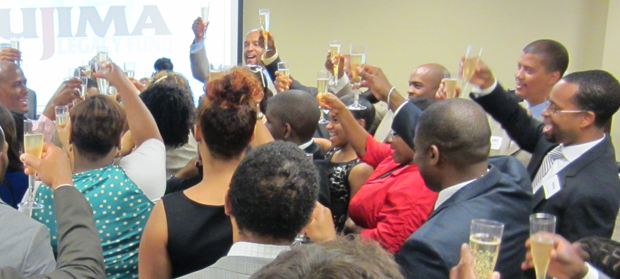
Second, create a small giving circle to support your school. This can be formal, as in the Ujima Legacy Fund that Reginald Gordon discussed in our last two columns, or it can be informal. For example, think about your high school and the impact ten or twenty graduates can make by giving on a monthly basis. Using the starting point of $25, you could collectively give $250 to $500 dollars depending upon how many people participate.

Third, if you are a member of an alumni association take a long hard look at the expenses associated with homecoming, reunions and other special events. Can we reverse the trend by spending more on scholarships than hotels, travel, parties and lavish awards? You can make a difference in the culture of your alumni association: let’s put students first.

Over time you can grow into a major donor who shares his or her success with the school or college that prepared you for your life and career. Start small – plan BIG.

Image courtesy of iosphere / FreeDigitalPhotos.net

Mel and Pearl Shaw are the authors of “Prerequisites for Fundraising Success” and “The Fundraiser’s Guide to Soliciting Gifts.” They provide fundraising counsel to nonprofits. Visit them at www.saadandshaw.com. Follow them on Twitter: @saadshaw.

African American men uniting to support community nonprofit organizations

Part two of a two part series. Read part one here

African American philanthropyAfrican American men are pooling their money to create positive community change. The Ujima Legacy Fund brings together men who invest $1,100 and collectively increase their impact. Founder Reginald Gordon shares a few details so you can create a fund in your community. We pick up our interview with Gordon with a discussion about grantmaking.

“Once we have reviewed all of the applications, a representative group of Ujima men go visit the site of the most compelling applicants,” Gordon shared. “The next step is for those applicants to make a presentation to the entire membership. After the membership has heard from each of the top applicants, then the members vote. The agency with the most votes is awarded the grant. Last year, we gave $20,000 to Partnership for the Future (www.partnershipforthefuture.org). This year Ujima received proposals for funding from 23 applicants. We will vote on our 2014 grantee in mid May.”

The fund started through barber shop conversations, now “we are using word of mouth, email and social gatherings to spread the news about the Ujima Legacy Fund. We asked each member from last year to try to recruit two other men to join this year. We have been successful in asking for time on the agenda at regularly scheduled African American male networking events and meetings, like fraternity meetings. The response has been overwhelmingly positive.”

Joy has accompanied the process. “One of the unexpected joys is the renewed sense of brotherhood. We now have a band of brothers who have made a commitment to transform our community by financially supporting critical pathways to success for our young adults,” Gordon shared. “We actually have a Ujima Legacy Fund lapel pin that we wear to symbolize our unity of purpose. The word has spread around town that African American men in Richmond are coming together to give money to causes that they want to support. We definitely have helped expand and diversify the list of major philanthropic donors in Richmond. We have even inspired black women in Richmond to begin the process of creating their own giving circle. We have jokingly asked them to not raise more money than us their first year.”

Gordon suggests checking out information about the Ujima Legacy Fund on the Community Foundation of Richmond website. “Get a small group of men (no more than six) who want to champion the creation of a giving circle. Have this core group decide on firm goals and objectives of the giving circle. (Please feel free to use any language that you like from Ujima.) Find a fiscal sponsor and some organization that can help administer the fund. Then, go out and boldly recruit members for your giving circle.”

Learn more at www.bit.ly/UjimaLegacyFund.

Photo credit: The Community Foundation Serving Richmond and Central Virginia. www.tcfrichmond.org

Mel and Pearl Shaw are the authors of “Prerequisites for Fundraising Success” and “The Fundraiser’s Guide to Soliciting Gifts.” They provide fundraising counsel to nonprofits. Visit them at www.saadandshaw.com. Follow them on Twitter: @saadshaw.

African American Men and philanthropy

African American men find a new way to give back

Part one of a two part series

Reginald Gordon, African American fundraising, African American male philanthropy, African American philanthropy, giving circles, how to start a giving circle

Readers of our column know we are supporters and promoters of women’s philanthropy including women’s foundations and giving circles. Mel likes to joke, “what about men’s philanthropy?” Now we have an answer: the Ujima Legacy Fund – an African American male giving circle. Knowing that men don’t want to be outdone by women, and that women want to support men, we bring you this interview with Reginald Gordon, one of the fund’s founders. In addition to supporting and growing African American men’s philanthropy Gordon is also the Chief Executive Officer of the Eastern Virginia Region of the American Red Cross.

Let’s start at the beginning. We asked Gordon about the events that led up to creation of the fund. “The Ujima Legacy Fund grew out of a series of conversations that we had in a barbershop,” he began. “A group of African American men decided to hold monthly conversations in a downtown barbershop a few years ago. The evening conversations attracted a cross section of men, from construction workers to college professors. We promoted the conversations by word of mouth. It felt like a Million Man March experience. We explored myriad topics that impacted the black community in Richmond, including the lack of black men involved in local philanthropy. A few of us decided to take action on the idea of getting more African American men involved in philanthropy. We kept on working on this idea after the cessation of the monthly barbershop conversations. We did research on black male philanthropy and decided that we needed to form an African American male giving circle. We named it the Ujima Legacy Fund. Ujima, the third day of Kwanzaa, means collective work and responsibility.”

While fundraising can be challenging, organizing how a fund operates can be even more complex. We asked Gordon to share how the fund operates. “We decided to keep the management of the Ujima Legacy Fund as simple as possible. The fund is open to any African American man who wishes to join. In order to become a member of the Ujima Legacy Fund, the man must contribute $1,100. Each member gets one vote, when it is time to select the grantee,” Gordon began. “The Ujima Legacy Fund has a partnership with the Community Foundation of Richmond for administration of the fund. The men of Ujima decided on the types of programs and agencies that would be appropriate for our funding. We agreed that we wanted to target our funds toward agencies that had credible educational programs designed to serve young adults. Prospective grantees apply for the Ujima Legacy Fund through the Community Foundation website (www.tcfrichmond.org.)”

Next week: grant making, and how to start your own fund.

Learn more at www.bit.ly/UjimaLegacyFund.

Mel and Pearl Shaw are the authors of “Prerequisites for Fundraising Success” and “The Fundraiser’s Guide to Soliciting Gifts.” They provide fundraising counsel to nonprofits. Visit them at www.saadandshaw.com. Follow them on Twitter: @saadshaw.

Fundraising reports: clarity or obfuscation?

Fundraising reportsFundraising reports can clearly communicate progress towards agreed upon goals and milestones. They can also take a lot of time to produce. They can be confusing. They can have too much detail, or too little. They can engage and energize. They can also obfuscate.

Through our work we have been exposed to the diversity of fundraising reports. We have seen staff focus all their attention on producing reports per board requests, only to have board members request different information in the meeting. We have watched board members’ heads nod trying to stay awake during fundraising presentations that include slide after slide of comparisons against prior years, goals, and other benchmarks. We have flipped through binders that include copies of proposals submitted, detailed gift reports that list each gift from $1 to $1 million, and lists of potential donors. We’ve heard board members complain, “with all that paper I still don’t know how much we need to raise.” And we’ve heard the exasperation’s of staff, “They want to know why we didn’t meet goal, but when we explain they aren’t interested.”

Producing fundraising reports can consume valuable time for a small, emerging or under-resourced nonprofit. Yet these reports are vital to the fundraising and oversight responsibilities of a board. The challenges and frustrations that arise when producing or reviewing reports can reflect an organization’s fundraising capacity and infrastructure. Examples include software or a database that can’t produce reports the board requests, or gifts that are entered incorrectly or categorized inconsistently. Frustrations over reports can also underscore an underlying tension between the board and executive. Streamlining the fundraising report process can help clarify an organization’s health and expose challenges and opportunities. Taking the time to identify the important information the board or campaign committee wants to review and measure, and determining how to succinctly present that information can help increase organizational health.

We want to know about your experiences. As a board member, development professional, volunteer or staff person, what are your thoughts on the types of fundraising reports that support transparency and accountability? As a board member, what are your expectations when attending a development committee meeting, or hearing a fundraising report at the full board level? As a development professional, what will help you support and engage board members and volunteers?

In your opinion, what are the five things board members or fundraising volunteers should track? What are your pet peeves? Your suggested solutions? Do reports engage board members and volunteers, or push them away? Do your reports include acronyms, language and references that people don’t understand? Are there guidelines for how gifts are categorized and credited? Tell us how your organization improved its reporting.

We want to know your thoughts and will share them in a future column. Please email us at news@saadandshaw.com

Image courtesy of Stuart Miles / FreeDigitalPhotos.net

Mel and Pearl Shaw are the authors of “Prerequisites for Fundraising Success” and “The Fundraiser’s Guide to Soliciting Gifts.” They provide fundraising counsel to nonprofits. Visit them at www.saadandshaw.com. Follow them on Twitter: @saadshaw.

How to keep a fundraising job

Part two in a two part series.

fundraising, fundraising career, tips for development directors, how to succeed in fundraising, executive director and development director relationships, president and vice president for advancement relationshipsWe have seen nonprofit executive directors and college presidents pull their hair out over their relationship – or lack of a relationship – with their development staff. There are magic words development professionals say that pour gasoline on a slow smoldering fire. Here are a few.

“I don’t have enough staff.” While this may be true, it is not a conversation starter. You must effectively deploy current staff before requesting more. A staffing request should be accompanied by a plan showing how new staff will increase revenue over-and-above the added salary line. “The event was a great friendraiser.” A fundraising event that fails to meet goal is not a successful friendraiser. “We couldn’t meet the proposal deadline….” There is no reason to miss a proposal submission date: plan ahead, and submit in advance.

“The annual appeal didn’t go out until January.” It doesn’t matter that it was ready to go on December 27th. Year end appeals should go out in October. November at the latest. “I am heading up a community solicitation program for the chamber.” Yes, your boss wanted you more involved with the community, but not like this. “Can you meet with a potential, major gift prospect in the next five minutes?” The point is you have to coordinate donor and funder visits with your executive. “I have a personality conflict with the chair of the alumni association.” Managing relationships is a key responsibility for a development professional. You cannot alienate one of your most important constituencies.

“The person with that information is out on sick leave.” This classic drives executives crazy. It doesn’t matter that it’s true: you need backup systems and cross-trained staff. “We are waiting on ABC foundation to take us over the top.” Too often this is the gift that never arrives. Don’t wait for a gift to make your goal: keep working a pool of prospects with the capacity to give three times your goal. “We made goal, but all gifts are restricted.” We know this is an exaggeration, but there’s a grain of truth: be careful with gift counting.

Here are a few other favorites: “Can you attend a check presentation of $1,000 in Chicago?” “I can’t tell you how much we raised because of a computer problem.” “Mr. Longwinded volunteered to make remarks at the grand opening.” Two more that are sure to annoy: asking for a raise when you haven’t met an agreed-upon, reasonable fundraising goal, and offering one-of-a-kind naming opportunities to more than one donor.

Here’s a tip for fundraisers who want to strengthen their relationship with their executive: You are the “subject matter expert”: Suggest potential solutions instead of leading with problems. Provide a weekly report with funds raised, prospects contacted, and important dates to remember.

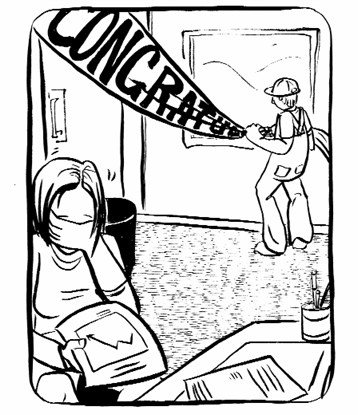
Photo credit: Briana Miller http://breakcomics.blogspot.com

Mel and Pearl Shaw are the authors of “Prerequisites for Fundraising Success” and “The Fundraiser’s Guide to Soliciting Gifts.” They provide fundraising counsel to nonprofits. Visit them at www.saadandshaw.com. Follow them on Twitter: @saadshaw.

Statements fund development professionals hate to hear

Part one in a two part series.

congratsDo you wonder why you can’t keep development staff? Maybe it is “their fault.” Or maybe your expectations have people running for the door. Here is a short list of things executive directors and college presidents have been known to say that get development staff running to monster.com. Do you hear yourself in these comments? What can you do to change?

  1. “Let my assistant to arrange a time for us to talk.” This is a favorite because it often takes weeks to secure an appointment.
  2. “Once you have done your homework, call me and I will close the deal.” Does this make any sense? How many nonprofit leaders are so sought after that their presence at the point of solicitation will “close the deal?”
  3. “It’s your job to raise the money.” This belief is a luxury no executive can afford. Regardless the number of development professionals employed, you are the chief fundraiser. Your staff’s ability to raise money requires your active participation.
  4. “I want you to make at least 20 calls a week. Another favorite. Who will your staff call, who will want to talk with them, and what are they calling donors about?
  5. “I want you to chair the homecoming dance committee.” There are many variations on this theme: all pull development staff away from fundraising. Unless there are clear revenue goals keep your development staff out of events.
  6. “Have you asked the board members for their gifts?” Major red flag. Expecting staff to solicit board members is a recipe for low giving. This is the responsibility of the board chair or chair of the board development committee.
  7. “You don’t need to know my travel plans.” This closes the door to fund development and fundraising opportunities. Your staff can suggest visits to current or potential major donors and influencers, help coordinate a friendraiser, or a visit to a foundation or corporation who funds nonprofits similar to yours.

Other favorites include:

  1. “I want you to raise 50% more than you did last year.”
  2. “I’m launching the campaign in spite of what the feasibility study says.”
  3. “We don’t need to be spending money on a feasibility study.”
  4. “I underestimated: we have a short fall of 20% that you will need to raise.”
  5. “I want you to represent me at the chamber meeting.”
  6. “I want you to make the case before the community foundation, I need to be at the Save the Duck conference in Idaho.”
  7. “What should be our fundraising priorities be for this year (this campaign?)”
  8. “Who were our top five donors last year?”
  9. “Send me an email about your fundraising plans.”
  10. “Tell me, who is currently on the development committee.”
  11. “I don’t want you talking to any board members.”
  12. “I need to cut the budget by 10% – that includes your department as well. And I need you to raise an additional 15%.”
  13. “I’m sorry, you will have to host our VIP guests.”
  14. “I think we can do the campaign without an increase in staff or budget.”

Statements like these drive development professionals crazy, contributing to high turnover. If you don’t know why these statements can put your organization or institution at risk ask your development staff. If you’re not that brave, ask a peer who is a successful fundraiser.

Next week: things development professionals say.

Mel and Pearl Shaw are the authors of “Prerequisites for Fundraising Success” and “The Fundraiser’s Guide to Soliciting Gifts.” They provide fundraising counsel to nonprofits. Visit them at www.saadandshaw.com. Follow them on Twitter: @saadshaw.


How to use business cards as a prospecting tool

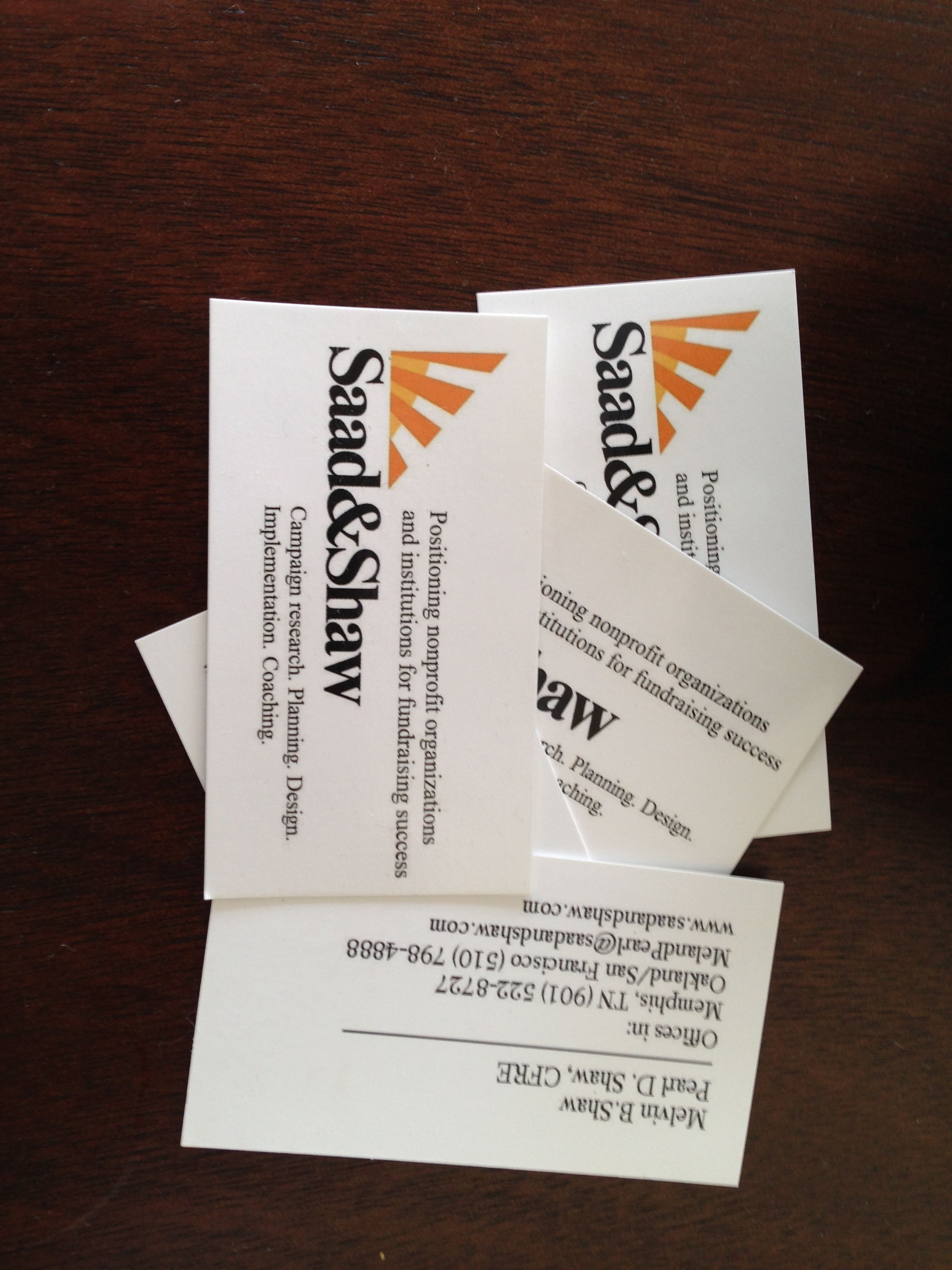
mprove your relationship w your development director: idea for joint prospectingNonprofit CEOs, board chairs, and college presidents are constantly out and about meeting people and picking up business cards. Here’s what we know: you can use those cards to stack the deck in favor of your fundraising success. Business cards also hold the key strengthening your relationship with your development director or vice president for advancement. Our recommendation is tried and true: collect the cards, when you have a moment at the end of the day write short notes about each of your meetings. Send the notes and a photo of the cards back to your staff when you are on the road. Or submit them when back in the office. This gets the names, contact information, and notes about relationships and opportunities into your database. Next step: partnering with your development person.

Call a debriefing session with your development director or vice president. Review each of the business cards you collected. Share with her the key insights you learned from each of your meetings. Working together, prioritize next steps for how to engage each person you met. Some follow up items are simple: sending a report or web resource you discussed; making an introduction; ensuring an invitation to upcoming events is sent. Others are more complex. Perhaps one of the people you met with could assist in evaluating a partnership you want to pursue. Maybe you met a corporate manager who wants to engage her employees in a day of service at your nonprofit. Determine who is responsible for taking the relationship to the next level and by when. Set check-in and follow-up dates with each other and keep them.

This practice gives you a “door opener” for regularly meeting with your development person, a way to be actively engaged with her in developing new relationships and partnerships. You are sharing contacts and information with her – “bringing something to the table” instead of always asking her how much money she has raised. You are increasing the prospects you both can work with, sharing some details of your work, and creating an opportunity for the two of you to strategize together. This process can be a stimulus for new ideas and perspectives. You can work shoulder to shoulder, learning from each other, co-creating goals and opportunities, and making commitments to each other regarding how to follow up with and engage the people you have met. It can energize you, expand your mind-set and help build a culture of fundraising.

Here are two truths about business cards and fundraising: a card can’t open a door if its sitting in a pile on your desk. Your development person can’t turn a pile of cards into relationships. The two of you need to work together, be creative, and follow up.

Mel and Pearl Shaw are the authors of “Prerequisites for Fundraising Success” and “The Fundraiser’s Guide to Soliciting Gifts.” They provide fundraising counsel to nonprofits. Visit them at www.saadandshaw.com. Follow them on Twitter: @saadshaw.