
Category Archives: FUNdraising Good Times

Fundraising commentary, tips and information.

Five ways to attract media attention

Gaining Media Attention, fundraising, FUNdraising Good Times, media relations Will 2015 be the year your nonprofit is highlighted in news stories and feature pieces? Will those who could benefit from the work of your organization read about you in the newspaper, see a story on TV, or listen to an interview on the radio? The media could “somehow” find out about your organization and decide to cover it. Or you could dedicate time and resources to cultivating media. Here are four things to consider when engaging the media in 2015

  1. Meet with the editorial board of your local paper. If you are looking for TV or radio exposure, meet with the station’s management. To secure this meeting, call the editor or station manager and request a time to meet. If your organization has a marketing person on staff, he or she should secure the meeting. If you don’t, ask a member of the board who has marketing experience or a relationship with the media to make the call. If you are without this resource, the executive director should request the meeting.
  2. During the meeting make the case for your organization, share your impact, and your plans for the coming year. Ask about their guidelines for how to share news about your nonprofit. Request assistance in creating awareness for your organization, its programs and events. Ask for their criteria when covering an organization such as yours. Who should you contact? How much lead time is required? What constitutes a good news story and what types of feature stories are they looking for? Be prepared to honestly answer questions they may ask of you, especially those that may be uncomfortable.
  3. Bring your media kit. Your kit should contain your case for support, annual report, program highlights, testimonials, and an annotated board list. It should also include a calendar of upcoming events such as fundraisers, lecture series, performances, receptions, and visits by people of note. As appropriate, include a list of the businesses and organizations you partner with, and any honors and awards.
  4. Be prepared. The executive director, board chair, top development person and top marketing person should attend the meeting. All should be prepared. Create an agenda and determine what role each person will play.
  5. Follow up. Keep your media contacts apprised of key staff changes and promotions, new board members and upcoming events. If you have expertise on a topic in the news, let them know you are available as a resource. Invite reporters to visit your organization to learn more.

Building media relationships takes time. You have to build a relationship with the media same as you would with a potential donor or board member. Get organized and integrate media relations into your work plan. Build a partnership that creates awareness and provides accountability.

Image courtesy of Stuart Miles at FreeDigitalPhotos.net

Mel and Pearl Shaw are the authors of “Prerequisites for Fundraising Success” and “The Fundraiser’s Guide to Soliciting Gifts.” They provide fundraising counsel to nonprofits. Visit them at www.saadandshaw.com. Follow them on Twitter: @saadshaw.


Nonprofit assessment task force

fundraising, FUNdraising Good Times, nonprofit assessmentYour 2015 secret to success: an assessment taskforce

We often start the new year with enthusiasm and high expectations, and yet by year-end so many of our great plans are unfulfilled. Will 2015 be another year of doing the same thing and expecting different results, or will this truly be a new year?

Here’s a suggestion for nonprofits who want to focus on different results: create a short-term assessment task force to review your planning processes and the people and resources available to implement your plans.

Your task force should be a small, focused working group comprised of people who are committed to

your organization but not currently involved in its operations. Task force members could include a major donor, past program participant, a new board member, or a local business person or faculty member. What you don’t want is a task force comprised of the executive director, development director, and board chair. You want fresh eyes on the organization. Those who are at “arms length” can ask questions and make suggestions without the knowledge or “baggage” that comes from knowing “we tried that three years ago” or “the board would never approve that” or “we can’t afford that.”

Members will look at your organization with the goal of helping you achieve your goals.

Four steps for task force members.

Step one. Review the organization’s strategic plan; fundraising plan; and marketing, communications and social media plan. Look at program descriptions, goals, objectives, outcomes and impact; and financial reports and fundraising reports. If the nonprofit is an educational institution, review recruitment, enrollment, retention, and graduation reports. Look at demographics of communities served and their identified and emerging needs.

Step two. Create a list of questions that arise during the review. Add to the list as you contemplate the documents holistically. What’s missing? Where are the redundancies? Individual questions should be shared with fellow task force members. What are the common themes that arise?

Step three. Meet individually with the executive director or president, fundraising leadership, program directors, accountants or bookkeepers, board members, clients or students and others who you believe can provide insights and answer questions.

Step four. Create a list of things for the nonprofit to consider. These suggestions can include short and long term suggestions: all should focus on how to help the organization best deliver on its mission and vision. No more than one page.

Two things for nonprofits to remember. First, this is a small, short-term task force so keep the group to no more than seven people, and don’t let the process drag on: the work should be completed in a month if possible. Second, while you don’t have to adopt all or any of the suggestions you will have a new look at what you are doing and how you could be more successful.

Happy New Year!

Mel and Pearl Shaw are the authors of “Prerequisites for Fundraising Success” and “The Fundraiser’s Guide to Soliciting Gifts.” They provide fundraising counsel to nonprofits. Visit them at www.saadandshaw.com. Follow them on Twitter: @saadshaw.

Nonprofit dating game

fundraising, FUNdraising Good Times, nonprofit partnership, nonprofit collaboration, evaluationThe holiday mistletoe, love songs, and New Year’s Eve parties conjure up the allure – and the drama – of dating. Who are you dating? Who do you want to be dating? Who will you be dating in 2015? And, if you’re married, how will you reaffirm your marriage in 2015?

What does all this have to do with nonprofits and fundraising? Well, we want you to have a happy love life, and we want you to enjoy your nonprofit relationships, especially your partnerships and collaborations. While there is a lot of pressure this time of year to be in a relationship, that isn’t always the right thing for everybody. Healthy relationships are characterized by love and mutual respect. There’s also pressure for nonprofits to partner and collaborate, but as with people, it has to be a right fit.

The end of the year is a good time to reassess, recommit or plan for a mutually agreeable dissolution. Consider the following as you make your assessment: what were the objectives of the relationship when it began? Have the initial expectations been met? Did the relationship help your nonprofit increase revenue? Did it help reduce costs through joint purchasing or shared resources such as facilities, personnel, services, or joint fundraising? Were you able to allocate the time and personnel required for the collaboration to thrive, or did these relationships tax your organization in terms of time and money? Were they more of a distraction than a benefit? Were these relationships like a planned marriage, begun with the encouragement of a foundation or funder? Has a love grown? Or did mutual attraction ignite both parties from the beginning?

While mutually beneficial, well-managed partnerships and collaborations can put your nonprofit at the head of the class, those that are a burden or take your nonprofit off course should be reevaluated. You may not have formed the right relationship. Related to this, it is okay if you are not a part of a partnership or collaboration, especially if such a relationship isn’t in line with your vision or if a prospective partner just isn’t a match. Being in the wrong relationship can be more of a negative than a plus if all parties are not in sync.

Here are our thoughts. Aim for mutual benefit. Question your motives: is the partnership for show, or for real? What is the substance of the relationship? Do your collaborations help your organization meet its goals and bring its mission to life? What about the goals and mission of your collaborators? Has the relationship changed over time? Is the vision that brought you together one that continues to inspire all parties, or are you staying together “for the children” (i.e. for a funder)?

Whether your nonprofit is single, dating or married make the most of the coming year.

Merry Christmas! Happy New Year!

Image courtesy of Stuart Miles at FreeDigitalPhotos.net

Mel and Pearl Shaw are the authors of “Prerequisites for Fundraising Success” and “The Fundraiser’s Guide to Soliciting Gifts.” They provide fundraising counsel to nonprofits. Visit them at www.saadandshaw.com. Follow them on Twitter: @saadshaw.

Social Change and Nonprofits – More than fundraising

fundraising, FUNdraising Good Times, Ferguson, blackbodies matterFUNdraising Good Times Social change and nonprofits – more than fundraising Ferguson, MO and Staten Island, NY. Cleveland, OH. Michael Brown. Eric Garner. Tamir Rice. These cities and the deaths of these African American males – men and boys – are in the headlines. So are people’s responses. These incidents are a catalyst for social change on many levels. Changes in policing, the use of the grand jury system, the role of the prosecutor. Changes in how we view and value the lives and bodies of black men and boys. Right now people can’t get past the double standards, and across the country – in ways big and small – people are demanding change.

There is a role for everyone to play, especially grassroots organizations. Regardless of your size you can make a difference. You are a catalyst whether reaching one person, 100 people or 1,000 people at a time. Change comes in many ways. It comes in the way you treat young people in after school programs, how you coach your basketball team, the explicit messages you send about the value of Black lives, and the way you resolve conflicts and de-escalate arguments.

During times of local or national protest you can demonstrate with others. You can also work behind the scenes, bringing water and serving meals to peaceful protestors. You can provide training, counsel, or transportation, create signs, collect money for legal fees, recruit volunteers. You can identify areas in local law and policy that need to be changed and advocate. You can be part of pushing a larger agenda.

Social change requires participation by all, same as it did in the past. It’s about churches, sororities and fraternities, civic and professional organizations. It’s about people of all faiths, colors and backgrounds. Now is the time to come together and be part of something larger whether formally or informally. This is not a time for “us vs. them” In the words of the president of the United States, “It’s about closing the gap between our professed ideals and how they are applied in day-to-day situations.”

At the same time, don’t get too caught up in the moment and emotions. Social change takes time. Are you committed to the work of changing policies and attitudes when the cameras are gone? This is the true test of the value of a nonprofit.

Finally, you don’t have to be big to make an impact. The civil rights movement was a consortium of grass roots organizations some of which later evolved into larger organizations. Fifty years later the situation is the same: you can make a difference.

You have a right to participate. As the old sayings go, “the crying baby gets the milk” and “the squeaky wheel gets the grease.” Be focused and committed to make sure you are heard. Grassroots organizations: America needs you!

Image courtesy of supakitmod at FreeDigitalPhotos.net

Mel and Pearl Shaw are the authors of “Prerequisites for Fundraising Success” and “The Fundraiser’s Guide to Soliciting Gifts.” They provide fundraising counsel to nonprofits. Visit them at www.saadandshaw.com. Follow them on Twitter: @saadshaw.

Year End Reflections – Part Two

fundraising, FUNdraising Good Times, fundraising strategyLast week we shared a little of the history of this column. We hope we conveyed why we are committed to these weekly writings, and most importantly our belief in you, our readers. While we have met very few of you in person, we hold you up before us in our minds as we write. When we have the opportunity to meet you in person we are always delighted. Now and then people come up to us in the grocery store or on the street to let us know they read our column. Others let us know when we meet in business settings. Now and then we get an email or phone call.

Here’s who we think of as we write. We think of people who are committed to nonprofit organizations, those who volunteer, those who provide executive leadership, and those who are charged with fundraising. We think of receptionists and vice presidents, long-term donors and committed alumni. From our experience we know that some of you are well connected professionals, others are grassroots activists. Some are devoutly religious, others are more secularly focused. We conjure up the diversity of your life experience, and the diversity of the organizations and causes you believe in. Mostly, we salute your humanity, your leadership, and your willingness to get involved. We want you to succeed.

That’s what drives us to write each week. You. As we prepare to celebrate 10 years of writing this column we look back at its evolution and the diversity of topics we have addressed. We share them with you here to encourage you to look for past columns on our blog www.FUNdraisingGoodTimes. As you prepare for 2015 there may be columns you missed with content that can help you.

For example, early columns focused on “how to” topics. These included how to create a case for support, how to create a fundraising plan, how to write a proposal, how to solicit a gift, and how to host a friendraiser. We moved into guidance and suggestions related to ensuring special events generate revenue, recruiting board members, and the difference between staff-led fundraising and volunteer-led fundraising. We expanded into interviews with philanthropic leaders, donors, bookkeepers, technologists and grant writers. Guidance grew to include topics such as “answer the phone” and “how to keep a fundraising job” and “how to sabotage your fundraising.” We highlighted organizations that were successful in their fundraising. The prerequisites for fundraising success have been featured throughout our columns, and in fact our book Prerequisites for Fundraising Success is an outgrowth of this column.

As you prepare for 2015, contemplate what you are willing to do in support of nonprofits you believe in. If you would like us to address a specific topic, let us know. We’ll get busy writing.

Image courtesy of Danilo Rizzuti at FreeDigitalPhotos.net

Mel and Pearl Shaw are the authors of “Prerequisites for Fundraising Success” and “The Fundraiser’s Guide to Soliciting Gifts.” They provide fundraising counsel to nonprofits. Visit them at www.saadandshaw.com. Follow them on Twitter: @saadshaw.

FUNdraising Good Times Year End Reflections

Year end reflections, fundraising, FUNdraising Good Times, fundraising strategyAs 2014 comes to an end, we find ourselves reflecting on our work and this column. They are both intertwined: FUNdraising Good Times is one way we help nonprofit organizations and institutions position themselves for fundraising success. To the uninitiated, fundraising can appear either easy or hard. Confidence and fear typically drive these stances. What is needed is a healthy dose of both, and lots of planning. In our work locally and across the country we help organizations large and small build the prerequisites for fundraising success. We help bring together board members, executive directors, fundraising professionals, and volunteers for the purpose of honestly assessing where they are, what they need, and where they want to go.

That’s what we seek to accomplish with this column as well. We write to stimulate healthy conversation, to encourage volunteer leaders and nonprofit executives to hold each other accountable, and to share some of the technical or how-to information specific to fundraising.

We began writing FUNdraising Good Times in October of 2005 when we lived in the San Francisco, CA Bay Area. We approached Vernon Whitmore and Eleanor Boswell Raine of The Globe Newspaper Group with the column concept. We knew that many of their readers worked for nonprofits, made financial contributions, and depended on the work of these organizations. We also knew that readers served as board members, were called upon to lead fundraising campaigns, and were forced to make difficult decisions when adequate funding could not be secured. We also knew that many struggled without access fundraising counsel. We wanted to fill the gap, for free, 500 words at a time.

As we anticipate our 10th year writing this column we remain ever grateful to Vernon and Eleanor for our launch. We now reach readers across the country through 28 papers, two magazines and our blog FUNdraisingGoodTimes.com. The issues that drove us to begin writing this column are those that sustain us in all aspects of our work. We want to help nonprofit organizations and institutions bring their visions and missions to life. We want them to succeed. And we want them to be thoughtful stewards of the resources they have access to.

We encourage board members to increase their involvement, and we encourage nonprofit staff to invite board members into the fundraising process from the very beginning. Most importantly we encourage all nonprofit leaders to ask the hard questions: is our work making an impact? What if we invested in new technology or marketing? Do we need to do things differently, to innovate? Are we meeting a need? And critical to fundraising, where will the money come from?

You are our readers. We appreciate your work. We want you to succeed. Tell us what you want us to write about in 2015. We’ll get busy.

Image courtesy of njaj at FreeDigitalPhotos.net

Mel and Pearl Shaw are the authors of “Prerequisites for Fundraising Success” and “The Fundraiser’s Guide to Soliciting Gifts.” They provide fundraising counsel to nonprofits. Visit them at www.saadandshaw.com. Follow them on Twitter: @saadshaw.

Giving Tuesday

Giving Tuesday,  fundraising, FUNdraising Good Times, #GivingTuesday, year-end giving, philanthropyThanksgiving. Black Friday. Cyber Monday. What’s next? Giving Tuesday. That’s right. This December 2nd, the Tuesday after Thanksgiving is a new global holiday and it’s all about philanthropy. Established in 2012, by New York City’s 92nd Street Y in partnership with the United Nations Foundation, and a team of influencers and founding partners, Giving Tuesday now engages over 10,000 organizations worldwide.

As we wrote in our last column, “It’s always good to give.” Now you can give in concert with your family, co-workers, friends, and most importantly people around the world. There is no end to the diversity of causes that seek your time, money, influence and resources. You can “Like” a Facebook page, forward a tweet, or sign an online petition. You can engage your friends using social media, the phone, or a short meeting after church, synagogue, or prayers at your mosque. You can give money or time or both. Either way when you engage others you multiply and amplify your giving. If you are an employer you can match your employee’s giving. If you run a consumer business you can pledge of portion of Giving Tuesday’s proceeds. You make the choice.

If you are involved with a nonprofit you are – most likely – finalizing your Giving Tuesday plans. The University of Michigan is launching Giving BlueDay on December 2nd, seeking to raise $1 million from alumni and friends that day. The National Coalition for Cancer Survivorship encourages people to share their story of surviving cancer and give $10 to $20. Your local United Way welcomes your support. The Africa America Institute is raising funds on Giving Tuesday to train nurses at Tubman University’s Nursing Program in Liberia. Google an organization close to your heart and find a way to give.

This is also an important time to introduce or reinforce the value of giving to the next generation. Talk with your children at home. Integrate philanthropy into your classroom or afterschool program using Dr. Heidi Kasevich’s curriculum guide for grades K-12. There’s also the gratitude blog through which you, your family and friends can record your gratitude. Both of these resources are available at GivingTuesday.org where you can also find tools, tips and technology to help you give and receive.

At the end of the day Giving Tuesday is about philanthropy – a time for each of us to reflect on our abundance and share our resources with others. We can give on this one day, or we can take time to build giving into our everyday lives. We can reflect on how giving changes our relationship to ourselves and the world. We can diminish feelings of alienation and restore our feelings of connection. Giving has deep spiritual, emotional, social and religious impacts. We are changed as we give. Often for the better.

Photo credit: Giving Tuesday

Mel and Pearl Shaw are the authors of “Prerequisites for Fundraising Success” and “The Fundraiser’s Guide to Soliciting Gifts.” They provide fundraising counsel to nonprofits. Visit them at www.saadandshaw.com. Follow them on Twitter: @saadshaw.
The Wise Donor – Moving Beyond Emotion

fundraising, FUNdraising Good Times, yearend giving, how to make a gift, donor strategy, donor adviceIt’s always good to give. To give from our hearts, according to our beliefs, and in-line with our vision for the world we want to live in. There is a renewed emphasis now as we enter the giving season. You will notice more advertisements on television for national nonprofits with compelling images and music; more social media campaigns; more letters and cards coming via US mail; more phone calls – from volunteers and paid solicitors; and more one-on-one conversations about giving.

Here are five things to help you make giving decisions that unite your heart and mind.

  1.  What are your giving priorities? What is important to you? Do you want to help end poverty? Increase access to the arts, childcare, affordable housing, or college education? What about curing cancer, improving neighborhood safety, supporting long-term social change, or teaching children to read? Are you committed to international aid that builds local economies or treats people with Ebola or HIV?
  2.  What types of organizations do you want to support? Local nonprofits? National or international agencies? Your church, synagogue, temple or mosque? A community foundation, women’s foundation, giving circle, or black united fund? Is it important to give to a recognized nonprofit, or are you comfortable giving directly to people you know make a difference, regardless of their formal structure?
  3.  How well do you know the organizations you give to? Which are registered charitable organizations? Which have a website with information? Is there anyone you can call to ask questions? Have you looked up the nonprofit at guidestar.org? This website provides information including funds raised and use of funds (Form 990). Just type in their name.
  4.  What is your giving budget? How much can you give? How much do you want to give? Know your budget so you can respond to specific solicitations. Consider automatic contributions from your credit card or bank account. Do you want to continue these? Increase them? Decrease? Have you received acknowledgements for these gifts, or an update regarding the impact of your giving?
  5.  Don’t fall prey to in-person or on-line peer pressure. Keep your giving joyous! Know who and what you want to support, and make your decisions accordingly. You are under no obligation to give to any organization, even if you gave before. Nor are you under an obligation to increase your gift. These are voluntary decisions. Take a moment to evaluate emotional appeals – especially online requests – to see if the actual work of the organization is in line with your priorities. Multiple small impulsive gifts add up over time: you may find you’re “over budget” or that your giving is not in-line with what’s important to you.

Most importantly, look inside to see if your giving reflects what’s in your heart.

Mel and Pearl Shaw are the authors of “Prerequisites for Fundraising Success” and “The Fundraiser’s Guide to Soliciting Gifts.” They provide fundraising counsel to nonprofits. Visit them at www.saadandshaw.com. Follow them on Twitter: @saadshaw.

How to solicit a gift for a nonprofit

It’s time to ask, but just exactly what do you say?

Fundraisers Guide, fundraising, FUNdraising Good Times, yearend giving, how to ask for a gift, ask for a donation, the fundraisers guide to soliciting giftsAs the year comes to a close nonprofits look to board members, volunteers and donors to ask their friends, family members and colleagues to consider making a meaningful gift. You may have the internal fortitude to overcome your fear of asking (read, fear of rejection), but what exactly do you say and do?

Make your own gift first. As a volunteer fundraiser you need to make your own gift before you can ask someone else to give. If you’re not willing to give, why should anyone respond to your ask? Consider sharing how much you gave and why. If you made a stretch in your giving, talk about what motivated you to do so.

Be prepared. As a solicitor you will need to “make the case” for why others should join you in giving. This means knowing the nonprofit’s history, mission, successes, challenge areas and projected growth. Brush up on your facts (check out the website!). You’ll want to be able to talk numbers and emotions. Depending on who you are talking with you may be asked to explain allocation of current funds, costs associated with growth, and revenue streams. At the same time you have to talk passionately from a feeling place about what the organization means to you and those served.

Don’t hide behind email. If you’re asked to solicit a meaningful gift, do it in person. Make an appointment, and make the reason for your meeting clear. For example, “Jane, can you join me for coffee on Friday? It will be my treat. I want to talk with you about the food bank.” This allows your friend to begin thinking about how to respond. When its time for the meeting, get dressed up. This is a big deal. The money you raise makes a difference to the organization you represent. Mentally rehearse your conversation. Remember to arrive early and, after initial conversation, make the ask. Do not let too much time lapse before you bring up the subject of giving.

Prepare for objections. Your passion isn’t an excuse for not knowing your facts. Make sure you are prepared to answer specific questions your colleagues may have. Put yourself in their shoes: what do you want to know before deciding whether or not to make a donation?

Ask for a specific amount. It’s okay to ask. In fact, that’s what fundraising is all about. Make sure you ask for a specific amount and then pause. Be quiet. Wait for the response. Don’t rush to fill the silence. Your answer will come.

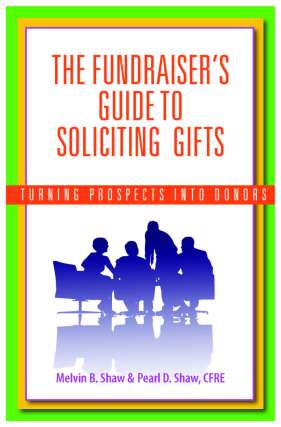
If you want more details, download our free one page guide to soliciting gifts. http://bit.ly/SolicitGift or read our book The Fundraiser’s Guide to Soliciting Gifts.

Related posts:
Making the Ask – Part One
Preparing to Ask for a Gift – Part Two

Mel and Pearl Shaw are the authors of “Prerequisites for Fundraising Success” and “The Fundraiser’s Guide to Soliciting Gifts.” They provide fundraising counsel to nonprofits. Visit them at www.saadandshaw.com. Follow them on Twitter: @saadshaw.

Yearend Giving: It’s Not Too Late

fundraising, FUNdraising Good Times, yearend giving, annual campaign, volunteer fundraisingCrazy as it seems 2015 is knocking at the door. Yes, we still need to celebrate Thanksgiving, Hanukkah, Christmas, Kwanza and New Years Eve. But, really, 2015 is almost here. And the question is: how is your nonprofit fundraising? Whether you are an employee or a board member, here are a few steps you can take today to change your yearend financial outcomes.

Staff. Take the time to create a yearend appeal letter for distribution to those who have given to your organization in the past. Be sure to send to those you serve and those you met during the year. Always send to lapsed donors. Highlight the impact your organization has made in 2014 and most importantly share your vision for 2015. Ask for a specific amount. Include a return envelope. Create an online appeal that ties to your appeal letter. Review and refine your e-communication list. Test to make sure your online giving page is easy to use and easy to find. Take the time to plot out how you will use social media to encourage giving. Create the tools that board members, friends and volunteers can use to encourage those they know to give. Include sample text for email messages, tweets, and Facebook posts; links to specific pages on your website or blog (don’t forget your “donate now” page); and most importantly share photos and SHORT engaging videos. We all love images!

Volunteers. Now is the time to be proactive. It is easy to wait for staff to give you all the information you need: that is often a plan for not making the ask. Instead, decide for yourself which actions you will take between now and the end of the year to help raise funds for your nonprofit. Are there two people you can talk with, sharing your nonprofit’s impact, vision and fundraising priorities? Will you ask each to consider a gift? Here’s encouragement: too many people don’t give because they aren’t asked. Others give small gifts because they aren’t asked to make a larger gift. Or they receive a direct mail letter instead of an in-person ask, and their gift reflects the method of solicitation. Take the time to make a well prepared ask of a few people. Don’t be self conscious, there is no such thing as “making” people give. Ask for a specific amount for a specific purpose, be quiet and wait for their response. Asking in person is always important, but social media and email is another way to engage potential donors, especially if you are part of an active network. You can share your nonprofit’s social media campaign, you can create your own appeal, directing people to your nonprofit’s giving page.

Don’t be afraid to ask. Your community depends on you.

Image courtesy of taesmileland at FreeDigitalPhotos.net

Mel and Pearl Shaw are the authors of “Prerequisites for Fundraising Success” and “The Fundraiser’s Guide to Soliciting Gifts.” They provide fundraising counsel to nonprofits. Visit them at www.saadandshaw.com. Follow them on Twitter: @saadshaw.