Category Archives: FUNdraising Good Times

Fundraising commentary, tips and information.

How to Transform Fundraising Challenges to Success

CEO Dr Coopwood, co-chair Susan Arney, Tammie Ritchey, co-chair Sally Pace, Regional One Health Foundation

CEO Dr Coopwood, co-chair Susan Arney, Tammie Ritchey, co-chair Sally Pace, Regional One Health Foundation

Challenging finances and what feels like an onslaught of “bad press” can be part of the nonprofit experience. Addressing these is what leadership is all about. Keep an eye to the future, talk with your donors and stakeholders, and find a game-changing way to engage the community. This is the story of Regional One Health and its foundation.

Tammie Ritchey, Vice President of Development and Executive Director of Regional One Health Foundation in Memphis Tennessee knows what it’s like to be part of a team that weathers the storm and emerges with stronger leadership, new visions, strategy, partners and donors. She credits her board, new leadership and engaged donors with the turn around of what was once The MED and is now Regional One Health.

First, executive leaders took time to personally share strategic directions and vision with major donors, keeping them in the loop. The foundation board played a major role too, and continues to do so. Ritchey credits their leadership and initiative, sharing “They help develop strategies and tactics that raise the money needed to advance the system’s goals.  They are our advocates, providing guidance and vision.” And they recruit new board members.

Ritchey proudly promotes the foundation board, “I sincerely believe we have one of the strongest board of directors around.  They are all quite brilliant in their own lives outside of the board and very successful men and women.  They are dedicated to Regional One Health, they believe in the vision, and they all work passionately on our behalf.  They challenge me every day to go harder, to push further, to give more to the patients and families we serve.  “And we have several members who held on with us during some very challenging times. It was very difficult to be on a fundraising board and not be able to raise a lot of funds because of the public’s perception of the hospital at that time.”

Read Part One:
How to Have a Visible and Active Foundation

But that has changed. The foundation now hosts a sell-out gala that is nothing short of spectacular. How did it get started? By a board member! “The gala started when then board member, Leigh Shockey, asked her friend, legendary producer David Guest to bring a soul review that he was doing in London to Memphis and allow the money raised to go to the then MED.  He agreed and she recruited board member Susan Arney to assist her with this.  The first gala had 14 artists and was put together in eight weeks!,” Ritchey explains.

“We used the gala specifically as a way to challenge and change the business community’s and donor community’s public perception of us.  It’s very important that our gala guests have a one-of-a-kind, first class experience – just like what we strive for with our patients and their families when they use our services. The first year we held the gala people said they were happy to support us, but they were unsure about what the experience would be like – so in a way it was a bit of a test.”

Robert (Kool) Bell, Regional One Healthcare Foundation, Saad&Shaw

Pictured: Robert (Kool) Bell

The foundation clearly passed the test, as the event is an annual sell out with people who literally buy their tables a year ahead of time.  And the health system has passed the test as well, Ritchey adds. “Patients used to be reticent about using our services, but once they get on campus and have their first experience with us they are thrilled with their care and outcomes and trust us for their healthcare needs.”

To close out our interview we asked Ritchey what two things she wants readers to know. Here are her words:

“Regional Health One handles cases that some physicians can go a lifetime without ever seeing or experiencing…in the areas of trauma, burn, neonatology and high risk obstetrics… we are national industry leaders.  We are creating an institution that our community needs and deserves but that does not currently exist. With our partners (donors, advocates, physicians) we will transform health care in this region.”

“Much of what is considered national industry best practices in the areas of trauma, burn, neonatology, and high risk obstetrics, were developed here at Regional One Health.  In the areas of trauma, burn, neonatology and high risk obstetrics, we are national leaders and our physicians are sought after for their industry knowledge and expertise.”

Here’s to a bright future for Regional One Health. We salute your vision and leadership.

Answers to our readers’ frequently asked questions:
Q. Does your board have a giving requirement?
A. All board members are required to give financially each year.

Q. Does your board have term limits?
A. Yes.  Members are eligible to serve two consecutive three year terms.

Q. Are all event costs underwritten?
A. No – I wish! We are working on building that up.  This event is just four years old – but we have made money every year.

Q. What is the primary source of funding for the foundation?
A. It varies each year but last fiscal year it was foundations and individuals.

Q. What is the relationship between the CEO of Regional One Health and the foundation?
A. The CEO of the system serves as the President of the Foundation board.

Q. What awards has the medical center received recently?
A. We were just named to Becker’s Healthcare just announced that we are one of the 150 best places to work in the nation.

Here’s all their information:
Regional One Health
877 Jefferson Avenue | Memphis, TN 38103
901-545-8373
Web: www.regionalonehealthfoundation.org
Facebook: www.facebook.com/RegOneHealthFDN
twitter:@RegOneHealthFDN

Mel and Pearl Shaw are the authors of “Prerequisites for Fundraising Success” and “The Fundraiser’s Guide to Soliciting Gifts.” They provide fundraising counsel to nonprofits. Visit them at www.saadandshaw.com. Follow them on Twitter: @saadshaw.

How to Have a Visible and Active Foundation

Tammie Ritchey, Healthcare Revitalization, Regional One Health Foundation

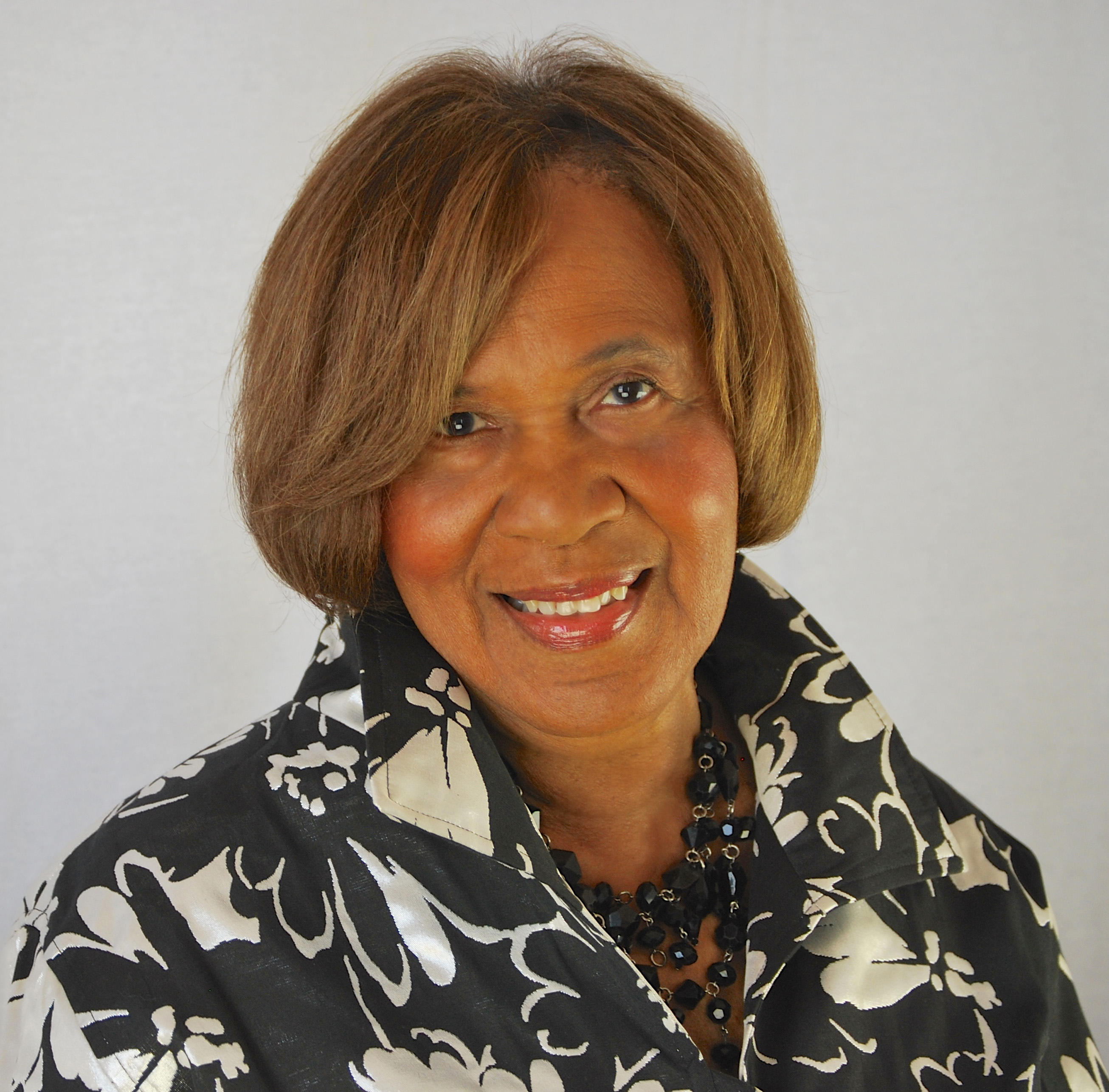
Pictured: Tammie Ritchey, Regional One Health Foundation

Healthcare is always in the news: advances in healthcare technology, groundbreaking research, and healthcare disparities are just a few. Yet there’s one story we rarely hear: the role of hospital or medical center related healthcare foundations. These foundations play important roles in communities across the country, bringing together leadership, vision, money and initiative to help improve the delivery of healthcare.

Wanting to learn more we spoke with Tammie Ritchey, Vice President of Development and Executive Director of Regional One Health Foundation in Memphis Tennessee. For the past 10 years Ritchey and the foundation board of directors have worked behind the scenes to help improve healthcare across the mid-South.

We started our conversation wanting to know – in general terms – the role of a foundation in the life of a nonprofit healthcare system. Not surprisingly, fundraising is a foundation’s most obvious role. Foundations raise money for research, new buildings, and investments in projects that improve patient outcomes and increase employee training, and more. But, according to Ritchey, fundraising isn’t always the most important role.

“A less visible role is the work of keeping the mission and vision of the healthcare system in the public’s mind,” Ritchey shared. “The relationships a foundation  forges with donors translates into the making of very strong advocates for not only the system it represents but also for improved community health care.”

Here’s an example she shared, related to the health system’s challenges in 2010, and how things have changed.  “The system was losing a great deal of money; we were downsizing staff, looking at service lines to cut, and working with an interim executive team for a couple of years.  Now, we have stable permanent leadership, progressive minded thought provoking visionary leaders who have created a clear mission and vision for the system, and are putting together the strategies to make the vision a reality.  We have a formal physician’s group to care for our patients now, which we did not have before, and all team members are playing from the same play book, all pointed in the same direction.”

Communication and relationships were key to changing the situation. “During difficult economic times, the foundation spent a great deal of time communicating what was going on inside the walls of the hospital with those who support us. We helped tell the story that was not getting told in the papers. We were able to strengthen a lot of relationships with community leaders even though we were not raising a lot of money. With the changes in our financial situation, we are now raising a great deal more money, and much of that is because we had established such strong relationships with donors during our lean years.”

You can learn more about Regional One Health Foundation at www.regionalonehealthfoundation.org or by calling (901) 545-8773.

Next week: the role of the board

Mel and Pearl Shaw are the authors of “Prerequisites for Fundraising Success” and “The Fundraiser’s Guide to Soliciting Gifts.” They provide fundraising counsel to nonprofits. Visit them at www.saadandshaw.com. Follow them on Twitter: @saadshaw.

9 Ways to Keep Your Dream Job a Blessing

Friend or Foe Networking


You’ve landed your dream job. Your next step: make sure it doesn’t become a nightmare. Consider these nine ways to tap your network.


  1. When sharing news of your new position with friends and family, don’t forget to ask for guidance. Most people want to support your success: the biggest challenge is asking the right people for the right things. Don’t ask one person for everything you want to know. Ask one or two questions from a diversity of people in your network.
  2. Consider those areas that might be a challenge in your new position. Request recommendations for conferences and workshops your peers have found valuable. There are many to choose from, but an experienced fundraiser, executive or college president will refer you to ones that are specifically relevant to your position, rich in content, and that include opportunities to build your network.
  3. Ask for a view of the road ahead. Meet one-on-one with individuals who are more experienced and who have a successful track record. Ask about the obstacles you may be up against, and how to overcome them. Too often we don’t know what we don’t know and then feel “blindsided” by events that are actually par for the course.
  4. Create an advisory council of friends, associates and peers. Call on these people proactively as you develop strategies. Depending on the opportunity you may want to talk with someone who knows your community, or someone from out of town who won’t be competing for the same resources.
  5. Expand your advisors to include people who can help you manage stress. In fundraising – as with many other businesses – stress can take you out. Include your personal trainer, life coach, minister or prayer partner as an advisor.
  6. If you are married or in a committed relationship ask your peers about how they include their spouse in their many work-related commitments and how they protect their relationship from the strains that a fundraising career can impose. Ask now, don’t wait until the stresses pile up.
  7. Create a “listening tour.” Talk to people in your department, across the organization and community. Learn the good and the bad related to your position and ask “how can I be most successful?” If possible, talk with your predecessor.
  8. Put what you learn to practice. After all the talking create a plan for your first three months on the job. Map out how you will use the guidance and information you have gained.
  9. Once on the job, create a climate where people can make suggestions. Whether the old fashioned suggestion box or its electronic counterpart, stay open to suggestions and you will grow in your career.

Whether taking a position as a development director, data manager, or executive director the time to ask – and listen, listen, listen – is now.

Image courtesy of stockimages at FreeDigitalPhotos.net

Mel and Pearl Shaw are the authors of “Prerequisites for Fundraising Success” and “The Fundraiser’s Guide to Soliciting Gifts.” They provide fundraising counsel to nonprofits. Visit them at www.saadandshaw.com. Follow them on Twitter: @saadshaw.

Unlock the Reasons for Starting a Capital Campaign

Time for QuestionsLet’s be honest. Do you really know why your nonprofit is running a “capital campaign?” Does your institution have specific capital needs such as buildings or equipment that it needs to invest in? Could it be your nonprofit is really running a “we need a lot of money campaign” or an “everyone else has done it” campaign?

Here’s what we’ve learned. The most well-intentioned of people are often afraid to question the assumptions underlying a capital campaign. While many of us have a strong drive to “save face,” that urge can put the organizations and institutions we believe in at risk. Our advice: Don’t be afraid to ask questions. Here are a three to consider.

Have there been conversations at the board level with reports from the finance committee on the costs, variables, timeframes, and projected impact? Is there a budget to support the operations of the campaign, or will staffing, marketing, technology, events, and consultants be paid for “as the money comes in.”

Is your executive director – or college president – seeking to leave a legacy by launching a capital campaign? Our question – will she or he launch a campaign or successfully complete the campaign? There is a slight difference, one that usually reveals itself when the books are presented to the incoming executive.

How exactly are you counting the money? Is your institution counting progress towards its building campaign with annual gifts that were spent last year? You know our question: who can spend a dollar twice? Don’t be afraid to question the numbers or ask for a detailed report instead of a summary report.

Here are some cues you need to start asking questions:

  1. The board is being asked to approve borrowing money that will be paid back with funds from the capital campaign.
  2. Your organization is unable to meet its annual fundraising goal.
  3. There is no pool of current or prospective major donors.
  4. The board is being asked to approve a campaign in spite of a feasibility study that recommends against doing so because of a lack of identified donors, capacity, infrastructure, resources and leadership.
  5. The board is not a fundraising board, fundraising staff is minimal and turns over regularly.
  6. Your questions are answered with statements such as “we can’t afford the time it will take to conduct a feasibility study, develop a case, recruit volunteer leadership… [fill in the blank]….”
  7. Another dangerous response: “I feel we can do it… we just have to step outside our comfort zone.”

We have seen churches, colleges, and community-based nonprofits plunge into capital campaigns only to awaken years later as if from a nightmare.

That doesn’t have to be the fate of your nonprofit: ask questions, and then ask some more.

Image courtesy of Stuart Miles at FreeDigitalPhotos.net

Mel and Pearl Shaw are the authors of “Prerequisites for Fundraising Success” and “The Fundraiser’s Guide to Soliciting Gifts.” They provide fundraising counsel to nonprofits. Visit them at www.saadandshaw.com. Follow them on Twitter: @saadshaw.

Professional development pays dividends

fundraising, FUNdraising Good Times, training, professional development, nonprofit staff developmentWe were reviewing a proposal for a client this week and noticed in the funder’s guidelines a request for information about the organization’s ongoing training and professional development activities, and the budget for these. Needless to say there was silence in the room. Having worked with organizations for a long time we know that nonprofits are often overwhelmed by the information funders want to see in a proposal. We could feel their pain, and almost read their minds, “What??##@@?!??”

And yet we thought it was an important question: funders want to know the extent to which an organization invests in its people, and builds the capacity to address community needs in an ever-changing environment. People are at the core of the nonprofit sector, and investments in people are a sign of organizational health. Exposing employees and volunteers to best practices encourages each to grow to their highest level.

Don’t let training and professional development be seen as a “cost” by those who seek to keep budgets lean. There’s a flip side: the people you serve, your board members and local stakeholders will all eventually know whether you care about your employees and volunteers or if you don’t. It shows in your strategies, services, and technology. Are you “just getting by” or is your organization thriving. It’s expensive to “save” on training and professional development. The nonprofit “revolving door” is often attributed to employees not feeling valued, not having the tools to be successful, and not having access to training and best practices.

But where does the money come from? It is clear to us that so many organizations – especially those that are grassroots or emerging – often have a difficult time securing funds for operations, let alone professional development. But it must be done. And done with accountability and an eye to being fiscally savvy. Training doesn’t have to break the bank. Here are a few suggestions.

First, invest in webinars. High quality webinars provide opportunities for team members, volunteers and board members to learn together. They reduce travel costs and travel time. For fundraising training consider www.fundraising123.org/training.

Second, determine how the information will be shared prior to investing in online or in-person professional development. How will employees share what they have learned with others? How will a manager or executive know the information was of value, or is being put to use? Decide these things in advance and refine to ensure relevancy.

Remember this: your volunteer leadership can assess whether or not your institution invests in its people. They know because many are also working with other nonprofits, and can make comparisons. When they realize you don’t have the right people in position to do the nonprofit’s work, their attention will drift to other organizations where attention is paid to grooming and growing personnel.

Image courtesy of Stuart Miles at FreeDigitalPhotos.net

Mel and Pearl Shaw are the authors of “Prerequisites for Fundraising Success” and “The Fundraiser’s Guide to Soliciting Gifts.” They provide fundraising counsel to nonprofits. Visit them at www.saadandshaw.com. Follow them on Twitter: @saadshaw.
First time fundraising effort raises $75,000

Todd Robinson, Carnegie Hall, fundraising

Dr. Todd Robinson

Dr. Todd Robinson is a navy pilot and flight surgeon, author, film producer, medical school faculty member, and a practicing physician. He is an MD and a PhD. But until now there was one area in which he had no experience: fundraising.

Here’s the background: Getting ready for the world premier of renowned composer Earnestine Rodgers Robinson’s oratorio “Exodus” required fundraising. Dr. Robinson (Mrs. Robinson eldest son), and family members needed to raise $140,000 to $170,000 to bring 200 diverse choir members to New York City’s Carnegie Hall. The family organized supporters as Chicago Voices United. But, surprisingly, not as an independent 501c3 organization.

“One of the FUNdraising Good Times! articles talked about being creative in looking for funding sources as it pertained to nonprofits. This was very encouraging as we struggled in the early phases. Initially, we used personal funds and a loan as start-up capital for Chicago Voices United. But we quickly realized that we needed the nonprofit status to be more attractive for donations,” Dr. Robinson shared.

Instead of becoming a 501c3 organization, Dr. Robinson asked an existing nonprofit if Chicago Voices United could become a “sponsored project” of that nonprofit. The answer was yes, and months of paperwork and filing fees were saved, allowing the group to focus on their goal: fundraising for choir members.

They launched a website (www.ChicagoVoicesUnited.org), attempted crowdsource funding, website marketing, and social media but found each to be “extremely ineffective.”

“We decided to go a different approach. Like the article I read and resonated with, we had to get creative with our fundraising,” Dr. Robinson shared.  “As a result, we decided to pursue industries/companies directly involved in our fundraising needs: hotels and airlines based in Chicago. We figured it would easier for a company to donate their time or services to a home-grown project instead of just forking over cash.”

The results? “Requesting donations in the way of services, we quickly landed a sponsorship from Hyatt who made a donation in the form of “discounted” room prices; and in the world of expensive hotel rates of downtown Manhattan, this was a big win. Now, the price of lodging during the concert event was more within reasonable reach for our average choir member,” Dr. Robinson continued.  “This also made it easier for us to recruit choir members. Recently, United Airlines has expressed interest in making a donation of its services.”

A January “sneak preview” of Exodus in Chicago was well-received, and part of the Robinsons’ fundraising strategy: potential donors and influencers had the opportunity to experience the oratorio and become inspired. Follow up meetings are in progress as we go to press.

Dr. Robinson’s advice: “Constantly monitor your efforts with a critical eye; be adaptive and flexible enough to quickly change directions if needed; and think creative.”

You can donate at www.chicagovoicesunited.org or by calling Dr. Robinson at 901-414-3366. Contact him by email at info@chicagovoicesunited.org

Read Part One: The “Carnegie Hall or Bust” Fundraiser

Visit www.earnestinerobinson.com for more information about the life and work of Earnestine Rodgers Robinson.

Mel and Pearl Shaw are the authors of “Prerequisites for Fundraising Success” and “The Fundraiser’s Guide to Soliciting Gifts.” They provide fundraising counsel to nonprofits. Visit them at www.saadandshaw.com. Follow them on Twitter: @saadshaw.

The “Carnegie Hall or Bust” Fundraiser

Earnestine Robinson, Carnegie Hall, Fundraising

Earnestine Rodgers Robinson, Composer

We were recently caught off guard when Dr. Todd Robinson, a FUNdraising Good Times! reader, shared with us that he raised over $75,000 using information from this column. We had to learn more so we could share his story with you and inspire you to achieve your fundraising goals. We asked Robinson a few questions and with this two part series we share his story with you.

But first, a little background. Dr. Robinson is the son of Earnestine Rodgers Robinson, the renowned, barrier-breaking, classical composer. She has created her third oratorio “Exodus” which will have its world premier at Carnegie Hall in New York City on February 16th. An oratorio, is a large-scale musical work for orchestra and voices, usually based on scripture such as Handel’s Messiah.

The Exodus premier will include 200 choir members from across the country. And so the fundraising question arose: how will the choir members afford the travel and accommodations that accompany this great honor?

We asked Dr. Robinson to share his fundraising needs and goals.

“This started out as a “one-time” project. We needed to raise funds to underwrite the costs of bringing together a 200-member adult and children chorus from around the country for a performance at Carnegie Hall. The members of the choir were being recruited from schools, churches and community choirs. Since the recruitment was primarily “grassroots” in nature (and not some established symphonic choir), all those participating would be responsible for covering all of their costs without the benefit of corporate sponsorship. This meant that each individual would pay a required fee to the Carnegie Hall production company, plus airline travel and the expensive cost of living charges of Manhattan (taxis, food, hotel, etc). Of course, there were other costs outside of the chorus that we needed to cover.”

“Being ‘grassroots’ in nature, we knew that many choir members were dealing with modest budgets,” Robinson continued.  “As a result, the dream of performing on the famed stage would be out of reach for most, especially the children. However, we wanted a multi-cultural choir with members with diverse, varied backgrounds. Therefore, it was our mission that we wanted to make this incredible opportunity a reality for every person who wanted to participate no matter their financial standing.”

The Robinson’s made a pledge to raise the $140,000 to $170,000 needed to make the dream a reality. This became both their mission and their challenge. And then Robinson recalled a FUNdraising Good Times! column that included a discussion of fundraising and creativity.

Next week: More about Dr. Robinson and how he raised $75,000+ without starting a nonprofit.

Visit www.earnestinerobinson.com for more information about the life and work of Earnestine Rodgers Robinson.

Mel and Pearl Shaw are the authors of “Prerequisites for Fundraising Success” and “The Fundraiser’s Guide to Soliciting Gifts.” They provide fundraising counsel to nonprofits. Visit them at www.saadandshaw.com. Follow them on Twitter: @saadshaw.

How to determine nonprofit software costs

fundraising, FUNdraising Good Times, nonprofit technology, nonprofit software, donor software, software evaluation, SaaS, software pricingSoftware is at the heart of so many nonprofit functions. You can’t afford down time. And you don’t want to find out your new system won’t talk to an existing one after its up and running. What’s a nonprofit leader to do? In search of guidance we talked with Janna Finch of Software Advice an online firm that reviews nonprofit technology.

Here’s her suggestion. “Many vendors have developed their products to integrate well with commonly used third-party software—especially accounting programs—so look for a list on their website or ask a sales rep. The vendor’s developers should also know which products integrate well, which integrate with some work and which don’t integrate at all. If the product you’re evaluating doesn’t work with the programs you need, you can choose to operate them independently, evaluate different software, or replace the software you’re currently using with something you know will work with the new software.”

It’s one thing to purchase software, it’s another to manage it. Finch reminded us that the type of person a nonprofit needs to manage their technology “depends on the complexity of the system, your organization’s needs and whether or not the software is hosted on- or off-site. Usually, the larger the organization, the more complex its IT requirements.”

Yet with hosted services such as software as a service (SaaS) smaller organizations don’t have to worry about updates and keeping the system up and running. They now have access to high quality software without the maintenance responsibilities.

But there are still costs, and these are impacted by the pricing model you choose. According to Finch, “Both perpetual license and subscription pricing models have upfront costs, typically set-up and data migration fees. Sometimes new equipment, such as credit card readers, is necessary and that’s also an upfront cost. With regard to the perpetual license model, the license fee is also considered an upfront cost.”

“Beyond upfront costs,” she continued, “you’ll have recurring costs to cover support and upgrades, or, in the case of subscription software, the monthly or annual subscription fee itself.”

There are also annual costs which Finch points out vary wildly depending on a nonprofit’s size and the complexity of its software. Here’s some benchmark information. “The Nonprofit Technology Network (NTEN) determined that the average nonprofit spends 3.2 percent of their budget on technology. The smallest nonprofits can expect to pay, at minimum, about $500 (one-time) for a fundraising and donor management program installed on one computer, or as little as $30 per month for hosted software. Factor in an additional 15 to 20 percent of the annual license cost toward training, support and other costs.”

Take the time to make an informed decision. You can compare software systems and learn more at www.SoftwareAdvice.com

Have you read: Three ways to evaluate nonprofit technology

Image courtesy of Stuart Miles at FreeDigitalPhotos.net

Mel and Pearl Shaw are the authors of “Prerequisites for Fundraising Success” and “The Fundraiser’s Guide to Soliciting Gifts.” They provide fundraising counsel to nonprofits. Visit them at www.saadandshaw.com. Follow them on Twitter: @saadshaw.

Three ways to evaluate nonprofit technology

Part one of a two part series

Janna Finch, fundraising, FUNdraising Good Times, nonprofit technology, nonprofit software, donor software, software evaluation, Software Advice“The main reason nonprofits look to update or implement technology is to acquire additional functionality that will automate more tasks, which they hope will free up time to work on more strategic projects.” – Janna Finch

Technology plays a critical role in the life of nonprofits, large and small. Accounting, fundraising, social media, admissions, recruitment, ticket sales, and human resources are only a few of the areas that depend on technology solutions. To help you navigate the maze of software solutions we interviewed nonprofit market researcher Janna Finch. She works with Software Advice, a donor management and fundraising tech resource for nonprofits. www.SoftwareAdvice.com.

Here are Finch’s three suggestions for software evaluation.

  1. “Most importantly, write down what you and the people who will use the software need it to do. Be specific. “Automatically generate 3,000 annual giving statements and email them to recipients,” “support recurring donations,” “integrate with our current fund accounting software,” and “allow 11 staff members and volunteers to access the system at the same time” are examples of how specific you should get.”
  2. “Learn about the types of pricing models offered by software vendors and calculate the total cost of ownership (TCO). The two most common pricing models are perpetual license and subscription. With a perpetual license, you typically pay a larger amount upfront to cover the license and set-up fees, then a smaller amount (around 20 percent of the license cost) annually for periodic upgrades and support. With subscription pricing, those same costs are spread out and paid for in smaller amounts monthly or annually for as long as you use the software. Subscriptions often start around $50 a month, but can scale much higher.”
  3. “Finally, you need to make sure that everyone who will use software can use it. To do this, take advantage of vendors’ demos and free trials to give the software a test-drive before committing. It may look like the perfect solution on paper, but hands-on experience may uncover that it has a learning curve greater than expected. If that’s the case, look at different software or add training costs to your budget.”

But, how do you know when to migrate to another platform? Here’s what Finch has learned from working with buyers. “There are a few situations when you should consider scrapping what you’ve got for a new vendor or product. The most obvious time is when a vendor goes out of business or stops supporting the product you’re using. Another is when your operations have outgrown the software’s capabilities and your options for customizing it are limited or cost prohibitive. Nonprofit professionals I talk to sometimes mention that unhelpful or unpleasant customer support is the reason they’re considering a switch.”

Next week: how to determine nonprofit software costs

Mel and Pearl Shaw are the authors of “Prerequisites for Fundraising Success” and “The Fundraiser’s Guide to Soliciting Gifts.” They provide fundraising counsel to nonprofits. Visit them at www.saadandshaw.com. Follow them on Twitter: @saadshaw.

Recommit to fundraising

fundraising, FUNdraising Good Times, commitment, fundraising commitment formIs fundraising at the top of your to-do list for 2015? Are you ready to recommit to help ensure the vitality of your nonprofit or college? Will you sign your fundraising commitment form again? What?!? Your organization doesn’t use one? Now is the time to change that. Here are three suggestions for how you can make a difference in your organization’s fundraising.

If you are a fundraising or development professional: Review the commitment forms that board members completed last year. Set up a time to meet with each member to review and plan for 2015. Meeting in person is ideal, but a phone or video meeting could work well too. Ask each to rate their fundraising participation for the prior year. Ask what worked well, and what didn’t. Inquire about training that could help increase their involvement. Let each know you are available to partner and support their efforts. Ask each to recommit for 2015. If your board doesn’t use a fundraising commitment form, now is the time to introduce this. Most likely there will be resistance. That is a good thing: you want to grow into a board where members are proud to give and fundraise. Introducing a formal commitment form can start a catalytic conversation.

If you are the chair of the board development committee: Meet with members to assess your commitment as a committee, and to assess the board’s commitment to fundraising. What is working? What strategies or activities were most successful? Are there problem areas that impede fundraising? What needs to be addressed in the new year for the board to take on a larger role in fundraising? Is there a specific project or fundraising priority the board can take on? If the board is not yet a “fundraising board” what activity can be introduced in 2015 to move in that direction? Don’t be afraid to set a specific amount as a goal. A defined goal (with a timeframe) allows you to measure progress. Be sure to measure!

If you are the CEO of a nonprofit or the president of a college: Commit to your role as the chief fundraising officer. You may have a development director or even an advancement department, but at the end of the day you are the person responsible for the organization’s or institution’s bottom line. Review your calendar and make time for cultivation and solicitation activities with potential major donors and supporters. Schedule time to meet with your top fundraising/development person. Ask “what do you need to be successful,” listen to the response, and work together towards success. Set your own fundraising goal: determine how much you will personally raise in the coming year and secure the involvement of those who can help you reach that goal.

Your commitment will show up on the bottom line!

Mel and Pearl Shaw are the authors of “Prerequisites for Fundraising Success” and “The Fundraiser’s Guide to Soliciting Gifts.” They provide fundraising counsel to nonprofits. Visit them at www.saadandshaw.com. Follow them on Twitter: @saadshaw.