Category Archives: FUNdraising Good Times

Fundraising commentary, tips and information.

Leaders in our community – NABA

National Association of Black Accountants

Earlier this month we were in Houston, TX to conduct a workshop at the quarterly board meeting of the National Association of Black Accountants, Inc. We were impressed by the high level of commitment and leadership we witnessed. With local, regional and students chapters across the country NABA is an example of a well run volunteer-led national organization. Founded 39 years ago NABA represents the interests of more than 100,000 minorities as they further their educational, professional, and career aspirations in the related business fields of accounting, consulting, finance, and information technology.

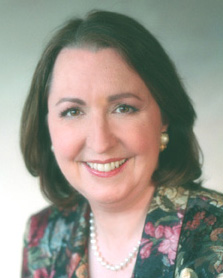
We had the opportunity to talk with Moire Rasmussen from NABA’s San Francisco Bay Area Chapter who shared some of her passion for NABA with us. Moire has been a NABA member for 13 years, is a former national board member, and currently serves on the resource committee. She works for PriceWaterhouseCoopers where she is a market diversity leader.

The San Francisco Bay Area chapter has over 100 members. The chapter supports members’ professional development and encourages young people to pursue accounting careers. One of their programs is the Accounting Careers and Awareness Program, a week-long residency program for high school students that teaches students the basics of accounting including balancing checkbooks, understanding credit, gives scholarships ($15,000 last year), and provides help to young people as they apply to college.

We asked Moire why gives so much of her time to NABA and why she serves on the resource committee. She said “I’ve been given opportunities that would not have been afforded to me anywhere else. The people I’ve met and the guidance I’ve been given has allowed me to grow professionally. I want to help others see the value NABA has to offer, and that takes resources.”

She – and NABA as an organization – is committed to helping others enter the accounting profession and to grow in the profession. She carries a special message to young people in high school and college.

“Accounting is the foundation of business. Business is the foundation of how our country survives. No matter what you do in life you need to understand the basics of business. Accounting will give you those basics. Even if you do not become a Certified Public Accountant, majoring in accounting will open more doors than you can imagine.”

If you are interested in a career in accounting or want to grow in your career visit www.nabainc.org.

Creating an earned revenue stream

CJ Hayden

CJ Hayden

Over the past few weeks we have featured a question and answer session with C.J. Hayden, a social venture advisor to entrepreneurs, nonprofits, and activists. This week C.J. offers suggestions for how to grow your own earned income stream and resources for more information.

Saad & Shaw: What suggestions  would you offer to non-profit leaders who are seeking to develop an earned income revenue stream?

CJ Hayden: Look first at business models that would align well with your organization’s primary mission. For example, it makes sense for an organization like Delancey Street to operate a restaurant, because it provides employment and job skills training for the population they serve. But if you operate an animal shelter, running a café would have little to do with your mission. You might want to consider offering veterinary services instead.

It’s not always possible to develop an earned income stream that also directly serves your mission. But if you are considering an unrelated business, look carefully at whether you have – or can afford to hire – the type of expertise you’ll need. Succeeding with enterprises like a thrift store or print shop will require knowledge and experience you may not have in your organization.

Also, your enterprise is more likely to become a success if your existing audience includes many people who are potential customers for your products and services. An animal shelter that decides to offer veterinary services would have a built-in customer base made up of their animal-loving donors and people who adopt from the shelter. But if they chose to open a café instead, they would have to expand their outreach considerably in order to turn a profit.

One word of caution – while social enterprise can be an excellent option for long-term funding, launching a venture is not a wise solution for an immediate funding crisis. Just as with a for-profit business, your enterprise will require some level of startup funding and may take time to become profitable.

Saad & Shaw: What resources are available for people who want to learn more about social enterprise?

CJ Hayden: Social Enterprise Alliance, www.se-alliance.org. SEA also has a Bay Area chapter, and their annual conference is coming to San Francisco in April 2010.

Social Edge, www.socialedge.org. A project of the Skoll Foundation designed to support social entrepreneurs and social enterprise.

Venture Forth: The Essential Guide to Starting a Moneymaking Business in Your Nonprofit Organization, by Rolfe Larson. A practical, step-by-step guidebook to selecting, planning, and launching a social enterprise.

Find out more about C.J. at www.cjhayden.com.

And as always, have a FUNdraising Good Time!

What is social enterprise?

CJ Hayden

CJ Hayden

Our recent blog entry addressed the topic of social entrepreneurism. This week the topic is social enterprise. We talked again with C.J. Hayden  the author of three books and over 300 articles on marketing, entrepreneurship, and social change. She serves as a social venture advisor to entrepreneurs, nonprofits, and activists.

Saad & Shaw: How do you define social enterprise?

CJ Hayden: A social enterprise is an organization or project dedicated to a social mission which uses business methods to generate revenue, regardless of whether the entity is for-profit or nonprofit. A nonprofit that operates a business to fund its mission is a social enterprise. A business that exists for the primary purpose of achieving a social mission, and which funnels a significant percentage of profits toward that mission, is also a social enterprise.

A business with the primary purpose of generating profits for its owners or stockholders, which also happens to donate a percentage of its profits to social causes, is not a social enterprise.

Saad & Shaw: Can you share some examples of businesses or non-profit organizations that are social enterprises?

CJ Hayden: One of the earliest and best-known examples of a social enterprise is Goodwill Industries, which since 1902 has been operating thrift stores to fund its mission of providing employment and job skills training for disadvantaged populations. Another well-known social enterprise project is Girl Scout Cookies, which provides funding for the operations of local Girl Scout councils and troops. Cookie sales also help the Scouts to achieve their mission by giving girls an opportunity to learn life skills like goal-setting, teamwork, and money management.

Both Goodwill and the Girl Scouts are nonprofits, but there are many for-profit social enterprises, for example:

  • Newman’s Own – Manufactures and sells salad dressing and other food products, donating all after-tax profits to charity
  • Working Assets – Provider of long distance and credit card services that donates a percentage of each call or transaction to charities selected by its customers
  • Tom’s Shoes – Shoe company that gives a new pair of shoes to a child in need for every pair they sell

Saad & Shaw: What differentiates a traditional non-profit organization from a social enterprise?

CJ Hayden: Traditional nonprofits rely on grants, donations, sponsorships, or government funding, while social enterprises make substantial use of earned income strategies. Many nonprofits have small social enterprise projects, such as selling t-shirts or books. But these usually generate only a minor portion of the organization’s funding. A full-scale social enterprise aims to provide a significant percentage of funding for their mission through business activities.

Find out more about C.J. at www.cjhayden.com.

And as always, continue to have a FUNdraising Good Time!

What is social entrepreneurship?

CJ Hayden

CJ Hayden

Social entrepreneurship is a new buzz word amongst people who want to make positive social changes locally and/or globally. But what does it mean? To find out we posed a few questions on your behalf with C.J. Hayden  the author of three books and over 300 articles on marketing, entrepreneurship, and social change. She serves as a social venture advisor to entrepreneurs, nonprofits, and activists.

Saad & Shaw: How do you define social entrepreneurship?

CJ Hayden: There probably as many different definitions for this term as there are people who use it. Some define a social entrepreneurship venture as one operated by a nonprofit organization that earns a substantial portion of its income by selling products and services. Others define social entrepreneurship more broadly as any enterprise dedicated to the public good that uses business methods to generate revenue, regardless of whether the entity is for-profit or nonprofit. And some define the term more broadly still, labeling as a social entrepreneur anyone who uses innovative strategies to address social problems on a replicable scale, regardless of whether they are using an income-earning model at all.

This last definition is the one that I favor. Just as a business entrepreneur creates monetary value by applying creative solutions to problems in the marketplace, a social entrepreneur creates social value by introducing changes with the potential to produce a lasting benefit to society.

Saad & Shaw: Can you share some examples of individuals or organizations that are social entrepreneurs?

CJ Hayden: Examples of well-known social entrepreneurs in history include Florence Nightingale, who established nursing as a respected profession, and launched the first-ever nursing school. Another example would be conservationist John Muir, who established the National Park System and helped found the Sierra Club. Social entrepreneurs active today include:

  • Muhammad Yunus, winner of the Nobel Peace Prize for founding the Grameen Bank, which provides collateral-free microloans to impoverished people in Bangladesh
  • Wendy Kopp, founder of Teach for America, which brings new college graduates into low-income schools as full-time teachers
  • Fabio Rosa, whose innovations have brought affordable electric power to rural Brazil
  • Nicholas Negroponte, founder of One Laptop per Child, which provides durable, solar-powered laptops to children in the developing world

Saad & Shaw: What resources are available for people who want to learn more about social entrepreneurship?

CJ Hayden: Ashoka, www.ashoka.org, provides resources and support for social entrepreneurs and people who wish to assist their efforts.

SocialEdge, www.socialedge.org, a project of the Skoll Foundation. Their website and newsletter provide a wealth of free information.

How to Change the World: Social Entrepreneurs and the Power of New Ideas, a book by  David Bornstein

Find out more about C.J. at www.cjhayden.com.

It’s all about leadership

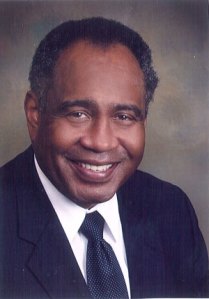
Dr. Ennix Coyness

Dr. Coyness Ennix

Do you hire staff to raise money for your organization or are staff members responsible for identifying and motivating volunteers who have the passion and connections to secure the money you need?

We believe it is volunteers who are responsible for raising funds for non-profit organizations. The Alameda County Health Care Foundation’s current campaign to raise $2.6 million for an angiography suite for Highland Hospital is a great example of volunteer leadership.

Working together the foundation’s executive director and the CEO of Alameda County Medical Center are engaging individuals from across Oakland to help raise the last $750,000 needed by the campaign. Cherlyn Spencer, the executive director, and Wright Lassiter III, the CEO have recruited an impressive group of Oakland’s finest to help ensure that all Oakland residents have access to state-of-the-art life-saving equipment that helps patients suffering from trauma and those who have heart conditions or vascular problems.

Volunteer leaders reported on their fundraising activities this past week with a reception at the new Lake Chalet Bar and Grill Restaurant. The costs of the reception were paid for by a foundation board member as a way of demonstrating support and reducing fundraising costs. At the meeting the chairs of the campaign’s divisions shared their plans and activities. Participating were Paul Gallagher, a Senior Vice President at Wells Fargo, who reported on the work of the major gifts division and the foundation’s board of directors; Dr. Coyness  Ennix from the medical center who reported on the medical community’s participation; Reverend David Kiteley of Shiloh Christian Fellowship and International Ministries and Father James Matthews of St. Benedict Parish who are engaging the faith community; and Tony Lynch of Alta Alliance Bank and Anthony Thompson, Vice President of Bank of Alameda who are co-chairing the corporate and business division.

These volunteers will be supported by foundation staff who are providing campaign information materials as well as suggestions and strategies to help volunteer leaders meet their fundraising goal. Staff also secured a matching grant of $1 million. This provides motivation for giving as each $1 donated will result in $2 for the campaign. More importantly all funds raised will help ensure that anyone suffering chest pains – regardless of their health insurance status – can have access to the equipment that makes a difference between full recovery and long-term disability, and even between life and death.

To get involved or make a contribution call (510) 437-8366 or visit www.achcf.org.

Is your fundraising connected to your strategic plan?

jigsaw_puzzleLast week we conducted two different workshops for board members from two distinctly different organizations on different sides of the country. One was a board comprised of medical professionals, the other was a University foundation board with diverse membership. One has an annual fundraising goal of less than $500,000 and the other has a $4.2 million goal. Yet the results of both workshops were the same. Board members ended each meeting agreeing to “update our strategic plan.”

The purpose of these workshops was not strategic planning. These were workshops designed to educate and engage board members about their responsibility for fundraising and their accountability to each other. During each workshop we reviewed the prerequisites for fundraising success that we have identified through our years of working with diverse organizations. Both boards focused on prerequisite number five “A compelling case for financial support that ties back to the strategic plan.”

The case for support is what people communicate to potential donors about the impact of their organization and the reasons for supporting its work. But these need to be connected to a strategic plan. If, for example, your organization’s strategic plan calls for increasing access to health care by 15% for children within a specific geographic area, then your fundraising should be organized around asking people, businesses and foundations to support you in this effort. If, instead, you are raising money to extend services to newly unemployed adults then your fundraising is not tied to your strategic plan.

There are plenty of good reasons why healthcare should be extended to the unemployed. The only problem is that this is not the identified focus of the organization. Taking the time to review, and as necessary, revise your organization’s strategic plan helps make sure that your activities and the use of your resources are in line with your strategic plan.

Many donors, particularly those who give larger sums of money, pay close attention to the congruence between fundraising and your strategic plan. We believe it is simply a good business practice.

So, maybe we shouldn’t have been surprised that both organizations decided to begin their work with a focus on strategic planning. This doesn’t have to be a difficult and time consuming task. At its best strategic planning focuses an organization’s energy, resources, activities, public relations and fundraising. Working from a current strategic plan helps everyone determine how to best use limited resources.

– Mel and Pearl Shaw!

Planning for change – executive transition

ByronJohnson

Byron Johnson, Project Director, Compasspoint Nonprofit Services

Change is a part of our personal lives and a part of organizational life. We asked Byron Johnson at CompassPoint Nonprofit Services a few questions about the process of planning for a change in executive leadership.

What is a succession plan and why is it important for a non-profit organization to have one?
Succession planning builds staff skills towards achieving an organization’s strategic vision, builds the leadership capacity of staff, and develops a pool of potential management successors.  It also provides the opportunity for some organizations to diversify their agency leadership.

What should the succession plan include?
There are two types of written succession plans: 1) an emergency succession plan, and 2) a departure-defined succession plan.

An emergency succession plan ensures that key leadership and administrative functions and services continue without disruption in the event of an unplanned, temporary absence of an administrator. It should include the following components:
1. A current description of the key functions of the executive director
2. A list of functions that would be covered by an acting director, what his or her authority would be, and which functions would be covered by other staff, e.g., government funder relations covered by the Director of Programs.
3. Who has the authority to appoint the acting director.
4. Standing appointee(s) to the position of acting director (with first and second back-ups) and compensation for acting director(s).
5. A cross-training plan for the identified back-ups that ensures they develop their abilities to carry out the executive director’s key functions.
6. A description of how the Board will support and supervise an acting director.
7. A communication plan in the event of an emergency succession (who gets notified and when).
8. An outline of procedures to be followed in the event that an emergency absence becomes a permanent absence.

What are the challenges we might face if our executive left and we didn’t have a plan in place?
Lack of succession planning can result in what we call a post-transition “meltdown”.  An organization can become so traumatized when faced with the prospect of dealing with an unplanned leadership transition that program delivery, funding, and by extension, the whole community can be adversely affected.

What is a departure-defined success plan?
A departure-defined succession plan is created when an organization’s leader has announced they will leave in two or more years.  This plan includes identifying the agency’s goals moving forward, determines what the skills their successor will need to achieve those goals, and identifies what in the agency needs “upgrading” (board governance abilities or fundraising capacity, as examples) in order for the agency to advance their goals.  The two year planning timeline gives the departing executive and others time to address some of the upgrades before the successor comes on board.

Related to this is another way of thinking about succession planning: Strategic Leader Development, which is the ongoing practice of defining an organization’s strategic vision, identifying the leadership and managerial skills necessary to carry out that vision, and recruiting and maintaining talented individuals who have or can develop those skills.  This is also sometimes referred to as “building the bench”.

What should a departure-defined succession plan include?
It should include the following elements:

a) A plan for dealing with the personal and professional barriers for the executive director who’s leaving.
b) Setting a date for the executive director’s last day in the office.
c) Any plans for grooming their successor (when appropriate).
d) Integrating the succession plan into the agency’s broader strategic plan.
e) A communications plan—who will be told when about the executive’s planned departure?
f) Conducting a “Sustainability Audit” to identify the operational upgrades needed.
g) Plans for solidifying the management team, if applicable.
h) Identifying board and staff back-ups for the executive’s key relationships.
i) A plan for putting finances in order.
j) A plan for building financial reserves and securing multi-year funding.
k) Agreement on the ED’s emeritus role, if the departing executive will have an ongoing formal relationship with the agency.

How does the presence or absence of a succession plan impact fundraising?
Most funders and supporters breathe a sigh of relief when there is some form of succession planning rooted in an organization.  Knowing that the organization can and will continue in the face of leadership transition makes everyone feel at ease and as a result prevents many fundraising hiccups that may occur during a transition.

For more detailed information on success planning visit www.compasspoint.org or www.transitionguides.com.

Byron Johnson, CFRE is a Project Director for CompassPoint Nonprofit Services, one of the country’s leading nonprofit consulting organizations, based in the San Francisco Bay Area. Prior to joining CompassPoint, he worked in senior development positions for San Francisco State University, the East Bay Asian Local Development Corporation, and the YMCA of the East Bay. A past board member of the Golden Gate chapter of the Association of Fundraising Professionals, he is currently an advisory board member of the Multi Cultural Alliance, a special year-round fellowship program designed to diversify the fundraising profession and to develop skills among aspiring under-represented fundraising professionals. Mr. Johnson consults in fund development and other areas of organizational capacity building, which include fundraising planning and coaching, strengthening foundation and individual donor development work, and donor solicitation training.

Passion, Creativity and Fundraising

Passionate Philanthropist

Vernon Foster: Passionate Philanthropist

When you work with a non-profit organization that is in line with your personal mission and values then everything is possible. Your creativity is sparked and you look to engage people with your non-profit and how you can advance its work.

Vernon Foster is an example of an individual who has combined his life passion with his philanthropy. A businessman who benefited from all that his father shared with him, Vernon has set out to offer to other young men what his father offered to him. After his father passed Vernon created the Charles P. Foster Foundation (CPFF) in his honor. The mission of the foundation is to assist African American youth, their parents and family members in leading meaningful, positive, successful lives and becoming productive citizens of society.  Vernon has worked to bring that mission to life by partnering with other people and organizations with a similar vision. He participates in collaboratives, has sought out national funding, and has begun piloting a model of what he would like to create – with others – to benefit young black men in the Bay Area.

For example, in 2001, Vernon donated 51 percent of the revenue from his company to CPFF for the purpose of providing jobs for graduates of the foundation’s Family Restoration Program and to help make the foundation financially self sufficient.

His most recent project is the publication of My Father Said: A Collection of Life Lessons. This book is another way that Vernon carries on his father’s legacy. It is designed for readers of all ages. Through the book Vernon brings to life his father’s message with stories from his childhood with his dad, photos and interviews with those who knew his dad. Throughout the book you will find life lessons from Charles Patrick Foster such as:

  • “Just because you go down the wrong road in life does not mean you can’t turn around.”
  • “If you speak the words, mean them, if not keep your mouth shut.
  • “Boy, here (in America) there is a recipe for everything to be successful. Your problem is you don’t want to follow the recipe.”

Vernon is offering his book as a gift to everyone who makes a gift the CPFF. You give to help advance the mission of the foundation, and the foundation gives you a gift to give to young people in your life. Visit the website at www.cpffoundation.org – give, get and give.

Ed McMahon and black history

Ed McMahon - co-host of the Lou Rawls Parade of Stars

Ed McMahon - co-host of the Lou Rawls Parade of Stars

This week America mourns the passing of Ed McMahon an entertainment giant, household name, and trusted American icon. He is remembered by the general public for his 30 years as Johnny Carson’s side-kick on The Tonight Show, his 12 years as the host of Star Search and his 16 years co-hosting TV’s Bloopers and Practical Jokes with Dick Clark.

He earned a place in American cultural history. And he earned a place in African American history.

As the creator and producer of the United Negro College Fund (UNCF) Lou Rawls Parade of Stars telethon I want to salute Ed McMahon for his work as the show’s co-host for over 17 years.

From the very beginning Ed lent his name, his prestige and his connections to the telethon. His role as co-host helped UNCF raise over $500 million and helped send thousands of young African Americans to college.

McMahon shared his celebrity, his reputation and his integrity with the telethon. His involvement helped to bring well established non-black entertainers onto the show giving it a “Good Housekeeping Seal of Approval.” His continuous role as co-host helped to extend the college fund into white homes who otherwise might have dismissed the telethon – and its important work of raising scholarship funds – as a “black thing.” Ed brought a diverse audience to the telethon. He gave the show credibility. He helped make the education of young black students an issue for all Americans to embrace.

When we wanted to engage a non-black entertainer Ed would make it happen. He would come into a room where we were meeting, pull out his little black book and personally call the entertainers we wanted on the show. He would ask and they would say yes.

You can’t buy what Ed McMahon gave. He was flexible and patient. He never asked for special treatment. He didn’t have an ego problem. He was a consummate professional. You could put a new script before him and he would read his lines as if he had been practicing for weeks.

He was so well liked by all. Of all the hundreds of stars who appeared on the show he was the easiest person to work with. He would spend enormous hours rehearsing. He never complained about all retakes and retaping. His famous line was “Point me where to go and I’ll do it.”

Ed McMahon is part of African American history!

Q&A – Private Public Partnership

Nicole Taylor, CEO - East Bay Community Foundation

Nicole Taylor, CEO - East Bay Community Foundation

One of the programs of the East Bay Community Foundation is it’s public/private partnership program. We thought you might want to know about this, so we asked questions on your behalf.

What is the Foundation’s public/private partnership program?
Based on the reality that neither government, business, the non-profit sector nor the philanthropic sector alone possesses the resources to resolve our most pressing challenges, our partnership program is dedicated to forming partnerships that pool resources from different sectors to develop solutions to specific problems.  Specifically, we look to partner with the private and public sectors. To make significant change, we need to go beyond the power of one.  We need the power of many.

Does this initiative provide funding for local non-profit?   
Funding for local non profits who focus on our two priority issues — advancing economic opportunities for adults and families in need and on ensuring very young children are successful in the education system — comes primarily from our grantmaking program rather than from our partnerships program.

What is an example of a public/private partnership that has exceeded the Foundation’s expectations?  
We are developing a program aimed at purchasing foreclosed homes in Richmond, rehabilitating them, and offering them to first-time home buyers who are low-to-moderate income families – thereby reducing neighborhood blight and creating financial assets for families.  If that program comes to fruition and if we are able to implement it at a significant level of scale, it will exceed our expectations.

How does this program impact communities of color in the East Bay?
The foundation is focusing on two issues – advancing economic opportunity for adults and families in need and ensuring very young children succeed in the education system so they will have economic opportunity when they become adults.  These issues  disproportionately affect communities of color. 

Because of that disproportionate impact, these two issues we focus on are directly aimed at communities of color in Alameda and Contra Costa counties.  The public and private partnerships program is currently working primarily on the issue of economic opportunities and development in communities with high need for job creation, job training, and asset-building strategies.  The communities we work in through these efforts are primarily communities of color.

Learn more by visiting the East Bay Community Foundation online at www.ebcf.org