Category Archives: FUNdraising Good Times

Fundraising commentary, tips and information.

Ten Things You Need to Know About Proposal Writing

If there is a mythical “pot-of-gold” in the nonprofit world it is the foundation grant. Many start-ups – as well as established nonprofits – look to grants from foundations as a cure-all; the answer to all fundraising problems. You can spot this tendency when you hear phrases such as “Bill Gates has a foundation, let’s submit a proposal.”

We talked with professional proposal writer Marlene Lynn recently and asked her to share her expertise. Lynn has written proposals to corporations and foundations for the past ten years; she works with her clients to manage grant funds received, and follow up with and report to funders. She is meticulous in her work, committed to her clients, and is an advocate of strategic proposal submission.

Saad & Shaw – Briefly, based on your experience, what are the three big “mistakes” nonprofits make when they begin writing to foundations for grant support?

Marlene Lynn – Number one is poor planning. This results in nonprofits being caught in a cycle of chasing the money – reacting to unexpected funding opportunities and hustling to meet deadlines. I call this working hard, not smart. A proactive approach is to allocate resources to conduct comprehensive prospect research and use this information to create a grant action work plan. You could think of this as the grants portion of your agency’s development plan.

Another mistake is writing a proposal for something that you cannot actually deliver, from program delivery to financial management of the grant funds. For example, when I am working with program staff to develop new objectives, they will commonly propose objectives they want to reach rather than objectives they are likely to reach. I advise proposing conservative objectives that can be reached, or better yet, exceeded.

Lack of attention to detail can sink your proposal. For example, I have seen a well prepared proposal discarded – not even read – because one form or signature was missing, or a staff person hit the “save” button instead of the “submit” button after completing an online proposal. I recommend having a second person check your work against the funder’s instructions.

Saad & Shaw – What are the elements of a well-written proposal?

Marlene Lynn – Get to the point early and make it interesting. Follow instructions. Make every word count.  This often means getting rid of an adjective and changing the noun to say what you want. Picture your reader, facing a tower of proposals to review and getting tired or bored halfway through. Make it easy for them see the great work you are doing with succinct writing backed up with data. If you were to ask a stranger on the street to read your proposal would she understand it and find it compelling?

Saad & Shaw – What’s the difference if any between a well-written proposal and a funded proposal?

Marlene Lynn – A funded proposal sticks out from the crowd. It provides a track record of success in addressing problems that the funder has identified as a priority. It highlights what is unique about your organization. It is easy to read with information that flows from the opening statement to the closing remarks. It has heart and data references to back up the work. The proposal does not create barriers for the reader. For example, information is presented in the order it is requested, so if readers are using an evaluation checklist, they don’t have to search through your proposal for the information.  The reader can see that you have done your homework, and that your work and their priorities are a strong match.

Saad & Shaw – What role can board members play in creating a climate where a foundation requests (or wants to receive) a proposal? What is an LOI?

Marlene Lynn – Sometimes a board member is acquainted with someone at a foundation or corporation. The board member can have a conversation – in person if possible – with their contact to tell them about the great work of the organization. The board member plans the key points of the conversation in advance with a development staff member, so the board member understands the foundation’s funding priorities and can tailor the conversation to fit this context. The board member can then report back on the level of interest the foundation has in a proposal, and instructions on when to submit a proposal or Letter of Interest (LOI), how much to ask, who to send it to, etc.  An LOI is a Letter of Inquiry – a brief letter (two pages max) that introduces the foundation to the organization and may include informational enclosures such as brochures, annual report, and news articles about the organization.

Saad & Shaw – What are the elements of a successful LOI?

Marlene Lynn – An LOI will begin with a sentence summarizing the request – how much is requested and for what. Other elements include a paragraph describing the organization – the year and reason the organization was founded, who founded it, its mission, and programs or services provided; description of the need the services address; how your organization addresses this need and why your organization is successful; key accomplishments/outcomes your organization has achieved in addressing the need; and a closing statement that includes the name, phone number and email of who may be contacted for more information. Always thank them for considering your request.

Saad & Shaw – What is “foundation research” and why is it important?

Marlene Lynn – Foundation research identifies grant funding prospects for your programs, including an assessment of the prospect’s funding potential, as well as funding criteria, application guidelines, deadlines, giving history, and procedures for submitting a proposal or LOI. I recommend doing the research, and putting the findings into a prospect report. This document will include on a list of funding prospects with an assessment of the funding potential for each prospect, as well as funding criteria, application guidelines, deadlines, giving history, and recommended next steps for cultivating and/or submitting a grant request.

Saad & Shaw – Should an organization submit a proposal if its programs are not an “exact fit” with the funder’s guidelines? What do you suggest an organization do when this is the case?

Marlene Lynn – I would see if a board member or volunteer has a connection with the funder, and if so, follow the recommended steps outlined in the above question. The funder may be able to make a gift from discretionary (unrestricted) funds based on this connection.  Don’t be afraid to call the funder (unless their guidelines prohibit it), tell them your idea, and ask for their feedback. They will usually tell you whether to submit or what your prospects of a favorable review might be.  If none of this is possible, you could weigh the input (how much resources are needed for the proposal or LOI) versus the possible output (amount of funding and reporting requirements).

Saad & Shaw – What do you suggest an organization do after submitting a proposal? Should they follow-up? Wait? What is the protocol?

Marlene Lynn – Not usually. The funders usually say when they make their decision. If you don’t hear back by that date, then it is appropriate to follow up unless their guidelines tell you not to.  For grant requests that are denied, my advice is the opposite. Always ask the funder for feedback on your proposal, unless their guidelines or denial letter say not to. A phone call – human interaction – is best.

Saad & Shaw – Can you amend a submitted proposal if new information becomes available?

Marlene Lynn – No. However, if a funder is considering your proposal for a long time, you might send them an update letter on new benchmarks you have reached since your proposal was submitted, perhaps with your latest annual report.

Saad & Shaw – What needs to be in place for an organization to either work with a grant writer or to have someone on staff write the proposal?

Marlene Lynn – There needs to be funding in the budget (and the bank!) for the position(s), whether staff or consultant. This ensures that the work can be completed, and it shows funders that your organization is committed to achieving its mission. Funders don’t want to support programs that may not be around next year.

Learn more about Marlene Lynn and her services

Church and Money

Many churches, like other nonprofits, have to grapple with challenges of operating facilities, paying salaries, and providing funding for programs, schools and mission work. The economic challenges of recent years have impacted congregations raising questions new and old.

We talked with Robert Van Ess, Associate Pastor at Holy Trinity Community Church United Church of Christ about this. He has studied and written about church giving, changes in the economy, and generational differences related to money. We share his thoughts for your consideration.

“Many churches are struggling to meet the demand of their annual budgets.  Hard choices are being made across the ecclesiastical landscape.  Programs and mission projects are being restructured, downsized, or even eliminated.  Churches are cutting down from employing full time pastors and making do with part time appointments.  Building campaigns have been scaled back or put on hold.  In a move to stave off budget busting expenditures many churches have begun to only insure their full time pastors exclusively, eliminating the previous benefit of insuring the pastor’s entire family as beneficiaries, in an attempt to cut down on the sky rocketing health care costs that along with a pastor’s salary can amount to 50% or more of a smaller church’s budget.”

Sound familiar?

As with other nonprofits, churches can only make so many cuts. There comes a point when revenue – or tithes and offerings – need to be reevaluated. Van Ess raises questions that for church leaders to consider. For example, how can churches encourage consistent tithing and giving by members who are committed to the church but who attend inconsistently?  How can churches retain liturgical meaning and values that are expressed through tithing and giving, and at the same time encourage tithing and giving by younger people who may not own a check book or carry cash?

Is electronic giving an appropriate answer? If yes, how would it be integrated into the life of a church? Is giving with a debit card acceptable? A credit card? How does an individual who gives electronically participate in the liturgical aspects of giving? What does she or he put in the basket? What if the majority of a congregation moves to electronic giving – would services themselves begin to change?

Van Ess points out that young people have a different relationship with money and giving than that of people over 50. Many don’t deal with checks or cash. They pay for gas with a card, use electronic bill pay services for utilities, rent and other monthly expenses. Many never receive a “pay check” – their salary is deposited into their bank account on a specified date.

Change is constant. The question is how will congregations adapt to these changes and ensure financial viability? Creative and respectful experimentation may reveal how to integrate new ways of giving. Tell us what your church is doing and we’ll report back.

Robert Van Ess is a 2011 graduate of Eden Theological Seminary in St. Louis Missouri and serves Holy Trinity Community Church United Church of Christ in Memphis Tennessee as Associate Pastor.

No Short Cuts to Meeting Your Fundraising Goal–Part Two

How do you report that your non-profit has not met its fundraising goal? Do you extend your campaign? Lay off employees? Close programs? Do more with less? Do you simply stop talking about the campaign and hope no one will ask about it?

Grappling with these questions and finding ways to answer them is part of doing business as a non-profit organization or institution. Knowing where the money will come from is vital to ensuring consistent operations and to implementing growth strategies, increasing impact, or financing new ventures.

Our last column discussed the University of Virginia $3 billion capital campaign. As you may recall they have extended their campaign and are seeking to raise the last $240 million by the spring of 2013.  Obviously UVa is in a unique position – very few organizations or institutions can forecast their ability to raise hundreds of millions of dollars in less than a year. But, regardless of the amount, realistically forecasting your fundraising is part of non-profit management.

At the heart of the matter is the question, “how do you know that you can raise the money you need?” And stepping backwards, “how did you come up with your fundraising goal in the first place?”

Our experience has shown that fundraising campaigns require a significant period of planning prior to campaign launch. Here’s a short version of the long list of typical pre-campaign activities. Determine fundraising priorities (how the funds will be used); develop case for support and test amongst potential donors and influencers via market research (“feasibility study”); revise case (including campaign financial goal) based on results of research; identify potential donors and the amount each could give; create campaign plan; solicit and engage campaign leadership; raise 40% – 60% of campaign goal prior to “going public…”

The amount of work can appear overwhelming. But, it is better to know what really goes into fundraising than to build an internal consensus that “we can do it” without knowing two important things: how the philanthropic market responds to your case, and the amount of fundraising capacity and infrastructure required to support your campaign.

When you find you have challenges in meeting your fundraising goal you are experiencing “campaign stall.” It’s not unusual. It occurs within many campaigns and is typically a time to review the campaign plan, reassess strategies, and huddle with campaign leadership. It’s time to see which components of the plan were implemented, which were modified and which were either consciously scrapped or unconsciously overlooked.

In the case for UVa they are rethinking the focus for the balance of their campaign, and looking to increase annual giving. How exactly do you plan to meet your fundraising goal, and what will you do if you are not on target to meet your plan?

New Lessons from Big Bird

Are you prepared for your 15 minutes of fame? Or more precisely, your nonprofit organization’s 15 minutes of fame? What if you were the Public Broadcasting System, home to Big Bird of Sesame Street fame, and a presidential candidate put you on the chopping block in front of 70 million television viewers?

You may recall Presidential candidate Mitt Romney’s now-famous quote during his first debate with President Barrack Obama. He told the moderator, Jim Lehr of PBS, “I’m sorry Jim, I’m gonna stop the subsidy to PBS, I like PBS, I love Big Bird, I actually like you too, but I am not going to keep spending money on things to borrow money from China to pay for.”

It went viral from there with tweets, videos and blog postings lighting up the internet. Here’s the question – what if your organization was suddenly thrust into the local or national limelight? Would you be in a position to capitalize on the publicity? What if people – hundreds or hundreds of thousands – suddenly started visiting your website? Or better yet, making $10 gifts by text or your website’s “donate now” button?

How does your website look? Does it tell your story? Is it integrated with your donor management software so you can track and respond to people who give electronically? Do you have easy-to-use talking points your leadership can use to get your story out? Would you be in a position to craft a quick and witty response that could be tweeted to your followers? What about creating a quick video? Could you drive people to your website, launch a give-by-text campaign? Thank everyone?

It would be great if all opportunities were planned; that we knew in advance when opportunity would knock and could be dressed for the occasion. But that’s not always the case. So here’s our take-away regarding the Big Bird dust-up – be prepared. Invest in your fundraising, your messaging, and technology. Think about how you could respond if your organization received unanticipated positive attention. How would you take advantage of it? Who could you call on to help you?

Conversely, what if your organization were drawn into the public eye in a negative way. Think Pennsylvania State University and Coach Jerry Sandusky? Do you have a crisis management plan that can help guide you through the challenging times? Again, are there people you can call on to help you?

Governor Romney’s comments created an unanticipated whirlwind complete with a guest appearance by Big Bird on Saturday Night Live. Sometimes the things we say have an effect that is different from our intentions. It’s part of life – the part where we learn to laugh at ourselves and accept our imperfections.

But, if your nonprofit can capitalize on an unanticipated moment in the spotlight, do so.

No Short Cuts to Meeting Your Fundraising Goal –Part One

“Sadly, I have to report that I and we failed.”

That is not a good message to have to deliver. But it is part of life. The above quote is from a report given by Robert D. Sweeney, senior vice president for development and public affairs to The University of Virginia Board of Visitors at its meeting September 14th.  Sweeny was reporting on the progress of the University’s $3 billion capital campaign. According to The Daily Progress the campaign launched in 2004 and was to conclude at the end of 2011. To date UVa has raised $2.76 billion; the campaign has been extended. “We will be to $3 billion by the spring,” Sweeny said.

While the number of nonprofits launching multi-billion dollar campaigns is small, there are lessons to be learned from publicly available information regarding the UVa campaign.

Here’s what we know: campaign strategy and the economic downturn contributed to the campaign’s challenges. UVa was not exempt from the economic challenges of the past five years. Another factor was strategy.

The Daily Progress reports, “Sweeney said there was a ‘miscalculation’ on the part of UVa officials, who thought they could pull in enough gifts of $10 million and $20 million to offset not having one more $100 million gift… Some consultants had suggested they’d need such a gift but UVa officials had thought otherwise, Sweeney said.”

Obviously most organizations dream of receiving even one $1 million gift. What’s important is not the size of the gifts, but the underlying fundraising principles that were in place or overlooked.

While UVa worked with campaign counsel, it also chose to move ahead despite guidance regarding the number and size of gifts needed to reach the campaign’s goal within the campaign timeframe.

In our experience that is not an unusual decision. It is, however, a risky one. Your campaign goal should be realistic. It should take into account your financial needs, the market’s response to your case, and the number of campaign gifts or grants you can secure.

To raise $1 million you need to know where the money could come from. Who can give $100,000? $50,000?  $25,000? How many gifts of $1,000 to $5,000 can you secure? Ensuring you reach your goal means identifying three times the number of gifts you need to receive; if the first person you ask turns you down you know who else you can ask. If you need 500 gifts to raise $1 million, you should, in general, identify 1,500 potential donors.

As you can see, reaching a campaign goal requires a lot of work. Impatience, overconfidence or miscalculation can be expensive. Think about how you are preparing for your campaign. Are you taking the time you need to be successful or will you find yourself saying, “Sadly, I have to report that I and we failed.”

Vision Mission and Fundraising

Successful nonprofit fundraising doesn’t just happen. It takes planning and preparation. It also requires an understanding and agreement regarding the organization’s mission, vision, strategic direction, goals, and financial position. We know that many times people want to begin fundraising right away. “We need money; we don’t have time to do all that,” is a common cry.

That may be true. And, you may be able to raise money without going through the “trouble” of ensuring understanding and agreement on the above items. But, you can only go so far without doing this work. Here is what we have learned: understanding and agreement, or the lack of these, will inform your fundraising.

Successful fundraising begins long before a fundraising plan is ever created. It starts with your organization’s vision and mission. These two items are at the core of nonprofit operations. It is the vision and mission that drive the strategic direction and goals. And it is the strategic direction that influences fundraising and the use of funds.

Defining the vision and mission can be a group process, but it needs to begin with the chief executive for your organization. He is responsible for ensuring board members, employees and volunteers understand these, and agree with them. He needs to live and breathe the vision and mission. He is also responsible for ensuring the organization’s strategic direction – as documented in the strategic plan – are rooted in the mission and vision.

Your vision and mission should be short and concise. One or two sentences at most, if possible. Your strategic plan can be as simple or as complex as your organization requires. We are partial to a short, clearly written plan that includes easy-to-understand and easy-to-measure goals and objectives.

Sometimes the vision, mission and strategic directions are documented, but they exist primarily on paper and are not the heartbeat of the organization. Things may have changed since they were written. For example, new board members or employees may have joined the organization and may not have participated in an orientation session that communicated these. Or, maybe the needs of the community have changed and the vision and mission need to be updated. You may have achieved the goals of your last strategic plan but not yet created a new one. These are good things to know – and to take action on.

If your vision, mission and strategic plan need revising, take the time to do so. Once these are in place, it is the chief executive’s responsibility to ensure they are understood, that the board and employees are in agreement with them, and that they are put into action.

Working in this way contributes to fundraising success, as fundraising goals need to tie to your strategic plan and its implementation.

For example, when you begin discussing how much money your organization needs to raise you should refer to your strategic plan to map out what you are seeking to achieve over the coming years. From there you can begin to map out costs and fundraising goals.

Here’s some more detail, some things to consider. When the leadership of your organization fully understands your vision and mission they are in a strong position to evaluate – and as necessary modify – the strategic plan. Understanding the strategic plan allows your leadership to make informed financial projections that impact programs and operations. An understanding of the financial position and projections informs fundraising. These can help ensure the organization is engaged in proactive fundraising instead of “emergency fundraising.”

Here are a few questions which can help define what we mean by the term financial position. Is your organization operating in the black? Does it run a deficit? Are there upcoming, required, but unfunded capital improvements or expenditures? Are programs being cut (despite increasing need) because of decreased funding? Does your organization have a pipeline of potential donors and funders who could be solicited should projected donations or revenue decrease? Are there multiple revenue streams, or do the majority of funds come from one source?

Take the time to ensure board members understand the implications of the financial statements they are asked to review. Encourage open discussion and questions regarding the organization’s finances. Discuss the variables that could impact your organization’s financial position, for better or for worse. Ensure that plans are put in place to address these possibilities should they arise. Review the size of the reserve fund and what expenses it could cover. If your organization doesn’t have a reserve fund, put plans in place to create and grow one. A reserve fund provides options for addressing an unanticipated increase in demand or services, or a decrease in revenue.

The economy may change without notice, and donors and funders may change their giving priorities – these are situations beyond anyone’s control.  But, with proper planning, they do not need to jeopardize your organization’s financial health. Consistent monitoring and assessment of finances contributes to organizational stability and growth.

Your organization’s vision, mission, strategic plan and financial position will impact your fundraising success. Take the time you need to discuss and review these and to ensure there is full understanding and agreement amongst your organization’s leadership. This is your starting point for fundraising. Special events, online giving and major donor appeals are strategies that will be impacted by your foundation – or lack of one. Take your time; be prepared.

Where’s the Money?

Fundraising is to nonprofits what sales is to business. It’s where the money comes from. In business the sales team secures revenue to cover expenses and generate a profit for shareholders. In nonprofits it is the fundraising team that raises the – money you need to deliver on your mission.

For example, increasing the number of local residents qualified to fill current, local job openings requires resources – including money. Partnerships with government agencies and businesses can provide resources needed to fulfill this mission, but money is also needed. The question for nonprofit leaders – both staff and board members – becomes “where will the money come from?”

Staying focused on why funds are needed is one way to change your relationship to fundraising. It is not about begging. It’s about making a clear case for why an individual, foundation or corporation should give to your organization. You need to know how much money your organization is seeking to raise, how it will be used, and what the impact will be.

Back to our example: if your organization seeks to prepare 100 young adults a year with the skills required to obtain a living wage job, you will need to be able to communicate what it costs to operate the program; which employers you are partnering with; what types of jobs you are preparing your students for; and what it will mean for each student, their family and the local economy when your students are employed.

You don’t have to come up with these answers on your own. You – as a board member – can help create a culture that encourages your fellow board members – and staff – to bring fundraising into the center of most conversations and activities. Here are a few examples.

When programs are discussed consider asking: how much does it cost to operate this program? Where does the money come from? Are we on track to secure the needed funds for this year? How can I help make sure we reach our goal? Can I accompany our director to meet with current or prospective funders?

Raise these questions in a spirit of open inquiry and wanting to be part of the solution. They can open the door to meaningful activities. For example, if you want to go with the director to visit a donor, staff will need to help get you prepared. This will create an awareness within staff about what board members need in order to be effective advocates and solicitors. Providing board members with information and materials that support fundraising, can help reduce board members’ reluctance to fundraise. Talking about the realities of how much money you need and where it is coming from (or not coming from!) brings board members into the process of securing the resources needed to deliver on your mission. And, at the end of the day, that is what fundraising is about. You can make a difference.

Church Fundraising

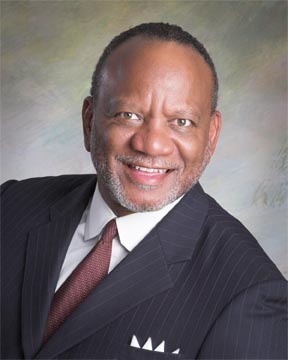
Willis White

Willis White

Prayer must be at the heart of church fundraising, but the fundamentals of fundraising also contribute to success. We met Willis White when he was serving as co-chair for a $3.5 million, multi-year campaign to retire the debt on the Allen Temple Baptist Church Family Life Center. We worked with White, his co-chair Constance Walker and the church’s campaign leadership team during their campaign.

The campaign was the vision of the senior pastor who called on White and Walker to serve as co-chairs. White had been prayerful regarding a ministry when he was approached by his pastor. “It felt like a calling to serve. Our pastor was respected by everyone and had served the church for over 40 years. It was an honor to be asked.”

White attributes the campaign’s success to prayer and planning. “We allowed the Lord to lead us, to lead the membership. All the gifts and donations we received are because the Lord made a way for us. We prayed and we planned. We hired fundraising counsel to help us. That was critical. It was one of the key reasons I accepted the request to serve as a co-chair.”

“Working with counsel we laid out a plan that would take us through the full campaign. Because the plan was in writing we could meet with people who had agreed to help with the campaign and talk with them about what we needed to do. The plan was key to galvanizing our membership. It had two components – an internal effort and an external community effort. The church membership bought into the idea of raising money to show our own commitment to the campaign before raising money from outside the church.”

Working with the culture of church, the membership organized itself into groups that corresponded to the 12 tribes of Israel and the 12 months of the year. “This allowed everyone to be a part of the campaign: you were a part of the campaign because you were part of a tribe because of your birth month.

The campaign’s naming opportunities motivated giving by individuals, families, and by groups and organizations from within the church. “These opportunities encouraged giving even though people were dealing with the downturn in the economy. For example, the ministers got together and pooled their gifts towards a naming opportunity to honor the outstanding work of one of our ministers. We had a $50,000 naming opportunity for the stage  and the music department pooled their gifts, naming the stage  in honor of our music director. Naming of the windows was a motivator – people used that opportunity to honor their loved ones or family. People were proud to show that they gave to the campaign and to show their commitment to the church.

The power of faith and planning

Motivation, prayer, faith and teamwork were key to White’s experience.

“Our campaign leadership committee had to stay motivated and we had to motivate the congregation. We had awareness Sunday on the first Sunday of each month where we reported on the progress of the campaign. People would rally around; it reminded people the campaign was going on, and motivated them to participate. Our strength came from faith and prayer. We were always amazed by the success we would have from month-to-month. We were making payments of $50,000 a quarter for debt service during difficult economic times; that was amazing.

Faith, prayer and planning are at the core of the advice he offers to church leaders who are considering a campaign. “Number one: be prayerful. You will be successful because of your faith. But make sure you give God all the glory for your success. Number two: work from a plan. Number three: consider a co-chair approach. It gave us continuity and constant leadership. When something came up for one person there was always a co-chair there who knew what was going on and could keep things going. We used that approach with the tribes as well. This is helpful because in a church there are usually a small number of people who do much of the work. Having a co-chair took some of the pressure off of the leaders and created support. In our church there is always the same group of individuals who volunteer to serve in the auxiliaries, and the co-chair approach shared the leadership responsibilities.

We asked how he sustained his commitment throughout the campaign. “Faith. It was always exciting and always rewarding to be able to raise money and to make $50,000 payments towards our debt. We wouldn’t know in the beginning of the quarter where the money would come from and to see the money appear in time to make the payment was very motivating. We felt the Lord blessed us every quarter to make these payments. It increased the faith of our membership – people continued to be amazed about what we as membership could do. We knew that continuous work and continuous prayer would make us successful.

Fellowship was an unexpected benefit. “We had an executive committee throughout the campaign and these were people I didn’t necessarily have fellowship with before. Our meetings and dinners brought us closer together. We found out there were talents and leadership within the church that we weren’t aware of before and this has served the church beyond the campaign.

Advice from a volunteer church fundraiser

Church fundraising requires prayer. That is at the heart of the advice White offered. We asked him how he prepared for the campaign. “Continuous prayer,” was his first response. “I also had  agreement from my family as this was a three-year commitment that would take a lot of my time. And my family had to make a meaningful gift over-and-above our giving, if I was to ask others to do so. We gave, and the Lord rewarded us. We were very committed; we believe in a church being debt free. There is power in being debt free, and we wanted the church to be debt free. That empowered and inspired us.”

White was an ideal campaign co-chair in our estimation. We asked him for his opinion on what makes a good church campaign leader. “You have to be committed and have faith in what you are doing. You need good leadership and organization; clear goals and a strategy for achieving those. The campaign should have a defined time period; and the church membership must  buy-in. You need people to lead the effort that can get other people to buy-in. You have to have marketing and sales skills in order to appeal to people who can give. You need good communication skills. You have to enjoy communicating with others and feel comfortable doing so. A church campaign needs everyone’s involvement; you have to be communicating to everyone about what is going on and how people can get involved.

While the campaign enjoyed success it also faced challenges.  “Prior campaigns related to our Family Life Center were not able to achieve their goals. Yet people who had given to those campaigns felt the debt had been paid off because there had been no final report at the end of the first campaign. We also had a building campaign going on, and we had to communicate the difference between the building campaign and the Family Life Center campaign. Another challenge was communicating the importance of giving beyond tithes and offerings. We needed to maintain current revenue from tithes and offerings and have people give above-and-beyond to this campaign.

“Finally, the economic climate was a big challenge. We launched during a time that was compared to an economic depression. We are located in an African American community where people were facing unemployment and foreclosure while we were asking for campaign gifts. The membership was very prayerful, they had faith, and they believed that if they gave it would be returned to them two-fold.”

Volunteer Management – Ten Things to Consider

Volunteers make all the difference in the world!
Here are 10 things you – as a volunteer coordinator – can consider as you grow your program.

  1. Have you developed a volunteer engagement, management and recognition program for your division?
  2. Are volunteer roles and responsibilities for your program clearly defined, documented and updated?
  3. Are you tracking past, current and potential volunteers and how they can be – or are – of service? Are you tracking their interests, relationships and birthdays?
  4. How do you communicate with your volunteers?
  5. How do your volunteers communicate with you?
  6. How do you inspire and motivate your volunteers on a consistent basis?
  7. Have you developed an ongoing support and training program to support and grow volunteer involvement?
  8. Do you encourage volunteers to make a financial gift to your organization?
  9. Have you developed a volunteer manual to help guide and orient your volunteers to your organization and the needs of the community?
  10. Do you have a “buddy system” that pairs new volunteers with more experienced volunteers?


Hiring a Fundraiser

You can never hire enough people to help with fundraising. If you are strategic you will look for individuals with volunteer management experience who can help build and support a diverse team of fundraising volunteers. This is different from hiring someone to “solve all your fundraising problems.” While most written job descriptions don’t include the previous phase, the idea is often an unspoken desire that drives hiring decisions. Our advice: acknowledge your desire; then work diligently to identify the right person with the right skills. Fundraising experience is not enough. We suggest keeping the following qualities in mind as you proceed.

Strong people skills and writing skills are critical. Fundraising professionals need to interact well with people from different backgrounds, make them feel comfortable, and make an honest human connection. They also need to be able to craft clearly written letters, reports, short proposals, and email messages.

Look for strong technology skills including word processing, mastery of spreadsheets and social media, and experience with donor databases that includes conducting searches and running reports.

Don’t overlook evaluating general office skills. A social media maven still needs to maintain accurate and up-to-date paper and electronic files that can be easily accessed by others. He or she will need strong time management skills as fundraising work never ends. Your ideal candidate should be able to work on multiple projects simultaneously and to meet (or beat) deadlines. Knowing how to prioritize is critical as timely communication with donors, volunteers, and staff cannot be overlooked. Courteous and timely communication by phone, email or letter is a must.

So is an understanding of the development process or sales/marketing cycles. Development professionals need to be able to discern the important and different roles that volunteers, board members, donors, and staff can play in facilitating giving. Strong general marketing skills and an understanding of the sales and marketing process are a good background when hiring someone new to fundraising.

Given the many competing priorities that characterize the nonprofit sector, we suggest looking to hire people who are self-motivated and able to pursue tasks with a minimum of follow-up. Of course you want to make sure your candidate is willing and able to ask questions when unsure of next steps. He or she should be a team player who can work well with others; a strategic thinker who understands the longer-term implications of short-term goals and how they relate to increased giving; and an ability to grasp the bigger picture as well as the immediate tasks at hand.

What else to look for: creative, detail-oriented, risk-takers who can motivate others, and manage and facilitate activities from a background or behind-the-scenes position. Is that too much to ask for? We think not. Knowing who you’re looking for will make your search easier.